Connect with us
Anglostratits

Business

Hong Kong rises to world No.1 cross-boundary wealth hub

Published

on

Hong Kong

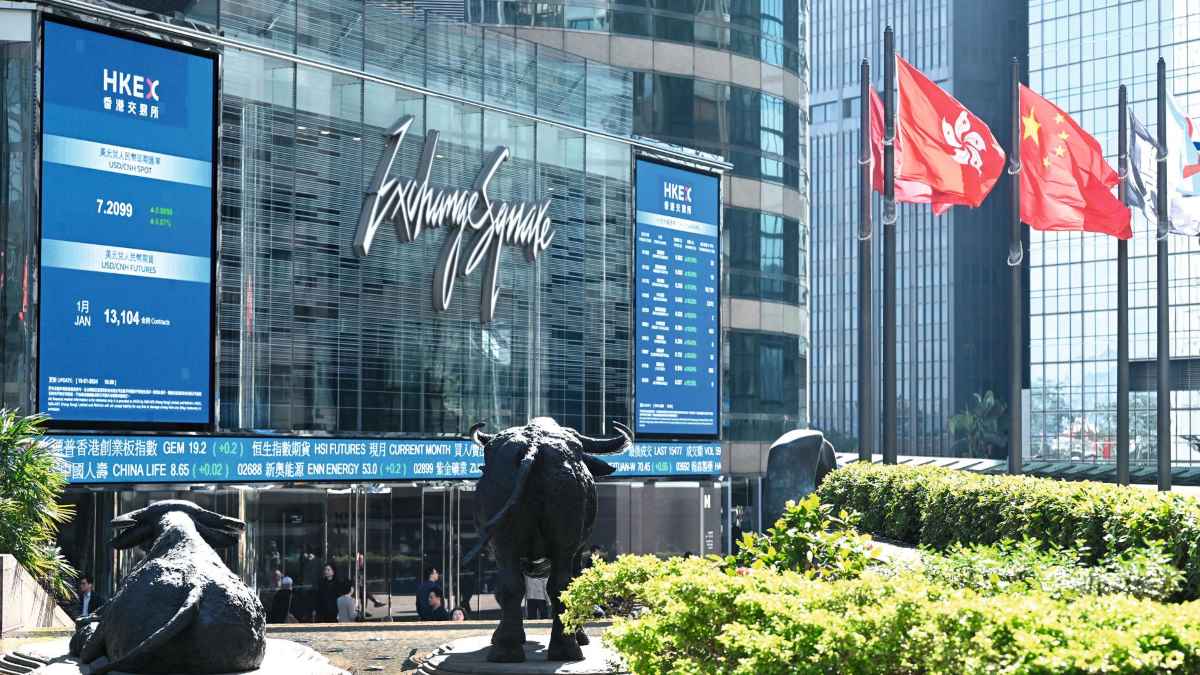
HONG KONG SAR – Media OutReach Newswire – 28 May 2026 – Hong Kong has overtaken Switzerland as the world’s top cross-boundary wealth management centre, according to the latest Global Wealth Report 2026 published by the Boston Consulting Group (May 27).

Hong Kong’s cross-boundary wealth rose 10.7% in 2025 to US$2.9 trillion, driven by Chinese Mainland flows and a vigorous stock market that delivered significant IPO (initial public offering) activity and strong gains in benchmark-heavy internet platforms, according to the report. It also projected that, from 2025 to 2030 the cross-boundary wealth managed by Hong Kong will grow by 9% on average annually and maintain first place globally, fully affirming Hong Kong’s position as a world-leading cross-boundary wealth management centre.

Paul Chan, Financial Secretary of the Hong Kong Special Administrative Region Government (HKSARG), highlighted that China’s National 15th Five-Year Plan clearly supports Hong Kong in strengthening its functions as an international asset and wealth management centre, which is also a key component of Hong Kong’s ‘Finance +’ development strategy.

“Over the past few years, the Government has worked closely with the financial sector to continuously improve the financial infrastructure and ecosystem, expand the range of investment products and risk management tools, and deepen the connectivity with capital markets around the world.

“Leveraging the advantages of ‘one country, two systems’, complemented by free, open, transparent, and predictable economic policies as well as a stable and secure investment environment, and cross-market connectivity, Hong Kong is attracting more and more ultra-high-net-worth individuals and family offices to establish a presence and invest in the city,” Mr Chan said.

Christopher Hui, Secretary for Financial Services and the Treasury of the HKSARG, noted that the Government had issued the Policy Statement on Developing Family Office Businesses in Hong Kong in March 2023 and has since implemented various measures to encourage family offices to operate in Hong Kong. Such initiatives, he said, include providing profits tax concession to family-owned investment holding vehicles managed by eligible single family offices and introducing the New Capital Investment Entrant Scheme.

“The Government will introduce legislative proposals into the Legislative Council next month (June 2026) to further enhance the preferential tax regimes for funds, single family offices and carried interest, so as to further enhance the competitiveness of the tax regimes, and attract more funds and family offices to set up and operate in Hong Kong,” Mr Hui said.

According to a study commissioned by Invest Hong Kong and published in February 2026, there were over 3,380 single family offices operating in Hong Kong as of end-2025, representing an increase of more than 25%, over the past two years.

Business

Annual Meetings 2026 (AM2026): African Development Bank Group and World Economic Forum Partner to Unlock Investments in Africa’s Frontier Markets

Published

on

AM2026

The HRI Roadmap for Africa sets out a coordinated, country-led approach to mobilising commercial and catalytic capital in underserved frontier markets and transition states, regions where the investment gap is most acute

BRAZZAVILLE, Republic of the Congo, May 28, 2026/APO Group/ –The African Development Bank Group (www.AfDB.org) and the World Economic Forum (WEF) on Wednesday launched the Humanitarian and Resilience Investing (HRI) Roadmap for Africa to channel private investment into Africa’s most fragile economies.


The HRI Roadmap for Africa sets out a coordinated, country-led approach to mobilising commercial and catalytic capital in underserved frontier markets and transition states, regions where the investment gap is most acute and the enabling conditions for private investment have historically been weakest.

The roadmap’s development responds to a structural paradox at the heart of Africa’s financing challenge: the continent faces an annual development financing gap of about $400 billion. Despite having 17 percent of the world’s population, Africa attracts only 3.5 percent of global foreign direct investment and less than 2 percent of global venture capital. Shifting geopolitical dynamics and contracting official development assistance environment have further intensified the urgency. Pilots are already underway in Liberia, Somalia, Mozambique, and Djibouti.

In keynote remarks, African Development Bank Group Senior Vice President Marie-Laure Akin-Olugbade, speaking on behalf of President Dr Sidi Ould Tah, underscored the urgency of the moment. “The time for a paradigm shift, from aid dependency to investment-led development, is now. The HRI Roadmap creates that foundation. It clarifies roles. It sequences interventions. It positions public and development finance where it belongs: as a catalyst, not a substitute.”

The world’s most vulnerable communities deserve more than relief — they deserve investment in the businesses and economies that allow them to thrive on their own terms

Ms. Sheba Crocker, Managing Director of the World Economic Forum; said: “The world’s most vulnerable communities deserve more than relief — they deserve investment in the businesses and economies that allow them to thrive on their own terms. Built on the global HRI initiative and backed by more than 100 partners, this Roadmap reflects our determination to move beyond fragmentation and toward the coordinated, investment-led approaches that Africa’s frontier markets urgently require.”

Acting Vice President for Regional Development, Integration and Business Delivery, Dr Abdul Kamara, moderated a panel discussion on Catalysing Investment in Africa’s Frontier Markets that followed the high-level remarks. The panellists were WEF MD Sheba Crocker; Bihi Iman Egeh, Minister of Finance of Somalia; Chris Bold, Director, International Financial Institutions Department at the U.K’s Foreign, Commonwealth and Development Office (FCDO); and Sara Mbago-Bhunu, Director, East and Southern Africa Division, International Fund for Agricultural Development (IFAD).

Minister Egeh argued that Somalia does not lack entrepreneurship but suffers from de-risking gaps and exclusion from correspondent banking. Mbago-Bhunu drew on examples from IFAD’s work with smallholder farmers– including a digital-voucher scheme with Kenyan commercial banks– to make the case that rural and peri-urban implementation will require integrated financial, digital and infrastructure tools, not isolated interventions. Bold explained that FCDO is steering its development finance institutions toward fragile states that rely on concessional capital. He pointed to Kenya’s M-Pesa mobile money system as proof that creating new markets depends as much on regulatory reform as on capital.

Mr. Bumi Camara, African Development Bank Chief Fragility and Resilience Economist, made a presentation on the roadmap.https://apo-opa.co/3PM4dKI

The Roadmap, which embeds climate resilience and gender inclusion as core pillars, aligns with the African Development Bank’s Four Cardinal Points strategic compass as well as the New African Financial Architecture for Development (NAFAD), endorsed through the Abidjan Consensus in April 2026. It also aligns with the Bank’s Affirmative Finance Action for Women in Africa (AFAWA) — which to date has disbursed $1.33 billion to women-led businesses across 45 countries.

Click to download a copy of the HRI Roadmap (https://apo-opa.co/4veVCz4)

Distributed by APO Group on behalf of African Development Bank Group (AfDB).

Continue Reading

Business

Annual Meetings 2026 (AM2026): African Development Bank (AfDB) 2025 Trade Finance Report Highlights Resilience of African Financial Institutions After Covid-19

Published

on

Annual Meetings

Between 2020 and 2024, intra-African trade accounted for 34% of total bank-intermediated trade, representing an 89 percentage-point increase above pre-pandemic levels (2011-2019)

BRAZZAVILLE, Congo (Republic of the), May 28, 2026/APO Group/ –The fifth edition of the African Development Bank’s (www.AfDB.org) Trade Finance Report paints a picture of resilient African financial institutions in the post Covid-19 years, despite a challenging global environment.


Download Report: https://apo-opa.co/4uNLXj6

The 2025 Trade Finance Report, which provides an updated assessment of Africa’s trade finance landscape over the 2020–2024 period following the COVID-19 pandemic, was released on Wednesday, during the Bank Group’s 2026 Annual Meetings, taking place in Brazzaville, Republic of Congo.

The report examines trade finance from a bank-intermediation perspective, filling important knowledge gaps while introducing new dimensions such as digitalization and environmental sustainability. It also, for the first time, quantifies the contribution of Development Finance Institutions (DFIs) to trade finance on the continent.

Presenting the report, Anthony Simpasa, Director of the Macroeconomic Policy, Forecasting and Research Department at the African Development Bank, said unmet demand for trade finance declined by nearly 10% between 2019 and 2024, supported by strong interventions from multilateral development banks, governments, export credit agencies, and global banks. These interventions were critical in sustaining trade flows, with estimates suggesting that, in the absence of DFI support, the annual trade finance gap could have exceeded $100 billion during the 2020-2024 period.

“Renewed geopolitical tensions and disruptions to global supply chains and trade flows could reverse post-pandemic progress in narrowing the trade finance gap. For instance, tighter correspondent risk appetite could widen the trade finance gap to $86.6-$102.6 billion by 2027 under a moderate to severe scenario. This is at least 17.7 % above the 2024 level, potentially erasing a decade of gains,” Simpasa cautioned.

The report launch event was attended by policymakers, private-sector leaders, Development Finance Institutions (DFIs), Financial Institutions, and trade finance experts from across the continent.

Africa will not close its trade finance gap by adding constraints, but by building a more resilient, more digital, and more sustainable trade finance ecosystem

Some highlights of the report:

  • The unmet demand for trade finance in Africa ranged from $74 billion to $92 billion in 2024. The estimated gap of $ 74 billion represents 5.4% of the region’s total merchandise trade value in 2024.
  • African trade remains underserved by commercial banks. Over the five years of the study, commercial banks intermediated an average of 23% of Africa’s total trade, down from 40% during 2011-19.
  • Between 2020 and 2024, intra-African trade accounted for 34% of total bank-intermediated trade, representing an 89 percent increase above pre-pandemic levels (2011-2019).
  • Foreign exchange liquidity shortages have become the primary barrier limiting banks’ growth in trade finance. About 36% of banks cited limited foreign exchange liquidity as the primary constraint to their trade finance growth between 2020 and 2024, compared with 18% in the 2015-2019 period.
  • The adoption of digital trade finance solutions by banks remains low, primarily due to high implementation costs and inadequate technological infrastructure. Only 28% of the banks surveyed reported having adopted digital tools or platforms for their trade finance operations.

In a short panel discussion following the launch, Didier Acouetey, Senior Advisor to African Development Bank President Sidi Ould Tah for the Private Sector, Francisca Tatchouop Belobe, Commissioner for Economic Development, Trade, Tourism, Industry and Minerals for the  African Union Commission, Admassu Tadesse, Group President and Managing Director, Trade and Development Bank; and Mehdi Tanani, Regional Director for Central Africa, Proparco, discussed the report’s findings, noting opportunities and challenges to unlocking sustainable bank-intermediated trade finance in Africa.

Although trade finance remains a major constraint for most of Africa, exciting innovations are gaining ground, such as digitization, guarantees and asset management initiatives to expand the trade finance asset class and related offerings to the market, Tadesse said. “This should be advanced further by new systemic initiatives such as New African Financial Architecture for Development (NAFAD) and related thrusts such as derisking and smart partnerships that should multiply the impact of African capital and unlock more global capital,” he added.

“NAFAD gives us, for the first time, a coherent continental framework to close the trade finance gap — not project by project, but systemically. That is the shift that changes everything for African SMEs,” Acouetey noted.

Commissioner Belobe called for eliminating the ‘missing middle’ in African banking. “SMEs are too large for microfinance, too small for corporate banking, but far too commercially important to be left outside the trade finance system. It is time for commercial banks to treat SME trade finance as a deliberate, core business line, not a residual activity,” he said.

“Africa will not close its trade finance gap by adding constraints, but by building a more resilient, more digital, and more sustainable trade finance ecosystem — one that protects SMEs against global shocks while accelerating the continent’s economic integration,” Tanani said.

The African Development Bank and other DFIs have played a significant role in reducing the trade finance gap in Africa. Development finance institutions facilitated about $32 billion in trade finance annually between 2020 and 2024, accounting for about 3% of Africa’s total merchandise trade on average over the same period.

The African Development Bank’s Trade Finance Program was established in 2013, with an inaugural survey conducted in 2014. Since 2014, AfDB has produced 4 periodic surveys, including two country-specific reports on Kenya and Tanzania.

Read the full report here https://apo-opa.co/4uNLXj6.

Distributed by APO Group on behalf of African Development Bank Group (AfDB).

Continue Reading

Business

Africa’s growth holds firm amid global turbulence, says 2026 African Economic Outlook

Published

on

Africa

According to the Bank’s flagship report, Africa’s growth in 2025 was supported by improved macroeconomic management, stronger agricultural output, elevated commodity prices, and ongoing structural reforms

BRAZZAVILLE, Republic of the Congo, May 28, 2026/APO Group/ —

  • The continent recorded an estimated average GDP growth of 4.4 percent in 2025, with 22 economies posting rates above 5 percent.
  • In 2026, Africa is projected to grow at 4.2 percent, despite heightened geopolitical tensions and global supply shocks.
  • Central Africa is expected to see growth rising to 3.8 percent in 2026 from 3.6 percent in 2025, buoyed by sustained high oil prices


Africa’s economies are projected to grow at 4.2 percent in 2026, moderating slightly from 4.4 percent in 2025, before rebounding to 4.4 percent in 2027. The findings of the 2026 African Economic Outlook, released Tuesday at the African Development Bank Group Annual Meetings in Brazzaville (www.AfDB.org), underscore the continent’s continued resilience in the face of geopolitical tensions, tighter global financial conditions, and supply chain disruptions.

According to the Bank’s flagship report, Africa’s growth in 2025 was supported by improved macroeconomic management, stronger agricultural output, elevated commodity prices, and ongoing structural reforms. The continent remains among the world’s fastest-growing regions, with 22 countries projected to grow above 5 percent in 2025.

Published under the theme, Mobilizing Africa’s Development Financing at Scale in a Fragmented World, the report notes that sustaining faster, inclusive and more resilient growth would require a decisive shift towards mobilising and deploying capital at scale. This includes strengthening domestic resource mobilisation, deepening and integrating financial systems, expanding capital markets, and enhancing African agency in global finance.

Mixed Regional Outlook 

  • East Africa is expected to remain the continent’s fastest-growing region, though growth is projected to ease from 6.6 percent in 2025 to 5.9 percent in 2026, as rising energy and import costs linked to Middle East disruptions take their toll. A rebound to 6.4 percent is anticipated in 2027.
  • West Africa is forecast to remain relatively stable, with growth projected at 4.7 percent in 2026, broadly in line with the estimated 4.8 percent for 2025, supported by strong agricultural production and continued infrastructure investment.
  • North Africa is expected to grow at 4.0 percent in 2026 compared to 4.4 percent in 2025, reflecting weaker tourism demand from Gulf states, and the broader effects of global supply chain disruptions.
  • Central Africa is one of the few regions projected to see an uptick, with growth rising marginally to 3.8 percent in 2026 from 3.6 percent in 2025, buoyed by sustained high oil prices.
  • Growth in Southern Africa is expected to remain subdued at 2.1 percent in 2026, from 2.3 percent in 2025, weighed down by weaker mining and agricultural output and higher energy costs.

Downside risks to the outlook remain significant. Inflation is projected to stay elevated at 10.4 percent in 2026, posing continued challenges to macroeconomic stability and growth prospects. Persistent geopolitical tensions, alongside prolonged global supply chain and energy disruptions, could further strain fiscal and external balances through higher energy and fertilizer prices. In addition, financial market volatility and exchange rate depreciations risk amplifying debt and fiscal vulnerabilities, while rising global fragmentation may intensify pressures on external financing flows, including official development assistance.

Closing Africa’s Financing Gap  

At the heart of the 2026 AEO report is a stark assessment of Africa’s development financing shortfall: the continent faces an annual gap exceeding $1.3 trillion to meet the Sustainable Development Goals. The African Development Bank attributes the deficit to low domestic resource mobilisation, weak financial intermediation and tightening external financing conditions.

However, it argues, the issue is not only about a lack of resources but also about effectively deploying capital.

With appropriate reforms, Africa could unlock up to $1.43 trillion annually through improved revenue collection, more efficient public investment, staunching illicit financial flows and corruption, deeper capital markets, expanded public-private partnerships, diaspora financing, and better use of natural capital.

Among the key opportunities identified are an estimated $469 billion in additional annual revenues from stronger tax and non-tax mobilisation, alongside roughly $299 billion in potential savings from improved public investment efficiency. Public-private partnerships are highlighted as a powerful lever, with each additional dollar of public investment associated with approximately $1.40 in private investment.

Institutional investors, including pension funds, insurers and sovereign wealth funds, manage around $4 trillion in assets; yet less than 2.7 percent is allocated to infrastructure and productive sectors in Africa, underscoring significant untapped potential.

The report calls for accelerated efforts to strengthen Africa’s financial systems through pan-African banks, integrated capital markets, and innovative instruments such as climate and Islamic finance. A central pillar to this is the New African Financial Architecture for Development (NAFAD) (https://apo-opa.co/4uIta9c), which aims to leverage over $4 trillion in assets within Africa’s financial ecosystem.

The report also highlights the role of the African Credit Rating Agency, launched in January 2026, as an important tool for addressing perceived biases in sovereign risk assessments. While Africa’s stock market capitalisation reached $1.2 trillion in 2024 — nearly sixfold growth over two decades — activity remains concentrated in South Africa, Egypt, Nigeria, and Morocco, pointing to the need for broader market integration.

The report further underscores the importance of advancing continental initiatives, such as the African Financing Stability Mechanism (https://apo-opa.co/4nTP7iR), to ease liquidity pressures, strengthen financial stability, and help African countries manage debt refinancing risks at lower cost.

Click here (https://apo-opa.co/4uAYM06) to read the full report

Distributed by APO Group on behalf of African Development Bank Group (AfDB).

Continue Reading

Trending