Connect with us
Anglostratits

Business

Africa’s growth holds firm amid global turbulence, says 2026 African Economic Outlook

Published

on

Africa

According to the Bank’s flagship report, Africa’s growth in 2025 was supported by improved macroeconomic management, stronger agricultural output, elevated commodity prices, and ongoing structural reforms

BRAZZAVILLE, Republic of the Congo, May 28, 2026/APO Group/ —

  • The continent recorded an estimated average GDP growth of 4.4 percent in 2025, with 22 economies posting rates above 5 percent.
  • In 2026, Africa is projected to grow at 4.2 percent, despite heightened geopolitical tensions and global supply shocks.
  • Central Africa is expected to see growth rising to 3.8 percent in 2026 from 3.6 percent in 2025, buoyed by sustained high oil prices


Africa’s economies are projected to grow at 4.2 percent in 2026, moderating slightly from 4.4 percent in 2025, before rebounding to 4.4 percent in 2027. The findings of the 2026 African Economic Outlook, released Tuesday at the African Development Bank Group Annual Meetings in Brazzaville (www.AfDB.org), underscore the continent’s continued resilience in the face of geopolitical tensions, tighter global financial conditions, and supply chain disruptions.

According to the Bank’s flagship report, Africa’s growth in 2025 was supported by improved macroeconomic management, stronger agricultural output, elevated commodity prices, and ongoing structural reforms. The continent remains among the world’s fastest-growing regions, with 22 countries projected to grow above 5 percent in 2025.

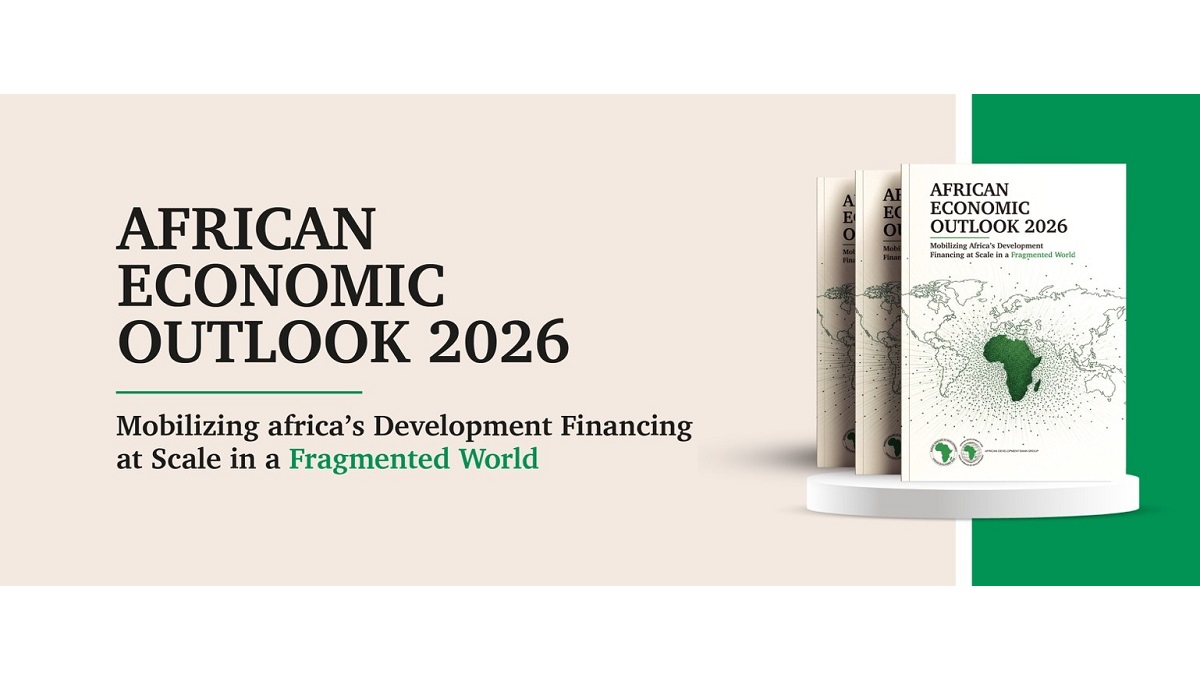
Published under the theme, Mobilizing Africa’s Development Financing at Scale in a Fragmented World, the report notes that sustaining faster, inclusive and more resilient growth would require a decisive shift towards mobilising and deploying capital at scale. This includes strengthening domestic resource mobilisation, deepening and integrating financial systems, expanding capital markets, and enhancing African agency in global finance.

Mixed Regional Outlook 

  • East Africa is expected to remain the continent’s fastest-growing region, though growth is projected to ease from 6.6 percent in 2025 to 5.9 percent in 2026, as rising energy and import costs linked to Middle East disruptions take their toll. A rebound to 6.4 percent is anticipated in 2027.
  • West Africa is forecast to remain relatively stable, with growth projected at 4.7 percent in 2026, broadly in line with the estimated 4.8 percent for 2025, supported by strong agricultural production and continued infrastructure investment.
  • North Africa is expected to grow at 4.0 percent in 2026 compared to 4.4 percent in 2025, reflecting weaker tourism demand from Gulf states, and the broader effects of global supply chain disruptions.
  • Central Africa is one of the few regions projected to see an uptick, with growth rising marginally to 3.8 percent in 2026 from 3.6 percent in 2025, buoyed by sustained high oil prices.
  • Growth in Southern Africa is expected to remain subdued at 2.1 percent in 2026, from 2.3 percent in 2025, weighed down by weaker mining and agricultural output and higher energy costs.

Downside risks to the outlook remain significant. Inflation is projected to stay elevated at 10.4 percent in 2026, posing continued challenges to macroeconomic stability and growth prospects. Persistent geopolitical tensions, alongside prolonged global supply chain and energy disruptions, could further strain fiscal and external balances through higher energy and fertilizer prices. In addition, financial market volatility and exchange rate depreciations risk amplifying debt and fiscal vulnerabilities, while rising global fragmentation may intensify pressures on external financing flows, including official development assistance.

Closing Africa’s Financing Gap  

At the heart of the 2026 AEO report is a stark assessment of Africa’s development financing shortfall: the continent faces an annual gap exceeding $1.3 trillion to meet the Sustainable Development Goals. The African Development Bank attributes the deficit to low domestic resource mobilisation, weak financial intermediation and tightening external financing conditions.

However, it argues, the issue is not only about a lack of resources but also about effectively deploying capital.

With appropriate reforms, Africa could unlock up to $1.43 trillion annually through improved revenue collection, more efficient public investment, staunching illicit financial flows and corruption, deeper capital markets, expanded public-private partnerships, diaspora financing, and better use of natural capital.

Among the key opportunities identified are an estimated $469 billion in additional annual revenues from stronger tax and non-tax mobilisation, alongside roughly $299 billion in potential savings from improved public investment efficiency. Public-private partnerships are highlighted as a powerful lever, with each additional dollar of public investment associated with approximately $1.40 in private investment.

Institutional investors, including pension funds, insurers and sovereign wealth funds, manage around $4 trillion in assets; yet less than 2.7 percent is allocated to infrastructure and productive sectors in Africa, underscoring significant untapped potential.

The report calls for accelerated efforts to strengthen Africa’s financial systems through pan-African banks, integrated capital markets, and innovative instruments such as climate and Islamic finance. A central pillar to this is the New African Financial Architecture for Development (NAFAD) (https://apo-opa.co/4uIta9c), which aims to leverage over $4 trillion in assets within Africa’s financial ecosystem.

The report also highlights the role of the African Credit Rating Agency, launched in January 2026, as an important tool for addressing perceived biases in sovereign risk assessments. While Africa’s stock market capitalisation reached $1.2 trillion in 2024 — nearly sixfold growth over two decades — activity remains concentrated in South Africa, Egypt, Nigeria, and Morocco, pointing to the need for broader market integration.

The report further underscores the importance of advancing continental initiatives, such as the African Financing Stability Mechanism (https://apo-opa.co/4nTP7iR), to ease liquidity pressures, strengthen financial stability, and help African countries manage debt refinancing risks at lower cost.

Click here (https://apo-opa.co/4uAYM06) to read the full report

Distributed by APO Group on behalf of African Development Bank Group (AfDB).

Business

Hong Kong rises to No.2 globally in competitiveness

Published

on

Hong Kong

HONG KONG SAR – Media OutReach Newswire – 18 June 2026 – Hong Kong jumped one place to become the world’s second most competitive economy, according to the 2026 World Competitiveness Ranking published today (June 18) by the Swiss-based International Institute for Management Development (IMD). It is Hong Kong’s highest ranking since 2019, and builds on three consecutive years of improvement.

Welcoming the report, a spokesperson for the Hong Kong Special Administrative Region (HKSAR) Government said, “The World Competitiveness Yearbook (WCY) 2026 reaffirms Hong Kong as one of the most competitive economies in the world, and notes that Hong Kong’s rise to second sustains the strong upward trajectory from 2024 and 2025.”
In announcing the results, the IMD noted that, amid rising geopolitical tensions, competitive advantage hinges on credible institutions, predictable rules, enforceable commitments and public trust.

According to WCY 2026, Hong Kong’s rise reflects sustained performance across the four competitiveness factors measured. Among these factors, Hong Kong ranks second in “Government efficiency” and third in “Business efficiency”. “Infrastructure” and “Economic performance” rank eighth and 11th respectively.

As regards the various competitiveness sub-factors, Hong Kong tops the rankings in “Tax policy” and “Business legislation”, ranks second in “Finance”, third in “International trade”, “International investment”, “Management practices” and “Education”, and fourth in “Public finance” and “Basic infrastructure”.

“In the competitiveness factor ‘Government efficiency’, Hong Kong continues to rank second globally, reflecting the HKSAR Government’s ongoing efforts to promote free and open, stable, predictable and business-friendly economic policies, as well as the international community’s trust in Hong Kong’s legal and regulatory environment,” the spokesperson said.

“Hong Kong’s ‘Business efficiency’ is ranked third globally, reflecting the strong support for industry development rendered by our robust financial ecosystem, as well as the seamless alignment of the city’s business practices and environment with international best standards.”

Amid rapidly evolving geopolitical dynamics, Hong Kong, with its close connectivity to both the Chinese Mainland and the world under the “one country, two systems” principle, and its sound institutions, open markets and sustained investments in innovation, has become a “value hub” that offers both security and growth opportunities.

In fact, Hong Kong continues to excel in various international rankings including those for economy, finance, and talent. The International Monetary Fund has also given positive recognition to Hong Kong in recent months, and major credit rating agencies have successively reaffirmed Hong Kong’s credit ratings and ‘stable’ outlook.

“All these echo the WCY 2026 results,” the spokesperson said.

Currently, Hong Kong is formulating at full speed its first Five-Year Plan, to proactively align with the National 15th Five-Year Plan.

“With the staunch support of our country, the HKSAR Government will work together with all sectors of society to strengthen our role and function as a ‘super connector’ and ‘super value-adder’, with a view to better integrating into and serving the overall national development, achieving our own high-quality development, creating more new room for development for our people and businesses, as well as opening up new opportunities for global investors and enterprises,” the spokesperson said.

Continue Reading

Events

2026 Hainan Cultural and Tourism Promotion Events Held in Hong Kong

Published

on

Hong Kong

HONG KONG SAR – Media OutReach Newswire – 18 June 2026 – On June 16, the 2026 Hainan Cultural and Tourism Promotion Events, under the theme of “Sunny Hainan · Heart’s Desire,” were held in Hong Kong. Leaders from Hong Kong’s cultural and tourism authorities, heads of industry associations, and representatives of key cultural and tourism enterprises from home and abroad gathered to explore new opportunities for cooperation and draw up a blueprint for the industry’s future.

Liu Xiaoming, Governor of the People’s Government of Hainan Province, and Cheuk Wing-hing, Deputy Chief Secretary for Administration of the Government of the Hong Kong Special Administrative Region, attended the events and delivered speeches. During the promotional session, Chen Tiejun, Director of the Department of Tourism, Culture, Radio, Television and Sports of Hainan Province, unveiled the “Top Ten Calling Cards of Hainan Tourism,” which received enthusiastic responses and positive feedback from various sectors in Hong Kong. Attendees from Hong Kong unanimously agreed that Hong Kong and Hainan boast highly complementary cultural and tourism resources and immense potential for cooperation.

Since the launch of special customs operations of the Hainan Free Trade Port, its distinctive opening-up advantages, such as “zero tariffs, low tax rates, a simplified tax system” and “tariff exemption for value-added processing,” have become increasingly prominent. These policies have continuously made Hainan more attractive to businesses and opened up broader opportunities for Hong Kong investors and entrepreneurs.

On the same day, at the “Invest in the Free Trade Port, Share New Opportunities” Symposium for Hong Kong Enterprises held in Hong Kong, four cooperation agreements were formally signed, covering high-end commerce, cultural and tourism integration, and regional industrial coordination. Hong Kong business representatives expressed strong interest in deepening their presence in Hainan.

Hainan and Hong Kong share a long history of cooperation, and in recent years, a steady stream of favorable policies has been introduced. Since the signing of the Hainan-Hong Kong Memorandum of Cooperation in March 2025, bilateral cooperation has accelerated across the board. In 2025, goods trade between the two sides reached RMB 9.35 billion, increasing by more than two times from 2020. A total of 793 new Hong Kong-funded enterprises were established in Hainan, a year-on-year increase of 21.5%. Hainan has also issued offshore RMB bonds in Hong Kong for four consecutive years, with a cumulative total of RMB 18 billion. Currently, an average of four direct flights operate daily between Hong Kong and Hainan, with the fastest travel time under two hours, facilitating the rapid emergence of the “Hainan-Hong Kong Living Circle.”

Continue Reading

Business

Hong Kong universities scale global heights, cementing education hub status

Published

on

Hong Kong

HONG KONG SAR – Media OutReach Newswire – 19 June 2026 – Hong Kong universities continue to excel on the international stage with five institutions ranked among the world’s top 100 and, for the first time, two in the top 20 of the 2027 World University Rankings published by Quacquarelli Symonds (QS) on June 18.

A spokesman for Hong Kong’s Education Bureau (EDB) said that with the Hong Kong Special Administrative Region (HKSAR) Government’s full commitment to developing Hong Kong into an education hub, coupled with the support of a series of policy measures, the city’s higher education system has again excelled.

Announcing the results, QS said in a press release that Hong Kong “emerges as Asia’s most improved higher education system for the second consecutive year, and the second most improved globally among systems with three or more ranked universities”.

The University of Hong Kong (HKU) maintained its position at 11th in the world; The Chinese University of Hong Kong (CUHK) rose 14 places to 18th; The Hong Kong University of Science and Technology rose 11 places to 33rd; and The Hong Kong Polytechnic University climbed four places to 50th, entering the world’s top 50 for the first time. Also among the top 100 is City University of Hong Kong, which improved 11 places to 52nd.

In the latest Best Global Universities Rankings published by the U.S. News & World Report just days ago, multiple Hong Kong universities also demonstrated exceptional international competitiveness, with 20 subjects placing in the global top 10. Notably, CUHK, HKU, and The Education University of Hong Kong swept the global top three spots for the Best Global Universities for “Education and Educational Research”, underscoring the city’s prowess in cultivating talents and conducting academic research.

“These achievements fully affirm the effectiveness of the HKSAR Government’s steadfast investment in education and its full support through the University Grants Committee (UGC) for institutions to continuously innovate, optimise, expand capacity, and enhance quality. The significant year-on-year rise in the overall rankings of our institutions further validates Hong Kong’s strong appeal as a premier hub for international high-end talent,” the EDB spokesman said.

“The stellar performance of UGC-funded universities in the international rankings is by no means accidental. On one hand, it relies on the tireless efforts of all institutions to actively recruit world-class scholars and invest in infrastructure. On the other hand, the HKSAR Government’s stable resource investment, clear and supportive policy guidance, as well as the rigorous quality assurance implemented through the University Accountability Agreements, are also of paramount importance.”

The Government will continue to promote the internationalisation and diversification of post-secondary education, which aims to not only enhance Hong Kong’s development momentum but also make proactive contributions to the nation’s development, the spokesman said.

The strength demonstrated by Hong Kong’s higher education system aligns perfectly with the strategic goals set out in the National 15th Five-Year Plan to build a leading nation in education, technology, and talent.

To support the post-secondary education sector to grow bigger and stronger, the Government has raised the admission ceiling for non-local students in taught programmes at funded post-secondary institutions to 50 per cent, and increased the over-enrolment ceiling for self-financing places in funded research postgraduate programmes to 120 per cent, among other measures.

Meanwhile, the Government is promoting the “Study in Hong Kong” brand. The Task Force on Study in Hong Kong, in collaboration with major institutions, is stepping up promotion of Hong Kong’s excellent academic, research, and international collaboration resources on the Chinese Mainland and overseas. It also aims to attract outstanding talent from all over the world through initiatives such as expanding the Belt and Road Scholarship.


Continue Reading

Trending