Connect with us
Anglostratits

Business

African Development Bank 2026 Annual Meetings: Governors Endorse the Four Cardinal Points and Call for Accelerated Reform of Africa’s Financial Architecture  

Published

on

African Development Bank

Bank Group President Ould Tah reaffirmed his ambition to make the African Development Bank a “solutions bank,” more agile, closer to people, and fully engaged in the continent’s economic transformation

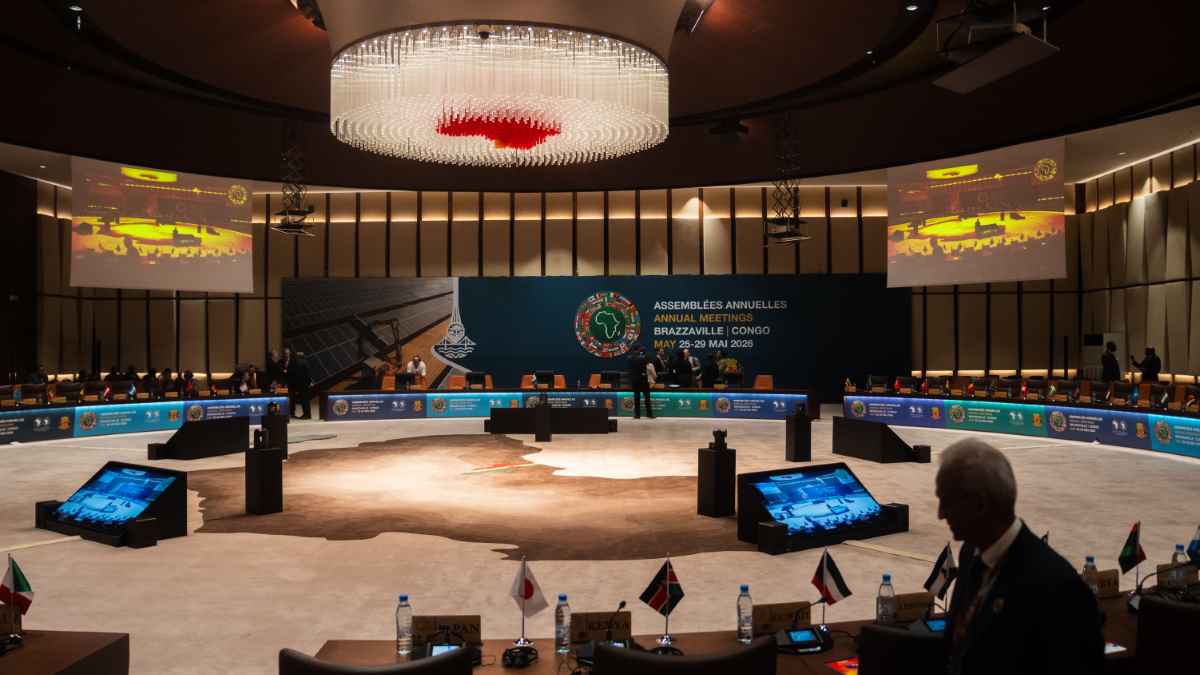
BRAZZAVILLE, Republic of the Congo, May 31, 2026/APO Group/ –The African Development Bank Group’s (www.AfDB.org) five-day Annual Meetings in Brazzaville, concluded on Friday 29 May 2026 with the Board of Governors strongly endorsing President Dr Sidi Ould Tah’s mandate to implement the Bank’s Four Cardinal Points strategic vision.


The governors called on Dr Ould Tah to accelerate the reform of Africa’s financial architecture in order to mobilize large-scale resources for Africa’s development within the framework of the New African Financial Architecture for Development (NAFAD). They also expressed their support for institutional reforms undertaken by Ould Tah to make the Bank more agile, more flexible, and closer to beneficiaries across Africa.

“The Board of Governors approved and encouraged the President of the African Development Bank Group, Dr. Sidi Ould Tah, to implement his vision, ‘the Four Cardinal Points,’ to strengthen Africa’s capacity for action and influence in an increasingly fragmented world,” said the Minister of Economy, Planning, Statistics and Forecasting of the Republic of the Congo, Ludovic Ngatsé, Chair of the Bank Group’s Boards of Governors, during the closing ceremony.

“I would like to warmly welcome the clear, frank and overwhelming support we received,” said Dr. Ould Tah during these Meetings.

In a compelling address, he recalled that it is “bold political decisions that will make the difference on the ground.” “I want to say this,” he added with the utmost clarity, “I have listened to you, and I have heard you.” The President emphasized that what was built in Brazzaville “beyond the figures” was “deeper.” “We have set in motion a dynamic of action, a dynamic of transformation, a dynamic of integration,” Ould Tah stressed.

More than 4,000 participants from over 81 countries took part in the Bank Group’s Annual Meetings, held under the theme: “Mobilizing large-scale resources for financing Africa’s development in a fragmented world.”

The Annual Meetings, the first organized under Dr. Ould Tah’s presidency since he took office on 1st  September 2025, featured a presidential panel bringing together the President of the Republic of the Congo, Denis Sassou-N’Guesso, his Central African counterpart Faustin-Archange Touadéra and Gabon’s Brice Clotaire Oligui Nguema, together with Bank President Sidi Ould Tah.

The Annual Meetings, the Bank Group’s main statutory gatherings, were also marked by several major announcements. Angola announced a contribution of €6.5 million to the 17th replenishment of the African Development Fund (ADF). This brings to 25 the number of African countries financing ADF-17, with a total exceeding USD 190 million. The unprecedented commitment of African countries to financing ADF-17 marks a turning point toward shared responsibility and reinforces African ownership within the development finance architecture and the economic future of the continent.

The Meetings were also marked by more than USD 3 billion in commitments to the Congo Basin Blue Fund (https://apo-opa.co/4nYSbKB), aimed at supporting 17 African countries in environmental conservation and sustainable development.

As from the first of January 2027, nationals of all African countries will have visa-free access and will no longer need a visa to come to Congo

Numerous agreements were signed as part of the operationalization of the Bank’s new Four Cardinal Points strategic vision, as well as during a high-level meeting on the Integrated Aviation Transformation Programme in Africa (IATP) and the African Facility for Medicines and Medical Equipment (AMEF).

Japan announced USD 10 million in funding for the implementation of AMEF.

As the Annual Meetings kicked off with the Africa Day celebrations on Monday 25 May, the President of the Republic of the Congo, Denis Sassou N’Guesso announced the abolition of visas for all African citizens.

“As from the first of January 2027, nationals of all African countries will have visa-free access and will no longer need a visa to come to Congo,” the Congolese leader said and urged countries to deepen regional integration

Welcoming the landmark decision, Bank President Ould Tah described it as “a courageous and deeply pan-African decision.”

Congolese Prime Minister Anatole Collinet Makosso hailed the fact that the Annual Meetings were held in person despite the Ebola outbreak in neighbouring Democratic Republic of Congo and Uganda a few days before the event.

A joint mobilization of the Congolese government, the World Health Organisation’s regional office which has its headquarters in Brazzaville, the Africa Centres for Disease Control and Prevention, the African Development Bank, put in place detailed safety measures to address the threat of the outbreak. To date, no Ebola case has been reported or detected in the Republic of the Congo since the outbreak was declared by the WHO on 17 May.  During his closing remarks, Minister Ngatsé, the Chairman of the Bank Group’s Boards of Governors, stated:

“For the Republic of the Congo, hosting these Meetings has been an exceptional international showcase, but above all a unique opportunity to align its national priorities with continental dynamics”.

Bank Group President Ould Tah reaffirmed his ambition to make the African Development Bank a “solutions bank,” more agile, closer to people, and fully engaged in the continent’s economic transformation.

At the press conference following the closing ceremony, Ould Tah said the African Development Bank will never be burdened by bureaucracy and will remain firmly connected to the field. “There is no risk of disconnect from the field,” stressing that the Bank will work with national banks and regional banks to provide support to Small and Medium Enterprises, youth, and women.

The Bank Group president emphasized that Africa must mobilize more domestic resources, guard against fragmentation, and transform its raw materials in order to create value, growth, and above all jobs for African youth and women.

President Ould Tah also paid tribute to civil society organisation, philanthropists, and the African diaspora. “Your role is irreplaceable,” he acknowledged, “The Bank will be your leading partner,” Ould Tah assured.

Distributed by APO Group on behalf of African Development Bank Group (AfDB).

Business

Hong Kong rises to No.2 globally in competitiveness

Published

on

Hong Kong

HONG KONG SAR – Media OutReach Newswire – 18 June 2026 – Hong Kong jumped one place to become the world’s second most competitive economy, according to the 2026 World Competitiveness Ranking published today (June 18) by the Swiss-based International Institute for Management Development (IMD). It is Hong Kong’s highest ranking since 2019, and builds on three consecutive years of improvement.

Welcoming the report, a spokesperson for the Hong Kong Special Administrative Region (HKSAR) Government said, “The World Competitiveness Yearbook (WCY) 2026 reaffirms Hong Kong as one of the most competitive economies in the world, and notes that Hong Kong’s rise to second sustains the strong upward trajectory from 2024 and 2025.”
In announcing the results, the IMD noted that, amid rising geopolitical tensions, competitive advantage hinges on credible institutions, predictable rules, enforceable commitments and public trust.

According to WCY 2026, Hong Kong’s rise reflects sustained performance across the four competitiveness factors measured. Among these factors, Hong Kong ranks second in “Government efficiency” and third in “Business efficiency”. “Infrastructure” and “Economic performance” rank eighth and 11th respectively.

As regards the various competitiveness sub-factors, Hong Kong tops the rankings in “Tax policy” and “Business legislation”, ranks second in “Finance”, third in “International trade”, “International investment”, “Management practices” and “Education”, and fourth in “Public finance” and “Basic infrastructure”.

“In the competitiveness factor ‘Government efficiency’, Hong Kong continues to rank second globally, reflecting the HKSAR Government’s ongoing efforts to promote free and open, stable, predictable and business-friendly economic policies, as well as the international community’s trust in Hong Kong’s legal and regulatory environment,” the spokesperson said.

“Hong Kong’s ‘Business efficiency’ is ranked third globally, reflecting the strong support for industry development rendered by our robust financial ecosystem, as well as the seamless alignment of the city’s business practices and environment with international best standards.”

Amid rapidly evolving geopolitical dynamics, Hong Kong, with its close connectivity to both the Chinese Mainland and the world under the “one country, two systems” principle, and its sound institutions, open markets and sustained investments in innovation, has become a “value hub” that offers both security and growth opportunities.

In fact, Hong Kong continues to excel in various international rankings including those for economy, finance, and talent. The International Monetary Fund has also given positive recognition to Hong Kong in recent months, and major credit rating agencies have successively reaffirmed Hong Kong’s credit ratings and ‘stable’ outlook.

“All these echo the WCY 2026 results,” the spokesperson said.

Currently, Hong Kong is formulating at full speed its first Five-Year Plan, to proactively align with the National 15th Five-Year Plan.

“With the staunch support of our country, the HKSAR Government will work together with all sectors of society to strengthen our role and function as a ‘super connector’ and ‘super value-adder’, with a view to better integrating into and serving the overall national development, achieving our own high-quality development, creating more new room for development for our people and businesses, as well as opening up new opportunities for global investors and enterprises,” the spokesperson said.

Continue Reading

Events

2026 Hainan Cultural and Tourism Promotion Events Held in Hong Kong

Published

on

Hong Kong

HONG KONG SAR – Media OutReach Newswire – 18 June 2026 – On June 16, the 2026 Hainan Cultural and Tourism Promotion Events, under the theme of “Sunny Hainan · Heart’s Desire,” were held in Hong Kong. Leaders from Hong Kong’s cultural and tourism authorities, heads of industry associations, and representatives of key cultural and tourism enterprises from home and abroad gathered to explore new opportunities for cooperation and draw up a blueprint for the industry’s future.

Liu Xiaoming, Governor of the People’s Government of Hainan Province, and Cheuk Wing-hing, Deputy Chief Secretary for Administration of the Government of the Hong Kong Special Administrative Region, attended the events and delivered speeches. During the promotional session, Chen Tiejun, Director of the Department of Tourism, Culture, Radio, Television and Sports of Hainan Province, unveiled the “Top Ten Calling Cards of Hainan Tourism,” which received enthusiastic responses and positive feedback from various sectors in Hong Kong. Attendees from Hong Kong unanimously agreed that Hong Kong and Hainan boast highly complementary cultural and tourism resources and immense potential for cooperation.

Since the launch of special customs operations of the Hainan Free Trade Port, its distinctive opening-up advantages, such as “zero tariffs, low tax rates, a simplified tax system” and “tariff exemption for value-added processing,” have become increasingly prominent. These policies have continuously made Hainan more attractive to businesses and opened up broader opportunities for Hong Kong investors and entrepreneurs.

On the same day, at the “Invest in the Free Trade Port, Share New Opportunities” Symposium for Hong Kong Enterprises held in Hong Kong, four cooperation agreements were formally signed, covering high-end commerce, cultural and tourism integration, and regional industrial coordination. Hong Kong business representatives expressed strong interest in deepening their presence in Hainan.

Hainan and Hong Kong share a long history of cooperation, and in recent years, a steady stream of favorable policies has been introduced. Since the signing of the Hainan-Hong Kong Memorandum of Cooperation in March 2025, bilateral cooperation has accelerated across the board. In 2025, goods trade between the two sides reached RMB 9.35 billion, increasing by more than two times from 2020. A total of 793 new Hong Kong-funded enterprises were established in Hainan, a year-on-year increase of 21.5%. Hainan has also issued offshore RMB bonds in Hong Kong for four consecutive years, with a cumulative total of RMB 18 billion. Currently, an average of four direct flights operate daily between Hong Kong and Hainan, with the fastest travel time under two hours, facilitating the rapid emergence of the “Hainan-Hong Kong Living Circle.”

Continue Reading

Business

Hong Kong universities scale global heights, cementing education hub status

Published

on

Hong Kong

HONG KONG SAR – Media OutReach Newswire – 19 June 2026 – Hong Kong universities continue to excel on the international stage with five institutions ranked among the world’s top 100 and, for the first time, two in the top 20 of the 2027 World University Rankings published by Quacquarelli Symonds (QS) on June 18.

A spokesman for Hong Kong’s Education Bureau (EDB) said that with the Hong Kong Special Administrative Region (HKSAR) Government’s full commitment to developing Hong Kong into an education hub, coupled with the support of a series of policy measures, the city’s higher education system has again excelled.

Announcing the results, QS said in a press release that Hong Kong “emerges as Asia’s most improved higher education system for the second consecutive year, and the second most improved globally among systems with three or more ranked universities”.

The University of Hong Kong (HKU) maintained its position at 11th in the world; The Chinese University of Hong Kong (CUHK) rose 14 places to 18th; The Hong Kong University of Science and Technology rose 11 places to 33rd; and The Hong Kong Polytechnic University climbed four places to 50th, entering the world’s top 50 for the first time. Also among the top 100 is City University of Hong Kong, which improved 11 places to 52nd.

In the latest Best Global Universities Rankings published by the U.S. News & World Report just days ago, multiple Hong Kong universities also demonstrated exceptional international competitiveness, with 20 subjects placing in the global top 10. Notably, CUHK, HKU, and The Education University of Hong Kong swept the global top three spots for the Best Global Universities for “Education and Educational Research”, underscoring the city’s prowess in cultivating talents and conducting academic research.

“These achievements fully affirm the effectiveness of the HKSAR Government’s steadfast investment in education and its full support through the University Grants Committee (UGC) for institutions to continuously innovate, optimise, expand capacity, and enhance quality. The significant year-on-year rise in the overall rankings of our institutions further validates Hong Kong’s strong appeal as a premier hub for international high-end talent,” the EDB spokesman said.

“The stellar performance of UGC-funded universities in the international rankings is by no means accidental. On one hand, it relies on the tireless efforts of all institutions to actively recruit world-class scholars and invest in infrastructure. On the other hand, the HKSAR Government’s stable resource investment, clear and supportive policy guidance, as well as the rigorous quality assurance implemented through the University Accountability Agreements, are also of paramount importance.”

The Government will continue to promote the internationalisation and diversification of post-secondary education, which aims to not only enhance Hong Kong’s development momentum but also make proactive contributions to the nation’s development, the spokesman said.

The strength demonstrated by Hong Kong’s higher education system aligns perfectly with the strategic goals set out in the National 15th Five-Year Plan to build a leading nation in education, technology, and talent.

To support the post-secondary education sector to grow bigger and stronger, the Government has raised the admission ceiling for non-local students in taught programmes at funded post-secondary institutions to 50 per cent, and increased the over-enrolment ceiling for self-financing places in funded research postgraduate programmes to 120 per cent, among other measures.

Meanwhile, the Government is promoting the “Study in Hong Kong” brand. The Task Force on Study in Hong Kong, in collaboration with major institutions, is stepping up promotion of Hong Kong’s excellent academic, research, and international collaboration resources on the Chinese Mainland and overseas. It also aims to attract outstanding talent from all over the world through initiatives such as expanding the Belt and Road Scholarship.


Continue Reading

Trending