Connect with us
Anglostratits

Tech

Canon Central and North Africa Partners with Makerere University to Shape the Next Generation of Creatives

Published

on

Canon

Canon Academy Photo & Video workshops, journalism training, and virtual film school access to empower youth and strengthen creative education in Uganda

KAMPALA, Uganda, May 21, 2026/APO Group/ —

  • Practical training in photography, filmmaking, and journalism
  • Access to Canon’s interactive virtual film school for aspiring storytellers 

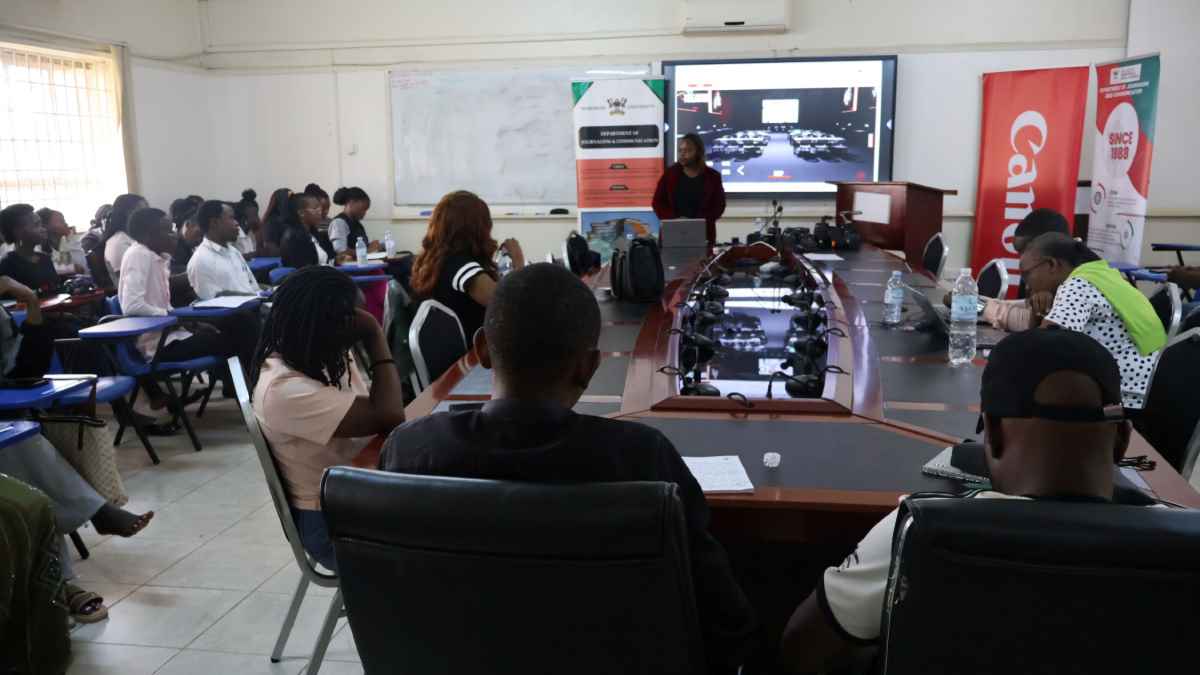
Canon Central and North Africa (CCNA) (www.Canon-CNA.com) has partnered with Makerere University in Uganda to deliver Canon Academy Photo & Video programmes, providing students with hands-on training in photography, filmmaking, and journalism.  The initiative will provide hands-on training in photography, filmmaking, and journalism, while giving students access to Canon Academy Video, Canon’s virtual film school.  The collaboration underscores Canon’s continued commitment to youth empowerment, creative education, and strengthening Africa’s visual storytelling industry as CCNA approaches its 10-year milestone in 2026.

Inspiring Tomorrow’s Storytellers

Rashad Ghani, B2C Business Unit Director, Canon Central and North Africa, said, “We’re proud to celebrate ten years of CCNA by investing in the next generation of creatives. Our partnership with Makerere University enables us to share Canon Academy’s resources with aspiring storytellers, helping them build the technical and creative skills needed to shape Africa’s visual narrative. By offering access to training, mentorship, and learning platforms, we’re supporting students on their journey into photography, filmmaking, journalism, and digital content creation.”

Our partnership with Makerere University enables us to share Canon Academy’s resources with aspiring storytellers, helping them build the technical and creative skills

Strengthening Educational Ties

The collaboration builds on Canon’s established relationship with Makerere University, where Canon has previously hosted training weeks and workshops. Makerere University, founded in 1922, has grown into one of Africa’s most prestigious institutions of higher learning, with a long tradition of excellence in journalism, media, and communication studies. By integrating Canon Academy workshops into the university’s curriculum, the initiative combines academic learning with practical, industry-focused training, helping prepare students for careers in Africa’s rapidly growing creative sector.

Overview of Workshops and Training

Students and local professionals can expect a diverse range of workshops and training sessions, including:

  • Dedicated Media Workshop: Local journalists and media professionals will join sessions led by Canon trainer Elayne Okaya, exploring Canon’s photo and video ecosystem and gaining hands-on experience with cutting-edge technology.
  • Canon Camera Innovation Workshop: Students will immerse themselves in Canon’s imaging tools, guided by Canon trainer Elayne Okaya, with insights into the latest products for content creation and practical demonstrations.
  • Journalism Workshops: Two sessions will focus on visual storytelling, ethics, and best practices in modern reporting, helping students strengthen their skills with Canon technology guided by certified trainer Miriam Watsemba.
  • Canon Academy Video Platform: Canon Educational Programmes Manager Katie Simmonds will introduce students to the virtual film school, guiding them through structured online learning and certification opportunities.
  • Basic Filmmaking Workshop: A three-day course led by Elayne Okaya will cover filmmaking fundamentals, including camera movement, scene structure, and production techniques, with access to Canon equipment for hands-on practice.

Supporting Africa’s Creative Economy

As Africa’s creative economy continues to expand, there is a growing need for practical training that equips young people with the skills required for careers in filmmaking, journalism, and digital content creation. By combining technical expertise with hands-on experience, initiatives like this help students build the confidence needed to succeed in a fast-evolving creative landscape. Dr Nakiwala Aisha Sembatya, the Chair department of Journalism and Communication noted that, “This collaboration gives our students direct access to industry expertise and practical experience in photography, filmmaking, and journalism. Canon’s training platforms will enhance our academic programmes and prepare students for careers in the media and creative sectors.”

Canon Miraisha and Long-Term Commitment

The partnership with Makerere University forms part of Canon’s broader Miraisha Programme and education-led ecosystem across Africa. By working with universities, training institutions, and creative communities, Canon supports young people in building careers in visual storytelling and digital content creation. As CCNA marks a decade of operations in Africa, the company continues to invest in initiatives that expand access to skills, nurture creative talent, and strengthen Africa’s future creative industries reflecting Canon’s Kyosei philosophy of living and working together for the common good.

Distributed by APO Group on behalf of Canon Central and North Africa (CCNA).

Business

African Organisations Move from Awareness to Action as IT Asset Visibility Becomes a Board-Level Priority

Published

on

IT

Following widespread recognition of the IT asset visibility gap across the continent, V-Track reports a significant shift in organisational behaviour as finance and IT leaders move beyond acknowledgement toward structured, technology-driven control

Across African markets, a shift is underway in how organisations approach IT asset management. Having acknowledged the scale of the visibility gap – the growing disconnect between what appears on balance sheets and what can be verified in the real world – finance and IT teams are now moving to close it. The conversation, once dominated by problem definition, is rapidly becoming one of implementation.


This shift follows a period of heightened scrutiny in which organisations have begun to quantify the financial impact of poor asset visibility: avoidable procurement spend on devices that already exist in their estates, capital tied up in assets that are no longer in productive use, audit exposure from inaccurate registers, and security risk created by devices that have drifted off the network without formal decommissioning.

“We are seeing a clear change in the nature of the conversations organisations are having with us,” said Valene Nagiah, Head of Asset Tracking and Management at V-Track. “Twelve months ago, the primary question was: do we have a problem? Now, the question is: how do we fix it  and how quickly can we demonstrate a return? That is a meaningful shift, and it reflects a broader maturation in how African businesses think about IT governance.”

From static registers to continuous control

For many organisations, the first step in closing the visibility gap has been confronting the inadequacy of existing systems. Periodic manual audits and static spreadsheet-based asset registers are the default approach across much of the continent and are increasingly being recognised for what they are: point-in-time snapshots that begin losing accuracy the moment they are completed.

In environments where assets move constantly between offices, remote locations, field teams, and employees who may work across multiple sites,  a register that is accurate today may be significantly out of date within weeks. The challenge is not simply one of data quality; it is structural. Manual processes cannot keep pace with the operational reality of a distributed, mobile workforce.

“The organisations making the most progress are those that have stopped treating asset management as an audit exercise and started treating it as a continuous function,” said Nagiah. “Visibility is not something you achieve once a year. It is something you maintain every day and that requires infrastructure, not just process.”

The hybrid workforce as a forcing function

The permanent entrenchment of hybrid and distributed working across African markets has proven to be a significant forcing function for ITAM investment. As organisations formalised remote and flexible work arrangements, the practical consequences of asset invisibility became harder to ignore. Devices issued to home-based employees, contractors, and field staff could no longer be assumed to be present, functional, or secure, and without tracking infrastructure, verifying their status required manual intervention that was neither scalable nor reliable.

The organisations making the most progress are those that have stopped treating asset management as an audit exercise and started treating it as a continuous function

In markets characterised by infrastructure variability, including intermittent power supply, inconsistent connectivity, and high rates of staff movement between employers, these challenges are amplified. A device that was verified last quarter may have changed location, changed hands, or gone offline entirely in the intervening period. Without continuous monitoring, the organisation simply does not know.

For leased IT environments, this dynamic carries additional financial weight. Devices that cannot be accounted for at the end of a lease agreement represent a direct liability, replacement costs that fall to the organisation, compounded by the administrative burden of attempting to recover assets after the fact. Proactive tracking eliminates this exposure before it materialises.

What effective implementation looks like

Organisations that have made meaningful progress on IT asset visibility share a common set of characteristics. They have moved away from treating ITAM as a back-office IT function and repositioned it as a financial control mechanism with direct implications for procurement strategy, capital allocation, and audit readiness. They have invested in platforms that provide continuous, real-time data rather than periodic snapshots. And they have created clear ownership of asset data at both the IT and finance level, recognising that the two functions need to operate from the same source of truth.

The practical benefits of this approach are demonstrable across four areas:

  • Financial accuracy: asset registers that reflect operational reality, enabling more precise depreciation, budgeting, and capital planning.
  • Procurement efficiency: elimination of duplicate or unnecessary purchases driven by inaccurate inventory data.
  • Security and compliance: continuous visibility into device status reduces the attack surface created by unmonitored endpoints and strengthens regulatory compliance.
  • Lease and lifecycle management: accurate, real-time asset data enables organisations to optimise lease terms, plan timely returns, and maximise residual value.


“The organisations that are getting this right are not necessarily those with the largest IT budgets,” Nagiah noted. “They are the ones that have made a deliberate decision to treat their asset estate as a managed financial resource and have put the systems in place to support that decision. The technology to do this exists, and it is accessible. The gap is no longer a technology gap. It is a decision gap.”

A platform built for African operating conditions

V-Track’s asset intelligence platform is designed to function effectively within the operational constraints that characterise many African business environments. The platform requires no on-premises infrastructure, operates across distributed and multi-jurisdiction environments, and provides finance and IT teams with a unified view of their asset estate regardless of where those assets are physically located.

Organisations yet to begin their asset visibility journey are encouraged to start with V-Track’s 15-day free trial (https://apo-opa.co/4ehmGXN) – a structured visibility audit that typically surfaces actionable findings within the first week. No procurement process, no long-form commitment, and no prior ITAM infrastructure required.

“The most common thing we hear after the trial is: we had no idea,” said Nagiah. “That is exactly the point. The trial does not sell a product – it reveals a reality. What organisations choose to do with that clarity is their decision. But they can no longer say they did not know.”

Distributed by APO Group on behalf of V-Track.


Continue Reading

Business

Nigeria’s Population Boom is Changing the Data Center Investment Story

Published

on

African Energy Chamber

Investors backing Nigeria’s fast-growing data center sector are betting not just on today’s demand, but on the emergence of one of the world’s largest digital economies over the next three decades

CAPE TOWN, South Africa, June 3, 2026/APO Group/ –Nigeria’s data center expansion is increasingly being framed as a technology story. But at its core, it is a demographics story. Africa’s largest economy is already home to more than 240 million people, and U.N. projections indicate the country could surpass 400 million by 2050, making it the world’s third most populous nation after India and China.


What makes that trajectory especially significant for investors is not just population size, but the age and digital profile of that population. Nigeria remains one of the youngest countries globally, with a median age of around 18, while internet penetration has surpassed 50%, creating a rapidly expanding base of mobile-first consumers entering the digital economy each year.


This dynamic is fundamentally reshaping the long-term case for digital infrastructure investment. Investors are positioning for what Nigeria could become over the next two decades: one of the world’s largest digital populations, with rising demand for cloud computing, AI-enabled services, fintech platforms, streaming content, enterprise software and sovereign data storage.

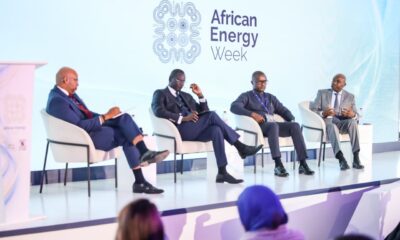
This shift is already shaping how the industry is thinking about digital infrastructure across the continent. At African Energy Week 2026 – the continent’s premier energy event – the introduction of an AI and Data Center track – Renegade Intel – reflects growing recognition that data infrastructure is becoming as critical as energy infrastructure to Africa’s economic future. In markets like Nigeria, where population growth is rapidly translating into digital demand, that intersection is now central to long-term investment planning.

Nigeria’s data center market, valued at roughly $288 million in 2025, is projected to surpass $1 billion by 2031, with operators rapidly expanding colocation and cloud capacity in Lagos and other urban hubs. Major players including Equinix, MTN, Rack Center and Open Access Data Centers are scaling infrastructure to capture what they see as long-term structural growth rather than a short-term market cycle.

In 2025, MTN announced a more than $240 million investment into a new Lagos data facility designed to support AI and cloud demand, underscoring how operators are preparing for far larger digital workloads in the years ahead. Recent reports suggest nearly $1 billion in broader data center investments flowing into Nigeria as companies race to expand cloud and AI infrastructure capacity.


Data centers are becoming critical infrastructure for Africa’s economic future, but none of this growth happens without energy

Much of that optimism rests on the belief that Nigeria’s digital consumption curve is still in its early stages. Fintech adoption continues to accelerate across the country, streaming platforms are expanding local content distribution, and enterprise cloud migration remains relatively underpenetrated compared to more mature markets. At the same time, artificial intelligence is expected to dramatically increase computing and storage requirements globally, creating additional incentives to localize infrastructure closer to end users.


For Nigeria, data localization and sovereign storage are becoming increasingly strategic as governments and businesses seek greater control over where critical information is processed and stored. Building data centers locally is now seen as essential for data control, security and long-term economic growth.


Still, the opportunity comes with its challenges. Reliable electricity supply remains one of the biggest constraints on large-scale data center expansion in Nigeria, where operators often rely heavily on backup generation and hybrid power systems. Connectivity improvements, regulatory clarity and long-term energy availability will all play a critical role in determining how quickly infrastructure deployment can scale.


“Data centers are becoming critical infrastructure for Africa’s economic future, but none of this growth happens without energy,” says NJ Ayuk, Executive Chairman of the African Energy Chamber. “Countries like Nigeria are seeing rising demand because of demographics, connectivity and digital adoption, but investors also need confidence that long-term power supply can support that expansion.”


Nigeria’s population growth alone does not guarantee digital infrastructure success. But when combined with rising internet penetration, fintech adoption, cloud usage and AI-driven computing demand, it creates a scale opportunity few emerging markets can match. Investors are looking beyond today’s market to the scale Nigeria’s digital economy could reach.

Distributed by APO Group on behalf of African Energy Chamber.

Continue Reading

Business

ThinkMarkets launches ChelseaAI, bringing live CFD trading into Artificial Intelligence (AI) assistants

Published

on

ThinkMarkets

Traders can check positions, place orders and manage risk through a conversation with Claude or any other MCP-compatible AI assistant, without leaving the tools they already use

LONDON, United Kingdom, June 2, 2026/APO Group/ –ThinkMarkets (www.ThinkMarkets.com) today launches ChelseaAI, a product that connects a live ThinkTrader account directly to an AI assistant. Ask your AI to check your positions, place a trade, analyze current market conditions, or move a stop-loss. It does it. No separate login. No switching apps.

ChelseaAI works through the Model Context Protocol (MCP), an open standard that lets AI assistants connect securely to external services. It works with any MCP-supported assistant. ThinkMarkets recommends Claude, developed by Anthropic, but traders can connect via other popular platforms, such as Grok and ChatGPT.

ChelseaAI is an interface, not an adviser. It executes what the trader instructs. It does not provide recommendations, signals, or investment advice of any kind. The world of trading is evolving from the user interface and charting libraries; the agentic trading revolution will allow users to move beyond interfaces and focus on the underlying product offering.

Control and security

We put a lot of work into the permission model and the funds boundary, not because we had to, but because a product like this only works if people genuinely trust it

Clients choose their permission level before connecting. Read-only gives the AI access to market data, positions, balances, and trading history. Full access adds the ability to place, modify, and close orders. Either level can be changed or revoked instantly from within ThinkTrader.

One limit holds regardless of permission level: ChelseaAI has no access to funds. Deposits, withdrawals, and transfers are excluded from the integration entirely, by design. Every action is recorded in an in-platform audit log that the AI cannot read or alter. Sessions expire after seven days or 24 hours of inactivity.

Quotes

“Our clients are already running AI assistants as part of how they trade. ChelseaAI means their ThinkMarkets account is in that conversation too. We put a lot of work into the permission model and the funds boundary, not because we had to, but because a product like this only works if people genuinely trust it.”

— Nauman Anees, Co-Founder and CEO, ThinkMarkets

Availability

ChelseaAI is available to ThinkTrader account holders from 2nd June 2026 via ThinkTrader (https://apo-opa.co/4dYrSQ7), with support for both live and demo accounts. Available exclusively on ThinkTrader. The integration covers 26 tools across market data, position management, order execution, and account information. Setup takes under two minutes. Full documentation is at www.ThinkMarkets.com.

Distributed by APO Group on behalf of ThinkMarkets.


Continue Reading

Trending