Connect with us
Anglostratits

Business

In Mékro, in central Côte d’Ivoire, sustainable agriculture is giving hope to an entire community

Published

on

agriculture

The project is focused on three agricultural crops: yams, cassava and vegetables, as well as traditional poultry farming, and aims to improve the living conditions of 60,000 vulnerable people

ABIDJAN, Ivory Coast, July 21, 2025/APO Group/ –Day breaks in Mékro, some 300 km from Abidjan, in central Côte d’Ivoire. The first rays of sun announce the start of what promises to be another sweltering day in a region known for its intense heat. Some women return from the backwaters bringing water to supply the family beehives. Others, armed with brooms made from palm leaves, begin sweeping the compounds, clearing away fallen leaves and scraps from the previous day’s meals.


A little farther off, domestic animals gradually emerge from their pens, joining the morning hustle and bustle that breathes life back into Mékro’s daily routine. In this area of high food crop production, yams, rice and cassava are produced in abundance. Yet despite its agricultural riches, Mékro has long remained in the shadows, unlike other places.

For years, farmers here relied on age-old techniques passed down through generations—methods that limited yields and left the population in a state of chronic vulnerability.

That morning, Koffi Kouakou Charles, known as “KKC,” sharpened his machete, the basic tool he uses to clear his field, under the watchful eyes of his seven children. At 30 years old, he mounted his bicycle and headed to Abokouassikro, five km away, where he has cultivated yams for several years.

In the past, Koffi grew “Kouba” yams, a popular local variety. Reflecting on those days, he recalls how traditional farming techniques learned and passed down from his ancestors, failed to reward his hard work. “Frankly, the work was exhausting. On top of that, we were using old-fashioned techniques. Despite our efforts, the harvests were poor. It was really hard,” sighs Koffi.

Hope restored

In the first half of 2024, his plight worsened when an epidemic known as the peste des petits ruminants (PPR) struck the village and wiped out his hens and goats. Hurting from this new financial blow, Koffi turned to the Project to Improve the Livelihoods of Smallholders and Women (PREMOPEF) (https://apo-opa.co/40ujK40) to regain hope.

Set up by the government of Côte d’Ivoire, the project is funded by the Global Agriculture and Food Security Program (GAFSP) (https://apo-opa.co/4lEIa36) and the African Development Fund (https://apo-opa.co/4o1986y), the concessional financing window of the African Development Bank Group. Its objective is to contribute to improving first, food and nutrition security and secondly, resilience to the effects of climate change among smallholder farmers, women and young people in the N’Zi region.

By applying innovative approaches, we’re putting agriculture at the center of inclusive development

The project is focused on three agricultural crops: yams, cassava and vegetables, as well as traditional poultry farming, and aims to improve the living conditions of 60,000 vulnerable people, 50 percent of whom are women and 35 percent young people.

At the “Farmer Training Field,” one of the project’s initiatives, Koffi and his fellow project beneficiaries were introduced to agroecological techniques for yam production and conservation. Thanks to the training, Koffi has turned his back on “Kouba” yams and old production practices in favour of new varieties called “Anader” and “Cameroun” (also known as “R3” and “C15”), which are more climate-resistant and productive.

A twofold increase in yield

From his first harvest in December 2024, Koffi’s yam yield doubled—from two to four tonnes on the same plot of land. Thinking ahead, he reserved three-quarters of the harvest for his family’s consumption and seed stock for the next season. The remaining quarter was sold at the local market in Mékro, earning him 125,000 CFA francs (around USD 250)—a significant windfall in this rural region.

“Before, I was just focused on surviving,” Koffi says. “Today, thanks to this project, I can think about my children’s future and even expand my farm.” Energized by his progress, Koffi is now determined to scale up and become one of the region’s leading yam producers. The prospect of mechanizing his work excites him. “I’m thinking of buying a ridging machine and a seed drill to make fieldwork easier and increase my yield,” he says confidently.

“The Project to Improve the Livelihoods of Smallholders and Women is a powerful tool for reducing household vulnerability and strengthening resilience to economic and environmental shocks,” says Ceserd Waba Akpaud, the project coordinator.

“PREMOPEF reflects our commitment to transforming rural communities through sustainable, farmer-focused solutions. By applying innovative approaches, we’re putting agriculture at the center of inclusive development,” adds Philip Boahen, GAFSP project coordinator at the African Development Bank.

To further boost his productivity, Koffi also envisions large-scale storage facilities to cut post-harvest losses. He’s planning to diversify his activities too. After losing his livestock to PPR—a disease he attributes to a lack of proper training—he intends to relaunch his poultry business using improved, safer methods. He is now exploring livestock training courses to build the necessary skills.

“It’s also a chance for me to make up for the schooling I missed,” he says, determined to turn past setbacks into opportunities.

With the knowledge he’s gained and the positive impact of the project, a new horizon is opening—not just for Koffi, but for the people of Mékro and the broader economy of the N’Zi region.

Distributed by APO Group on behalf of African Development Bank Group (AfDB).

Home  Facebook

Business

SLB commissions new fluids systems plant in Pemba to support Mozambique’s offshore energy development

Published

on

Mozambique

New facility expands in-country drilling and completion fluids capability, advancing the next phase of SLB’s growth in Mozambique

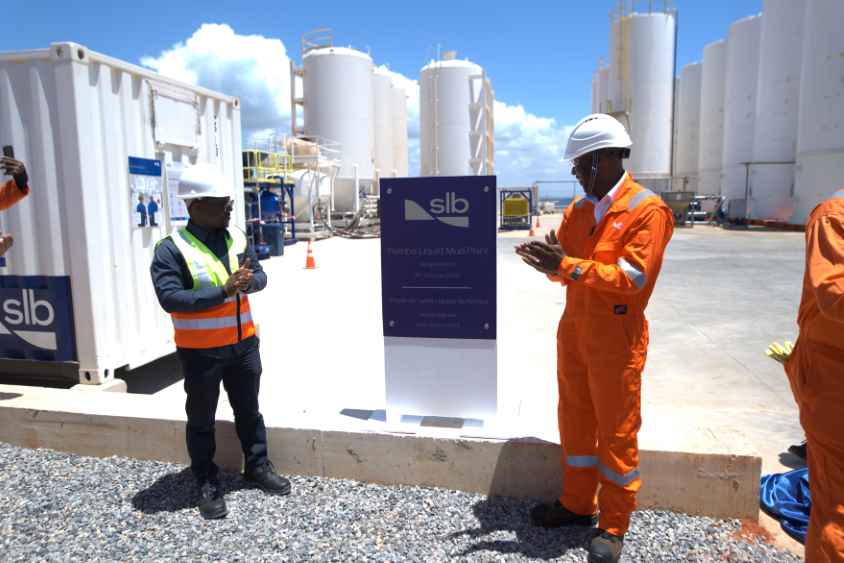
PEMBA, Mozambique, October 9, 2026/APO Group/ –SLB (NYSE: SLB) (www.SLB.com) announced the opening of a new fluids systems plant in Pemba, Mozambique. The new facility strengthens in-country capacity to prepare, store and deliver drilling and completion fluids for offshore operations, reinforcing the infrastructure needed as Mozambique’s offshore activity grows and its role as a strategic energy hub for East Africa continues to expand.

The commissioning of the plant, also known as a liquid mud plant, coincides with SLB marking 70 years of operations in Mozambique. It reflects the company’s long-term commitment to investing in people, infrastructure and capability that support the country’s long-term offshore energy development plans.


With an initial storage capacity of 21,000 barrels, the liquid mud plant provides a scalable platform for future growth, supporting multiple customers and rising offshore activity while improving logistics and enhancing operational flexibility.

As SLB marks 70 years in Mozambique, this investment reflects our confidence in the country’s future and our commitment to supporting its energy ambitions

“As SLB marks 70 years in Mozambique, this investment reflects our confidence in the country’s future and our commitment to supporting its energy ambitions,” said Miguel Baptista, Central, East and Southern Africa, Managing Director, SLB. The new liquid mud plant strengthens local energy infrastructure, expands opportunities for local content development, and enhances our ability to support customers as they deliver some of Africa’s most significant offshore energy resources.”

The liquid mud plant project was delivered with strong local participation and that momentum is expected to continue into operations. During project delivery, more than 100 jobs were created in Pemba with nationals representing 80% of the workforce, reflecting a focus on building local capability.

The project was delivered with a strong focus on safety, operational integrity, and quality, achieving more than 67,000 hours worked without a recordable safety incident.

This key infrastructure strengthens SLB’s ability to support consistent service quality and enhance supply chain readiness for increasing offshore activity across Mozambique, supporting customers execute safely and efficiently while developing local skills and expertise.

Key Points:

  • SLB has commissioned a new fluids system plant in Pemba, expanding in-country drilling and completion fluids capability for offshore operations.
  • With an initial storage capacity of 21,000 barrels, the facility provides a scalable platform to support growing offshore activity in Mozambique.
  • The investment marks the next phase of SLB’s growth in Mozambique, strengthening local capability and supporting long-term offshore energy development.

Distributed by APO Group on behalf of SLB.


Continue Reading

Business

South African Energy Storage Association (SAESA) welcomes 4,600 MW battery storage prioritisation and calls for integrated energy planning

Published

on

Battery energy storage systems (BESS) are becoming critical system infrastructure, supporting flexibility, reducing avoidable curtailment, shifting energy into periods of demand and strengthening security of supply

JOHANNESBURG, South Africa, October 9, 2026/APO Group/ –The South African Energy Storage Association (SAESA) (www.SAESA.org.za) welcomes the prioritisation of 4,600 MW of battery energy storage under the first Integrated Resource Plan (IRP) 2025 Section 34 determination.


The timing is significant. Recent Integrated Energy Plan (IEP) modelling and assumptions discussions highlighted a fundamental shift that South Africa’s energy planning now needs to capture: we cannot plan the future power system by counting megawatts of generation alone.

We must plan for when energy is available, where it is available, how it moves through a constrained grid and how it is stored and dispatched when the system needs it most.

The announcement reinforces that shift. Battery energy storage systems (BESS) are becoming critical system infrastructure, supporting flexibility, reducing avoidable curtailment, shifting energy into periods of demand and strengthening security of supply.

For SAESA, the message for the IEP is clear: storage, flexibility and system services must be modelled as integral components of South Africa’s future electricity architecture, with their contribution considered from the outset of generation planning.

“The IEP must plan the power system we are becoming, not simply model the power system we have inherited,” says SAESA.

The IEP must plan the power system we are becoming, not simply model the power system we have inherited

Partnership with C&I Energy + Storage Summit

SAESA is an association partner of the C&I Energy + Storage Summit, created by VUKA Group, taking place on 28–29 October 2026 at The Maslow Hotel, Sandton, Johannesburg.

The summit brings together commercial and industrial energy users, project developers, financiers, regulators and solution providers to explore practical approaches to energy security, procurement and storage deployment.

For businesses assessing how storage can support their operations, the event offers an opportunity to meet SAESA and engage with the wider energy community on the decisions shaping South Africa’s evolving electricity system.

Commercial and industrial energy decision-makers are invited to apply to attend as hosted buyers. Qualifying buyers receive complimentary summit access and curated opportunities to engage with industry partners.


Meet SAESA at C&I Energy + Storage Summit: Join the Hosted Buyer Programme

The Hosted Buyer Programme connects commercial and industrial energy decision-makers with solution providers shaping South Africa’s evolving private energy market.

Qualified energy buyers receive complimentary access to the summit and curated engagement with industry partners exploring energy procurement, storage deployment and project development.

Apply for the Hosted Buyer Programme (https://apo-opa.co/4ehLijJ)

Distributed by APO Group on behalf of VUKA Group.


Continue Reading

Business

Afreximbank welcomes launch of Africa Credit Rating Agency as an important step in strengthening Africa’s financial architecture

Published

on

Expanding credible rating coverage can improve the information available to investors and support the development of deeper domestic and regional capital markets

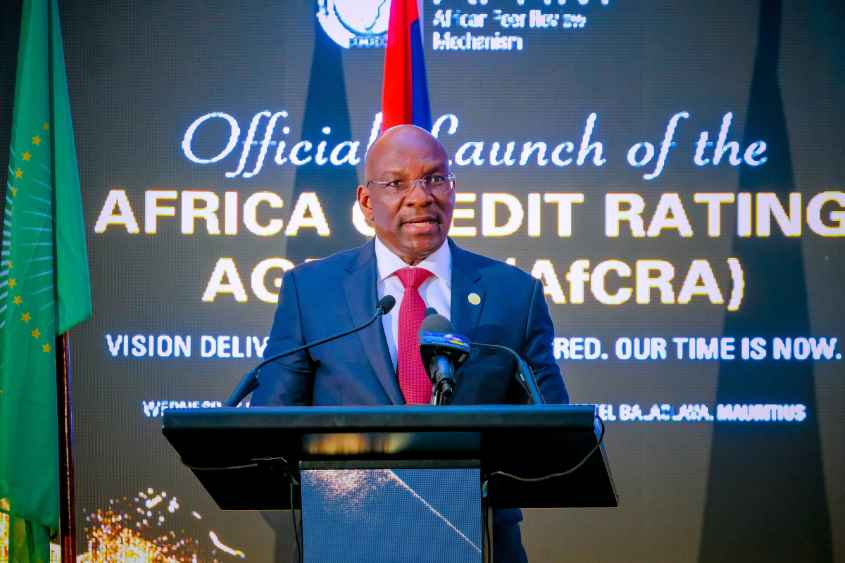
PORT LOUIS, Mauritius, October 8, 2026/APO Group/ –African Export-Import Bank (Afreximbank) (www.Afreximbank.com) welcomes today’s launch of the Africa Credit Rating Agency (AfCRA), an important milestone in strengthening Africa’s financial architecture and expanding the continent’s capacity to generate credible, independent analysis of African credit risk.


Credit ratings play an important role in determining access to capital, influencing investor perceptions and shaping the cost at which governments, institutions and businesses can finance development. It is therefore essential that assessments of African credit risk are independent, rigorous and evidence-based, while reflecting a complete understanding of the structures, institutions and economic realities being assessed.

The establishment of AfCRA adds an important African-led source of credit opinion to the market. Its value will not be measured by whether it produces more favourable ratings, but by the credibility of its analysis, the quality of its data and transparency of its methodology, and its ability to deepen understanding of African sovereigns, sub-sovereigns and corporate credit.

This is particularly important given that many African issuers remain unrated, while local-currency and sub-sovereign markets continue to have limited rating coverage. Expanding credible rating coverage can improve the information available to investors and support the development of deeper domestic and regional capital markets.

AfCRA must set a new benchmark for the continent, maintain its independence, and remain wholly owned and controlled by Africans

Alongside fellow members of the Alliance of African Multilateral Financial Institutions (AAMFI), Afreximbank has consistently maintained that African Multilateral Financial Institutions should be assessed on the basis of their fundamentals, performance, legal frameworks, mandates and operating models. Ensuring that these institutional characteristics are properly understood is essential to achieving informed, balanced and credible assessments of African risk.

Commenting on the uniqueness of the African market, and need for AfCRA’s rating methodology to reflect this, Mr Denys Denya, Senior Executive Vice President, Afreximbank, said: “The rating methodology AfCRA develops must recognise the uniqueness of our environment and its institutional structures. The Agency must set its own standards and not follow those set elsewhere — it must build a unique identity that conforms to an ‘African best practice.”

Highlighting the need for the autonomy of the Africa Credit Rating agency as it takes off, Mr Denya added: “Most importantly, AfCRA must set a new benchmark for the continent, maintain its independence, and remain wholly owned and controlled by Africans. We must all use it, and in return expect a complete assessment of where we (Africa) stand: the strengths the market has ignored, and the weaknesses we still need to fix.”

AfCRA should therefore be seen as complementary to existing international and regional rating agencies, broadening the range of credible analysis available to investors and issuers while strengthening competition, transparency and analytical capacity within Africa’s credit markets.

As Africa seeks to mobilise the scale of capital required for industrialisation, trade, infrastructure and economic transformation, credible African institutions that improve information, strengthen market confidence and deepen the continent’s financial markets will become increasingly important.

Afreximbank congratulates the African Union, the African Peer Review Mechanism (APRM) and all those involved in bringing AfCRA from concept to launch, and looks forward to the contribution the Agency will make to deeper, more transparent and more efficient African capital markets.

Distributed by APO Group on behalf of Afreximbank.


Continue Reading

Trending