Connect with us

Business

In Mékro, in central Côte d’Ivoire, sustainable agriculture is giving hope to an entire community

Published

on

agriculture

The project is focused on three agricultural crops: yams, cassava and vegetables, as well as traditional poultry farming, and aims to improve the living conditions of 60,000 vulnerable people

ABIDJAN, Ivory Coast, July 21, 2025/APO Group/ –Day breaks in Mékro, some 300 km from Abidjan, in central Côte d’Ivoire. The first rays of sun announce the start of what promises to be another sweltering day in a region known for its intense heat. Some women return from the backwaters bringing water to supply the family beehives. Others, armed with brooms made from palm leaves, begin sweeping the compounds, clearing away fallen leaves and scraps from the previous day’s meals.


A little farther off, domestic animals gradually emerge from their pens, joining the morning hustle and bustle that breathes life back into Mékro’s daily routine. In this area of high food crop production, yams, rice and cassava are produced in abundance. Yet despite its agricultural riches, Mékro has long remained in the shadows, unlike other places.

For years, farmers here relied on age-old techniques passed down through generations—methods that limited yields and left the population in a state of chronic vulnerability.

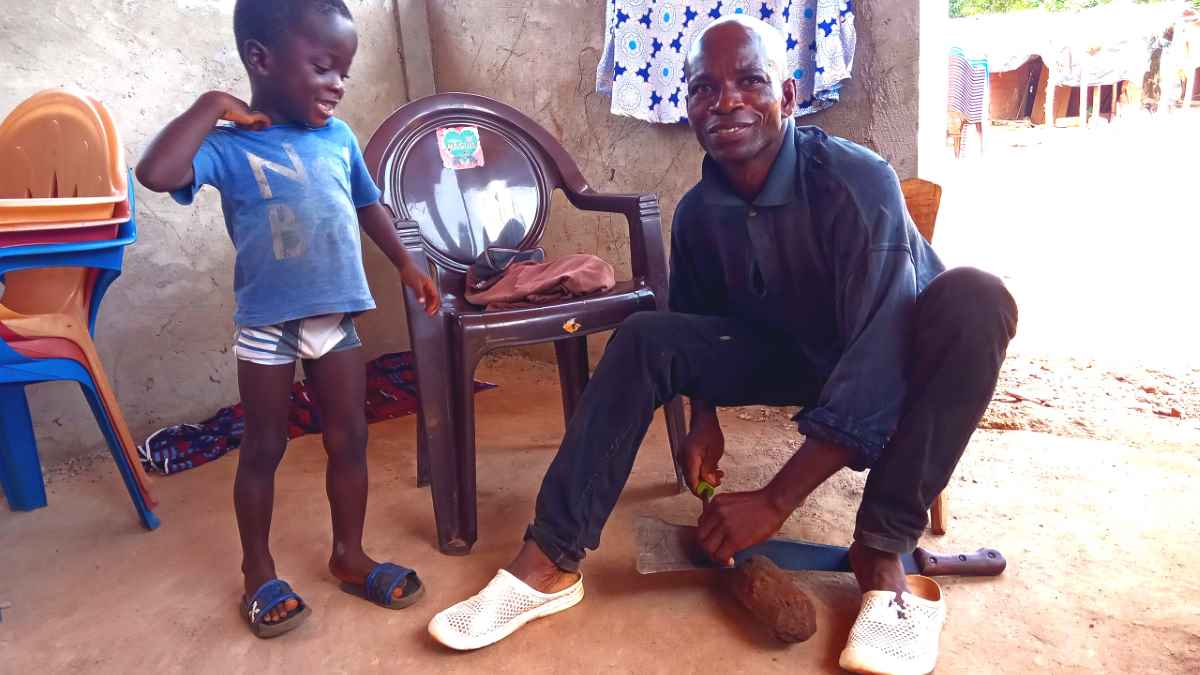
That morning, Koffi Kouakou Charles, known as “KKC,” sharpened his machete, the basic tool he uses to clear his field, under the watchful eyes of his seven children. At 30 years old, he mounted his bicycle and headed to Abokouassikro, five km away, where he has cultivated yams for several years.

In the past, Koffi grew “Kouba” yams, a popular local variety. Reflecting on those days, he recalls how traditional farming techniques learned and passed down from his ancestors, failed to reward his hard work. “Frankly, the work was exhausting. On top of that, we were using old-fashioned techniques. Despite our efforts, the harvests were poor. It was really hard,” sighs Koffi.

Hope restored

In the first half of 2024, his plight worsened when an epidemic known as the peste des petits ruminants (PPR) struck the village and wiped out his hens and goats. Hurting from this new financial blow, Koffi turned to the Project to Improve the Livelihoods of Smallholders and Women (PREMOPEF) (https://apo-opa.co/40ujK40) to regain hope.

Set up by the government of Côte d’Ivoire, the project is funded by the Global Agriculture and Food Security Program (GAFSP) (https://apo-opa.co/4lEIa36) and the African Development Fund (https://apo-opa.co/4o1986y), the concessional financing window of the African Development Bank Group. Its objective is to contribute to improving first, food and nutrition security and secondly, resilience to the effects of climate change among smallholder farmers, women and young people in the N’Zi region.

By applying innovative approaches, we’re putting agriculture at the center of inclusive development

The project is focused on three agricultural crops: yams, cassava and vegetables, as well as traditional poultry farming, and aims to improve the living conditions of 60,000 vulnerable people, 50 percent of whom are women and 35 percent young people.

At the “Farmer Training Field,” one of the project’s initiatives, Koffi and his fellow project beneficiaries were introduced to agroecological techniques for yam production and conservation. Thanks to the training, Koffi has turned his back on “Kouba” yams and old production practices in favour of new varieties called “Anader” and “Cameroun” (also known as “R3” and “C15”), which are more climate-resistant and productive.

A twofold increase in yield

From his first harvest in December 2024, Koffi’s yam yield doubled—from two to four tonnes on the same plot of land. Thinking ahead, he reserved three-quarters of the harvest for his family’s consumption and seed stock for the next season. The remaining quarter was sold at the local market in Mékro, earning him 125,000 CFA francs (around USD 250)—a significant windfall in this rural region.

“Before, I was just focused on surviving,” Koffi says. “Today, thanks to this project, I can think about my children’s future and even expand my farm.” Energized by his progress, Koffi is now determined to scale up and become one of the region’s leading yam producers. The prospect of mechanizing his work excites him. “I’m thinking of buying a ridging machine and a seed drill to make fieldwork easier and increase my yield,” he says confidently.

“The Project to Improve the Livelihoods of Smallholders and Women is a powerful tool for reducing household vulnerability and strengthening resilience to economic and environmental shocks,” says Ceserd Waba Akpaud, the project coordinator.

“PREMOPEF reflects our commitment to transforming rural communities through sustainable, farmer-focused solutions. By applying innovative approaches, we’re putting agriculture at the center of inclusive development,” adds Philip Boahen, GAFSP project coordinator at the African Development Bank.

To further boost his productivity, Koffi also envisions large-scale storage facilities to cut post-harvest losses. He’s planning to diversify his activities too. After losing his livestock to PPR—a disease he attributes to a lack of proper training—he intends to relaunch his poultry business using improved, safer methods. He is now exploring livestock training courses to build the necessary skills.

“It’s also a chance for me to make up for the schooling I missed,” he says, determined to turn past setbacks into opportunities.

With the knowledge he’s gained and the positive impact of the project, a new horizon is opening—not just for Koffi, but for the people of Mékro and the broader economy of the N’Zi region.


Distributed by APO Group on behalf of African Development Bank Group (AfDB).

Home  Facebook

Events

As global power structures shift, Invest Africa convenes The Africa Debate 2026 to redefine partnership in a changing world

Published

on

The Africa Debate 2026 will provide a platform for this essential, era-defining discussion, convening leaders to explore how Africa and its partners can build more balanced, resilient and sustainable models of cooperation

LONDON, United Kingdom, February 5, 2026/APO Group/ –As African economies assert greater agency in a rapidly evolving global order, Invest Africa (www.InvestAfrica.com) is delighted to announce The Africa Debate 2026, its flagship investment forum, taking place at the historic Guildhall in London on 3 June 2026.

Now in its 12th year, The Africa Debate has established itself as London’s premier platform for African investment dialogue since launching in 2014, convening over 800 global decision-makers annually to shape the future of trade, finance, investment, and development across the continent.

Under the theme “Redefining Partnership: Navigating a World in Transition”, this year’s forum will focus on Africa’s response to global economic realignment with greater agency, ambition and economic sovereignty.

The Africa Debate puts Africa’s priorities at the centre of the conversation, moving beyond traditional narratives to focus on ownership, resilience and long-term value creation.

“Volatility is not new to Africa. What is changing is the opportunity to respond with greater agency and ambition,” says Invest Africa CEO Chantelé Carrington.

“This year’s edition of The Africa Debate asks how we strengthen economic sovereignty — from access to capital and investment to financial and industrial policy — so African economies can take greater ownership of their growth. Success will be defined by how effectively we turn disruption into leverage and partnership into shared value.”

The Africa Debate 2026 will provide a platform for this essential, era-defining discussion, convening leaders to explore how Africa and its partners can build more balanced, resilient and sustainable models of cooperation.

Key challenges driving the debate

Core focus areas for this year’s edition of The Africa Debate include:

This year’s edition of The Africa Debate asks how we strengthen economic sovereignty — from access to capital and investment to financial and industrial policy

Global Realignment & New Partnerships

How shifting geopolitical and economic power structures are reshaping Africa’s global partnerships, trade dynamics and investment landscape.

Financing Africa’s Future

The growing need to reform the global financial architecture, new approaches to development finance, as well as the strengthening of market access and financial resilience of African economies in a changing global system.

Strategic Value Chains

Moving beyond primary exports to build local value chains in critical minerals for the green economy. Also addressing Africa’s energy access gap and mobilising investment in renewable and transitional energy systems.

Digital Transformation & Technology

Unlocking growth in fintech, AI and digital infrastructure to drive productivity, inclusion, and the next phase of Africa’s economic transformation.

The Africa Debate 2026 offers a unique platform for high-level dialogue, deal-making, and strategic engagement. Attendees will gain actionable insights from leading policymakers, investors and business leaders shaping Africa’s economic future, while building strategic partnerships that define the continent’s next growth phase.

Registration is now open (http://apo-opa.co/46b19gj).

Distributed by APO Group on behalf of Invest Africa.

Continue Reading

Business

Zion Adeoye terminated as Chief Executive Officer (CEO) of CLG due to serious personal and professional conduct violations

Published

on

After a thorough internal and external investigation, along with a disciplinary hearing chaired by Sbongiseni Dube, CLG (https://CLGglobal.com) has made the decision to terminate Zion Adeoye due to serious personal and professional conduct violations. This process adhered to the Code of Good Practice of the Labour Relations Act, ensuring fairness, transparency, and compliance with South African law.

Mr. Adeoye has been held accountable for several serious offenses, including:

  • Making malicious and defamatory statements against colleagues
  • Extortion
  • Intimidation
  • Fraud
  • Misuse of company funds
  • Theft and misappropriation of funds
  • Breach of fiduciary duty
  • Mismanagement

His actions are in direct contradiction to our firm’s core values. We do not approve of attorneys spending time in a Gentleman’s Club. CLG deeply regrets the impact this situation has had on our colleagues and continues to provide full support to those affected.

We want to express our gratitude to those who spoke up and to reassure everyone at the firm of our unwavering commitment to maintaining a respectful workplace. Misconduct of any kind is unacceptable and will be addressed decisively.

We recognize the seriousness of this matter and have referred it to the appropriate law enforcement, regulatory, and legal authorities in Nigeria, Mauritius, and South Africa. We kindly ask that the privacy of the third party involved be respected.

Distributed by APO Group on behalf of CLG.


Continue Reading

Business

The International Islamic Trade Finance Corporation (ITFC) Strengthens Partnership with the Republic of Djibouti through US$35 Million Financing Facility

Published

on

This facility forms part of the US$600 million, three-year Framework Agreement signed in May 2023 between ITFC and the Republic of Djibouti, reflecting the strong and growing partnership between both parties

JEDDAH, Saudi Arabia, February 5, 2026/APO Group/ –The International Islamic Trade Finance Corporation (ITFC) (https://www.ITFC-IDB.org), a member of the Islamic Development Bank (IsDB) Group, has signed a US$35 million sovereign financing facility with the Republic of Djibouti to support the development of the country’s bunkering services sector and strengthen its position as a strategic regional maritime and trade hub.

The facility was signed at the ITFC Headquarters in Jeddah by Eng. Adeeb Yousuf Al-Aama, Chief Executive Officer of ITFC, and H.E. Ilyas Moussa Dawaleh, Minister of Economy and Finance in charge of Industry of the Republic of Djibouti.

The financing facility is expected to contribute to Djibouti’s economic growth and revenue diversification by reinforcing the competitiveness and attractiveness of the Djibouti Port as a “one-stop port” offering comprehensive vessel-related services. With Red Sea Bunkering (RSB) as the Executing Agency, the facility will support the procurement of refined petroleum products, thus boosting RSB’s bunkering operations, enhancing revenue diversification, and consolidating Djibouti’s role as a key logistics and trading hub in the Horn of Africa and the wider region.

We look forward to deepening this partnership, creating new opportunities, and leveraging collaborative programs to advance key sectors and drive sustainable economic growth

Commenting on the signing, Eng. Adeeb Yousuf Al-Aama, CEO of ITFC, stated:

“This financing reflects ITFC’s continued commitment to supporting Djibouti’s strategic development priorities, particularly in strengthening energy security, port competitiveness, and trade facilitation. We are proud to deepen our partnership with the Republic of Djibouti and contribute to sustainable economic growth and regional integration.”

H.E. Ilyas Moussa Dawaleh, Minister of Economy and Finance in charge of Industry of the Republic of Djibouti, commented: “Today’s signing marks an important milestone in the development of Djibouti’s bunkering services and reflects our strong and valued partnership with ITFC, particularly in the oil and gas sector. This collaboration supports our ambition to position Djibouti as a regional hub for integrated maritime and logistics services. We look forward to deepening this partnership, creating new opportunities, and leveraging collaborative programs to advance key sectors and drive sustainable economic growth.”

This facility forms part of the US$600 million, three-year Framework Agreement signed in May 2023 between ITFC and the Republic of Djibouti, reflecting the strong and growing partnership between both parties.

Since its inception in 2008, ITFC and the Republic of Djibouti have maintained a strong partnership, with a total of US$1.8 billion approved primarily supporting the country’s energy sector and trade development objectives.

Distributed by APO Group on behalf of International Islamic Trade Finance Corporation (ITFC).

Continue Reading

Trending

Exit mobile version