As global banks search for international projects spread across the world, it creates a window for banks based on African soil, such as those in Mauritius, to leverage upon opportunities emerging on the continent
PORT LOUIS, Mauritius, October 3, 2023/APO Group/ —
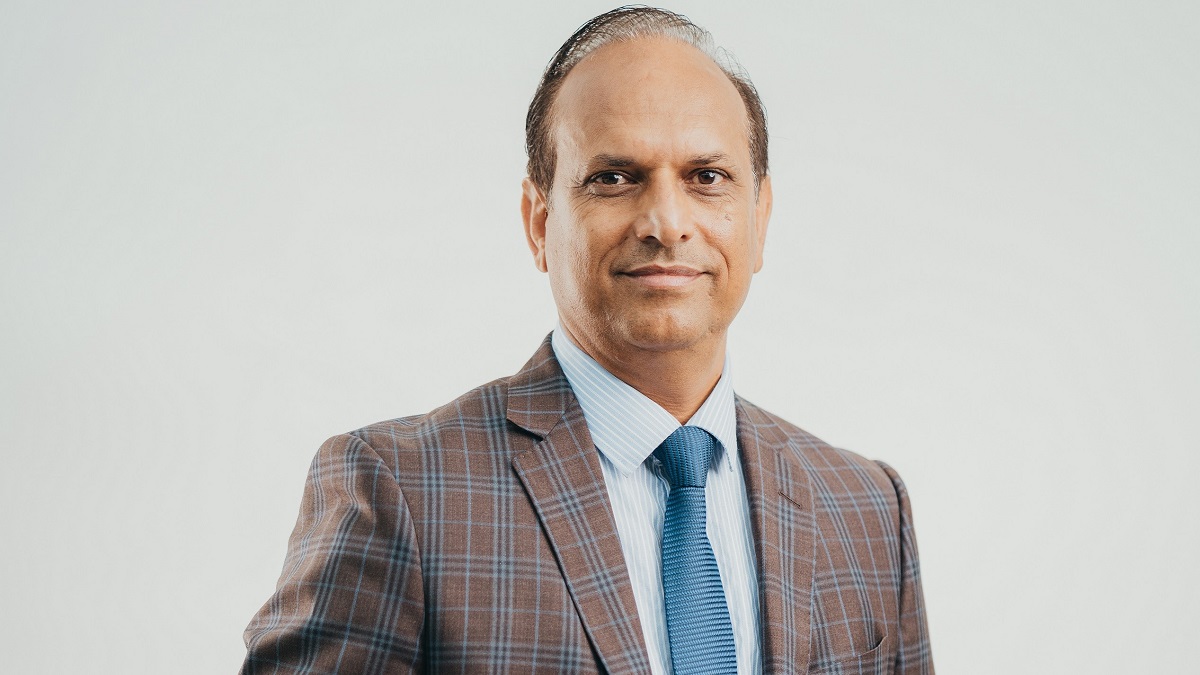
Thavin Audit, Acting Head of International Banking, Bank One (https://International.BankOne.mu), talks about the key role that Mauritius-based banks are playing in Africa by structuring transactions through their international banking divisions to shape investor interest and channel funds towards impactful projects being run by Financial Institutions (FIs), Central Banks, Sovereigns, and top corporates alike.
An IMF working paper from April 2023 (https://apo-opa.info/3ZURjLb) estimates that Sub-Saharan Africa could find itself caught in the crossfire as geo-economic fragmentation sees fault lines between nations deepening. It postulates that, in a world fully split into two isolated trading blocs, Sub-Saharan Africa would be hit especially hard because it would lose access to a large share of current trade partners. The report soberingly notes that about half of the region’s value of international trade would be affected in a scenario where the world is split between trading blocs centred around the US & EU, and another around China.
The report, however, holds out a ray of hope when it notes that deepening domestic financial markets can broaden the sources of financing and lower the volatility associated with excessive reliance on foreign inflows. By upgrading domestic financial market infrastructure — including through digitalisation, transparency, and regulation, and expanding financial product diversity — Sub-Saharan African countries can expand financial inclusion, build a broader domestic investor base, and increase attractiveness to a larger set of external investors, it underlines.
It is here that we believe Mauritius has a pivotal role to play in supporting Sub-Saharan African economies to realise their true growth potential by using its expertise as an International Financial Centre (IFC) to extend sophisticated financial instruments to fund the continent’s economic development.
Why are banks from Mauritius going into Sub-Saharan Africa?
A case in point is the Sub-Saharan African strategy being pursued by Bank One for the last three years, coincidentally dating from just before the outbreak of COVID. I&M Group PLC, a Kenya-listed financial services group holding 50% of Bank One, having a strong presence in key East African markets such as Tanzania, Kenya, Rwanda, and Uganda combined with significant demographic changes underway in Sub-Saharan Africa, creates a compelling story to address rapidly expanding customer needs in the region. As such, one had to adopt the strategy of leveraging shareholder footprints in the region to provide solutions to both Mauritian and Sub-Saharan African businesses looking to grow.
For instance, while the slogan of Bank One is to bring “African solutions to African challenges”, looking at Sub-Saharan Africa, we know it isn’t an easy journey, as each country has its own characteristics, and these emerging economies are not rated as well as those from more advanced regions by credit agencies. However, if one looks at the space of Financial Institutions (FIs), Central Banks, Sovereigns, or top corporates where our shareholders sit – and scrutinise the individual entities within, it is clear that the probability of default for such large institutions tend to be very low due to the stringent regulations around the banking sector.
Hence, looking at the top-tier financial institutions in Africa, I believe that they are comparable to the highest-rated banks in the global arena. For instance, even if the Nigerian economy itself has unfortunately been downgraded to Caa1 from B3 by Moody’s as recently as February (https://apo-opa.info/3PEvFpI), its banks are still comparable to the best banks in the world.
As global banks search for international projects spread across the world, it creates a window for banks based on African soil, such as those in Mauritius, to leverage upon opportunities emerging on the continent. Indeed, Africa’s trade finance gap, estimated to be between US$80bn to US$120bn (https://apo-opa.info/3PIXnSb), has widened further over the past decade, exacerbated by the disruption to global supply chains caused by the COVID pandemic. In this space, it is only those that are too big to fail – large Financial Institutions, Sovereigns and large corporates – that have been able to make a difference to high-impact but long-gestation projects on the ground.
Lessons from this journey to support FIs into Sub-Saharan Africa
Post COVID, supply chains have been further disrupted, and demand is only now picking up. So, big banks based in key African economies need funding for their clients, and most Letters of Credit for trade finance range in tenor between 90 days to one year. That funding space gives banks in Mauritius an opportunity to leverage on those transactions efficiently. For instance, if banks in Nigeria or Tanzania have continuous trade finance requirements, Mauritius-based banks can fulfil those by putting together a small syndication.
In addition, Mauritian banks can leverage on speed of execution, project management skills and low turnaround time to deliver value to the Development Finance Institutions (DFIs) that are seeking to fund projects in Africa. Within the DFI funding the space, a key lesson for banks is that sustainable financing is the way forward. Operating from a Small Island Developing State that is heavily reliant on nature, one must be alert and on guard against extending finance to any project that is harmful to the environment. Addressing the climate crisis and reaching net zero emissions by 2050 is not going to be cheap – but to manage the increasing impacts of climate change on people’s lives, all countries including the sub-Saharan region will need funding and Banks have a crucial part to play.
As local banks in Mauritius, we might not have the biggest balance sheets, but we do have the knowledge and capacity to provide funding
It is also critical to attend the right events and conferences that create the opportunity to the network with right partners for the region. It is important for banks in Mauritius to invest time and effort into attending Global Trade Reviews and leadership platforms such as the Africa CEO Forum that provide the necessary space to build relationships, engage with various institutions including the regulators, and look for opportunities where Mauritius-based banks can create impact financing and position themselves as responsible and trusted funders. On this note, it is heartening to report that the AFSIC conference last year has proven very successful for the Mauritian delegation.
At Bank One, our key takeaway from AFSIC was creating a window to structure transactions by dealing with best-in-class insurance counterparties to diffuse risk on Africa-centric transactions – in a process termed ‘risk deficient’ through insurance support. A best practice for all banks eyeing Africa would then be to collaborate with Moody’s-rated insurance companies on the platform for diffusion of risk, give relief on capital allocation, and make the structured transaction less risky for global partners.
What is the impact being achieved on the ground?
Back in 2020 when COVID first broke out and Bank One was on its first-year trajectory of the long-term journey of its Sub-Saharan Africa strategy, we witnessed pressing issues around shortage of forex (FX) for central banks amid deep disruptions in supply chains. As such, we pioneered a currency swap for central banks. The solution is scalable, profitable, and replicable for other central banks in Sub-Saharan Africa facing FX seasonality challenges. Bank One invited other Mauritian banks to participate in the syndication to expand the space and resources within. Such currency swaps hold the potential to extend powerful assistance to the central banks of the concerned countries to come out of their forex shortages and build their currency reserves. Finally, the funds raised from the currency swaps made significant impact by helping the countries in question to finance food and medicines for their burgeoning populations.
Indeed, going beyond our immediate neighbours in East Africa, our experience has shown us that Mauritius-based banks are also well placed to support banks in West Africa, which are particularly struggling with setting the right frameworks in place and are not necessarily IFRS-compliant based on their adherence to French GAAP instead. Thus, with most banks in West Africa being Francophone, the fact that Mauritius is bilingual and has a legal framework that imbeds both English and French laws, gives us the opportunity and competence to reach out to markets in West Africa where we can help central banks structure their potential transactions.
In the Non-Banking Financial Institutions (NBFI) space, there are leading microfinance outfits in Africa that are being supported by Mauritius-based banks, such as Bank One, as funders. Here again, the Mauritius IFC is making a clear contribution towards inclusive financing to improve conditions for low-income groups in Africa, be it for buying a small vehicle; investing in home-based agriculture for self-consumption; or improving standards of living for children. A case in point was the funding raised by Bank One for the Letshego Group, one of the leading microfinance institutions in Africa, for a syndication of US$60 million. The first tranche, valued at US$30 million, was successfully completed last year exclusively with a consortium of Mauritian banks. The funding raised allowed the Letshego Group to support 11,000 households in terms of income, as well as assist in business generation and education plans.
Finally, with a view to supporting Sub-Saharan African trade flows, to boost intra-African trade and bridge the region’s trade finance gap, a key milestone achieved by Bank One was the successful facilitation of a US$35 million trade finance facility for a leading oil & gas player, Dalbit International Ltd. By empowering Dalbit’s working capital, this transaction supports the trading of refined petroleum products across East Africa and creates impact at the level of both businesses and households.
Exploring the right synergies: Collaborating to deepen impact
Ultimately, as the international banking arms of Mauritian banks foray deeper into Africa, it is important for us to acknowledge that the right partners on this journey would be not only local banks in Mauritius but also investment banks in other countries. Given that the appetite for Africa by banks in Mauritius is limited, let alone those based internationally, we must be willing and able to share stories of lessons learnt and create pathways into Africa for other banks. As local banks in Mauritius, we might not have the biggest balance sheets, but we do have the knowledge and capacity to provide funding. We must build capacity in the space, as, together, we can achieve broader and deeper impact.
To conclude, it is not a journey that is paved with overnight success, and it is only over time that we can slowly but surely build our way upwards. Every bank has their own governance and credit appetite, but Africa is a success story that is waiting to happen, and Mauritius can definitely be a key player in accelerating Africa’s transition to higher growth and economic development by spreading the word.
Distributed by APO Group on behalf of Bank One Limited.














 Business5 days ago
 Business4 days ago
 Energy5 days ago
 Business5 days ago
 Events5 days ago