Connect with us
Anglostratits

Energy

Congo Liquefied Natural Gas (LNG) Phase 2 Begins Exports as Hydrocarbons Minister Joins Paris Energy Forum

Published

on

Congo

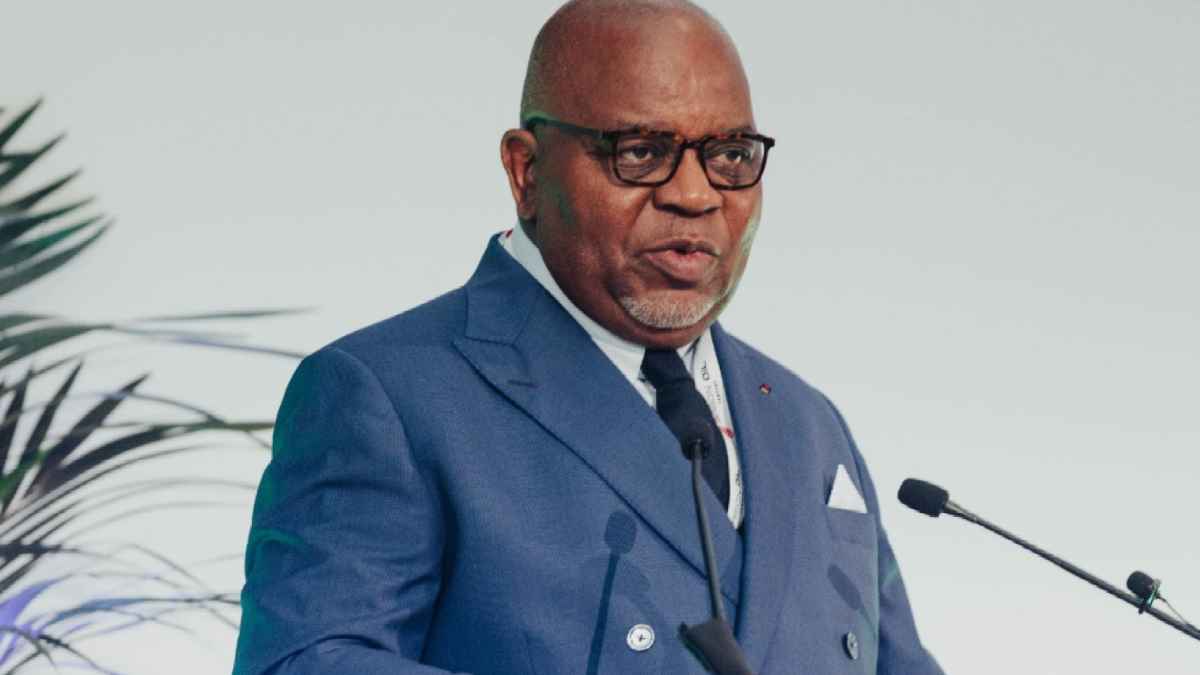
The Republic of Congo’s accelerated launch of Phase 2 of its LNG project underscores rapid execution and expanding export capacity, setting the stage for Hydrocarbons Minister Bruno Jean‑Richard Itoua’s participation at this year’s Invest in African Energy Forum in Paris

PARIS, France, February 13, 2026/APO Group/ –The Republic of Congo marked a major milestone earlier this week with first exports from Phase 2 of its Congo LNG project – amplifying investor interest just ahead of Hydrocarbons Minister Bruno Jean‑Richard Itoua’s engagement at the Invest in African Energy (IAE) Forum in Paris, scheduled for April 22–23, 2026. Operated by Eni, the second phase began exporting from the new Nguya FLNG facility, lifting the country’s liquefaction capacity to 3 million tons per annum and delivering its first cargo in early 2026 following commissioning ahead of schedule.

Phase 2’s start‑up, achieved roughly 35 months after construction began, adds capacity alongside the earlier Tango FLNG unit, reinforcing Congo’s emerging role as a competitive LNG exporter in Africa. The expanded infrastructure draws on gas from the offshore Nené and Litchendjili fields under the Marine XII license, giving the country a stronger foothold in global gas markets at a time when buyers – particularly in Europe – seek diversified supply sources amid a shifting energy landscape.

The timing of Phase 2’s export start-up dovetails with growing international interest in Congo’s broader energy agenda: TotalEnergies recently secured the Nzombo exploration permit with a one-well drilling program, while Perenco is redeveloping its mature Kombi‑Likalala‑Libondo II offshore field with a new platform to extend production and gas recovery.

Minister Itoua, who has been instrumental in advancing upstream, midstream and gas monetization policy in the country, is expected to outline investment opportunities across gas, LNG, marginal fields and exploration at the upcoming forum – providing investors with direct access to Congo’s evolving energy landscape.

Beyond LNG, the Ministry of Hydrocarbons has advanced regulatory reform – including a new gas code nearing adoption that streamlines fiscal terms and clarifies rules for investors – alongside international cooperation to stimulate investment. Past IAE Forum engagements have produced key agreements, such as the 2023 pact with Technip Energies to enhance onshore and offshore capacity and collaborate on decarbonization and energy transition, highlighting Congo’s proactive approach to industry partnerships.

At IAE 2026, investors and policymakers will have the opportunity to engage directly with Minister Itoua and other senior officials on these developments, gaining first‑hand insight into how Congo is balancing gas monetization with broader energy sector growth and unlocking investment opportunities.

Congo’s trajectory – from a mature oil producer to a rapidly evolving LNG exporter – reflects a broader shift in African energy markets toward integrated, export‑oriented gas strategies. By linking robust policy engagement with ambitious infrastructure execution, Congo exemplifies how resource-rich African states can compete for global investment while contributing meaningfully to energy security and economic growth. As Minister Itoua prepares to take the stage in Paris, the Phase 2 LNG milestone serves as concrete evidence of both progress and opportunity for investors prepared to engage with the continent’s expanding energy frontier.

Distributed by APO Group on behalf of Energy Capital & Power.

Energy

Windfall or Mismatch? How the United States-Iran Conflict Aligns with Venezuela’s Oil Comeback

Published

on

African Energy Chamber

Rising prices and supply disruption are boosting Venezuela’s relevance – but timing, volatility and structural constraints complicate the narrative

CAPE TOWN, South Africa, April 22, 2026/APO Group/ –The U.S.–Iran conflict has triggered a sharp tightening of global oil markets, with disruptions in the Strait of Hormuz constraining flows and pushing prices upward. As supply uncertainty deepens, buyers are scrambling to secure alternative barrels, elevating the strategic value of producers outside the Middle East. In theory, this creates a near-perfect opening for Venezuela – home to the world’s largest proven oil reserves – to reassert itself in global markets. But the timing raises a more complex question: is Venezuela’s recovery genuinely aligned with this geopolitical window, or is the overlap more coincidental than transformational?

The African Energy Week (AEW) 2026 Conference and Exhibition – taking place October 12–16 in Cape Town – will interrogate precisely this dynamic during a roundtable session focused on Africa and Venezuela. With discussions centered on geopolitical risk, supply diversification and the emergence of alternative producers – both across Africa and South America – the event provides a timely platform to assess whether Venezuela’s resurgence is durable or simply opportunistic.

Global Supply Shocks Send Buyers Scrambling

The ongoing Middle East conflict has sent global oil and gas markets into a state of volatility, with disruptions at the Strait of Hormuz – responsible for 20% of global oil trade – placing up to 15 million barrels per day (bpd) at risk. The conflict has also sent oil prices skyrocketing by 60% in March to $120 per barrel, partially pulling back to around $92-$95 per barrel in April. At first glance, this creates incentives for non-Gulf producers to increase exports, as import-heavy economies in Asia and Europe seek alternative barrels.

In theory, Venezuela – with over 300 billion barrels of proven oil reserves – could benefit from this windfall, but years of U.S. sanctions and underinvestment have seen production fall from a peak of three million bpd in 1998 to 900,000 bpd in 2025. Recent policy shifts – including U.S. licensing measures allowing select foreign companies to operate Venezuelan assets – could turn this trend around, but unlikely in the immediate-term.

Venezuela has the resources and the market interest, but converting that into sustained growth requires stability, policy clarity and execution

As such, the timing of the Gulf conflict creates a form of mismatch for Venezuela. The country’s oil recovery is gradual, while the market opportunity is episodic. Buyers are not committing to long-term shifts in supply chains; they are managing short-term risk through flexible procurement. The result is a fragmented market response rather than a decisive reallocation of global trade flows. Therefore, if disruptions ease or stabilize before Venezuela significantly scales production, the window may narrow before it is fully captured.

Venezuela’s Oil Recovery Gains Ground – But Structural Constraints Persist

Following years of sanctions, Venezuela’s oil recovery seems to be moving in the right direction. The U.S. issued General License 46A in early 2026, authorizing U.S. entities to engage in transactions necessary to the lifting, exportation, re-exportation, sale, re-sale, supply, storage, marketing, purchase, delivery or transportation of Venezuelan-origin oil. In April 2026, the U.S. went a step further, easing sanctions imposed on Venezuela’s central bank. Market activity is also increasing. Chevron signed a deal with Venezuela’s PDVSA to trade its offshore gas holdings for a larger footprint in the Orinoco Belt.

With the emergence of the Gulf conflict, elevated oil prices and supply insecurity are increasing Venezuela’s geopolitical value, particularly for U.S. Gulf Coast and European refiners configured for heavy crude. This comes as Venezuelan exports to the U.S. are once again gaining traction. Recent shipping data shows Venezuelan crude exports surpassing one million bpd in March 2026 – the first time since September 2025 – backed by increased sales to India and Caribbean states. In February, shipments to the U.S. rose 32%, with PDVSA signing supply contracts with the U.S. in March 2026.

These moves demonstrate a shift toward global energy and financial market re-entry, marking a step in Venezuela’s oil recovery. Yet even with improved market access, scaling output is neither immediate nor straightforward.

“Geopolitical disruption can create opportunity, but it doesn’t fix fundamentals. Venezuela has the resources and the market interest, but converting that into sustained growth requires stability, policy clarity and execution. Without that, the upside remains constrained,” states NJ Ayuk, Executive Chairman, African Energy Chamber.

Ultimately, the key issue is not whether Venezuela benefits from higher prices – it will. The more important question is whether this moment translates into structural repositioning or remains another cyclical upswing driven by external shocks.

Distributed by APO Group on behalf of African Energy Chamber.

Continue Reading

Energy

Typhoon Returns to African Mining Week (AMW) as Associate Sponsor Amid Regional Push to Formalize Artisanal and Small-Scale Gold Mining (ASGM)

Published

on

Energy Capital

African Mining Week 2026 will connect global investors with the continent’s gold mining companies such as Typhoon for partnership formations aimed at accelerating the growth of the gold value chain

CAPE TOWN, South Africa, April 22, 2026/APO Group/ –Typhoon Greenfield Development (Typhoon) – Ghana’s first small-scale mining company compliant with London Bullion Market Association standards – is returning to this year’s edition of African Mining Week (AMW) 2026 as an Associate Sponsor.

Typhoon’s participation highlights the company’s strategy to deepen engagement with global investors and advance Africa’s gold value chain at a time when the sector is experiencing unprecedented growth. Gold prices surpassed $5,000 per ounce in March 2026, prompting mineral-rich African countries to accelerate strategies aimed at maximizing the resource’s contribution to GDP growth, employment creation, beneficiation and broader economic development.

During the event, Typhoon executives will participate in high-level panel discussions, networking sessions and project showcases, where they are set to engage with African stakeholders on strategies to advance artisanal and small-scale gold mining (ASGM) formalization. The company is expected to share lessons and best practices from Ghana’s ongoing efforts to strengthen responsible and formalized gold production.

Held under the theme Mining the Future: Unearthing Africa’s Full Mineral Value Chain, AMW 2026 – scheduled for October 14–16 in Cape Town – will feature a dedicated Gold Forum addressing key industry priorities, including maximizing Africa’s gold production, expanding local beneficiation and accelerating ASGM formalization. The forum provides a strategic platform for companies such as Typhoon to highlight their contributions to Africa’s gold sector while exploring investment and partnership opportunities.

In 2026, Typhoon is advancing the Adomanu cluster of mines expansion project, which has reached a 65% completion milestone. The company is also conducting additional exploration to unlock new production prospects within the cluster, while advancing development at its first large-scale asset – the Asempanaye concession in the Asante Akim South District of Ghana. These initiatives form part of a broader growth strategy announced in June 2025 aimed at expanding the company’s asset base from two clusters through additional exploration across its six cluster mining concessions. At AMW 2025, the company presented its in-house program designed to empower artisanal and small-scale miners, contributing to Ghana’s broader industry formalization agenda.

At AMW2026, Typhoon is expected to showcase progress made in advancing these initiatives while unveiling new investment and partnership opportunities across its growing portfolio of mining assets.

Distributed by APO Group on behalf of Energy Capital & Power.

Continue Reading

Energy

Niger’s Petroleum Minister Joins African Energy Week (AEW) 2026 Amid Renewed Export, Infrastructure Drive

Published

on

African Energy Chamber

Minister Hamadou Tinni is expected to outline Niger’s expanding oil ambitions as pipeline infrastructure lays the foundation for new upstream investments

CAPE TOWN, South Africa, April 21, 2026/APO Group/ –Niger’s Minister of Petroleum Hamadou Tinni will take the stage at the African Energy Week (AEW) Conference and Exhibition – taking place October 12-16, 2026, in Cape Town – as the country accelerates efforts to position itself as a competitive upstream and export-driven oil producer. His participation comes at a pivotal moment for Niger’s hydrocarbons sector, as recent project developments and infrastructure expansion reshape the country’s energy landscape.

Niger’s upstream expansion is anchored by projects such as those in the Agadem Rift Basin. China National Petroleum Corporation (CNPC) operates the Agadem oilfield, recently increasing its capacity from 20,000 barrels per day (bpd) to 90,000 bpd through a phase two expansion. Savannah Energy currently has interests in the R1234 PSC area – equating to roughly 50% of the basin – with five discoveries made from five wells in the R3 license area to date.

As the country looks to expand production and attract new players to the market, clear policy direction could serve as a launchpad for exploration

Looking ahead, Savannah Energy is assessing plans for a four-well testing program and/or a return to exploration activity in the R1234 PSC contract area in 2026/2027. The company has identified 146 potential exploration targets in total across its four license areas, with future exploration subject to government approval. Since 2024, Savannah Energy has restructured the R3 East Area development plan, raising production forecasts from 5,000 bpd to 10,000 bpd. First oil production from the area will depend on successful well tests.

The project is supported by advancements in infrastructure, specifically the CNPC-built SORAZ refinery and the now-completed Niger-Benin oil export pipeline. The pipeline provides a direct route to international markets for Niger’s crude oil, offering a clear export pathway for the R1234 PSC area. The $4.5 billion pipeline traverses 1,980km, transporting crude from Niger’s Agadem oilfields to Seme – an Atlantic port in Benin.

As a key economic driver, Niger’s oil industry is expected to remain the backbone of the country’s growth forecast for 2026 and beyond. The International Monetary Agency projects the country’s economic growth to reach 6.7% in 2026, driven by rising oil exports and infrastructure expansion. While political transitions have impacted the country’s investment climate, the country has set clear goals to expand crude production while accelerating the development of other key industries such as mining. For investors, this highlights a unique opportunity to support the growth of promising sectors.

“Niger is demonstrating how strategic infrastructure and resource potential can come together to unlock new energy frontiers. Projects such as the Niger-Benin Pipeline stand to support new investments in the country’s upstream sector by offering a direct route to market for Nigerien crude. As the country looks to expand production and attract new players to the market, clear policy direction could serve as a launchpad for exploration,” states NJ Ayuk, Executive Chairman, African Energy Chamber.

At AEW 2026, Minister Tinni is expected to outline the country’s development strategy, providing insights into strategic investment opportunities across the entire economic spectrum. As competition for capital intensifies, Niger’s combination of resource potential and improving infrastructure offers a differentiated value proposition. The Minister’s engagement at this year’s conference will provide a platform to articulate this vision while reinforcing the country’s readiness to partner with global industry players.

Distributed by APO Group on behalf of African Energy Chamber.

Continue Reading

Trending