Connect with us
Anglostratits

Business

Inside Africa’s Green Economy: Kevin Munjal on What’s Coming Next

Published

on

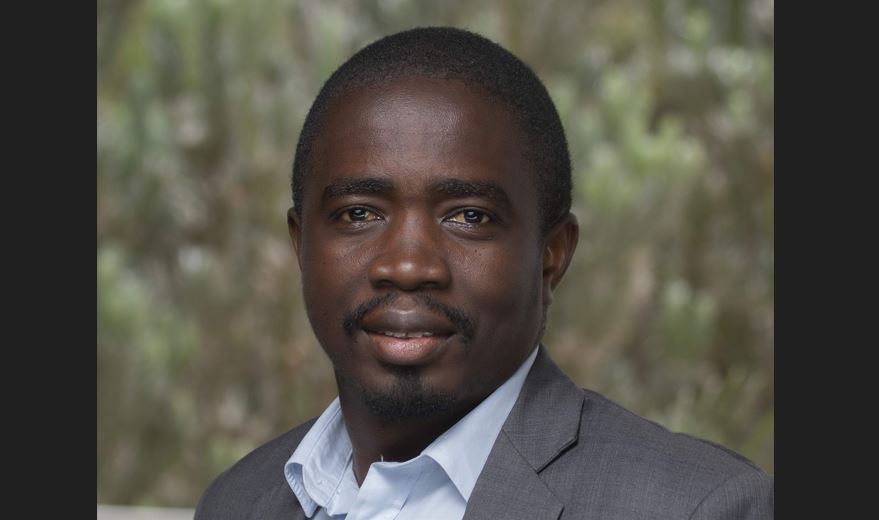
Kevin Munjal, Director of Development Impact at FSD Africa, highlights the potential for up to 84.5 million green jobs in Africa by 2050 if capital flows to service-led value chains, regulations are enforced, and skills systems modernised

CAPE TOWN, South Africa, July 30, 2026/APO Group/ —Exclusive interview with Kevin Munjal, Director, Development Impact at FSD Africa, which recently published a report on “Unlocking Africa’s Green Transition: Opportunities Towards a Green and Inclusive Workforce (https://apo-opa.co/4yMIbJt) in partnership with Shell Foundation. It contains highly relevant insights for stakeholders working on Africa’s green transition and related human capital challenges.  

Interview Summary:
Kevin Munjal, Director of Development Impact at FSD Africa, highlights the potential for up to 84.5 million green jobs in Africa by 2050 if capital flows to service-led value chains, regulations are enforced, and skills systems modernised. He stresses vocational training models with guaranteed income pathways, innovative financing that embeds workforce development into green infrastructure, and mobile-based social protection for informal workers.

Gender equity requires targeted interventions across both formal and informal economies. Clean cooking and waste recycling are identified as transformative sectors, while national strategies must reflect distinct labour market structures in Nigeria, South Africa and Kenya.

Let’s start with some background on you and the work that you do for FSD Africa. Where in Africa are you active?
My name is Kevin Munjal, I’m the Director of Development Impact at FSD Africa. FSD Africa is a specialist development agency deploying financial and non-financial instruments to strengthen Africa’s financial sector to enable the continent to mobilise sustainable capital at scale for financing of its development needs. We currently have a presence in over 30 countries.

As Director of Development Impact, I oversee the body of work that helps FSD Africa understand the effectiveness of its financial sector development strategies. Together with my team, we help craft and test hypotheses, generating data and insights that inform stronger programming.

I also oversee a growing portfolio of work on green skills and jobs, advocating for climate financing strategies that enable a just green transition in Africa.

The recently published FSD Africa report projects up to 84.5 million green jobs by 2050. What policy choices are most critical to ensure Africa reaches the high scenario outcome rather than falling short?
The gap between the low and high scenarios, 18 million jobs by 2050,  comes down to three things: where capital is directed, whether regulations are enforced, and whether skills systems keep pace with deployment.

On capital, the high scenario requires finance to flow toward service-led value chains like clean cooking, solar home systems, waste recycling, e-mobility, rather than concentrating in utility-scale infrastructure. These service chains generate more jobs per dollar and reach more people.

On regulation, the gap between policy intent and market reality is enormous. Thirteen African countries have published e-mobility strategies, but very few have operational enforcement frameworks. Clean cooking targets appear in only 45% of African NDCs.

On skills, the training systems that exist are largely calibrated to legacy technologies. There are no national training programmes for IoT-enabled remote operations, battery management system governance, or carbon measurement and verification in any of the three countries we studied.

How can African governments and industry rapidly scale vocational training and skills systems to meet demand?
Africa’s renewable energy workforce is around 324,000 people—just 2% of the global total—despite the continent holding 60% of the world’s best solar resources. That gap cannot be closed through the formal TVET system alone, which is too slow to reform and too geographically fixed to reach the workers who need it most.

The most effective approaches we’ve seen share a common design principle: train for a specific job with a guaranteed income pathway. The Rural Electrification Agency’s NextGen model in Nigeria—bootcamp training paired with a nine-month paid internship—is a strong example. South Africa’s Grootbos Green Futures programme places 90% of its trainees into roles in the local restoration economy.

Beyond individual programmes, three instruments can scale quickly without new legislation. Recognition of prior learning, embedding green skills modules into existing qualifications rather than creating standalone credentials, and making industrial apprenticeships paid, which has been shown to dramatically improve female retention.

Less than 1% of climate finance currently goes to skills development. What innovative financing mechanisms could redirect capital towards workforce training?
Less than 1% of climate finance currently goes to skills development. While “Jobs created” is the standard metric for investors, it tells you nothing about whether those jobs are decent, skilled, or sustainable.

The first shift needed is to embed workforce development criteria directly into green infrastructure financing. If a DFI is deploying capital into a solar project, a defined share of that deployment should be earmarked for training. Gender inclusion criteria should also be part of the deal terms.

To move beyond grants, need to identify how the underlying assets of a green investment can innovatively finance the skilling of workers. For instance, can a portion of the carbon revenue generated by a green investment be used to finance skilling, In principle, more private finance needs to be directed to the skilling agenda if it is to be sustainable, hence the need to find financing models that can enable this.

The report warns that 86% of green jobs in 2030 will be informal. How can stakeholders extend social protection and career pathways to informal workers, especially women and youth?
By 2030, 86% of green jobs will be informal. That is not a problem to solve for, it is the structure of Africa’s green economy, and any serious strategy has to work within it rather than around it.

Three instruments matter most. Mobile-based social protection, linked to the digital payment platforms that African workers already use, can extend access to health insurance, accident cover, and pensions for self-employed green workers.

Our research is very clear that there is no single African green transition, and a continental template would miss the mark badly

Portable digital credentials, verified through employer records and accessible on basic mobile devices, allow workers to build a recognised skills profile that travels with them across employers and markets. For young people in particular, this converts informal experience into a career asset.

Finally, giving micro-distributors access to working capital and trade finance allows nano and micro-enterprises to build the enterprise performance records that financial institutions need to extend credit. This is how you move someone from a survivalist activity to a sustainable livelihood.

Staying with women, they are concentrated in lower value, commission-based roles. What targeted interventions could ensure gender equity and progression opportunities in the green economy?
Women are projected to hold 31% of green jobs by 2030 and 44% by 2050. That sounds positive until you look at where those jobs are concentrated—the lowest-value, most informal, commission-based roles, with no contract, no social protection, and no progression pathway.

The barriers are structural and well-documented. Safety and mobility issues prevent women from taking on remote or overnight technical assignments. Women’s care burdens conflict with the rigid schedules of higher-tier roles. Gaps in certification and field placement mean that women who complete technical training often cannot convert it into employment.

The most effective interventions address these simultaneously rather than one at a time.

In South Africa, where the green economy is highly formalised, the levers are procurement standards, worksite infrastructure and embedding these into financing conditionalities so they become institutional expectations rather than voluntary practice.

In Nigeria and Kenya, where growth is happening through informal channels, the priority is expanding women’s access to distribution roles and providing working capital for women-led enterprises through catalytic finance instruments.

Gender covenants in DFI financing, specifying targets by value chain and tracking women in technical and management roles, are the accountability mechanism that makes all of this stick.

Africa’s transition is mainly driven by service-led industries. In your view, which of these sectors are most transformative for inclusive job creation?
Clean cooking stands out. By 2030, it is projected to be the largest green value chain on the continent generating between 1.4 and 2.5 million jobs through micro-distributors, maintenance technicians, and community agents. By 2050, clean cooking employment is projected to grow more than tenfold. The majority of customers are women, which means effective distribution requires women as agents, and the sector is approaching gender parity in our high-scenario projections.

Waste recycling is the other sector I’d highlight. It has the highest accessibility rates for low-income workers, around 72%, and the regulatory frameworks to drive formalisation are already in place in South Africa, Kenya, and increasingly Nigeria. South Africa’s Extended Producer Responsibility regime has already created over 24,000 formal jobs since 2022.

The common thread in both sectors is that employment is driven by service delivery at scale with millions of household connections and collections, not a handful of large construction projects. That is precisely what makes them transformative: the jobs are distributed, the barriers to entry are low, and the potential to reach workers who have been structurally excluded from the formal economy is real.

The report highlights differences across Nigeria, South Africa and Kenya. How should national strategies be tailored to reflect these distinct labour market structures and enabling conditions?
Our research is very clear that there is no single African green transition, and a continental template would miss the mark badly.

Nigeria’s transition is 87% informal and dominated by nano-enterprises. Mandating formalisation will not work at the scale and speed the sector requires. The priority is improving job quality within informal systems—portable credentials, mobile social protection, quality standards within agent networks—while expanding the sectors where women are better represented, like climate-smart agriculture.

South Africa’s transition is 70% formal, shaped by regulated procurement frameworks and the most capitalised just transition plan on the continent. The challenge here is not reaching informal workers; it is reforming conditions within formal systems, particularly the occupational segregation that keeps women’s participation stagnant at around 25%, and ensuring that the shift from construction-phase to operations and maintenance roles translates into improved incomes.

Kenya occupies a middle ground—a renewable electricity system already operational, an emerging e-mobility sector anchored by the continent’s most mature mobile money infrastructure, and a devolved governance structure that requires green skills to be integrated at the county level if employment benefits are to reach workers where deployment is actually occurring.

FSD Africa is launching the Green Jobs Innovation Hub. What role do you envision this initiative playing in bridging the gap between investment in infrastructure and investment in human capital?
The hub is a direct response to the coordination failure that sits at the heart of this problem. Training institutions cannot invest in green skills without demand signals from employers. Employers cannot plan workforces without deployment pipelines. DFIs cannot condition financing on workforce outcomes without data on what those outcomes should look like. And governments cannot sequence skills expenditure without occupation-level employment projections. Everyone is waiting for someone else to move first.

The Green Jobs Innovation Hub is designed to break that deadlock by bringing these actors together around shared data, shared standards, and shared investment. Concretely, The Hub works to unlock financing models that close the workforce investment gap—ensuring that capital flows alongside green infrastructure investment.

Any final thoughts from your side?
The most important thing I want to emphasise is that Africa’s green transition is not primarily a story about solar panels and megawatts. It is a story about millions of micro-distributors, maintenance technicians, waste sorters, and community agents, people who are already doing this work, largely informally, largely without recognition, and largely without protection.

We also have the data now. We know which value chains will generate the most jobs, we know who those jobs will reach, and we know what is preventing more people from accessing better ones.

Therefore, we should stop separating the infrastructure conversation from the human capital conversation. They are the same investment. And until we finance them that way, we will keep building green infrastructure that imports its skills and perpetuates the same development challenges we’ve seen over the years.

Distributed by APO Group on behalf of VUKA Group.

Business

Comsol enters wholesale 5G home broadband market with backing from new shareholders

Published

on

Comsol

Comsol aims to blanket South Africa with around 2,000 base stations, representing one of the country’s largest standards-based and highest-capacity 5G networks

JOHANNESBURG, South Africa, August 20, 2026/APO Group/ —

  • New shareholder alignment funds the multibillion-rand buildout of a purpose-built 5G-Advanced fixed wireless access (FWA) network.
  • Wholesale model enables established ISPs, MVNOs, WISPs and new market entrants to access South Africa’s fastest-growing broadband category.
  • Network brings stable, high-speed home connectivity and greater consumer choice to a growing market across the nation, including underserved areas, starting in Gauteng.


Comsol (https://Comsol.co.za/), a South African fixed wireless connectivity and private network operator with a history spanning nearly three decades, is entering the home broadband market as a wholesale provider of 5G infrastructure. The move is backed by two new shareholders: Platform Investment Partners, which has made 10 founder-stage fibre investments across four geographies over the past decade, and Wimsey Capital, a privately held investment company.

The new shareholding follows the exit of Nedbank Private Equity, part of Nedbank CIB, from its investment in Comsol. Convergence Partners, a major shareholder and long-standing investor in the business, together with Solcon Capital, is investing additional growth capital. Founder and CEO Iain Stevenson (through Mactavish Investments) retains his stake and is also investing additional capital into the company. RMB arranged and provided an innovative and holistic funding solution that enabled the shareholder transaction and will support the business in its strategic capex roll-out plan.

The move gives South African internet service providers, mobile virtual network operators (MVNOs) and other potential partners access to a standalone 5G-Advanced* network purpose-built for fixed wireless access (FWA). Comsol owns and operates the network as an end-to-end wholesale product, while its partners control the customer relationship and go-to-market strategy, including branding, commercials and support.

One million households in Gauteng already covered

Comsol started building its network six months ago and already covers more than a million households in Gauteng. The company is targeting full coverage of Gauteng by March 2027. Expansion into the Western Cape, KwaZulu-Natal and major regional centres will follow in 2027 and 2028.

Comsol aims to blanket South Africa with around 2,000 base stations, representing one of the country’s largest standards-based and highest-capacity 5G networks. The network creates a new wholesale option for South African service providers, giving them more network capacity choice through new infrastructure, enhancing the competitive landscape to the benefit of the consumer.

“Comsol anticipates where the market is heading and builds ahead of demand,” said Stevenson. “This is why we were investing in licensed spectrum years before its strategic value was widely understood and building private 5G before the market had grasped what it would enable. We see 5G-Advanced for the home as a big growth opportunity.

“ICASA has allocated spectrum to network providers to expand broadband access and increase competition in the market. We believe the way to honour that mandate is to build wholesale infrastructure that extends high-speed broadband to new customer segments and creates a platform for more competition at the well-established service provider layer.”

Backed by investors with deep experience in telecom infrastructure

Comsol anticipates where the market is heading and builds ahead of demand

Shaun Clark, CEO of Platform Investment Partners, added: “We have spent years investing in the construction of open-access digital infrastructure in South Africa, and were founding investors in assets such as DFA, Conduct, Vumatel and N99. Our approach has always been to identify trends in technology adoption and invest behind them. We see fixed wireless as an important part of the connectivity market. Comsol is a natural fit with our portfolio of digital infrastructure businesses, which are all centred around a neutral host model.”

Richard Ladbrook, Director of Wimsey Capital, said: “We see a significant opportunity in 5G fixed wireless access to bring high-quality connectivity to more South African households. Comsol has a multi-decade track record of successfully building and delivering advanced wireless networks in diverse contexts. We are excited to back the business and partner with the world-class Comsol team as they build and scale this next phase of growth.”

Said Andile Ngcaba, executive chairman of Convergence Partners and chairman of the Comsol board: “Comsol is well positioned as the world transitions from 5G to 6G. The depth of its spectrum and nationwide network presence across all provinces creates a significant opportunity to serve South Africa’s enterprise, private and public sectors. Comsol’s platform is equally relevant to urban and rural markets, and to companies of all sizes.”

For Nedbank Private Equity this exit concludes a successful nine-year investment in Comsol. “We are proud to have supported the company’s growth, network rollout and value creation journey alongside management and our co-shareholders. The transaction positions Comsol strongly for its next phase of growth,” said Yougan Moodley of Nedbank Private Equity.

The commercial case for advanced home 5G

Comsol’s wholesale 5G-Advanced offering complements existing fibre networks, expanding consumer choice and the reach of home connectivity.  Approximately 15% of South African households are connected to fibre, largely concentrated in dense metro areas where trenching costs are justified. This leaves a significant market adjacent to suburban markets where 5G FWA can be deployed quickly and at a substantially lower cost. The 5G-Advanced FWA network deployed by Comsol provides high capacity to support home broadband at scale, enabling entire towns to be covered in weeks.

Regulatory and technology developments in recent years have further strengthened the commercial case for 5G-Advanced FWA home connectivity. Comsol received its C-band spectrum licence from ICASA in 2022, providing investors with the certainty to fund the network rollout. The allocated spectrum supports speed-tiered plans with competitive pricing for consumers. Meanwhile, declining 5G chipset and CPE costs have lowered the upfront cost for consumers and ISPs entering the 5G FWA market. As a new entrant into the 5G wholesale market, Comsol also benefits from a modern 5G-Advanced standalone core, unencumbered by legacy technologies.

These advantages of 5G FWA are expected to drive significant growth over the next five years. ICASA data shows FWA subscriptions growing by roughly 39% year on year in 2025.** BMIT predicts that 5G may account for up to 67% of all residential FWA connections by 2029, up from 35% in 2024.***

Built differently

Comsol’s network is one of only two production 5G standalone cores currently live in South Africa. The network offers a level of ultra-low latency and dedicated capacity control that hybrid 4G/5G deployments cannot match, along with roughly double the uplink performance of typical 5G mobile operator networks.

Comsol’s implementation of 5G-Advanced is IMT-conformant, taking advantage of standards-based technologies that deliver significantly greater capacity at a lower cost per bit. Comsol’s network is purpose-built to deliver high-capacity 5G home connectivity at scale.

Advantages for partners

Comsol operates as a wholesaler and does not compete with its consumer-facing partners. ISPs and other partners retain ownership of their go-to-market strategies, including product commercials, packaging, billing and branding. Comsol’s API-driven platform enables partners to bring a branded 5G-Advanced FWA offering to market in weeks, while retaining a high degree of control over their products and customer engagement.

Comsol has designed the network to enable ISPs to reach new customer segments with connectivity geared towards streaming, video calls and smart-home use that make up the bulk of home broadband needs. Its API-driven architecture gives partners the flexibility to build differentiated packages for different customer segments and implement or adapt products within hours, enabling them to respond quickly to changing market demand.

Distributed by APO Group on behalf of Comsol.


Continue Reading

Business

Electra Mining Africa: Showcasing the Technologies Shaping the Future of Industry

Published

on

Mining

More than 1,000 exhibitors, technical seminars, industry forums and networking opportunities will bring together the people, products and ideas shaping industrial progress across Africa

JOHANNESBURG, South Africa, August 20, 2026/APO Group/ –As industrial technologies continue to evolve and mining, manufacturing and industrial businesses across Africa pursue greater productivity, improved safety, operational efficiency and more sustainable practices, the need for practical technologies, trusted expertise and strong business partnerships has never been greater. From automation and digitalisation to energy efficiency, sustainability and advanced engineering, organisations are seeking solutions that deliver measurable business value while supporting long-term growth.

Taking place from 7-11 September at the Johannesburg Expo Centre in Nasrec, Johannesburg, Electra Mining Africa will once again provide a meeting place for industry. Recognised as one of Africa’s leading industrial exhibitions, the event will bring together more than 1,000 predominantly local exhibitors, together with international companies, country pavilions, industry organisations, technical specialists, business leaders and decision-makers from across mining, manufacturing and related industries.

By bringing together six complementary sectors—mining, manufacturing, automation, electrical and power, transport and related engineering sectors—under one roof, Electra Mining Africa enables visitors to explore how integrated technologies and solutions can improve productivity, safety and operational performance. The exhibition provides a unique opportunity to compare products, engage directly with technical experts and discover how innovations from different sectors are increasingly working together to support smarter industrial operations.

Reflecting continued industry confidence, Electra Mining Africa has expanded its footprint for the 2026 edition, growing by 4,000m² to a record 44,000m² of net exhibition space across six indoor exhibition halls and expanded outdoor display areas.

Visitors will have the opportunity to explore solutions ranging from large-scale mining equipment and industrial machinery to automation systems, artificial intelligence (AI), robotics, digital manufacturing, predictive maintenance technologies, power solutions and advanced engineering services. The exhibition also features pumps, valves, welding and fabrication equipment, safety solutions, personal protective equipment (PPE), tools, components and specialist industrial services.

Electra Mining Africa has become an important business platform for companies serving markets across Africa. At the previous edition, industry professionals from 58 countries were represented, reflecting the exhibition’s growing international reach and its role in connecting manufacturers, technology suppliers, distributors, buyers and decision-makers from across the continent and beyond. For many exhibitors, the exhibition provides opportunities to strengthen customer relationships, meet prospective buyers, appoint distribution partners and explore new business opportunities. For visitors, it offers access to both internationally recognised brands and locally developed technologies designed to address the operational requirements of African industry.

Electra Mining Africa brings together the technologies, expertise and industry relationships that help organisations make informed decisions

Beyond the exhibition floor

Electra Mining Africa offers an extensive programme of technical knowledge sharing, professional development and industry collaboration. Free-to-attend seminars hosted by the Southern African Institute of Mining and Metallurgy (SAIMM) will explore practical operational challenges and emerging technologies, while the Society for Automation Instrumentation Mechatronics and Computer Engineering (SAIMC) will present specialist workshops on advances in automation and mechatronics. WiMSA’s Women in Mining workshop will provide a forum for discussion around leadership, opportunity and professional development, and the Lifting Equipment Engineering Association of South Africa (LEEASA) will host its two-day National Conference, bringing together industry professionals to share knowledge and discuss developments affecting the sector.

New for 2026, the SA Institution of Mechanical Engineering (SAIMechE) Skills and Career Hub will strengthen collaboration between industry and the education and training sector, encouraging conversations around future workforce requirements, skills development and innovation. Visitors will also be able to experience the Geological Society of South Africa (GSSA) Explorers Pitch, where finalist student teams present their mineral exploration projects to an expert industry judging panel before the winning team is announced.

Also taking place during Electra Mining Africa are the New Products and Innovation Awards, which recognise outstanding achievements by both local and international exhibitors. Adjudicated by the South African Capital Equipment Export Council (SACEEC), entries are evaluated against a comprehensive set of criteria, including innovation, engineering excellence, research and development, product quality, technical expertise and the practical value each solution delivers to industry. The winners are announced during the exhibition, recognising companies whose products and innovations are advancing technology, performance and industrial application.

“Industrial businesses are facing increasingly complex challenges that cannot be solved in isolation. Electra Mining Africa brings together the technologies, expertise and industry relationships that help organisations make informed decisions, identify practical solutions and build partnerships that support long-term growth. That’s what makes the exhibition such an important meeting place for industry, not only in South Africa but for businesses operating across the African continent,” says Charlene Hefer, Portfolio Director at Montgomery Group, organisers of Electra Mining Africa..

Industry professionals wishing to attend Electra Mining Africa can register (https://apo-opa.co/4xthQPH) as a Standard Visitor free of charge. There is also an option to upgrade to a Diamond Select Visitor.

Distributed by APO Group on behalf of Montgomery Group Africa.


Continue Reading

Energy

Transnet Freight Rail Chief Executive Officer (CEO) to Spotlight South Africa’s Rail Reform at African Mining Week (AMW) 2026

Published

on

Etu Energias

As South Africa accelerates freight rail reforms and private sector participation to unlock mining investment, Transnet Freight Rail CEO Russell Baatjies will outline the company’s infrastructure modernization strategy and opportunities for investors at African Mining Week 2026

CAPE TOWN, South Africa, August 20, 2026/APO Group/ –Russell Baatjies, Group Chief Executive of Transnet Freight Rail, has been confirmed as a speaker at African Mining Week (AMW) 2026 – Africa’s premier gathering for the mining industry – taking place October 14-16 in Cape Town.


Baatjies will participate in the Regional Connectivity: Financing Africa’s Mineral Infrastructure panel, where he is expected to discuss Transnet’s strategy to modernize South Africa’s freight rail network, expand private sector participation and strengthen regional logistics corridors to support mining growth and cross-border trade.

His participation comes as South Africa accelerates sweeping logistics reforms aimed at removing infrastructure bottlenecks and unlocking greater investment across its mining sector. As the country seeks to mobilize R2 trillion to develop its critical minerals industry – including an estimated R40 trillion in untapped iron ore resources – expanding rail and port capacity has become central to increasing exports of coal, platinum group metals, manganese, chrome and iron ore while improving regional trade connectivity.

In May 2026, Transnet signed rail access agreements with 11 Train Operating Companies (TOCs) serving the coal, manganese, container, fuel and general freight sectors, marking a major step toward opening the national freight rail network to private operators. The agreements are expected to add 24 million tons of annual freight capacity, with the potential to increase to 52 million tons over the next five years, supporting South Africa’s goal of increasing annual rail volumes from approximately 180 million tons to 250 million tons by 2030.

Building on these reforms, Transnet launched the procurement process in June 2026 for The Leasing Company, a rolling stock leasing platform designed to improve access to locomotives and wagons for both established and emerging TOCs. The initiative is expected to increase asset utilization, strengthen freight capacity and attract greater private investment into Southern Africa’s rail sector.

The company is also reinforcing its financial position to accelerate infrastructure modernization through major financing agreements, including a €300 million loan from Agence Française de Développement, a €350 million loan from the European Investment Bank, a $278 million facility from the New Development Bank, a $1 billion loan from the African Development Bank and a R94.8 billion government guarantee package supporting its long-term recovery and investment program.

Alongside infrastructure investment, Transnet is strengthening collaboration with the mining industry to improve export capacity through strategic agreements with Exxaro ResourcesUnited Manganese of KalahariHotazel Manganese Mines and Tshipi é Ntle Manganese Mining, reinforcing efforts to support higher mining production through more efficient logistics.

At AMW 2026, Baatjies is expected to examine how rail modernization, private sector participation and regional logistics integration can unlock new mining investment while strengthening Africa’s mineral value chains and improving access to global markets.


Distributed by APO Group on behalf of Energy Capital & Power.


Continue Reading

Trending