Connect with us
Anglostratits

Energy

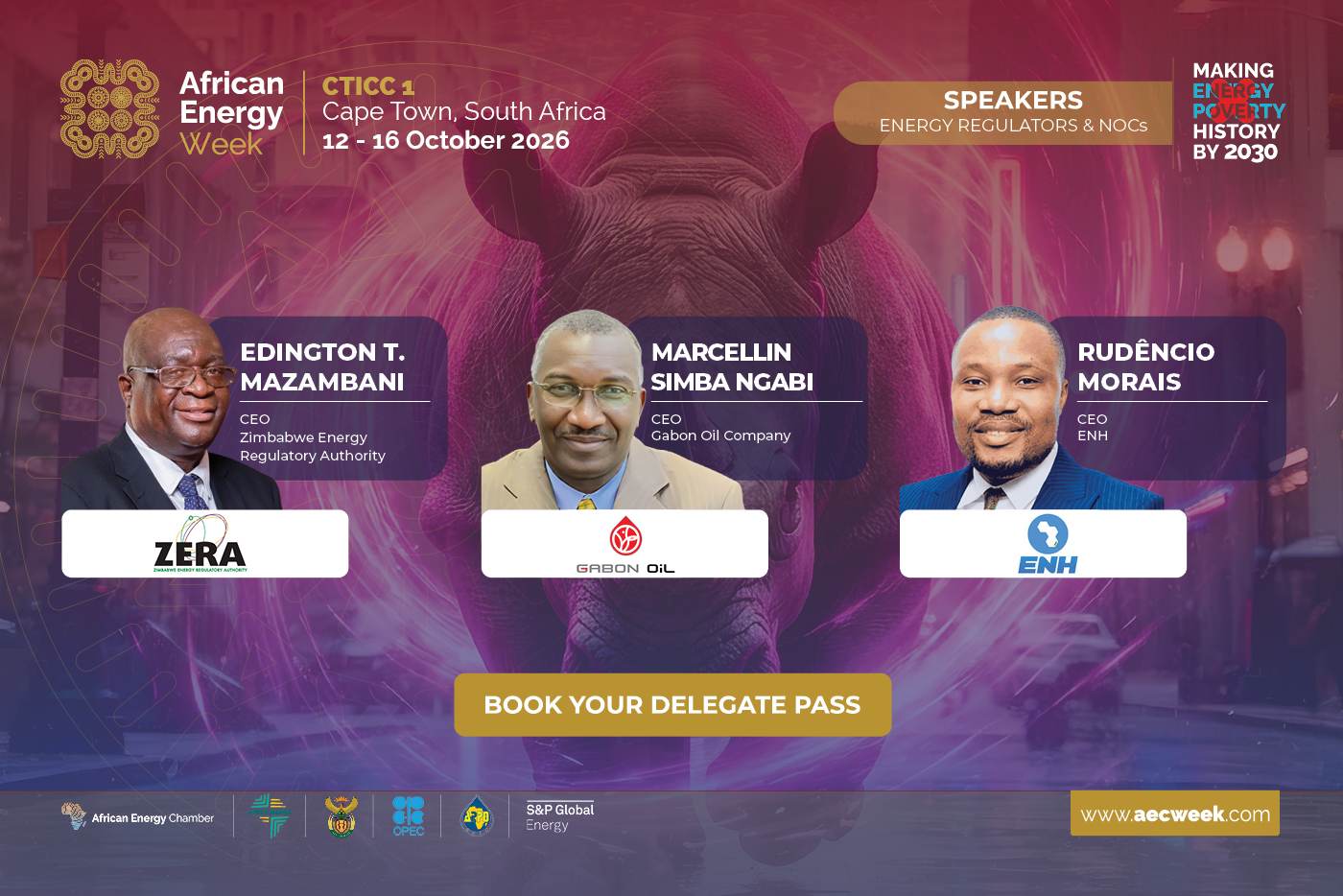
Zimbabwe, Gabon and Mozambique Energy Leaders to Drive Investment Talks at African Energy Week (AEW) 2026

Published

on

Zimbabwe

ZERA, Gabon Oil Company and ENH leaders will join AEW 2026 to discuss energy reform, upstream growth and investment opportunities across Africa

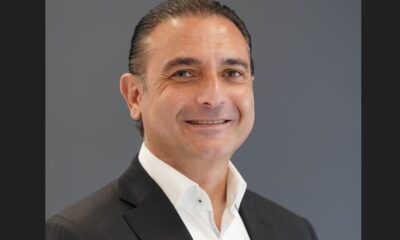
CAPE TOWN, South Africa, July 30, 2026/APO Group/ –Zimbabwe Regulatory Authority (ZERA) CEO Edington Tapera Mazambani, Gabon Oil Company (GOC) CEO Dr. Marcellin Simba Ngabi and Empresa Nacional de Hidrocarbonetos (ENH) Chairman and CEO Rudêncio de Rodolfo Novais Morais will speak at African Energy Week 2026, bringing perspectives from three institutions at the center of Africa’s evolving energy landscape. Representing regulation, state participation and natural resource development, the executives will share insights into the policies, investments and partnerships shaping the next phase of energy growth across southern and Central Africa.

Their participation comes as African governments pursue market reforms, strengthen national energy companies and expand private investment to improve energy security and accelerate resource development. AEW 2026 – taking place in Cape Town from October 12–16 – will provide a platform to examine how regulatory modernization, state-led investment and international partnerships are driving new opportunities across the continent’s electricity, oil and gas sectors.

Mazambani joins AEW 2026 as Zimbabwe advances one of its most significant energy market reforms in decades. The regulator recently shifted away from unsolicited project proposals in favour of structured competitive bidding, improving transparency while creating clearer pathways for private investment. At the same time, ZERA continues expanding the country’s renewable energy pipeline, issuing new generation licenses that have added hundreds of megawatts of planned capacity, predominantly through utility-scale solar projects.

The participation of ZERA, Gabon Oil Company and ENH at AEW 2026 reflects the important role these institutions play in shaping competitive energy markets

The authority has also launched initiatives to modernize the national grid, strengthen energy efficiency standards and prepare for wider deployment of distributed generation through future net-metering frameworks. Recent enforcement measures to ensure lower fuel prices are expected to reduce transport costs and improve affordability for consumers.

Meanwhile, Ngabi brings insights from one of Africa’s fastest-growing national oil companies as GOC expands from an equity partner into an integrated upstream operator. Since taking office, he has overseen a strategy centered on increasing state participation in Gabon’s petroleum sector through acquisitions, operatorship and domestic capability building. The company’s $300 million acquisition of Tullow Oil’s Gabon portfolio significantly expanded its production base and reserves while positioning GOC as a more influential operator across the country’s mature producing assets.

The acquisition of Société de Maintenance Pétrolière Afrique has brought drilling and well intervention expertise in-house, while new offshore production sharing contracts have expanded GOC’s operated acreage. These developments coincide with Gabon’s broader efforts to revive exploration activity, open new offshore licensing opportunities and modernizing refining infrastructure.

A geologist by training with decades of experience inside ENH, Morais has been tasked with maintaining technical continuity while advancing the commercialization of Mozambique’s vast offshore natural gas resources. His appointment comes as Mozambique seeks to accelerate financing and implementation of major Rovuma Basin LNG projects that are expected to transform the country’s economy over the coming decade.

Beyond LNG development, ENH is expanding its role across Mozambique’s broader energy value chain. Under Morais’ leadership, the company is supporting government efforts to increase domestic value addition by strengthening logistics infrastructure, pipeline networks and downstream facilities that can support long-term industrialization. The strategy reflects Mozambique’s growing emphasis on ensuring natural gas development delivers wider economic benefits through local content, industrial growth and improved energy access.

“Across Africa, governments are strengthening regulatory institutions, expanding the role of national energy companies and creating new investment frameworks to unlock long-term energy development,” says NJ Ayuk, Executive Chairman, African Energy Chamber. “The participation of ZERA, Gabon Oil Company and ENH at AEW 2026 reflects the important role these institutions play in shaping competitive energy markets, attracting investment and ensuring Africa’s natural resources drive sustainable economic growth.”

Distributed by APO Group on behalf of African Energy Chamber.

Business

African Energy Leaders Call for Action on South-South Oil and Gas Partnerships

Published

on

African Energy Chamber

At AEW 2026, industry representatives from Africa and the Caribbean say joint ventures, enforceable local-content rules and regional financing are needed to turn petroleum resources into domestic industrial growth

CAPE TOWN, South Africa, October 17, 2026/APO Group/ –African and Caribbean energy leaders called for stronger cross-border investment, technology transfer and enforceable local-content requirements to ensure emerging oil and gas producers capture more value from their resources during the session South-South Energy Partnership: Advancing Africa’s Oil and Gas Future in 2026 at African Energy Week (AEW) 2026 in Cape Town.


Ndapwilapo Selma Shimutwikeni, CEO, RichAfrica Consultancy, said partnerships could accelerate skills development.

“From a business perspective, we need to build partnerships that encourage joint ventures between experienced countries and emerging countries like Namibia,” she said. “We need to look beyond just oil production and actually look at the entire value chain.”

Building on Shimutwikeni’s remarks, Gilbert Yevi, Lead Consultant, Grenada Hydrocarbon Technical Working Group, called for partnerships that share risks and benefits rather than simply replace one source of financing with another.

We want cooperation and a collaboration in risk sharing, skill sharing, and sharing in the benefits

“We want cooperation and a collaboration in risk sharing, skill sharing, and sharing in the benefits,” he said.

Yevi also advocated regional training centers to pool expertise and help emerging producers access established industry capabilities.

Expanding on the topic of local content, Eric Williams, Principal Consultant and President, Royal Triangle Energy Solutions, said policies must be linked to a broader national development strategy, using petroleum resources to build domestic industries rather than focusing solely on exports.

“The Trinidad model is about using the molecules to develop the country,” he said, arguing that this vision should shape negotiations with upstream investors and the terms of petroleum contracts.

Omar Farouk Ibrahim, Regional Chair for Africa, World Energy Council, said national sovereignty concerns continued to limit practical regional cooperation, despite public commitments to collaboration.

“The first question they ask is: ‘Will the industry be in my territory?’ If it’s not, why should I? And for as long as we have this mentality, believe me, this cooperation and collaboration we’re talking about will just be theory,” he said.

Across the discussion, speakers emphasized that cooperation must translate into financing, enforceable commitments and local capabilities that endure beyond individual projects.

Distributed by APO Group on behalf of African Energy Chamber.


Continue Reading

Energy

Algeria’s Hydrocarbons Minister Joins MSGBC 2026 as Sonatrach Eyes Senegal Partnerships

Published

on

Etu Energias

Algiers and Dakar are preparing an energy agreement as Sonatrach pursues partnerships across the MSGBC basin

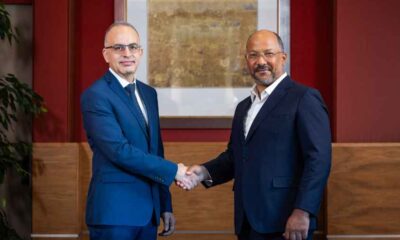
DAKAR, Senegal, October 19, 2026/APO Group/ –Mohamed Arkab, Algeria’s Minister of State and Minister of Hydrocarbons, will join the speaker lineup at MSGBC Oil, Gas & Power 2026 in Dakar this December, bringing one of the continent’s most senior energy ministers to a forum focused on investment and regional cooperation. His confirmation serves as a bridge between one of Africa’s longest-standing oil and gas producers and one of its newest, paving the way for greater collaboration across upstream exploration, infrastructure and power.


Algerian cooperation with MSGBC nations has already gained momentum. Minister Arkab hosted Senegal’s Minister of Energy and Petroleum, Dr. El Hadji Abdourahmane Diouf, in Algiers on October 4. The two-day visit produced a cooperation agreement between Senegalese utility Senelec and Algeria’s Sonelgaz, while Petrosen and Sonatrach held discussions on a potential partnership spanning upstream exploration and infrastructure.

Senegal’s government has said the visit sets the stage for an intergovernmental agreement to be signed in Dakar during MSGBC Oil, Gas & Power 2026. The two national oil companies first signed a memorandum of understanding in 2022, and Minister Arkab discussed putting it into effect with Senegal’s Minister of Foreign Affairs Cheikh Niang in July.

The potential partnership comes as MSGBC countries look toward the next phase of upstream development following the start of production at Senegal’s Sangomar oil field and the cross-border Greater Tortue Ahmeyim (GTA) LNG project. Regional priorities are now shifting toward advancing the next generation of projects, including Senegal’s Yakaar-Teranga gas development and Mauritania’s BirAllah discovery, while attracting fresh exploration investment across the wider basin. Moving these opportunities toward development will require capital, technical expertise and partnerships with established producers – creating scope for deeper cooperation with countries such as Algeria and companies such as Sonatrach.

Minister Arkab’s participation at the upcoming conference also arrives as Algeria advances its own exploration strategy. The event convenes shortly after bidding closes for the Algeria Bid Round 2026, which the National Agency for the Valorization of Hydrocarbon Resources launched in April with seven exploration blocks on offer. Submissions are due November 26, and Sonatrach expects to finalize contracts with successful bidders by the end of January 2027. Exploration and production will absorb three-quarters of the $60 billion Sonatrach intends to spend between 2026 and 2030, as the company works toward lifting annual gas output to 200 billion cubic meters within five years.

With a bilateral agreement potentially headed for signature on the conference sidelines, Minister Arkab’s participation promises to be one of the defining moments of the 2026 edition and reinforces MSGBC Oil, Gas & Power’s standing as the region’s leading meeting point for governments and investors.

Organized by Energy Capital & Power and held under the High Patronage of Senegalese President Bassirou Diomaye Faye, MSGBC Oil, Gas & Power 2026 takes place December 1–3 in Dakar and will convene heads of state, ministers, investors, operators and development partners from Mauritania, Senegal, The Gambia, Guinea-Bissau and Guinea-Conakry. Explore opportunities and secure your participation at www.MSGBCOilGasandPower.com.


Distributed by APO Group on behalf of Energy Capital & Power.


Continue Reading

Business

The Digital Webinar Series builds momentum towards the full Democratic Republic of the Congo (DRC) Critical Minerals & Industrialisation Forum 2027

Published

on

“In Four live sessions, one goal: turning mineral wealth into industrial growth

CAPE TOWN, South Africa, October 16, 2026/APO Group/ –The organisers of the DRC Critical Minerals & Industrialisation Forum, co-located with the DRC-Africa Battery Metals Forum, have announced a four-part digital webinar series running from September to November 2026. Bringing together government, industry and investment leaders, the series will examine the opportunities, challenges and partnerships shaping the DRC’s next phase of economic development.


Across four live sessions, the discussions will explore the policies, infrastructure, technologies and investment models needed to unlock greater value from the country’s critical mineral resources. Speakers will share market intelligence, practical case studies and perspectives on how the DRC can strengthen local value creation, attract investment and build a more competitive and sustainable minerals economy.

The webinar series also provides a platform for continued engagement ahead of the full in-person Forum in Kinshasa in 2027. VUKA Group RDC rescheduled the Forum to align with the DRC Government’s evolving national policy frameworks and allow the revised roadmaps for the $58 billion Master Plan for Industrialisation (Plan Directeur d’Industrialisation, PDI) to further develop.

The first four editions of the digital webinar series will focus on the following:

Webinar 1: 23 September 2026, 10h30–12h00 (https://apo-opa.co/4zwms7Z)

UNLOCKING THE DRC’S INDUSTRIAL POTENTIAL:  The A-to-Z masterclass strategy

The DRC masterclass examines how the nation can harness its mineral wealth for sustainable growth and industrialization. Experts will discuss policies to move beyond raw exports, enforce security and strengthen ESG standards. Priorities include local beneficiation, human capital development and tailored financing to balance global markets. By defining collaborative actions and investment pathways, the session seeks to accelerate value addition, enhance competitiveness and position the DRC as a responsible global leader in the minerals value chain. VIEW ON DEMAND (https://apo-opa.co/4zHqbjn)
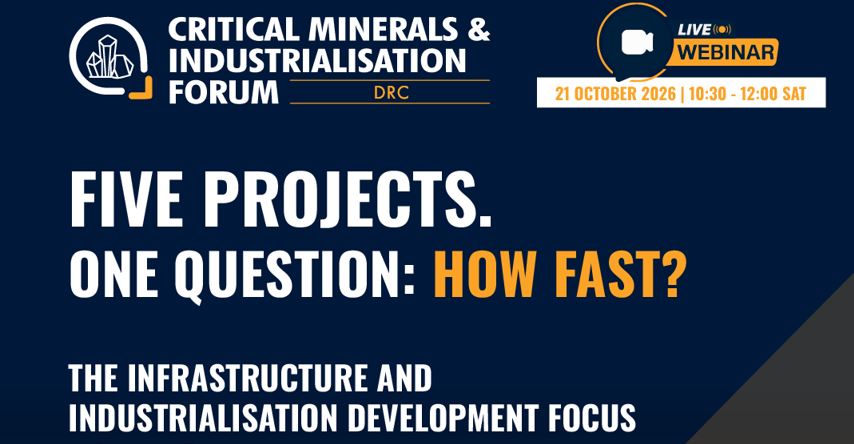
Webinar 2: 21 October 2026, 10h30–12h00   (https://apo-opa.co/4zwms7Z)

FOCUS ON INFRASTRUCTURE & INDUSTRIALISATION DEVELOPMENT

The panel on infrastructure and industrialisation highlights the DRC’s need to move beyond raw material extraction by focusing on local transformation. Building resilient industries will drive job creation and strengthen the economy. Experts will examine how transport, energy and logistics projects accelerate industrialisation, with case studies such as ports, railways and cross‑border initiatives. By prioritising strategic development and leveraging mineral revenues, the DRC can unlock sustainable growth and position itself as a competitive hub within the African Continental Free Trade Area.

Key discussion points

–  Understanding the DRC’s industrial strategy to capitalise on the African Continental Free Trade Area (AfCFTA)

–  The Lobito Corridor project: now or tomorrow?

–  Prioritising development projects in energy, transport linkages (road and railway rehabilitation), maritime infrastructure and port networks by utilising mineral revenues

Case studies

–  The Banana Port (developers: DP World and Mota-Engil contractors)

–  The Matadi Multipurpose Terminal, the DRC’s maritime gateway (AD Ports Group and the DRC Ministry of Transport)

–  Port of Boma maritime project

–  Banana–Matadi–Kinshasa railway

–  DRC–RSA Industrialisation Project, linking South Africa and the DRC and establishing 12 Economic Zones

Speakers

–  Chairperson: Bob Bononge, President, Caplaine Consulting, DRC

–  Popaul Madiana, Managing Partner, Prime Mineral Consulting, DRC

–  Serge Nawej, Partner, ADNA ALN, DRC*

REGISTER TO ATTEND (https://apo-opa.co/4dKfbsZ)

Webinar 3: 11 November 2026, 10h30–12h00   (https://apo-opa.co/4zwms7Z)

NEW TECHNOLOGIES DRIVING THE GLOBAL ENERGY TRANSITION

This session explores how technology and ESG‑aligned investment can transform the DRC’s critical minerals sector. With global demand for lithium, cobalt, nickel and copper rising, responsible sourcing and compliance are essential to build investor confidence. Discussions will focus on local processing, advanced metallurgical methods, renewable energy and automation to accelerate industrialisation. By shifting from raw exports to in‑country beneficiation, the DRC can strengthen sustainability, unlock long‑term value and position itself as a competitive player in the global energy transition.

Webinar 4: 25 November 2026, 10h30–12h00   (https://apo-opa.co/4zwms7Z)

STRATEGIC PARTNERSHIPS: BUILDING A STRONGER AND MORE SUSTAINABLE CRITICAL MINERALS VALUE CHAIN

This discussion explores how strategic partnerships can strengthen the DRC’s critical minerals value chain. By fostering collaboration between governments, regional integration systems and investors, the focus is on building resilience and supporting sustainable growth. Key themes include industrialisation through global partnerships, prioritising sectors for development and aligning with international partners. With effective models of cooperation, the DRC can unlock socio‑economic benefits, enhance competitiveness and establish a stronger foundation for a sustainable and inclusive minerals sector.

DRC’s transition
DRC Critical minerals & Industrialisation forum unites government, industry and investors to accelerate the country’s transition from raw‑material extraction to high‑value manufacturing, underscoring the nation’s opportunity to convert mineral wealth into infrastructure, jobs and sustainable economic growth.

The DRC’s Ministry of Mines (https://apo-opa.co/4jZPwjF) and the DRC’s Ministry of Industry (https://apo-opa.co/3UpRU98) as well the Federation of Enterprises of Congo (FEC) (https://apo-opa.co/4dHvFC4) are official partners of the event.

Distributed by APO Group on behalf of VUKA Group.


Continue Reading

Trending