Connect with us

Energy

Congo Liquefied Natural Gas (LNG) Phase 2 Begins Exports as Hydrocarbons Minister Joins Paris Energy Forum

Published

on

Congo

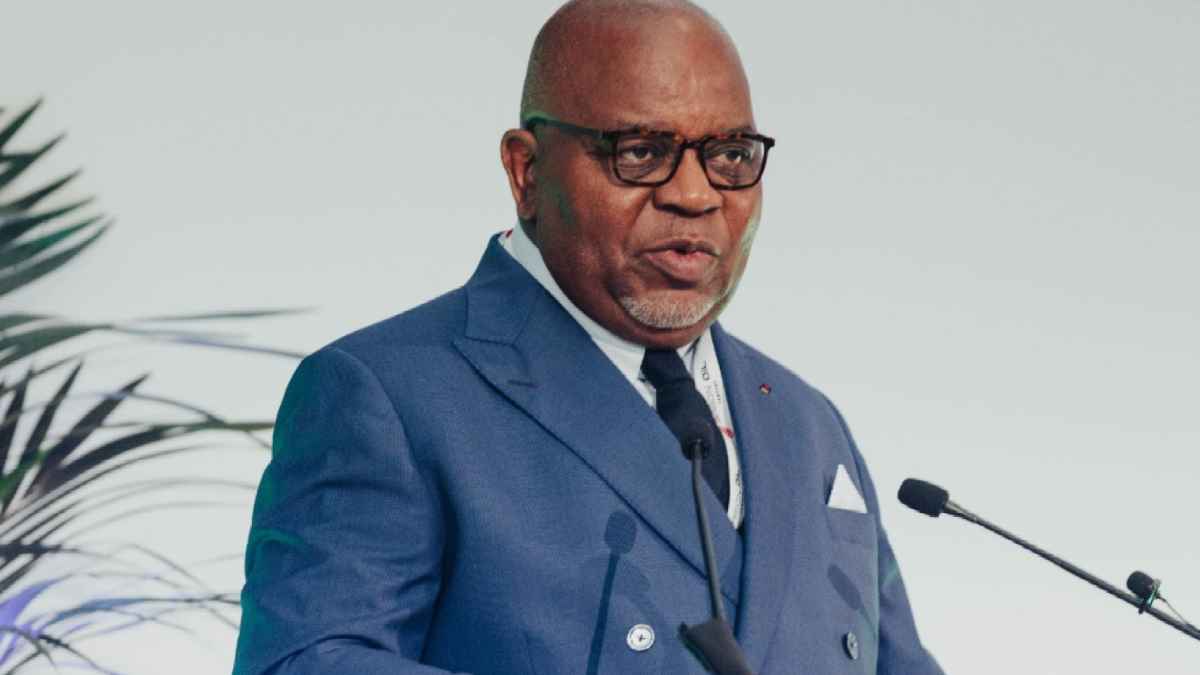
The Republic of Congo’s accelerated launch of Phase 2 of its LNG project underscores rapid execution and expanding export capacity, setting the stage for Hydrocarbons Minister Bruno Jean‑Richard Itoua’s participation at this year’s Invest in African Energy Forum in Paris

PARIS, France, February 13, 2026/APO Group/ –The Republic of Congo marked a major milestone earlier this week with first exports from Phase 2 of its Congo LNG project – amplifying investor interest just ahead of Hydrocarbons Minister Bruno Jean‑Richard Itoua’s engagement at the Invest in African Energy (IAE) Forum in Paris, scheduled for April 22–23, 2026. Operated by Eni, the second phase began exporting from the new Nguya FLNG facility, lifting the country’s liquefaction capacity to 3 million tons per annum and delivering its first cargo in early 2026 following commissioning ahead of schedule.

Phase 2’s start‑up, achieved roughly 35 months after construction began, adds capacity alongside the earlier Tango FLNG unit, reinforcing Congo’s emerging role as a competitive LNG exporter in Africa. The expanded infrastructure draws on gas from the offshore Nené and Litchendjili fields under the Marine XII license, giving the country a stronger foothold in global gas markets at a time when buyers – particularly in Europe – seek diversified supply sources amid a shifting energy landscape.

The timing of Phase 2’s export start-up dovetails with growing international interest in Congo’s broader energy agenda: TotalEnergies recently secured the Nzombo exploration permit with a one-well drilling program, while Perenco is redeveloping its mature Kombi‑Likalala‑Libondo II offshore field with a new platform to extend production and gas recovery.

Minister Itoua, who has been instrumental in advancing upstream, midstream and gas monetization policy in the country, is expected to outline investment opportunities across gas, LNG, marginal fields and exploration at the upcoming forum – providing investors with direct access to Congo’s evolving energy landscape.

Beyond LNG, the Ministry of Hydrocarbons has advanced regulatory reform – including a new gas code nearing adoption that streamlines fiscal terms and clarifies rules for investors – alongside international cooperation to stimulate investment. Past IAE Forum engagements have produced key agreements, such as the 2023 pact with Technip Energies to enhance onshore and offshore capacity and collaborate on decarbonization and energy transition, highlighting Congo’s proactive approach to industry partnerships.

At IAE 2026, investors and policymakers will have the opportunity to engage directly with Minister Itoua and other senior officials on these developments, gaining first‑hand insight into how Congo is balancing gas monetization with broader energy sector growth and unlocking investment opportunities.

Congo’s trajectory – from a mature oil producer to a rapidly evolving LNG exporter – reflects a broader shift in African energy markets toward integrated, export‑oriented gas strategies. By linking robust policy engagement with ambitious infrastructure execution, Congo exemplifies how resource-rich African states can compete for global investment while contributing meaningfully to energy security and economic growth. As Minister Itoua prepares to take the stage in Paris, the Phase 2 LNG milestone serves as concrete evidence of both progress and opportunity for investors prepared to engage with the continent’s expanding energy frontier.

Distributed by APO Group on behalf of Energy Capital & Power.

Business

Why Africa’s Energy Supply Gap is its Defining Commercial Opportunity

Published

on

Africa’s energy deficit is often framed as a development crisis, but in 2026 it should also be seen as one of the continent’s most compelling structural investment opportunities

CAPE TOWN, South Africa, February 13, 2026/APO Group/ –Nearly 600 million people across Africa still lack access to electricity, with electrification progress barely keeping pace with population growth and leaving the continent far from universal access targets. Achieving full access will require electricity-access investment to scale toward around $15 billion annually, according to the IEA, yet tracked financing commitments remain below $2.5 billion per year, underscoring a profound capital shortfall.

This mismatch – vast, guaranteed demand paired with chronic under-investment – is precisely what creates durable commercial opportunity. Energy demand across Africa is projected to rise sharply through 2030, driven by urbanization, industrialization, electrification and emerging high-consumption sectors such as data centers. Sub-Saharan Africa contains the majority of the global population without electricity, while the continent hosts 20% of the world’s population but receives only about 2% of global clean-energy investment.

In investment terms, this reflects demand certainty combined with supply scarcity – a dynamic that historically underpins strong long-term project economics. Reliable power fuels industrial growth, digital infrastructure and sustained revenue expansion, linking electrification directly to bankable demand. Closing the supply gap is therefore not just a social imperative, but a continent-wide revenue opportunity for investors.

Energy poverty is not just a challenge – it is Africa’s greatest investment opportunity

This commercial logic is already reshaping global portfolio strategy. Major oil companies facing reserve pressure and slowing discoveries are increasingly turning toward frontier regions capable of delivering material new volumes, with Africa at the center of this shift. Industry analysis in 2026 suggests some producers could face production declines of hundreds of thousands of barrels per day within the next decade without major discoveries or acquisitions – intensifying the search for scalable new basins.

Developments progressing through 2025–2026 demonstrate how structural demand is translating into commercially viable assets. Mozambique’s $20 billion LNG project, advancing toward production later this decade, is anchored by tens of trillions of cubic feet of recoverable gas and supported by one of the largest financing packages ever assembled for an African energy development – demonstrating how global gas demand, domestic industrialization and long-term state revenue can align within a single project.

Meanwhile, analysis indicates that developing the continent’s gas resources could play a decisive role in closing the electricity access gap for hundreds of millions of people, while contributing only marginally to global emissions – strengthening the investment rationale even within a transition-constrained financing environment.

“Energy poverty is not just a challenge – it is Africa’s greatest investment opportunity. What we are witnessing today is a historic convergence of demand, resources and political will. The companies and investors that choose to partner with Africa now will not only generate long-term returns, but help power industries, create jobs and define the next era of global energy,” says NJ Ayuk, Executive Chairman of the African Energy Chamber.

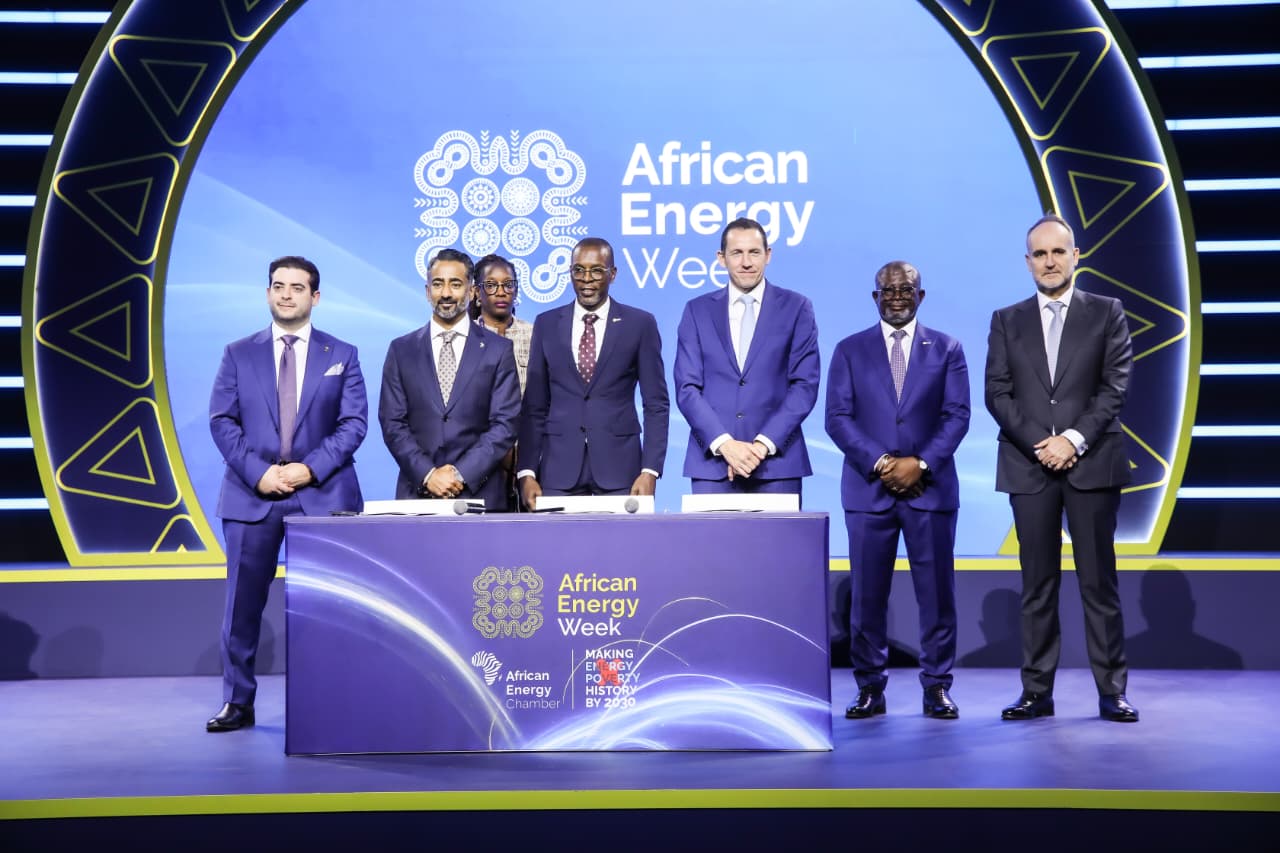
This commercial reality will take center stage at African Energy Week 2026 in Cape Town, where policymakers, operators and financiers will focus on translating structural demand into bankable upstream, LNG, gas-to-power and renewable energy projects. Making energy poverty history will require unprecedented capital deployment – but the investment case is already clear. Vast resources, accelerating demand and a growing pipeline of projects position Africa’s energy gap as one of the defining commercial opportunities of the energy transition era.

Distributed by APO Group on behalf of African Energy Chamber.


Continue Reading

Business

RS Group Partners with SolarAid to Bring Safe Solar Light to 150,000 People across Africa

Published

on

RS Group plc (LSE: RS1) (https://Africa.RSDelivers.com), a high-service global product and service solutions provider for industrial customers, today announces a new three-year partnership with international development charity SolarAid. Together, RS Group and SolarAid aim to raise £1 million to deliver clean, safe solar lights to 150,000 people living in rural communities across Africa without access to electricity.

The partnership forms a central part of RS Group’s 2030 ESG action plan and champions the shared ambition to “make amazing happen for a brighter world.” By combining corporate donations, matched funding, RS PRO product contributions, employee fundraising, and gifts in kind, RS Group will help accelerate SolarAid’s mission to create thriving solar businesses that tackle poverty and climate change.

Just one solar light benefits every member of the household leading to a 90% reduction in kerosene, candles or torches, with a 95% saving on their energy spend and enabling a child to study safely for the first time after sunset. It also reduces carbon emissions in the transition to renewable energy.  A paraffin candle emits three times its weight in CO2 and a kerosene lamp emits over a tonne of carbon over 3 years.

Employee engagement at the heart of the partnership

RS and SolarAid are closely aligned as providers of products and solutions that support the low-carbon transition with a focus on renewables. As a leader in industrial MRO services, the RS team’s expertise will directly support SolarAid’s global and local repair programmes, helping build a circular solar economy in off-grid communities. RS employees worldwide will be encouraged to get involved through skills-based volunteering, fundraising challenges, and awareness-raising activities. Planned initiatives include:

Access to clean, safe solar light is a powerful catalyst for education, safety, and opportunity

  • Skills-based volunteering: RS experts will seek to support SolarAid projects, such as improving its Repair App, which helps communities extend the life of solar lights and reduce waste through simple repairs.
  • On-the-ground engagement: Opportunities to visit SolarAid-supported communities in Malawi and Zambia, as well as welcoming SolarAid representatives to RS markets for live demonstrations.
  • Active for Change: A global fundraising challenge where employees raise money by logging physical activity in teams.

RS employees are entitled to two annual volunteering days, and the company aims to inspire 50% of colleagues to use this time to support their communities and the SolarAid partnership.

Bridging ambition with proven impact

SolarAid’s recent remarkable achievement in Kasakula, Malawi underscores the partnership’s potential. On 26 August 2025, 100% of households, all local schools, and the health clinic in Kasakula gained solar access through the Light a Village initiative—highlighting what’s possible when communities, charities, and partners align around a bold, shared goal.

A brighter future through collaboration

Andrea Barrett, Chief Sustainability Officer at RS Group, said “We are proud to partner with SolarAid on this important mission. Access to clean, safe solar light is a powerful catalyst for education, safety, and opportunity. By combining the passion of our people with the innovation of our customers and suppliers, we can make amazing happen for communities that need it most. The success in Kasakula is a living proof point: achieving 100% access in one of the world’s poorest and most remote regions shows that universal energy access is not just achievable, but scalable.”

John Keane, CEO of SolarAid, said,“We are delighted to be working in partnership with RS Group. From the very start our shared purpose and alignment has been clear. Like RS Group, we strive to innovate the best solutions for our customers, so that we can deliver sustainable energy access. We are incredibly excited by the huge opportunity we have together, to progress our mission and bring clean, safe light and power to those living in the most remote, hardest to reach communities. Together, we really will make amazing happen for a brighter world”.

Driving long-term impact

The partnership builds on RS Group’s track record of impactful collaborations, including raising nearly £1 million for The Washing Machine Project since 2020. By focusing on engagement opportunities for employees, customers, and suppliers, RS Group and SolarAid aim to create a movement of shared purpose and innovation. To amplify the collective impact, RS Group will match donations and funds raised by employees, further reinforcing its commitment to empowering communities.

Distributed by APO Group on behalf of RS South Africa.

Continue Reading

Energy

The National Business Initiative (NBI) Urges SONA to Frame Water, Energy and Climate Crises as National Economic Priorities

Published

on

The rapid expansion of renewable energy is essential, and the same time the country mustensure energy reliability during the transition, including the continued role of existing generation capacity in the near term

CAPE TOWN, South Africa, February 12, 2026/APO Group/ –Ahead of the State of the Nation Address and the upcoming Africa’s Green Economy Summit (AGES), the National Business Initiative (NBI) has issued a compelling call for a decisive shift in how South Africa addresses its most pressing challenges. NBI CEO Shameela Soobramoney asserts that the nation’s parallel crises in water security, energy reliability and climate resilience constitute an interconnected “triple threat” to economic stability, urging for an immediate transition from planning to execution through a structured national “delivery compact.”

Soobramoney argues that the country must dismantle the perceived trade-off between environment and economy. “Environmental sustainability and economic progress are not mutually exclusive; they are interdependent,” she states. “The persistent narrative that green priorities hinder growth is an unnecessary diversion. Our immediate task is to create policy and strategic coherence which allows for the certainty needed to turn existing plans into bankable projects and attract investment. We need to entrench the understanding around the risks to economy and society and consider them as systemically integrated. The upcoming Africa’s Green Economy Summit is a key moment to signal our readiness to lead, not just participate.”

Water, energy and climate: The triple threat to economic foundations

The NBI positions the protection of nature, climate adaptation and mitigation as central elements of the national economic strategy. Framing these risks as merely environmental issues has pushed them to the margins of planning. “We are facing a systemic economic risk,” Soobramoney explains. “Water scarcity paralyses supply chains. Energy instability devastates productivity. Climate disasters create massive fiscal shocks. Together, they form a triple threat that increases costs, stifles growth and entrenches inequality, directly undermining our economic foundation and social contract.”

A call for a practical national “delivery compact”

Our immediate task is to create policy and strategic coherence which allows for the certainty needed to turn existing plans into bankable projects and attract investment

The solution proposed is a focused, accountable partnership model. “We have enough forums for discussion; what we need now is a national delivery compact,” Soobramoney asserts. This compact would target specific, measurable outcomes, such as achieving defined water security and energy reliability benchmarks. We have already seen some examples of how this can yield results in actions such as the business-government partnership which supported Operation Vulindlela.These should be built on three pillars: transparent, shared data and shared understanding of the challenge; clear lines of accountability; and genuine co-implementation between public and private sectors. “SONA must signal this critical shift from siloed plans to coordinated delivery. This is the single most powerful action to enhance confidence, both domestically and for the international investors gathering at AGES this month.”

A credible transition: Balancing energy security and decarbonisation

The NBI emphasises that South Africa’s transition must be credible, pragmatic and economically grounded. The rapid expansion of renewable energy is essential, and the same time the country mustensure energy reliability during the transition, including the continued role of existing generation capacity in the near term. “The transition is not about switching off the current system overnight. It is about building the new system fast enough while stabilising the one we have.”

A decisive transition pathway must acknowledge the realities of the current energy system. In the near term, responsibly managing existing generation capacity – including fossil-fuel assets – is essential to protect economic stability, while reforms accelerate the shift to a cleaner, more competitive, affordable and future-fit electricity market based on clear business cases and transparent cost understanding.

Tangible signals to unlock green investment and competitiveness

To secure South Africa’s position in the future green economy, Soobramoney identifies non-negotiable actions. These include finalising the creation of an independent national transmission company and competitive electricity market, announcing clear renewable energy generation targets and actively leveraging the country’s mineral and industrial base to build local manufacturing capacity for electric vehicles and components. “We have the strategic assets. What we require is the policy certainty, targeted incentives, and execution speed to transform them into jobs and decent earning opportunities, investment and export competitiveness. Clarity from SONA will directly shape the conversations and investment decisions at the Green Economy Summit.”

Effective service delivery is the cornerstone of justice and stability

There is a link between effective governance and national well-being. ” Failure to deliver basic services is an injustice that destroys trust and accelerates economic decline,” says Soobramoney. “Building a resilient future is not a political choice; it is an operational imperative. Our collective focus must be on building enduring partnerships and state capability to deliver tangible results for all citizens.We are at a defining moment as a country and as a globe. Setting a solid foundation for growth and the realisation of the enormous potential and our natural assets positions us to be able to respond to and in many cases, lead, in sustainable growth and development.”

Distributed by APO Group on behalf of VUKA Group.

Continue Reading

Trending

Exit mobile version