

Business
Rolls-Royce: Sustainably Powering Africa’s Regional Connectivity (By Lydia-Claire Halliday)

Africa urgently needs a more extensive and robust aviation network, given the region’s relative lack of alternative long-distance transportation infrastructure
DAKAR, Senegal, December 28, 2022/APO Group/ —
By Lydia-Claire Halliday, Executive Director, Stakeholder Relations & Strategy, LCH Consultancy Ltd.
The African aviation market has been underserved for a long time. Before 2020, only 9% of Africa’s air traffic was between African countries, the rest being intercontinental. And today, globally, the region accounts for less than 2% of total air traffic despite being home to around 17% of the world’s population.
Africa urgently needs a more extensive and robust aviation network, given the region’s relative lack of alternative long-distance transportation infrastructure. Indeed, unlike the United States and Europe, where there is an extensive road and rail network, in Africa, these vital modes of intracontinental transport remain underdeveloped.
“African countries have experienced unprecedented economic growth in the past years, with a fast-growing population, but the airline industry has not enjoyed the same positive trend. African airlines have been marginalised, and this is evidenced by the sharp drop of their market share in the past years. In the intra-African regional market, there is need for airlines to deploy the appropriate right-sized aircraft. As the air transport sector resumes the growth trajectory post-COVID, growth will be enhanced by implementing the Single African Air Transport Market (SAATM) and the African Continental Free Trade Agreement (AfCFTA). A shift of strategies and focus on the regional operations to feed, and de-feed major hubs is important for African carriers to harness the growth opportunity and enhance competitiveness.” Mr Abderahmane Berthé – AFRAA Secretary General, speaking at the associations’ Annual General Assembly in Dakar Senegal.
While infrastructure is being developed, aircraft manufacturers are also responding to the call. Embraer, in particular, has long seen the potential for its planes in Africa and has thus extensively marketed its aircraft to African airlines.
Rolls-Royce proudly supplies the Brazil-based aircraft manufacturer with AE3007 engines for its 50-seater ERJ family of aircraft. Since the engine achieved FAA/EASA certification in 1995 for Embraer, Rolls-Royce has delivered more than 3,200 engines worldwide, with more than 65 million flight hours. The AE3007 also reliably and efficiently powers the Cessna Citation X passenger aircraft. In the Defence sector, the AE3007 powers the Northrop Grumman RQ-4A Global Hawk & Triton; in fact, the AE engine family was initially developed for defence applications. Still, the constant development of the common core has given us a range of highly robust and versatile engines.
In Africa, Rolls-Royce powers more than 100 regional aircraft in operation. These range from premium full-serviced regional airlines, government-owned flagship airlines, charter operations, and mining companies to operators serving humanitarian missions for the United Nations and the World Food Program.
The majority of these aircraft, however, are Embraer’s ERJ 145/140/135 and Legacy twin-turbofan regional jets. The Long Range version of the ERJ140 can carry a full load of passengers over a distance of more than 3,000 kilometres. This range can intra-connect Eastern, Central, Western, Southern and Northern African sub-regions.
As this connectivity increases and barriers to trade and travel are lowered, we expect demand for this aircraft type to grow.
During the pandemic, with many aircraft grounded, Rolls-Royce took the opportunity to complete an extensive maintenance program on their AE3007 engines in the region, upgrading to the latest standards without charge. This allowed operators to comply with an Airworthiness Directive (necessary for all grounded aircraft) before operations restarted, giving them an all-important head start.
Meanwhile, in September 2021, Rolls-Royce penned an important extension of its TotalCare maintenance service agreement with South African airline Airlink.
Rolls-Royce has submitted a proposal to Embraer to power the new 70-90 seater rear-mounted turboprop that the airframer plans to launch in early 2023
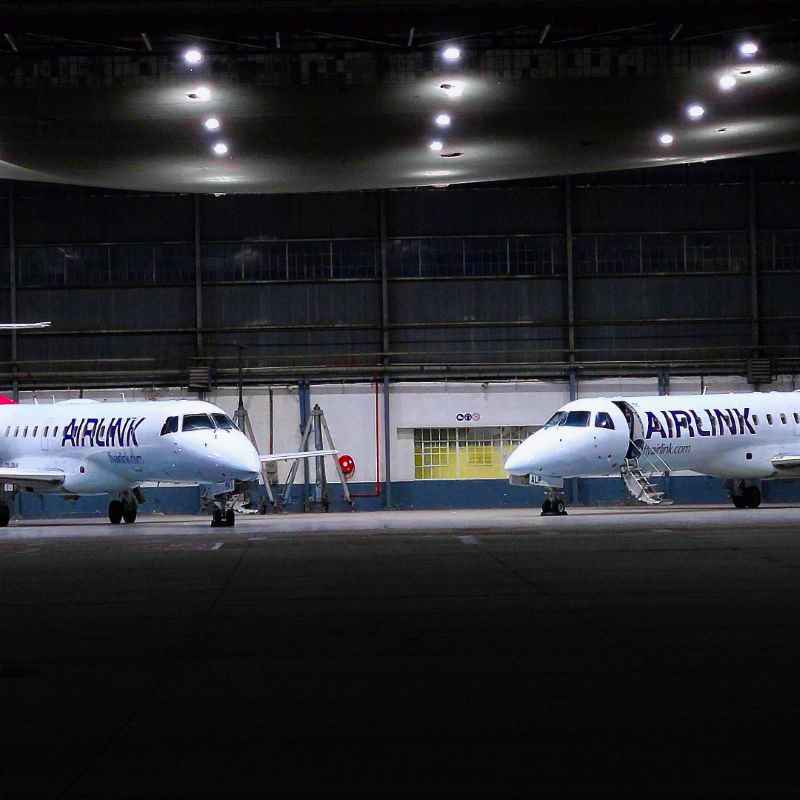
“I’m very proud to say that we have had a long-standing relationship with Rolls-Royce since 2001. These engines power up our 28-aircraft Embraer ERJ fleet. Rolls-Royce has never dropped the ball, and Airlink has extreme reliability on these engines. Kudos to Rolls-Royce, who has been awarded our supplier of the year and on an unbelievable and excellent relationship.” Rodger Foster, Chief Executive Officer, Managing Director Airlink
The key to TotalCare is that Rolls-Royce takes back time-on-wing and shop visit cost risks, providing airlines with peace of mind that their maintenance schedules will run at a fixed cost per engine flying hour.
The service is underpinned by predictive maintenance, i.e. fixing problems before they occur. It relies on extensive gathering and analysis of performance data, which helps engineers to diagnose potential future faults and act on them to avoid downtime.
Indeed, this has been central to Airlink’s impressive on-time performance, consistently above 97% throughout its use of TotalCare.
Moving forwards, if Africa is to build a more extensive regional flying network, maintenance infrastructure will be essential to ensure it runs smoothly. Indeed, Rolls-Royce has observed the need to diversify services to keep as many aircraft flying in the region as possible.
A relentless focus on efficiency and the pathway to zero-emissions
Deploying the right aircraft on suitable routes is also crucial to running the network as environmentally and sustainably as possible.
According to research by Embraer, some 14% of all domestic African flights are operated on widebody aircraft. In addition, the company observes that almost all (99%) of these flights flown with widebodies fly on sectors under 4,500 kilometres – in other words, the scope for narrowbody aircraft seating 120-150 passengers to increase operational efficiency is sizeable.
In the longer term, the regional aviation industry has a huge opportunity to be a flagbearer for net zero flying.
And here, as one example in Norway, Embraer and Rolls-Royce, in collaboration with Widerøe, are deep into a study on a conceptual zero-emission regional aircraft. The 12-month project, set to conclude in February 2023, aims to accelerate the knowledge of the technologies necessary for the net zero transition, progress which could pave the way for clean fuels and electrification to be the significant enablers of a new era of regional aviation. The study examines a variety of potential solutions, including all-electric, hydrogen fuel cell or hydrogen-fuelled gas turbine-powered aircraft.
Meanwhile, Rolls-Royce has submitted a proposal to Embraer to power the new 70-90 seater rear-mounted turboprop that the airframer plans to launch in early 2023. A key reason why Embraer has chosen to switch the design to rear-mounted engines is that it enables easier accommodation of a hydrogen system which could be integrated in the future. With its ongoing R&D into hydrogen-propelled aircraft, Rolls-Royce will be well-placed to fulfil this need.
In addition, the company is set to prove that all its aero engines will be able to run on 100% Sustainable Aviation Fuel by the end of 2023. Any sustainable fuel that meets the D1655 jet fuel standard and requirements is now approved for use in AE3007 engines. Currently, seven different blend varieties can be used, some being certified to blend up to 50% with conventional jet fuel, dramatically reducing carbon footprints.
In keeping its fingers on the pulse, Rolls-Royce is ideally positioned to steer Africa’s growing regional aviation sector in a sustainable direction over the coming years.
Distributed by APO Group on behalf of Rolls-Royce.










Business
AFRICLOUD Opens Lagos Region and Local-Currency Payments in African Markets
The company’s third African region keeps Nigerian workloads in Nigeria, and customers from Abidjan to Nairobi can now pay in the currency they earn, without an international card

Download document (1): https://apo-opa.co/4Ardfz9
Download document (2): https://apo-opa.co/46FWH8Y
Buying cloud infrastructure in Africa has meant living with three compromises: traffic that leaves the continent and comes back, payment in dollars behind a card many businesses do not hold, and data sitting under somebody else’s law.
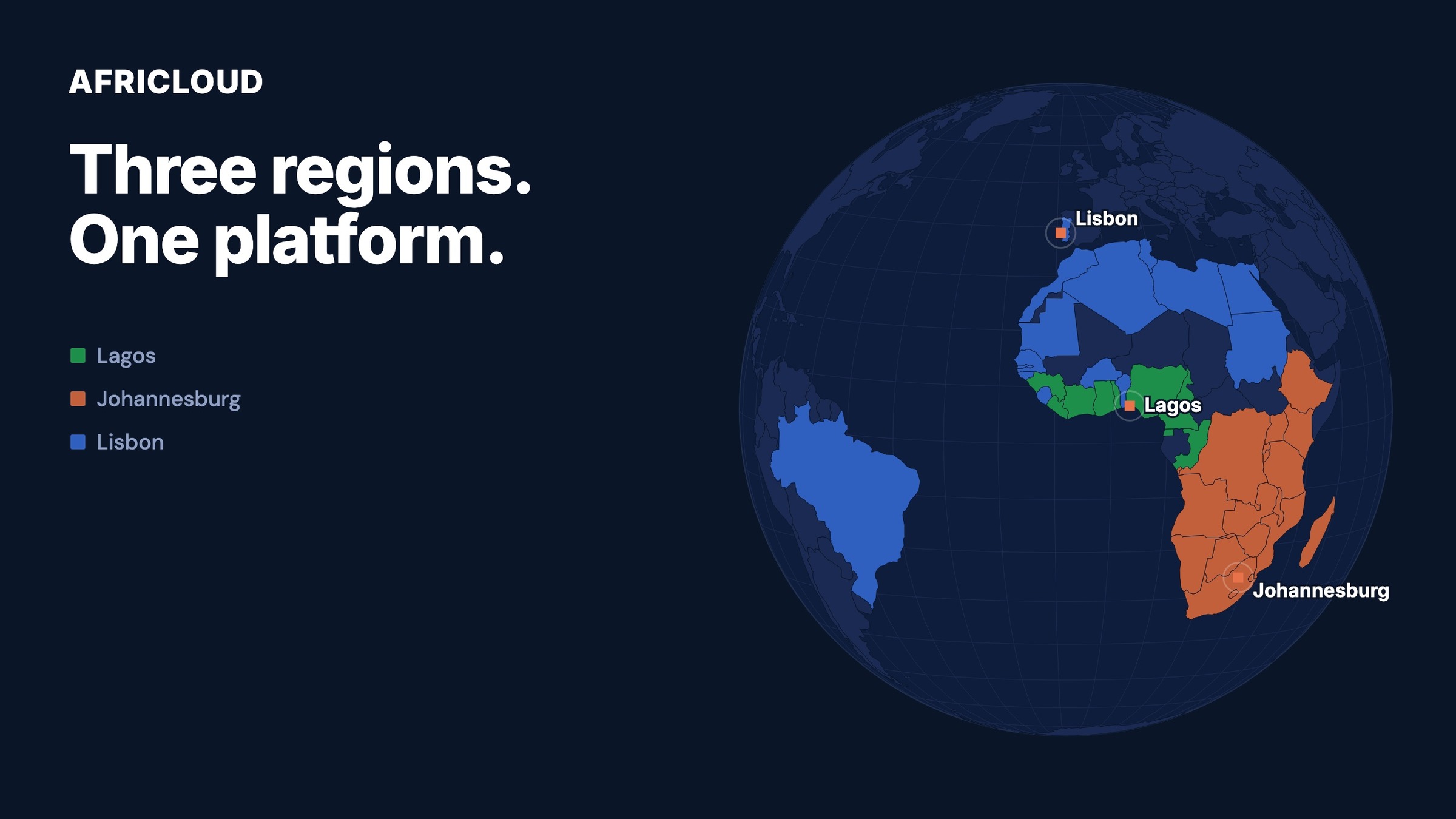
Lagos answers the first. Compute and storage for Nigerian customers stay in Nigeria, and the region also serves Accra, Abidjan, Lome, Douala and Ouagadougou. Traffic from landlocked West Africa that once reached comparable infrastructure by way of Europe now stays on terrestrial West African fibre. Johannesburg serves Southern and East Africa. Lisbon serves North Africa and Europe, and reaches Brazil over a direct subsea route. Across the three regions, AFRICLOUD’s own continent-wide measurements place 42 of the 53 African countries measured within a best-case round trip of 70 milliseconds, countries home to about 1.28 billion people.
A company in Accra or Abidjan now reaches West African infrastructure without leaving the region, and pays for it in the currency it earns
Payment answers the second. Customers across West, Central, East and Southern Africa pay in their own currency, including the naira, the cedi, the shilling and the CFA francs, by local card, bank transfer, USSD or mobile money, with no international card needed. Mobile money is live in twelve African countries, and cards, PayPal and more than 300 cryptocurrencies are accepted everywhere. The GSMA reports that 74 per cent of the world’s mobile money activity by transaction count took place in Africa in 2024.
Residency answers the third. Nigerian data runs under the Nigeria Data Protection Act, South African data under POPIA and European workloads under EU law, chosen server by server from the same dashboard.
“African businesses have been asked to choose between infrastructure that is close, infrastructure they can actually pay for, and infrastructure that keeps their data under their own law,” said Oluniyi Ajao, Founder of AFRICLOUD. “Removing that choice is the reason we built this.”
“Lagos is the piece that completes the map,” he said. “A company in Accra or Abidjan now reaches West African infrastructure without leaving the region, and pays for it in the currency it earns.”
All three regions run the same platform: AMD EPYC processors with all-NVMe storage, IPv4 and IPv6 on every server, and a new server online in about two minutes. Dedicated Servers are built to order in all three regions. Support is available around the clock by chat and email.
Cloud Servers are available now at https://AFRICLOUD.com.
Distributed by APO Group on behalf of AFRICLOUD LLC.
Business
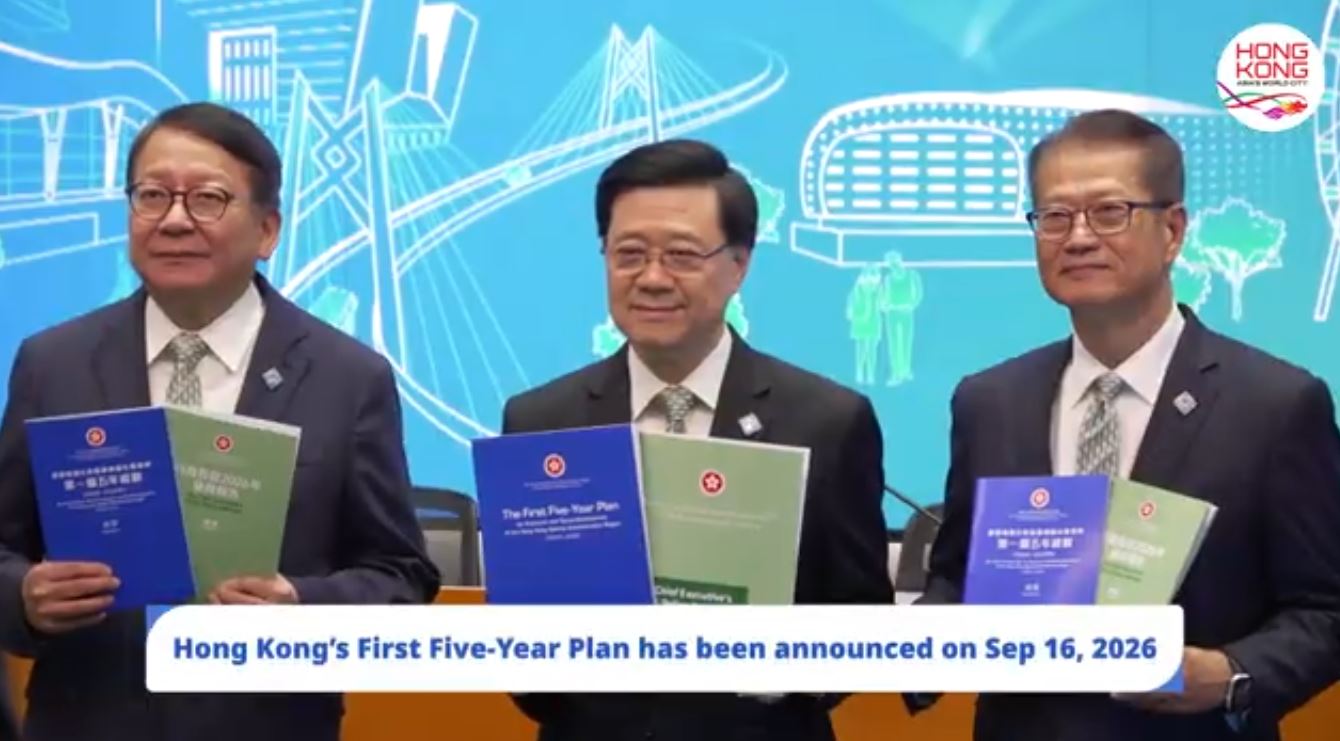
Hong Kong outlines strategies for deepening development of the Guangdong-Hong Kong-Macao Greater Bay Area and enhancing green transformation
Business
Alamein Africa Forum to bring together key political and business leaders

-

 Business2 days ago
Afreximbank, Ghana Infrastructure Investment Fund (GIIF) and Ghana’s 24-Hour Economy Authority launch project preparation partnership to accelerate 24H+ projects
-

 Events2 days ago
Huawei Cloud Rolls Out Enterprise AI Products Across the Board, Building an Open Agentic Cloud
-

 Business2 days ago
Hong Kong sets out strategies to enhance the appeal and add value to the city’s tourism industry
-

 Energy2 days ago
Deals, Drilling and New Entrants Define Angola Oil & Gas 2026
-

 Business2 days ago
Former DAMAC Senior Vice President Paulo J. Cruz Appointed Founding CEO of African Collaboration Group (ACG) to Spearhead Sports and Entertainment District Development Across Africa
-

 Business2 days ago
Hong Kong sets out initiatives to secure long-term development of pillar industries
-

 Business2 days ago
Africa Makes its Case for a Bigger Role on the Global Stage
-

 Business2 days ago
South Africa’s water challenges are reshaping how businesses plan for resilience