Connect with us
Anglostratits

Business

Former DAMAC Senior Vice President Paulo J. Cruz Appointed Founding CEO of African Collaboration Group (ACG) to Spearhead Sports and Entertainment District Development Across Africa

Published

on

DAMAC

Paulo J. Cruz will lead the development and expansion of a pan-African platform for the origination and structuring of large-scale sports and entertainment district ecosystems

LONDON, United Kingdom, September 21, 2026/APO Group/ –African Collaborations Group (ACG) (www.ACGafrica.com), the leading strategic project origination and collaboration platform focused on the industrialisation of sport in Africa through bankable district ecosystems, today announced the appointment of Paulo J. Cruz as its Founding Chief Executive Officer.


Mr Cruz joins ACG from DAMAC Group, one of the largest privately held real estate developers in the Middle East, where he served as Senior Vice President from 2022 to 2026. In 2025, the Group reported close to USD 10 billion in property sales. His tenure at DAMAC further deepened an already distinguished career spanning infrastructure origination, urbanisation strategy, and large-scale real estate development across Africa, the Middle East, and Europe.

Over the course of his 28-year career, Mr Cruz has originated or structured projects ranging from USD 50 million to in excess of USD 5 billion, stewarding initiatives from early-stage concept through feasibility analysis, financial structuring, and investor alignment to bankable delivery stages. His professional footprint encompasses senior roles at BP, one of the world’s foremost energy companies; BlackIvy Group, a US-backed infrastructure investment platform; Movares, a leading European engineering consultancy; and Cushman & Wakefield, a globally recognised real estate advisory firm.

Prior to DAMAC, Mr Cruz served as Group Chief Executive Officer of LandAfrique, a pan-African development platform focused on industrial parks, infrastructure, housing and power projects across Sub-Saharan Africa, further solidifying his reputation as one of the continent’s most experienced development executives.

Infrastructure is the prerequisite for the industrialisation of sport in Africa

As Founding CEO of ACG, Mr Cruz will lead the development and expansion of a pan-African origination platform, working in close partnership with sovereign governments, development finance institutions (DFIs), private investors, sport and entertainment principals, and leading academic institutions to structure district-level projects that are both investable and deliverable at scale.

ACG operates as a specialised origination and collaboration platform engineered to transform concepts into credible, bankable sport and entertainment district ecosystems — architectures capable of attracting institutional capital and generating long-term, multi-dimensional economic impact at a national and continental scale.

ACG’s flagship initiative, Victory District™, provides a proprietary district development framework designed to originate integrated, mixed-use sport and entertainment destinations that transcend conventional single-venue models. The framework prioritises asset utilisation optimisation, long-term sustainability, expanded revenue diversification beyond matchday economics, structured employment and youth opportunity creation, talent development pathways, and institutional-grade operations and maintenance standards.

Mr Cruz’s appointment follows the establishment of ACG’s Advisory Board, comprising internationally recognised leaders from global sport governance, finance, infrastructure and development institutions — including Fatma Samoura, Former Secretary General of FIFA; Kenny Jean-Marie, Former Chief Member Associations Officer of FIFA; Herbert Mensah, President of Rugby Africa and Executive Board Member of World Rugby; and Jan Alessie, Co-Founder and Managing Director of the World Football Summit — as well as a Research & Impact Advisory Panel of leading scholars focused on the economics, governance and societal impact of sport. The full list of Advisory Board and Research & Impact Advisory Panel members can be consulted here:  https://apo-opa.co/4xMb5ry.

“Paulo brings an exceptional combination of origination expertise, institutional credibility, and continental experience that is virtually unparalleled in this space. His demonstrated ability to transform ambitious development concepts into financially structured, bankable projects positions him as the ideal leader to guide ACG as we build a platform capable of catalysing transformative investment and accelerating the realisation of financially sustainable sport and entertainment districts across Africa,” said Nicolas Pompigne-Mognard (www.Pompigne-Mognard.com), Founder and Executive Chairman of ACG.

A prominent thought leader and keynote speaker at leading international platforms — including the Africa Property Investment Summit (API Summit), the Africa Real Estate Conference & Expo (ARCE), the African Union for Housing Finance Annual Conference, and the West Africa Property Investment Summit — Mr Cruz was honoured as “Person of the Month” by Sustainable Investments and Alliances for Africa (SIA).

“Infrastructure is the prerequisite for the industrialisation of sport in Africa — without it, the entire value chain remains theoretical. Athletes need places to train, compete and develop. Sport governing bodies need venues that meet international standards. Broadcasters, sponsors and event organisers need facilities capable of generating commercial value. Every revenue stream in the sport economy ultimately depends on infrastructure existing and its respective operation. But how that infrastructure is originated determines whether it becomes an economic engine or a fiscal burden. Across Africa, too many sport facilities have been built in isolation — a stadium delivered for a single event, then left to deteriorate at a fraction of its capacity, draining public finances rather than generating returns. ACG exists to change that equation,” said Paulo J. Cruz, Founding Chief Executive Officer of African Collaborations Group.

Distributed by APO Group on behalf of African Collaborations Group (ACG).


Business

SLB commissions new fluids systems plant in Pemba to support Mozambique’s offshore energy development

Published

on

Mozambique

New facility expands in-country drilling and completion fluids capability, advancing the next phase of SLB’s growth in Mozambique

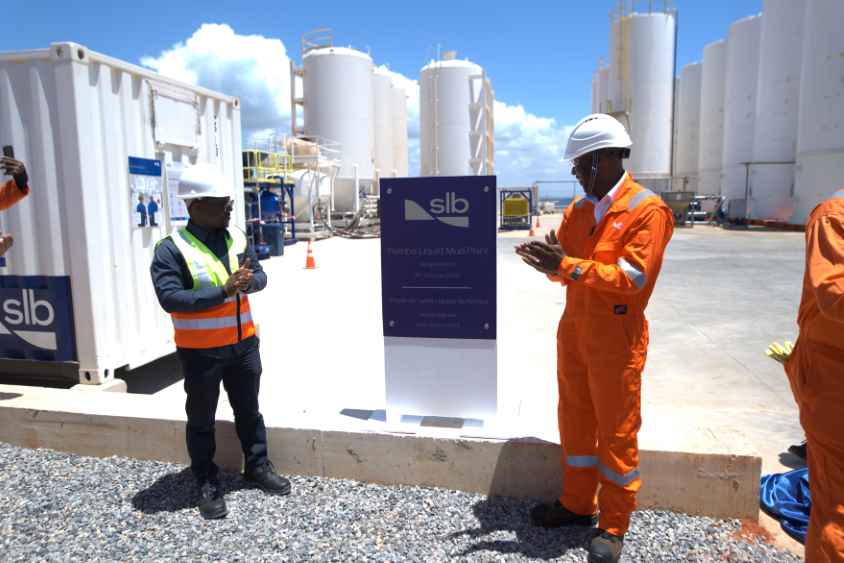
PEMBA, Mozambique, October 9, 2026/APO Group/ –SLB (NYSE: SLB) (www.SLB.com) announced the opening of a new fluids systems plant in Pemba, Mozambique. The new facility strengthens in-country capacity to prepare, store and deliver drilling and completion fluids for offshore operations, reinforcing the infrastructure needed as Mozambique’s offshore activity grows and its role as a strategic energy hub for East Africa continues to expand.

The commissioning of the plant, also known as a liquid mud plant, coincides with SLB marking 70 years of operations in Mozambique. It reflects the company’s long-term commitment to investing in people, infrastructure and capability that support the country’s long-term offshore energy development plans.


With an initial storage capacity of 21,000 barrels, the liquid mud plant provides a scalable platform for future growth, supporting multiple customers and rising offshore activity while improving logistics and enhancing operational flexibility.

As SLB marks 70 years in Mozambique, this investment reflects our confidence in the country’s future and our commitment to supporting its energy ambitions

“As SLB marks 70 years in Mozambique, this investment reflects our confidence in the country’s future and our commitment to supporting its energy ambitions,” said Miguel Baptista, Central, East and Southern Africa, Managing Director, SLB. The new liquid mud plant strengthens local energy infrastructure, expands opportunities for local content development, and enhances our ability to support customers as they deliver some of Africa’s most significant offshore energy resources.”

The liquid mud plant project was delivered with strong local participation and that momentum is expected to continue into operations. During project delivery, more than 100 jobs were created in Pemba with nationals representing 80% of the workforce, reflecting a focus on building local capability.

The project was delivered with a strong focus on safety, operational integrity, and quality, achieving more than 67,000 hours worked without a recordable safety incident.

This key infrastructure strengthens SLB’s ability to support consistent service quality and enhance supply chain readiness for increasing offshore activity across Mozambique, supporting customers execute safely and efficiently while developing local skills and expertise.

Key Points:

  • SLB has commissioned a new fluids system plant in Pemba, expanding in-country drilling and completion fluids capability for offshore operations.
  • With an initial storage capacity of 21,000 barrels, the facility provides a scalable platform to support growing offshore activity in Mozambique.
  • The investment marks the next phase of SLB’s growth in Mozambique, strengthening local capability and supporting long-term offshore energy development.

Distributed by APO Group on behalf of SLB.


Continue Reading

Business

South African Energy Storage Association (SAESA) welcomes 4,600 MW battery storage prioritisation and calls for integrated energy planning

Published

on

Battery energy storage systems (BESS) are becoming critical system infrastructure, supporting flexibility, reducing avoidable curtailment, shifting energy into periods of demand and strengthening security of supply

JOHANNESBURG, South Africa, October 9, 2026/APO Group/ –The South African Energy Storage Association (SAESA) (www.SAESA.org.za) welcomes the prioritisation of 4,600 MW of battery energy storage under the first Integrated Resource Plan (IRP) 2025 Section 34 determination.


The timing is significant. Recent Integrated Energy Plan (IEP) modelling and assumptions discussions highlighted a fundamental shift that South Africa’s energy planning now needs to capture: we cannot plan the future power system by counting megawatts of generation alone.

We must plan for when energy is available, where it is available, how it moves through a constrained grid and how it is stored and dispatched when the system needs it most.

The announcement reinforces that shift. Battery energy storage systems (BESS) are becoming critical system infrastructure, supporting flexibility, reducing avoidable curtailment, shifting energy into periods of demand and strengthening security of supply.

For SAESA, the message for the IEP is clear: storage, flexibility and system services must be modelled as integral components of South Africa’s future electricity architecture, with their contribution considered from the outset of generation planning.

“The IEP must plan the power system we are becoming, not simply model the power system we have inherited,” says SAESA.

The IEP must plan the power system we are becoming, not simply model the power system we have inherited

Partnership with C&I Energy + Storage Summit

SAESA is an association partner of the C&I Energy + Storage Summit, created by VUKA Group, taking place on 28–29 October 2026 at The Maslow Hotel, Sandton, Johannesburg.

The summit brings together commercial and industrial energy users, project developers, financiers, regulators and solution providers to explore practical approaches to energy security, procurement and storage deployment.

For businesses assessing how storage can support their operations, the event offers an opportunity to meet SAESA and engage with the wider energy community on the decisions shaping South Africa’s evolving electricity system.

Commercial and industrial energy decision-makers are invited to apply to attend as hosted buyers. Qualifying buyers receive complimentary summit access and curated opportunities to engage with industry partners.


Meet SAESA at C&I Energy + Storage Summit: Join the Hosted Buyer Programme

The Hosted Buyer Programme connects commercial and industrial energy decision-makers with solution providers shaping South Africa’s evolving private energy market.

Qualified energy buyers receive complimentary access to the summit and curated engagement with industry partners exploring energy procurement, storage deployment and project development.

Apply for the Hosted Buyer Programme (https://apo-opa.co/4ehLijJ)

Distributed by APO Group on behalf of VUKA Group.


Continue Reading

Business

Afreximbank welcomes launch of Africa Credit Rating Agency as an important step in strengthening Africa’s financial architecture

Published

on

Expanding credible rating coverage can improve the information available to investors and support the development of deeper domestic and regional capital markets

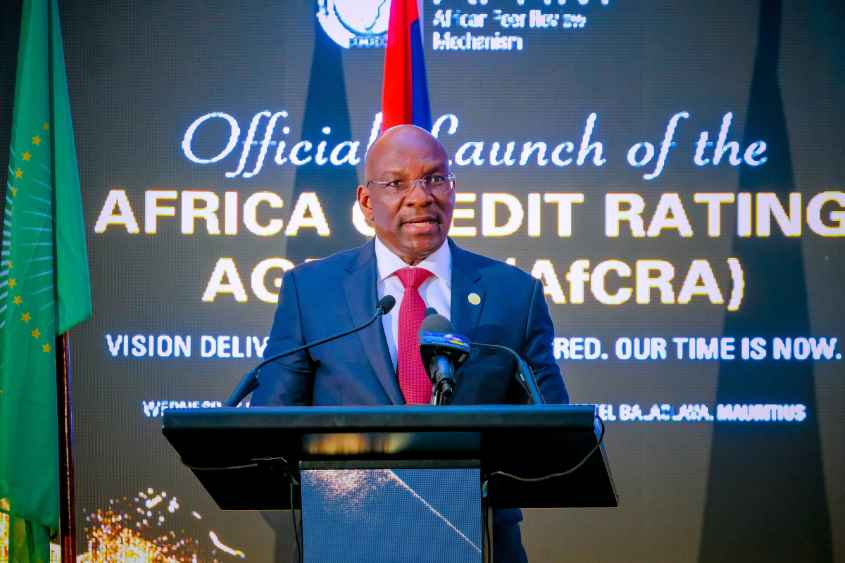
PORT LOUIS, Mauritius, October 8, 2026/APO Group/ –African Export-Import Bank (Afreximbank) (www.Afreximbank.com) welcomes today’s launch of the Africa Credit Rating Agency (AfCRA), an important milestone in strengthening Africa’s financial architecture and expanding the continent’s capacity to generate credible, independent analysis of African credit risk.


Credit ratings play an important role in determining access to capital, influencing investor perceptions and shaping the cost at which governments, institutions and businesses can finance development. It is therefore essential that assessments of African credit risk are independent, rigorous and evidence-based, while reflecting a complete understanding of the structures, institutions and economic realities being assessed.

The establishment of AfCRA adds an important African-led source of credit opinion to the market. Its value will not be measured by whether it produces more favourable ratings, but by the credibility of its analysis, the quality of its data and transparency of its methodology, and its ability to deepen understanding of African sovereigns, sub-sovereigns and corporate credit.

This is particularly important given that many African issuers remain unrated, while local-currency and sub-sovereign markets continue to have limited rating coverage. Expanding credible rating coverage can improve the information available to investors and support the development of deeper domestic and regional capital markets.

AfCRA must set a new benchmark for the continent, maintain its independence, and remain wholly owned and controlled by Africans

Alongside fellow members of the Alliance of African Multilateral Financial Institutions (AAMFI), Afreximbank has consistently maintained that African Multilateral Financial Institutions should be assessed on the basis of their fundamentals, performance, legal frameworks, mandates and operating models. Ensuring that these institutional characteristics are properly understood is essential to achieving informed, balanced and credible assessments of African risk.

Commenting on the uniqueness of the African market, and need for AfCRA’s rating methodology to reflect this, Mr Denys Denya, Senior Executive Vice President, Afreximbank, said: “The rating methodology AfCRA develops must recognise the uniqueness of our environment and its institutional structures. The Agency must set its own standards and not follow those set elsewhere — it must build a unique identity that conforms to an ‘African best practice.”

Highlighting the need for the autonomy of the Africa Credit Rating agency as it takes off, Mr Denya added: “Most importantly, AfCRA must set a new benchmark for the continent, maintain its independence, and remain wholly owned and controlled by Africans. We must all use it, and in return expect a complete assessment of where we (Africa) stand: the strengths the market has ignored, and the weaknesses we still need to fix.”

AfCRA should therefore be seen as complementary to existing international and regional rating agencies, broadening the range of credible analysis available to investors and issuers while strengthening competition, transparency and analytical capacity within Africa’s credit markets.

As Africa seeks to mobilise the scale of capital required for industrialisation, trade, infrastructure and economic transformation, credible African institutions that improve information, strengthen market confidence and deepen the continent’s financial markets will become increasingly important.

Afreximbank congratulates the African Union, the African Peer Review Mechanism (APRM) and all those involved in bringing AfCRA from concept to launch, and looks forward to the contribution the Agency will make to deeper, more transparent and more efficient African capital markets.

Distributed by APO Group on behalf of Afreximbank.


Continue Reading

Trending