Connect with us
Anglostratits

Business

African Development Bank Group’s (AfDB) New African Financial Architecture for Development gets off to a bold start at Abidjan meeting

Published

on

African Development Bank

This is a historic moment: the Abidjan Consensus redefines the future of financing on our continent – Dr Sidi Ould Tah

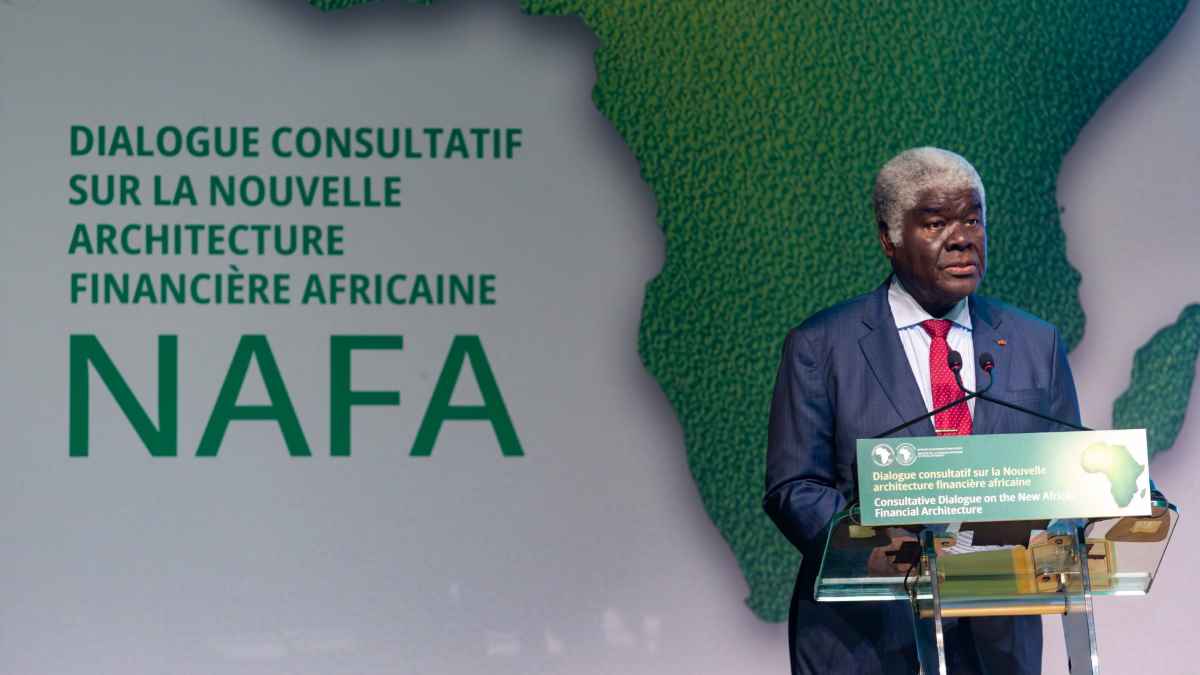
ABIDJAN, Ivory Coast, April 20, 2026/APO Group/ –The African Development Bank Group (www.AfDB.org) on Thursday concluded a landmark Consultative Dialogue on a New African Financial Architecture for Development (NAFAD, formerly NAFA), with a bold roadmap to address Africa’s development financing gap.


The day-long dialogue held 9th April, resulted in the adoption of an 11-point “Abidjan Consensus” on NAFAD. NAFAD is designed to overcome the structural obstacles to mobilising resources on a large-scale, to plug Africa’s $400 billion annual development finance gap.

Among the commitments made by participants was a resolution to unlock Africa’s vast domestic savings, and channel them into productive investment on the continent. They also pledged continuous coordination and annual reviews to ensure sustained momentum and track progress.

The New African Financial Architecture for Development is a core part of Bank Group President Dr Sidi Ould Tah’s Four Cardinal Points strategic vision.

Thursday’s Consultative Dialogue, which took place in the Ivorian commercial capital, Abidjan, involved nine “Labs,” in which a broad spectrum of Africa’s top financial sector stakeholders brainstormed to produce concrete instruments, platforms and frameworks towards building a new financial architecture for the continent.

The Dialogue was held under the patronage of the President of Cote d’Ivoire, Alassane Ouattara who was represented at the opening ceremony by nation’s Prime Minister Mr Robert Beugré Mambé. The event was also attended by other government officials, members of the diplomatic corps, representatives of international organizations and agencies, among others.

“The conference bringing us together today presents a real opportunity to deepen our collective reflection on the reforms needed to build an international financial system that is fairer and better suited to the realities of the contemporary world,” Prime Minister Mambé said on behalf of President Ouattara.

As Dr Ould Tah put it during the opening ceremony, “The current architecture of financing Africa’s development is inadequate and not fit for purpose,” he said. “The truth is that we do not suffer from a lack of capital: Africa has approximately $4 trillion in medium- and long-term savings.”


The truth is that we do not suffer from a lack of capital: Africa has approximately $4 trillion in medium- and long-term savings

NAFAD proposes a systemic framework aimed at reorganising how capital and risk are deployed across the African financial ecosystem. It will focus on building a permanent implementation architecture, capital mobilisation and deployment.


“The transition from NAFA to NAFAD is not merely a semantic shift; above all, it expresses your genuine determination to overcome the structural obstacles to the large-scale mobilisation of resources to finance Africa’s development,” Dr Ould Tah said in closing remarks.

In remarks during the opening plenary, Guinea Bissau economist Professor Carlos Lopes noted that the real constraint to executing the African Union’s Agenda 2063 is finance.

“For decades, Africa has worked with its development partners, and concessional finance has played a role—particularly for the most vulnerable countries. But we have also learned its limits. It was never designed to finance transformation at scale.”


The Dialogue drew participants from a cross-section of financial sectors. They included African central bank governors, senior executives from sovereign wealth funds, regional commercial banks, regional and national development banks, securities exchanges, private equity, consignment funds, guarantee funds, and development finance institutions.

The broad and representative participation reflected the systemic nature of the financing challenge the Dialogue seeks to address.

Dr Ould Tah congratulated participants for their full engagement in the discussions and mastery of the topics addressed.

“You have enabled us to achieve results far exceeding initial expectations. This is an historic moment: the Abidjan Consensus, welcomed with immense enthusiasm, redefines the future of financing on our continent,” he said.

“By cementing the unity of the African financial ecosystem on the shores of the Ébrié Lagoon, this agreement provides NAFAD with the legitimacy and grounding necessary to uphold the ambitions of our “Four Cardinal Points.”

The Abidjan Consensus was presented to the delegates by Souleymane Diarrassouba, Cote D’Ivoire’s Minister for Planning and Development.

Distributed by APO Group on behalf of African Development Bank Group (AfDB).

Energy

Zambia Energy Minister to Showcase Integrated Power and Fuel Investment Agenda at African Energy Week (AEW) 2026

Published

on

African Energy Chamber

Makozo Chikote joins African Energy Week’s growing ministerial lineup as Zambia fast-tracks energy reforms across power, renewables, and oil

CAPE TOWN, South Africa, April 22, 2026/APO Group/ –Zambia’s Energy Minister, Makozo Chikote, will take a prominent role at African Energy Week (AEW) 2026 in Cape Town from 12–16 October, where he is expected to outline the country’s integrated energy strategy to investors, policymakers and development partners.


His participation comes at a time when Zambia is accelerating reforms across the entire energy value chain – from electricity generation and renewable deployment to fuel supply security and downstream oil infrastructure – positioning the country as both a regional power hub and an emerging player in refined fuel distribution.


A key pillar of the government’s agenda is the Carbon Feed-in Premium (CFIP) program, launched earlier this month and designed to unlock up to 300 MW of private renewable energy investment. The initiative aims to diversify Zambia’s generation mix, reduce emissions and strengthen grid stability. It also includes a Mitigation Outcome Purchase Agreement with Norway under the CFIP framework, expected to help mobilize international climate-linked financing and support decarbonization of the power sector ahead of 2027.


Alongside the renewable push, Zambia is also advancing its hydrocarbons and fuel security agenda. The government has begun construction of a 60,000 barrels-per-day crude oil refinery in Ndola, a landmark downstream project aimed at reducing dependence on imported refined fuels and strengthening domestic supply security. The refinery is expected to support industrial demand, particularly from mining and transport sectors, while easing pressure on foreign exchange reserves over the long term. At AEW 2026, Minister Chikote is expected to position this dual-track strategy as central to Zambia’s long-term energy security and industrial growth agenda.


Zambia has already committed to adding more than 2,610 MW of new electricity generation capacity by the end of 2026. The expansion program is designed to address chronic power shortages, reduce load shedding and support industrial expansion. It prioritizes a diversified mix of solar, wind and hybrid projects to improve system resilience, particularly as climate variability continues to affect hydropower output.

Zambia is taking a smart, integrated approach to energy – balancing power, renewables, and oil and fuel security


Investor sentiment has also been supported by recent regulatory momentum. In March 2026, the Energy Regulation Board approved 24 licenses, seven construction permits and amendments to existing projects, representing a combined investment commitment of ZMW 1.1 billion across power generation, renewables and downstream petroleum infrastructure. The approvals reflect both growing private sector appetite and a more streamlined regulatory environment for energy project development.


Beyond generation and fuel infrastructure, Zambia is also strengthening energy efficiency and system resilience. Through a partnership with the European Union, the Ministry of Energy has launched the Zambia Energy Efficiency and Sustainable Transformation program, introducing LED retrofits and infrastructure upgrades in schools and hospitals in the Eastern Province to reduce consumption and improve reliability.


Regionally, Zambia is deepening cooperation with Tanzania in oil and gas development, with both governments exploring joint exploration opportunities, cross-border energy trade and shared infrastructure. The discussions reflect a broader regional push to strengthen energy security and improve integration across East and Southern Africa.


“Zambia is taking a smart, integrated approach to energy – balancing power, renewables, and oil and fuel security. This is exactly the kind of practical, investment-ready strategy Africa needs. Minister Chikote is showing how policy can unlock capital and deliver real projects across the entire energy value chain,” said NJ Ayuk, Executive Chairman of the African Energy Chamber.

Distributed by APO Group on behalf of African Energy Chamber.

Continue Reading

Business

Afreximbank announces third African Continental Free Trade Area (AfCFTA) training programme as it seeks to empower African businesses

Published

on

Afreximbank

The programme is designed to equip participants with the skills, knowledge, and practical expertise required to navigate and succeed within Africa’s evolving intra-African trade landscape

CAIRO, Egypt, April 22, 2026/APO Group/ –African Corporates will have a unique opportunity to learn how to fully maximize the benefits of the African Continental Free Trade Area (AfCFTA) when the third edition of the AfCFTA Training Programme holds in Cairo, Egypt from 16th June to 18th June, 2026.

Developed and led by African Export-Import Bank (Afreximbank), in collaboration with the American University in Cairo (AUC) and the AfCFTA Secretariat, the programme is designed to equip participants with the skills, knowledge, and practical expertise required to navigate and succeed within Africa’s evolving intra-African trade landscape.

While the AfCFTA has significant potential to drive economic development across Africa, limited understanding of its technical provisions and practical applications continues to hinder the full realization of its benefits. The programme is designed to equip businesses with practical, actionable insights on identifying and capitalising on trade opportunities, managing export and import operations, and navigating trade finance, supply chains, and the broader international trade environment. It will also provide a clear understanding of how the AfCFTA framework addresses capacity constraints and expands market access for producers of goods and services across the continent.

By translating the AfCFTA’s legal and treaty provisions into business-ready strategies, the programme offers clarity on the regulatory, operational, and market requirements necessary for companies to fully leverage opportunities within the rapidly expanding AfCFTA market.

We are empowering businesses across Global Africa to scale, innovate, and play a leading role in the continent’s economic transformation

As the African Union’s key strategic partner in implementing the AfCFTA, Afreximbank has spearheaded multiple initiatives to advance both intra and extra-African trade and investment, with trainings playing a key role in capacity building.

Commenting on the programme, Dr. Yemi Kale, Group Chief Economist & Managing Director of Research at Afreximbank, described it as “a strategic platform for advancing the adoption and deepening the understanding of the AfCFTA among key stakeholders, particularly corporates within the broader private sector ecosystem.” He added that the initiative “reinforces the Bank’s commitment to equipping businesses with the insights and capabilities required to effectively leverage opportunities under the Agreement.”

Dr. Kale said: “I have full confidence that participants in this training will leave with a holistic understanding of the AfCFTA, its genesis and dimensions, enabling them to assess the outcomes of the ongoing negotiations, and to examine the challenges and opportunities that underlie the negotiations and the agreement at large. They will also be able to explore the prospects of the AfCFTA and to capitalize on the agreement while supporting its objectives to the benefit their corporations and the continent.”

Mohamed Ali, Director of Trade in Goods and Competition at the AfCFTA Secretariat, said: “This programme represents a critical step towards unlocking the full potential of intra-African trade through targeted capacity building and strategic partnerships. Our collaboration with Afreximbank reinforces a shared commitment to equip African businesses with the practical knowledge, tools, and institutional support required to effectively utilize the Agreement.”

Commenting on the programme, Mr. Stephen Tio Kauma, Managing Director, Human Resources at Afreximbank, stated: Delivered through the Afreximbank Academy (AFRACAD), this programme reflects our commitment to equipping African businesses with the practical skills needed to fully leverage the opportunities under the AfCFTA. AFRACAD continues to serve as a leading trade knowledge hub, empowering participants to compete and thrive in Africa’s single market. Through our strong partnerships and innovative learning approach, we are empowering businesses across Global Africa to scale, innovate, and play a leading role in the continent’s economic transformation”.

For registration and further information, please visit: https://apo-opa.co/41O3CdY

Distributed by APO Group on behalf of Afreximbank.

Continue Reading

Business

A-ONE PACIFIC INVESTMENTS, the discreet architect of two energy agreements exceeding USD 350 million in the Democratic Republic of Congo (DRC)

Published

on

INVESTMENTS

Two major energy agreements steered by A-ONE PACIFIC INVESTMENTS reshape access to electricity in the DRC

KINSHASA, Democratic Republic of the Congo, April 22, 2026/APO Group/ –In a context where securing complex financing remains one of the main barriers to developing major infrastructure in Africa, two high-profile energy agreements have just been finalized in the Democratic Republic of Congo (DRC), marking a decisive turning point for access to electricity and the country’s economic growth.


At the heart of these operations is A-ONE PACIFIC INVESTMENTS, a discreet yet decisive strategic partner that has overseen the financial and organizational aspects of projects totaling more than USD 350 million.

A decisive month for energy in the DRC

In April, two major initiatives took critical steps forward despite a demanding environment that combines regulatory challenges, national sovereignty and international financiers’ conditions.

ANSER – Gauff Engineering (Germany)
The signing of a market contract between the National Agency for Electrification and Energy Services in rural and peri-urban areas (ANSER), represented by its Director-General Cyprien Musimar, and the German company Gauff Engineering marks a crucial milestone. The project aims to electrify 36 territories using hybrid solutions that combine solar and hydroelectric power, directly benefiting millions of people.

ANSER – Angelique International (India)
A commercial contract has been concluded between Cyprien Musimar and Ajay Krishna Goyal, Chairman of Angelique International, for the construction of the Mbombo hydroelectric power plant (approximately 20.08 MW). The project includes four production units, access roads and transmission lines to Kananga. It fully supports the national strategy set by the Congolese authorities and the President of the Republic, who view access to electricity as a priority driver of development.

As Cyprien Musimar noted:

“Access to electricity is a fundamental lever for development. These initiatives mark a significant step towards more inclusive energy coverage in the DRC.”

Tangible impacts for the DRC

Access to electricity is a fundamental lever for development

These two agreements address the strategic challenge of reliable, accessible energy tailored to the country’s needs. In the long term, they will enable:

  • the electrification of dozens of territories and rural areas;
  • support for industrial activity, particularly mining;
  • the lasting improvement of living conditions for millions of Congolese.

Beyond infrastructure, these projects initiate an economic dynamic that will have direct repercussions on growth, employment and the attractiveness of the country.

A decisive contribution behind the scenes

Although these agreements today mark a visible milestone, they result from several years of groundwork: financial structuring, coordination among public and private actors, and securing the necessary funds. A-ONE PACIFIC INVESTMENTS has acted as a strategic partner, ensuring the consistency and success of these operations.

Behind these projects are two entrepreneurs: Franck Ping and Jean-François Ping, co-founders of the company. With more than twenty years’ experience in finance, project development and international deployment across the continent, they support the implementation of high-impact projects with a rigorous, pragmatic approach. They now apply this expertise to concrete initiatives, with a strategic grounding in the continent’s economic realities.

A momentum set to continue

These two agreements are only an initial step in a broader process. A-ONE PACIFIC INVESTMENTS is currently involved in several initiatives under development, aimed at redefining the energy future of the sub-region. These operations, at different stages of progress, reflect a carefully managed rise and close collaboration among stakeholders.

In a context marked by increasing needs for infrastructure and energy, the ability to design credible projects, bring together public and private actors and secure complex financial arrangements becomes essential. This mastery is at the heart of A-ONE PACIFIC INVESTMENTS’ added value.

These initiatives are part of a long-term vision aimed at supporting the transformation of energy systems and fostering growth in the territories concerned.

Franck Ping, co-founder, states:

“Africa lacks neither opportunities nor ambition. The challenge lies in designing robust, fundable and achievable projects. That is where we focus our efforts.”

Distributed by APO Group on behalf of A-One Pacific Investments.

Continue Reading

Trending