Connect with us
Anglostratits

Energy

African Energy Chamber (AEC) Doubles Down on Africa Energies Summit Boycott, Demands Immediate Shift on Local Content

Published

on

African Energy Chamber

The boycott continues amid escalating pressure on organizers to address exclusionary hiring practices and align with Africa’s local content and development priorities

JOHANNESBURG, South Africa, April 22, 2026/APO Group/ –The African Energy Chamber (AEC) (www.EnergyChamber.org) has reiterated that it will continue boycotting the upcoming Africa Energies Summit – hosted by Frontier Energy Network in London – until meaningful changes are made to the event’s approach to local content and hiring practices. The Chamber’s position reflects mounting concern across the African energy sector that platforms claiming to represent the continent are failing to include African professionals – particularly Black Africans – in leadership and decision-making roles.

The AEC has been explicit: this is no longer a matter of engagement or dialogue, but one of accountability. Despite repeated calls for reform, the organizers of the summit have not demonstrated a willingness to address concerns around exclusion, particularly the lack of Black African representation at senior levels within an Africa-focused platform. For the AEC, this undermines both the credibility and the legitimacy of the event.

“Our position remains the same: if you benefit from Africa’s resources and its development agenda, then you must reflect Africa in your leadership, hiring and decision-making. Local content can no longer be smoke and mirrors – it must be a tangible commitment to inclusion, opportunity and ownership. We cannot accept a situation where Africa is central to the conversation, but Africans are absent from leadership,” states NJ Ayuk, Executive Chairman, AEC.

If you benefit from Africa’s resources and its development agenda, then you must reflect Africa in your leadership, hiring and decision-making

The decision to continue the boycott comes amid a mass withdrawal by the African public and private sector from the upcoming summit, with stakeholders citing repeated failures by the organizers to address concerns around local content and participation. In March 2026, Mozambique’s oil and gas sector withdrew from the summit, with the Mozambique Energy Chamber expressing that its members will not be attending. In April 2026, Ghana followed suite, citing similar concerns as well as discriminatory hiring practices that sidelined African professionals. This reflects a broader position: Africa will not support events that exclude African professionals.

For its part, the AEC has been firm on this position. Delivering a keynote address to downstream players during ARDA Week 2026, Ayuk called for a continental shift to ‘refine, baby refine,’ highlighting the need for African-led innovation and infrastructure development to address energy security challenges. Drawing attention to African-led projects such as the Dangote Refinery – Africa’s largest facility at 650,000 barrels per day – as well as indigenous companies such as Sahara Group, Ayuk stressed that “energy poverty cannot only be an ideology but action,” emphasizing the need to invest more in local communities, companies and projects.

The Chamber reinforced this position during the Namibia International Energy Conference in Windhoek last week, where discussions largely centered around local content, women in energy and advancing the country’s oil boom. During the event, the Chamber called for strong local content frameworks and inclusive leadership, highlighting that through strengthened participation and policies that advocate for gender diversity, the country could position oil and gas as an engine for growth. The behavior of organizations such as Frontier Energy Network and individuals such as Daniel Davidson threaten to undermine these efforts, posing a structural risk to Africa’s energy development.

“It will be incredibly dangerous to have the vision of Daniel Davidson and Frontier Energy Network guide how the continent deals with energy poverty, investments and the development of fields in Namibia, Mozambique and across Africa. Over the coming weeks we will intensify our campaign to boycott the summit. But the industry must do more: seismic companies that continue enabling these horrible policies will also be targeted. They are aiding and abetting anti-African policies. Multi-client data does not work with discrimination,” added Ayuk.

The AEC has made it clear that its position will not shift without tangible change. For the Chamber and its partners, the issue is not about exclusion in return, but about establishing a baseline of fairness, representation and mutual respect. Until that standard is met, the boycott will remain in place.

Distributed by APO Group on behalf of African Energy Chamber.

Energy

PetroGuin, Tender Oil and Gas Joint Venture (JV) Signals Rising Confidence in Guinea-Bissau’s Deepwater Potential

Published

on

PetroGuin

The partnership reflects growing investor interest and shifting perceptions of West Africa’s frontier offshore basins

PARIS, France, April 22, 2026/APO Group/ –A new joint venture between PetroGuin and Tender Oil and Gas marks a step forward in unlocking Guinea-Bissau’s offshore potential, reinforcing broader momentum across West Africa’s deepwater frontier.

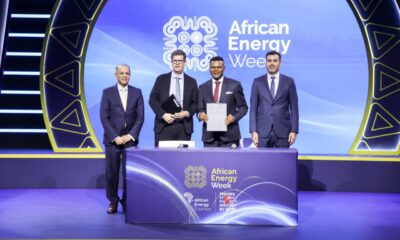
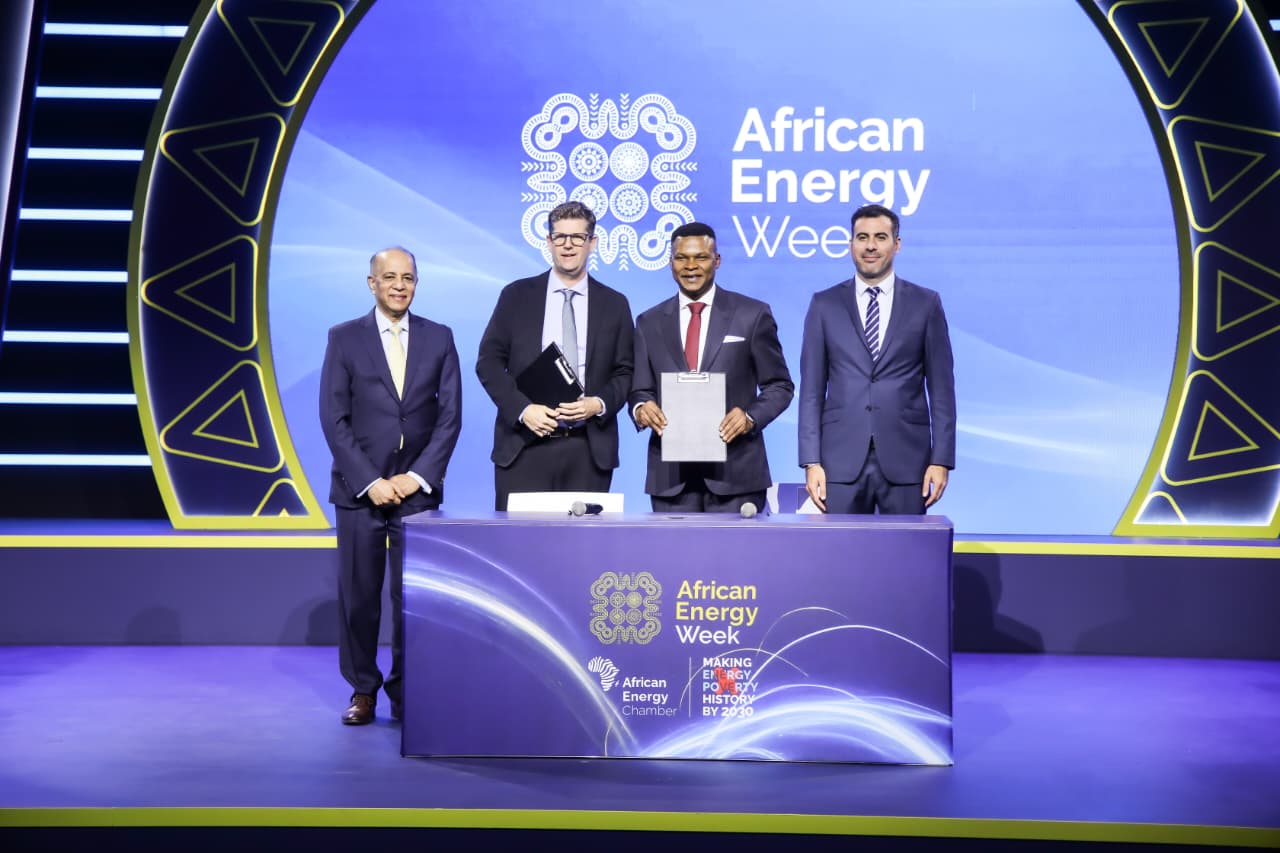
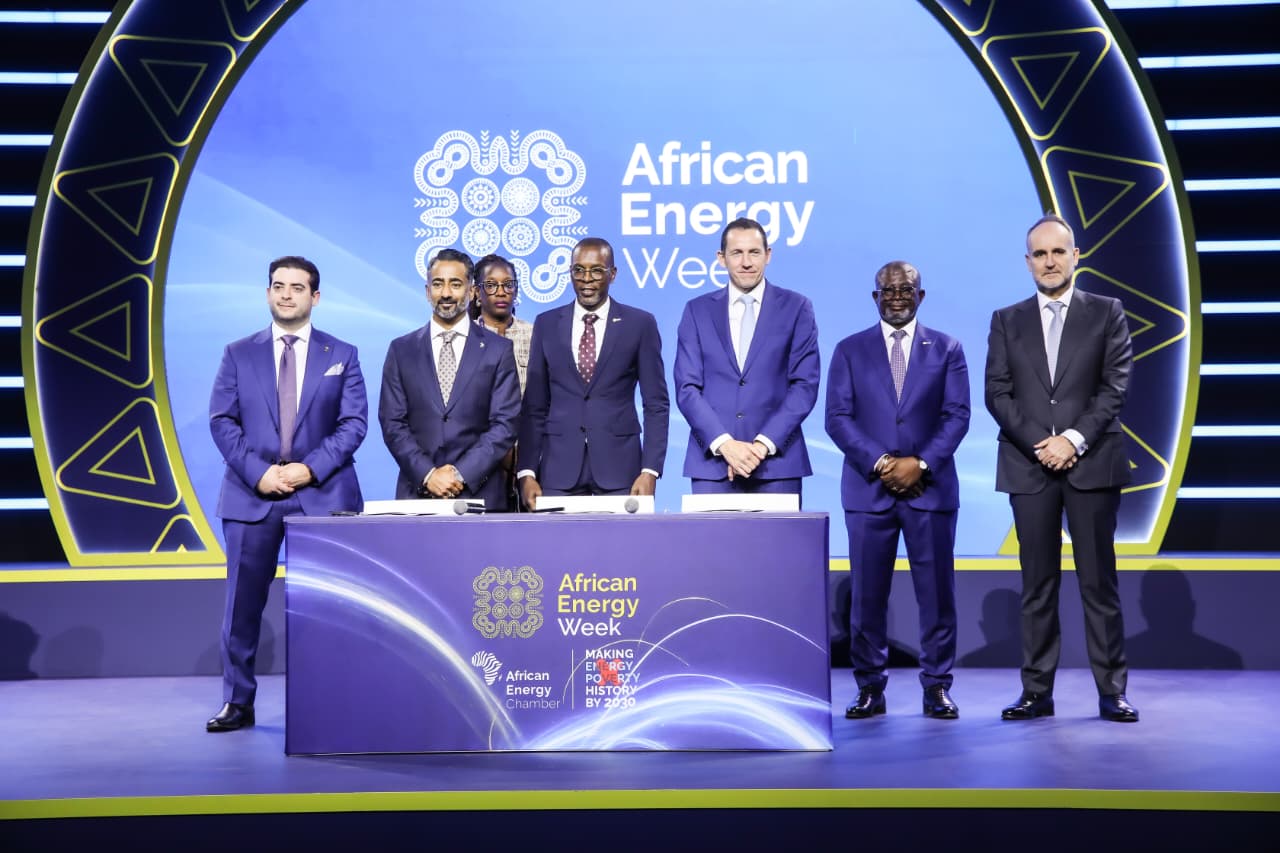
Signed during the Invest in African Energy Forum in Paris on Wednesday by Petroguin Director General Alfredo Malú and Tender Oil and Gas Chairman and CEO Teodor Ovidiu Tender, the agreement for Blocks 5C and 6C reflects increasing investor confidence in a basin long constrained by capital intensity and technical barriers.

“The discovery in Senegal and Chevron’s recent entry into the deepwater blocks in Guinea-Bissau have begun to have an impact, arousing interest in the deep offshore areas of Guinea-Bissau and the subregion,” said Malú.

The Partnership Agreement between Tender Oil and Gas and PetroGuin-EP will accelerate exploration work in our deep offshore areas

At the core of the agreement is a comprehensive seismic campaign, including the acquisition and interpretation of 2D and 3D data, aimed at improving subsurface understanding and supporting future drilling.

“The Partnership Agreement between Tender Oil and Gas and PetroGuin-EP will accelerate exploration work in our deep offshore areas, which previously did not attract much interest due to the heavy investment and advanced technologies required,” said Malú.

Beyond its technical scope, the partnership signals a broader shift, as frontier markets like Guinea-Bissau increasingly attract agile, partnership-driven players capable of operating in complex environments.

“It will enable greater dynamism in the country’s oil sector, with the short- and medium-term goal of advancing exploration drilling,” Malú said.

With a focus on accelerating exploration timelines and stimulating sector activity, the JV underscores the role of strategic collaboration in advancing the next phase of Africa’s deepwater development.

Distributed by APO Group on behalf of Energy Capital & Power.

Continue Reading

Energy

Investment Delays, Supply Risks Put Africa’s Gas Opportunity in Focus at Paris Forum

Published

on

Investment

Delayed projects and persistent underinvestment raise the risk of prolonged LNG tightness, as Africa continues working to convert abundant reserves into production

PARIS, France, April 22, 2026/APO Group/ –Delays to new gas projects and continued underinvestment in upstream development are raising the prospect that global LNG markets will remain tighter for longer than previously expected, industry leaders said at the opening of the Invest in African Energy Forum in Paris on Wednesday.


The discussion was shaped by a shared concern: that shifting geopolitics, capital discipline and deferred final investment decisions (FIDs) are converging to slow new supply just as demand continues to evolve.

Gas Exporting Countries Forum (GECF) Secretary General Dr. Philip Mshelbila said the market had been widely expected to tip into oversupply by 2026, but that outlook is now being reassessed as volatility persists and investment timelines stretch.

“The current energy crisis touches every corner of the globe,” he said, pointing to sustained disruption driven by geopolitical tensions and supply uncertainty. If instability continues, he added, the market risks a more structural reordering rather than a near-term correction.

That uncertainty is already feeding through into investment decisions, with companies increasingly prioritizing risk management over expansion, leading to deferred FIDs across several gas developments.

For Africa, the implications are particularly acute. Despite holding significant gas reserves and export infrastructure – including LNG capacity and pipeline links to Europe via Libya and Algeria – much of the continent’s potential remains constrained by weak upstream development.

“There is a material gap between capacity and reserves, and actual production,” Mshelbila said, stressing that closing that gap will require sustained and large-scale upstream investment. He estimated global gas investment needs at $11–12 trillion over the coming decades, with the majority directed toward exploration and production.

There is a material gap between capacity and reserves, and actual production

That investment gap is also being felt further down the value chain. Anibor Kragha, Executive Secretary of the African Refiners and Distributors Association (ARDA), pointed to Africa’s continued dependence on imported refined products and limited strategic buffers, exposing structural fragility across the downstream sector.

“Africa remains heavily dependent on refined petroleum products,” he said, noting that some countries operate with as little as 20 days of strategic fuel reserves. “We’ve come to realize how fragile the global supply chain is.”

He argued that addressing these vulnerabilities will require a rethink of refinery development models, with future projects needing to be more flexible and integrated in order to attract long-term capital.

NJ Ayuk, Executive Chairman of the African Energy Chamber, framed the broader energy debate around rising demand rather than transition, arguing that Africa is entering a period of structural energy expansion driven by industrial growth and emerging technologies.

“We believe Africans deserve more, not less energy,” he said, describing the coming decade as “an African decade of energy additions, not energy transitions.”

Ayuk pushed back against what he described as disproportionate global climate narratives around Africa, noting that the continent contributes less than 3% of global emissions. “No other industry has matched our industry’s ability to produce more energy with fewer emissions,” he said.

Ayuk also highlighted accelerating demand from new sectors, including data infrastructure and artificial intelligence, which he said will require “historic amounts of new energy,” reinforcing the need to accelerate gas development and monetize existing discoveries.

Rounding out the discussion, Foday Mansaray, Director General of Sierra Leone’s Petroleum Directorate, emphasized that project delivery will depend increasingly on alignment between governments, investors and operators, particularly in frontier markets.

“The future of energy is being negotiated in rooms like this,” he said, underscoring the importance of partnership-driven development as Africa seeks to convert resources into production.

Distributed by APO Group on behalf of Energy Capital & Power.

Continue Reading

Energy

Zambia Energy Minister to Showcase Integrated Power and Fuel Investment Agenda at African Energy Week (AEW) 2026

Published

on

African Energy Chamber

Makozo Chikote joins African Energy Week’s growing ministerial lineup as Zambia fast-tracks energy reforms across power, renewables, and oil

CAPE TOWN, South Africa, April 22, 2026/APO Group/ –Zambia’s Energy Minister, Makozo Chikote, will take a prominent role at African Energy Week (AEW) 2026 in Cape Town from 12–16 October, where he is expected to outline the country’s integrated energy strategy to investors, policymakers and development partners.


His participation comes at a time when Zambia is accelerating reforms across the entire energy value chain – from electricity generation and renewable deployment to fuel supply security and downstream oil infrastructure – positioning the country as both a regional power hub and an emerging player in refined fuel distribution.


A key pillar of the government’s agenda is the Carbon Feed-in Premium (CFIP) program, launched earlier this month and designed to unlock up to 300 MW of private renewable energy investment. The initiative aims to diversify Zambia’s generation mix, reduce emissions and strengthen grid stability. It also includes a Mitigation Outcome Purchase Agreement with Norway under the CFIP framework, expected to help mobilize international climate-linked financing and support decarbonization of the power sector ahead of 2027.


Alongside the renewable push, Zambia is also advancing its hydrocarbons and fuel security agenda. The government has begun construction of a 60,000 barrels-per-day crude oil refinery in Ndola, a landmark downstream project aimed at reducing dependence on imported refined fuels and strengthening domestic supply security. The refinery is expected to support industrial demand, particularly from mining and transport sectors, while easing pressure on foreign exchange reserves over the long term. At AEW 2026, Minister Chikote is expected to position this dual-track strategy as central to Zambia’s long-term energy security and industrial growth agenda.


Zambia has already committed to adding more than 2,610 MW of new electricity generation capacity by the end of 2026. The expansion program is designed to address chronic power shortages, reduce load shedding and support industrial expansion. It prioritizes a diversified mix of solar, wind and hybrid projects to improve system resilience, particularly as climate variability continues to affect hydropower output.

Zambia is taking a smart, integrated approach to energy – balancing power, renewables, and oil and fuel security


Investor sentiment has also been supported by recent regulatory momentum. In March 2026, the Energy Regulation Board approved 24 licenses, seven construction permits and amendments to existing projects, representing a combined investment commitment of ZMW 1.1 billion across power generation, renewables and downstream petroleum infrastructure. The approvals reflect both growing private sector appetite and a more streamlined regulatory environment for energy project development.


Beyond generation and fuel infrastructure, Zambia is also strengthening energy efficiency and system resilience. Through a partnership with the European Union, the Ministry of Energy has launched the Zambia Energy Efficiency and Sustainable Transformation program, introducing LED retrofits and infrastructure upgrades in schools and hospitals in the Eastern Province to reduce consumption and improve reliability.


Regionally, Zambia is deepening cooperation with Tanzania in oil and gas development, with both governments exploring joint exploration opportunities, cross-border energy trade and shared infrastructure. The discussions reflect a broader regional push to strengthen energy security and improve integration across East and Southern Africa.


“Zambia is taking a smart, integrated approach to energy – balancing power, renewables, and oil and fuel security. This is exactly the kind of practical, investment-ready strategy Africa needs. Minister Chikote is showing how policy can unlock capital and deliver real projects across the entire energy value chain,” said NJ Ayuk, Executive Chairman of the African Energy Chamber.

Distributed by APO Group on behalf of African Energy Chamber.

Continue Reading

Trending