Connect with us
Anglostratits

Energy

Investment Delays, Supply Risks Put Africa’s Gas Opportunity in Focus at Paris Forum

Published

on

Investment

Delayed projects and persistent underinvestment raise the risk of prolonged LNG tightness, as Africa continues working to convert abundant reserves into production

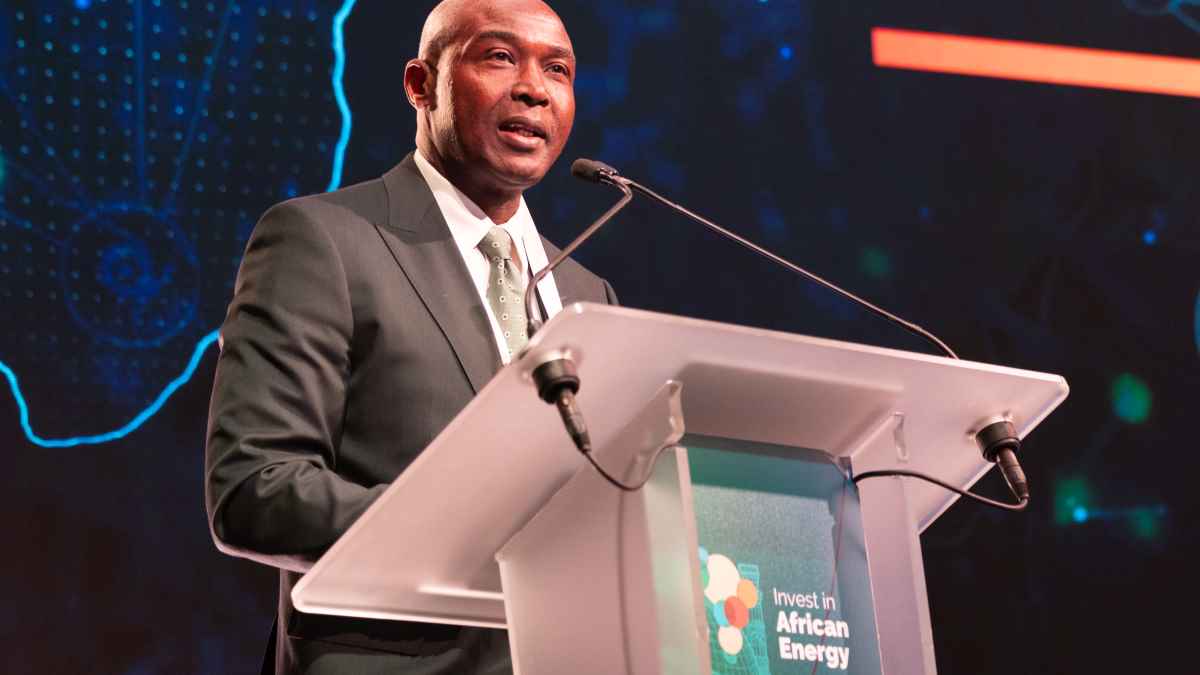
PARIS, France, April 22, 2026/APO Group/ –Delays to new gas projects and continued underinvestment in upstream development are raising the prospect that global LNG markets will remain tighter for longer than previously expected, industry leaders said at the opening of the Invest in African Energy Forum in Paris on Wednesday.


The discussion was shaped by a shared concern: that shifting geopolitics, capital discipline and deferred final investment decisions (FIDs) are converging to slow new supply just as demand continues to evolve.

Gas Exporting Countries Forum (GECF) Secretary General Dr. Philip Mshelbila said the market had been widely expected to tip into oversupply by 2026, but that outlook is now being reassessed as volatility persists and investment timelines stretch.

“The current energy crisis touches every corner of the globe,” he said, pointing to sustained disruption driven by geopolitical tensions and supply uncertainty. If instability continues, he added, the market risks a more structural reordering rather than a near-term correction.

That uncertainty is already feeding through into investment decisions, with companies increasingly prioritizing risk management over expansion, leading to deferred FIDs across several gas developments.

For Africa, the implications are particularly acute. Despite holding significant gas reserves and export infrastructure – including LNG capacity and pipeline links to Europe via Libya and Algeria – much of the continent’s potential remains constrained by weak upstream development.

“There is a material gap between capacity and reserves, and actual production,” Mshelbila said, stressing that closing that gap will require sustained and large-scale upstream investment. He estimated global gas investment needs at $11–12 trillion over the coming decades, with the majority directed toward exploration and production.

There is a material gap between capacity and reserves, and actual production

That investment gap is also being felt further down the value chain. Anibor Kragha, Executive Secretary of the African Refiners and Distributors Association (ARDA), pointed to Africa’s continued dependence on imported refined products and limited strategic buffers, exposing structural fragility across the downstream sector.

“Africa remains heavily dependent on refined petroleum products,” he said, noting that some countries operate with as little as 20 days of strategic fuel reserves. “We’ve come to realize how fragile the global supply chain is.”

He argued that addressing these vulnerabilities will require a rethink of refinery development models, with future projects needing to be more flexible and integrated in order to attract long-term capital.

NJ Ayuk, Executive Chairman of the African Energy Chamber, framed the broader energy debate around rising demand rather than transition, arguing that Africa is entering a period of structural energy expansion driven by industrial growth and emerging technologies.

“We believe Africans deserve more, not less energy,” he said, describing the coming decade as “an African decade of energy additions, not energy transitions.”

Ayuk pushed back against what he described as disproportionate global climate narratives around Africa, noting that the continent contributes less than 3% of global emissions. “No other industry has matched our industry’s ability to produce more energy with fewer emissions,” he said.

Ayuk also highlighted accelerating demand from new sectors, including data infrastructure and artificial intelligence, which he said will require “historic amounts of new energy,” reinforcing the need to accelerate gas development and monetize existing discoveries.

Rounding out the discussion, Foday Mansaray, Director General of Sierra Leone’s Petroleum Directorate, emphasized that project delivery will depend increasingly on alignment between governments, investors and operators, particularly in frontier markets.

“The future of energy is being negotiated in rooms like this,” he said, underscoring the importance of partnership-driven development as Africa seeks to convert resources into production.

Distributed by APO Group on behalf of Energy Capital & Power.

Energy

Gwede Mantashe Joins African Energy Week (AEW) 2026 as South Africa’s Petroleum Reforms Open the Orange Basin to Drilling

Published

on

African Energy Chamber

A new petroleum law and the prospect of fresh Orange Basin drilling is resetting South Africa’s upstream, and Minister Mantashe is taking the AEW host nation’s case to the global market

CAPE TOWN, South Africa, June 8, 2026/APO Group/ –Gwede Mantashe, Minister of Mineral and Petroleum Resources of the Republic of South Africa, has been confirmed as a featured speaker at the upcoming African Energy Week (AEW) 2026 Conference and Exhibition, where he is expected to lay out the reform agenda reshaping the country’s upstream oil and gas sector and its drive to convert long-stranded offshore gas into production.


South Africa is pursuing one of the most significant upstream overhauls in its history, anchored by a new law that gives oil and gas their own regulatory regime for the first time. The reforms position the host nation as both a destination for exploration capital and a future producer along an Atlantic margin that has drawn the world’s largest oil companies to the region.

At the center of the shift is the Upstream Petroleum Resources Development Act (UPRDA), which President Cyril Ramaphosa signed into law in October 2024. The Act separates petroleum from the mining statute that has long regulated both sectors. It also creates a single petroleum right covering exploration and production along with a 20% carried interest for the state. The UPRDA awaits a presidential proclamation to take effect, and implementing regulations that went through a further round of industry comment in early 2026 are now being finalized.

A clear petroleum framework and a credible state partner are what international capital needs to commit to the Orange Basin

Mantashe has emerged as the most forceful advocate for accelerating the sector. He has long-argued that South Africa must shift from importing refined products to producing its own, warning that dependence on foreign supply leaves the economy exposed to global price shocks. This shift becomes increasingly more importance in the current global climate, where supply security has become a major challenge – particularly for import-reliance economies such as South Africa. As such, Mantashe has repeatedly pressed for faster licensing and fewer legal delays to exploration. AEW 2026 is a key platform to bring this discussion to a global audience.

“South Africa has the geology for exploration. Now it is building the regulatory certainty it needs to turn discoveries into bankable projects,” said NJ Ayuk, Executive Chairman of the African Energy Chamber. “A clear petroleum framework and a credible state partner are what international capital needs to commit to the Orange Basin.”

Offshore, TotalEnergies – operator of Block 3B/4B in the Orange Basin – is preparing to begin drilling in South African waters in 2026 pending final regulatory approvals. The acreage sits on trend with the Venus discovery in neighboring Namibia, where TotalEnergies is developing the basin’s first oil project.

Onshore, momentum is building in Mpumalanga, where gas developer Kinetiko Energy’s Amersfoort project has logged sustained high-flow results and is advancing plans for an LNG pilot plant. Mantashe has also signaled that government is moving to lift the long-standing moratorium on shale gas development, with the Petroleum Agency of South Africa (PASA) estimating recoverable Karoo reserves at 209 tcf.

Mantashe is also expected to report on successes of the South African National Petroleum Company (SANPC), the state entity formed in May 2025 through the merger of PetroSA, iGas and the Strategic Fuel Fund. Positioned as the country’s petroleum champion, SANPC is intended to anchor state participation across the value chain as South Africa works toward 6 GW of gas-fired power by 2030.

As AEW 2026 prepares to convene policymakers, investors and operators at the Cape Town International Convention Centre from October 12-16, Mantashe’s address carries added weight as the host nation’s signal to the market. His message is expected to be direct: South Africa is open for upstream investment and ready to move from potential to production.

Distributed by APO Group on behalf of African Energy Chamber.

Continue Reading

Business

Mining Review Africa expands coverage to include global mining news

Published

on

vukagroup

The expanded editorial scope aligns with Vuka Group’s commitment to delivering timely, relevant and insightful content that supports informed decision-making across the mining value chain

CAPE TOWN, South Africa, June 8, 2026/APO Group/ –Vuka Group’s Mining Review Africa (https://WeAreVUKA.com), a leading source of mining industry news and insights, is expanding its editorial coverage to include major mining developments from around the world.


While Mining Review Africa remains firmly committed to reporting on the opportunities, challenges and successes shaping Africa’s mining sector, readers will now also benefit from coverage of international projects, investments, technologies, commodity markets and policy developments influencing the global mining industry.

The move reflects the increasingly interconnected nature of the mining sector, where developments in one region can have significant implications for investment decisions, supply chains, commodity markets, and mining operations worldwide.

Expanding our coverage enables us to deliver a more comprehensive view of the mining industry while maintaining our strong focus on Africa

“As the mining industry continues to evolve on a global scale, our readers are seeking greater context around international developments that impact Africa and the wider resources sector,” said Mining Review Africa Editor-in-Chief, Gerard Peter.

“Expanding our coverage enables us to deliver a more comprehensive view of the mining industry while maintaining our strong focus on Africa.”

Readers can expect enhanced reporting on major mining projects, mergers and acquisitions, sustainability initiatives, technological innovation, critical minerals, energy transition developments and regulatory changes from key mining jurisdictions worldwide.

The expanded editorial scope aligns with Vuka Group’s commitment to delivering timely, relevant and insightful content that supports informed decision-making across the mining value chain.

Mining Review Africa has established itself as a trusted voice within the African mining industry, providing news, analysis and thought leadership for mining professionals, investors, suppliers and policymakers. By broadening its coverage, the publication aims to give readers a deeper understanding of the global forces shaping the future of mining, while continuing to place African mining stories at the centre of its reporting.

For readers, this means access to a wider range of industry intelligence, bringing together African mining news and key international developments on a single trusted platform.

Distributed by APO Group on behalf of VUKA Group.

Continue Reading

Energy

Libya Energy & Economic Summit (LEES) 2027 to Define Libya’s Next Phase of Energy Expansion in Tripoli

Published

on

Etu Energias

Returning for its fifth edition, LEES 2027 will advance Libya’s $18 billion energy pipeline, targeting 1.6–2 million bpd, gas megaprojects and renewables

TRIPOLI, Libya, June 4, 2026/APO Group/ –The fifth edition of the Libya Energy & Economic Summit (LEES) 2027 returns to Tripoli on January 23–25. Positioned as Libya’s landmark energy event, LEES serves as the country’s premier international platform for investment, technical collaboration and private sector engagement across oil, gas, power and renewables.


LEES 2027 builds directly on the outcomes of LEES 2026, which marked Libya’s shift from post-recovery stabilization to execution-led development. The 2026 edition established an estimated $18 billion pipeline of energy and infrastructure projects and repositioned the sector from ambition to delivery, setting the foundation for the 2027 summit’s execution-focused agenda.


A central focus for 2027 is upstream acceleration. The National Oil Corporation’s (NOC) 2026 licensing round introduced 22 on- and offshore exploration blocks, the country’s first in 17 years, alongside a mandate to drill 70 to 100 new wells annually. With support from the Ministry of Oil & Gas, LEES 2027 will evaluate initial seismic results, contract awards and the transition from exploration rights into operational development phases.

Production expansion remains a core investment theme. Libya’s output stabilized at approximately 1.4 million barrels per day (bpd) in 2026, with LEES 2027 targeting pathways toward 1.6 million bpd in the near term and a long-term ambition of 2 million bpd. The summit – endorsed directly by the NOC – will focus on infrastructure bottlenecks, field optimization and midstream capacity required to support higher output levels.


Gas monetization and large-scale infrastructure development will also feature prominently. Eni’s $8 billion offshore Structures A&E project remains on track for completion by late 2027, while discussions around Chevron-linked shale studies highlight potential resources estimated at 123 trillion cubic feet of gas and 18 billion barrels of oil across key basins, including Sirte, Murzuq and Ghadames.

Moving from licensing and planning into large-scale execution and infrastructure delivery, LEES 2027 is a focal point for this critical transformation in Libya’s energy sector


The sector aims to attract an estimated $3–4 billion in annual drilling investment following unified drilling regulations announced in 2026. LEES 2027 will assess early implementation outcomes, including operational safety, fiscal predictability and contract execution efficiency across upstream assets.


Meanwhile, Libya’s 4 GW solar roadmap is advancing, anchored by TotalEnergies’ 500 MW Sadada solar project. Supported by the Renewable Energy Authority of Libya as an institutional partner, LEES 2027 is expected to focus on financial close milestones, construction timelines and the scaling of independent power purchase structures within the national grid strategy.


Human capital development will also remain a strategic pillar at next year’s event, with the Energy JEEL initiative having trained more than 900 youth participants aged 15–35 in engineering, digital systems and energy operations, forming a national talent pipeline aligned with Libya’s long-term energy transition and industrial expansion goals.

Against this backdrop, LEES 2027 – which takes place at the Tripoli International Convention Center – will serve as the sector’s execution benchmark, converting licensing frameworks, infrastructure commitments and production targets into operational outcomes across hydrocarbons, power generation and next-generation energy systems.


“Moving from licensing and planning into large-scale execution and infrastructure delivery, LEES 2027 is a focal point for this critical transformation in Libya’s energy sector,” says James Chester, CEO of LEES 2027 organizer Energy Capital & Power. “It will be a defining platform where investment commitments from 2026 are translated into measurable production, capacity expansion and long-term energy security outcomes.”


Join industry leaders at the Libya Energy & Economic Summit 2027 in Tripoli and explore investment opportunities in one of Africa’s most dynamic energy markets. LEES 2027 offers a premier platform for partnerships, innovation and sector growth. Visit www.LibyaSummit.com to secure your participation. To sponsor or participate as a delegate, please contact sales@energycapitalpower.com

Distributed by APO Group on behalf of Energy Capital & Power.

Continue Reading

Trending