

Events
HKTDC Smart Lighting Expo and Hong Kong International Lighting Fair (Spring Edition) to open in April Light Lab debuts as the highlight: an immersive experience of the future of smart lighting
Published
6 months agoon
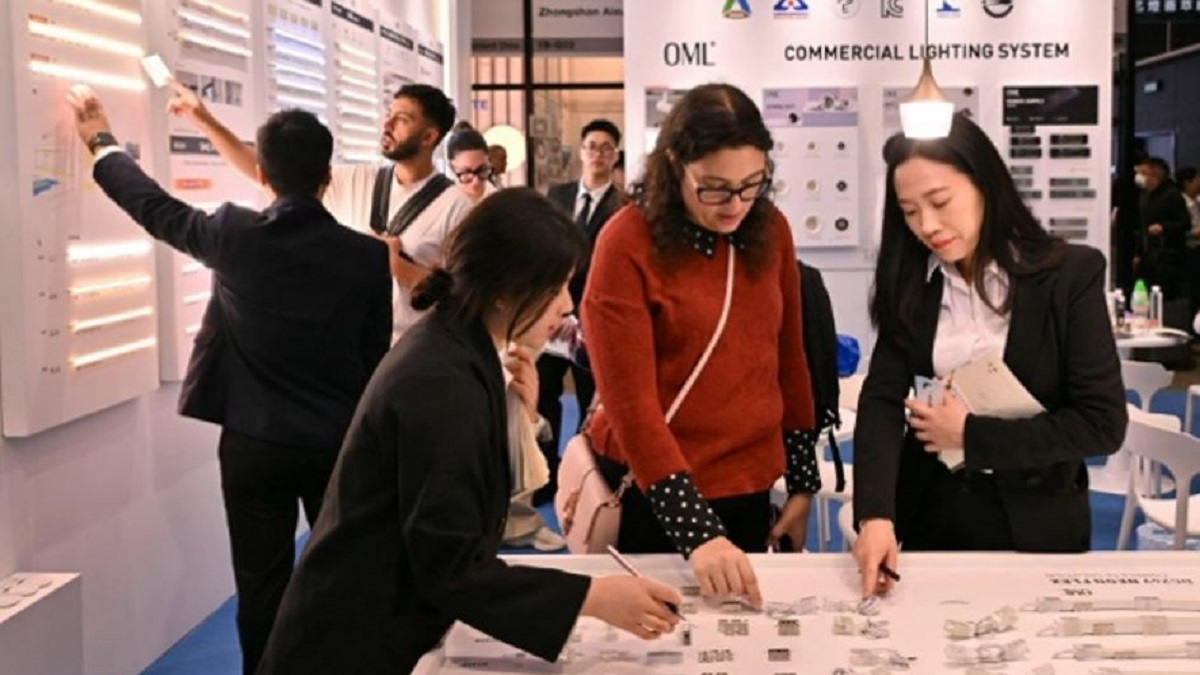
HONG KONG SAR – Media OutReach Newswire – 16 March 2026 – The 17th HKTDC Hong Kong International Lighting Fair (Spring Edition) and the 3rd HKTDC Smart Lighting Expo will be staged from 20 to 23 April at the Hong Kong Convention and Exhibition Centre. Under the theme “Go Smart * Live Green”, worldwide exhibitors will present global buyers with a wide range of high-quality lighting products.
Register for FREE Buyer Badge: https://shorturl.at/3lCV2
The role of lighting has been redefined and transformed into a vital component that enhances well-being and fosters improved environments along with the advancement of the lighting industry. Smart Lighting Expo, a comprehensive platform for the entire supply chain, showcasing an extensive array of products and solutions, including smart lighting technologies, human-centric designs, energy-efficient innovations, advanced digital signage solutions and much more. Given the rising demand in smart display solutions and entertainment lighting driven by mega-events all over the world, a new zone named Smart Commercial Display & Stage Audio-Visual Zone will be launched, featuring renowned brands and leaders of the industry. Key industry leaders such as Absen, whose products were used in NBA, New York Times Square and FIFA Qatar World Cup, will showcase their latest offerings.
The concurrent Spring Lighting Fair will continue to serve as a one-stop trading platform. The Greenovation zone will make a welcome return and showcase green building products and green lighting products, including solar panel, electrical engineering, energy-efficiency lighting systems, safety and security technology. The Leisure Lighting Zone and the Outdoor Lighting Zone will be newly introduced to bring specialised products tailored to leisure and outdoor applications. Fair’s highlighted zone, the Hall of Aurora, will gather renowned brands and showcase innovative lighting products and technologies. Other product zones include commercial lighting, decorative lighting, residential lighting, technical lighting and lighting accessories.
A new highlight of this year’s fairs, Light Lab, debuts in Hall 3 as a dedicated themed display area designed to immerse visitors in the future of smart and intelligent lighting. This innovative showcase features interactive lighting products equipped with cutting-edge technologies, presented in a compelling scenario-based format to demonstrate real-world applications. Visitors can explore three distinct scenes:
- Lumin Garden highlighting garden lights, smart poles, and solar-powered solutions — including the standout Sansi Basin-Clip Plant Light, which leverages proprietary independent ceramic technology for superior heat dissipation far exceeding traditional metal structures. This reduces LED temperatures, minimises light decay, and enhances stability and safety, while its high corrosion resistance delivers a lifespan of up to 25,000 hours. Paired with precise spectral tuning and advanced optics, it offers high efficacy, low energy consumption, and uniform illumination tailored to every stage of plant growth — outperforming conventional plant lights in overall performance.
- Lumin Gallery showcasing sophisticated museum lighting, along with modular track lights and spot lights. One of the highlights is Xiaoshanqiu Cylinder Spotlight Star Series by Sansi Shanghai, which achieves a breakthrough in luminous efficacy through Sansi’s self-developed ceramic core technology. Brightness is boosted by 1.5 times compared to ordinary downlights, while creating pure, elegant hill-shaped wall-washing light spots. The bezel-less and narrow-bezel design seamlessly blends into modern home aesthetics, with deeply recessed light sources and a 65° shading angle that significantly reduces glare for comfortable, eye-friendly lighting — redefining quality in residential and gallery illumination.
- Lumin Arena featuring high-performance stadium lights, high-bay lights, and wall washers — headlined by the F Series Stadium Light by Fozhao Huguang (Maoming) Technology. Crafted using full aluminum forging techniques, it is 20%-45% lighter than traditional fixtures at equivalent illuminance levels, significantly reducing transportation costs and installation demands. Its high-thermal-conductivity 1060 pure aluminum effectively lowers LED chip operating temperatures, extending lifespan to 100,000 hours and minimizing maintenance needs. The design also enables quick and straightforward installation, eliminating complex on-site adjustments and dramatically shortening project delivery timelines for sports lighting applications.
Many of the exhibited products emphasise ESG (Environmental, Social, and Governance) principles, include award-winning designs, and draw from iconic real-world projects, underscoring the latest trends in sustainable, intelligent, and human-centric lighting solutions.
In addition to showcasing products, the twin lighting fairs will feature informative forums where industry players will share their insights on the latest trends and developments in the lighting industry. These forums will provide a valuable platform for knowledge exchange and networking among industry professionals. Asian Lighting Forum will take place on 20-21 April to facilitate the lighting industry to adapt to the latest sustainability standards and market trends of landscape and outdoor lighting, as well as showcasing recognised immersive entertainment lighting projects by award-winning designers. To be held on 21 April, industry experts will present the technological advancements in human-centric lighting and the application of intelligent LED solutions with case studies in Smart Lighting Solution Forum.
Providing Buyers with a seamless sourcing journey
The events will adopt the EXHIBITION+ hybrid model, enhanced by the “Click2Match” online smart business matching platform, available from 13 to 30 April and “Scan2Match” will be also available at the fairs, serving as a feature designed to bridge offline and online interactions. With the HKTDC Marketplace App, buyers can scan dedicated QR codes from exhibitors to bookmark their favourites, access product information, view electronic floor plans, and engage in conversations with exhibitors even after the fair, allowing them to seamlessly continue their sourcing journey.
To attract exhibitors and buyers from key markets, the HKTDC is offering special airfare deals and value-for-money hotel accommodation while more than 40 hotels are offering special booking discounts for trade buyers and five airlines are providing discounted airfares for overseas buyers and exhibitors. In 2025, the twin lighting fairs welcomed some 15,000 buyers from 108 countries and regions, a testimony to the fairs’ internationality.
Product at a Glimpse
Smart Lighting ExpoSmartlightingexpo.hktdc.com
| A25 Series Premier Low-carbon and Energy-saving LED Display
Exhibitor: Shenzhen Absen Optoelectronic Co., Ltd. |
Product Description
The A25 Series Premier Low-carbon and Energy-saving LED Display consumes less than 1 KWH/SQM per day. With over 50% energy saving compared with standard solutions, it promotes a green shift in outdoor advertising and is ideal for Spectacular, Billboard, Transit, Sports, etc. with its aviation-grade waterproofing |
| Ambit 3 + Spot Extended Coverage Screen Light
Exhibitor: Zhongyuan Innovation (HK) Limited |
Product Description
Designed to create an expansive and immersive atmosphere for gaming, movie and music, the PC light supports 16 million color choices with multiple modes and vibrant effects. Functions such as picture and sound synchronization, ambience coverage, and eye‑protection could be controlled by an intuitive and user-friendly PC application. Its unique design also allows tool‑free setup in seconds with adjustable light angle. |
| Extreme Low Glare Spotlight
Exhibitor: Guangdong ThinkGis Lighting Technology CO,.Ltd |
Product Description
As a recipient of Alighting Awards 2025, the spotlight is engineered with precision optical system design and high energy efficiency, ideal for outdoor lighting scenes. Employing optimised light source configuration, reflector cup structures, and glare control rings, environmental light interference is significantly mitigated, ensuring distribution of light concentrated within the targeted zones. |
Spring Lighting FairHklightingfairse.hktdc.com
| Micro Track Light
Exhibitor: Kang Cai International Lighting Co., Limited |
Product Description
M7 is a complete 48V micro‑track lighting system designed for diverse architectural applications. With an ultra‑compact 7 mm profile, it delivers minimalist aesthetics and integrates seamlessly into modern spaces. The flexible track supports embedded and surface‑mounted installations and can be bent into curves or custom shapes, enabling creative layouts for complex structures. Each module supports intelligent control, including Casambi and DALI, allowing precise lighting management and scene customization. Available in six refined finishes, M7 combines design versatility, aesthetic integration, and technical flexibility for both residential and commercial environments. |
| Football Stadium Light
Exhibitor: Shenzhen HuaDian Lighting Co., Ltd. |
Product Description
FL11 is a high-performance integrated sports lighting system designed for modern stadiums. With an all-in-one structure, it delivers 1650W of power while weighing only 18.5 kg, significantly reducing installation load. Its ultra-high central luminous intensity ensures excellent visibility and uniform illumination, fully meeting professional competition and broadcast requirements. With proven performance in international projects, FL11 is a reliable and efficient solution for high-end sports venues. |
| Book House Ambient Lamp
Exhibitor: NIZ |
Product Description
This lighting collection represents modern Korean design, characterized by warmth, simplicity, and emotional balance. The Book House Ambient Lamp delivers calm, architectural softness inspired by everyday living spaces. The Lucky Fish Night Lamp adds a touch of playful charm with a handcrafted look and gentle glow. The Macaron Floor Lamp features smooth curves and pastel tones for a refined contemporary accent. Together, the collection offers soft ambience lighting and distinctive design, suitable for residential, hospitality, and lifestyle spaces worldwide. |
You may like
-

Hong Kong sets out strategies to enhance the appeal and add value to the city’s tourism industry
-

Hong Kong sets out initiatives to secure long-term development of pillar industries
-

Hong Kong’s Chief Executive takes to the airwaves to discuss his strategic vision for development under the city’s First Five-Year Plan
-


Hong Kong sets out strategic vision for developing the Northern Metropolis and creating a global talent hub
-


Hong Kong’s 2026 Policy Address: A Strategic Vision for a Bright New Era
-


Hong Kong’s First Five-Year Plan sets out long-term vision for development
Energy
Deals, Drilling and New Entrants Define Angola Oil & Gas 2026
Published
18 hours agoon
September 21, 2026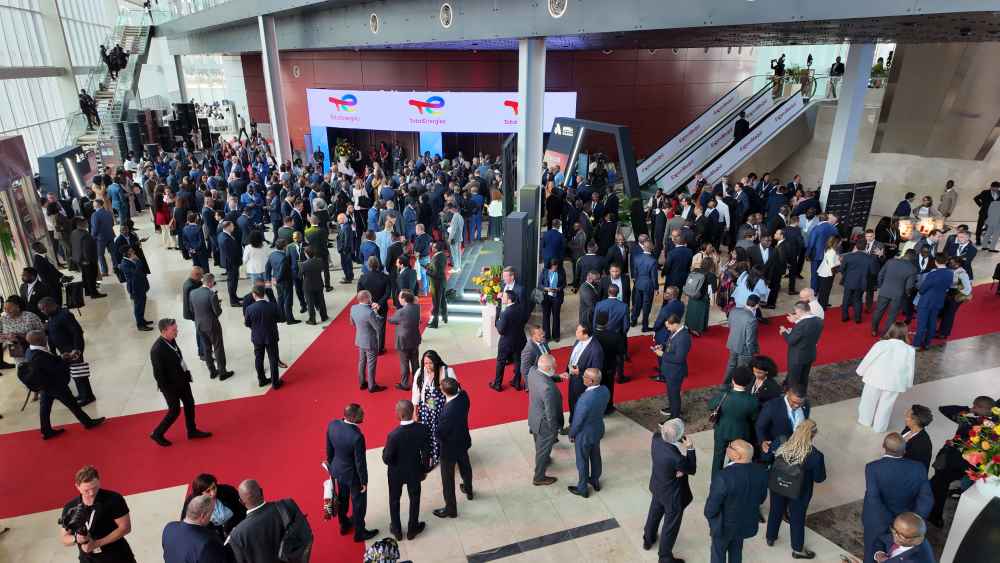
Eleven agreements, new exploration commitments and billions of dollars in planned investment highlight Angola’s push to convert upstream reform into projects, production and broader energy-sector growth
Eleven Deals Advance Angola’s Investment Pipeline
Eleven agreements were formalized during AOG 2026, spanning new acreage, mature-field investment, financing, gas-based industry and emissions reduction. Angola’s National Oil, Gas & Biofuels Agency (ANPG) signed agreements with international oil companies covering deepwater Blocks 19, 34 and 35; Blocks 8 and 22; Block 33/24; Blocks 17/25 and 32/21; and further investment in Block 32. Agreements also supported incremental production at Blocks 15 and 31, financing for Etu Energias’ expansion at Block 14 and the social responsibility component of Amufert’s planned $2 billion Soyo fertilizer complex.
Exploration Moves to the Forefront
The ANPG set a target of at least 10 wells annually as Angola seeks to rebuild its exploration pipeline and offset mature-field decline. Shell pledged to pursue exploration aggressively following three agreements signed at AOG. Corcel is also considering a mid-2027 exploration well at KON-16 in the onshore Kwanza Basin following completion of a 326-line-km 2D seismic campaign.
TotalEnergies, Chevron Double Down
Existing operators used AOG to reaffirm long-term investment. TotalEnergies announced plans to invest $10 billion alongside project partners across its Angolan portfolio over the next five years, while further investment at Dalia could unlock up to 400 million barrels under Angola’s incremental-production framework. Chevron plans additional investment in Block 0 following the concession’s extension to 2050.
Pertamina, Panoro Eye Angola Entry
AOG also brought indications of new international participation. Indonesia’s Pertamina announced plans to pursue an upstream operator role in Angola. Panoro Energy, meanwhile, is assessing opportunities across Angola’s onshore, offshore, frontier and brownfield segments. Senior Advisor Tim O’Hanlon said that “it won’t be long before we are in Angola,” highlighting favorable fiscal terms and increasing competition.
It won’t be long before we are in Angola
Pre-Conference Sets Investment Agenda
AOG 2026 began with a dedicated pre-conference program focused on Angola’s next phase of oil and gas development. Workshops and technical discussions examined gas infrastructure, downstream markets, exploration technology and investment opportunities, setting the stage for the commitments announced during the main conference.
Gas and Refining Shift Toward Domestic Value Creation
Angola’s Gas Master Plan emerged as a major industrialization platform, targeting approximately $13 billion in midstream and downstream investment across five hubs. Downstream expansion is advancing in parallel. Angola is targeting 425,000 barrels per day of refining capacity across Luanda, Cabinda, Lobito and Soyo as it seeks to reduce a refined-product import bill that reached approximately $1.96 billion in the first half of 2026.
AOG Recognizes Industry and Emerging Talent
The AOG Awards recognized achievements across the value chain, with Azule Energy named Game Changer of the Year, Sonangol Explorer of the Year, Etu Energias Local Company of the Year and the Cabinda Refinery Downstream Player of the Year. Aníbal Octávio Teixeira da Silva received the Lifetime Achievement Award.
Four female students – Abigail Francisco Boa, Chana Lisboa, Genilda Ricardo and Madalena Yanesa Ramos Neto – also received the Albina Faria de Assis Pereira Africano Scholarship, which provides financial support to leading female entrants to Angola’s National Petroleum Institute.
ANPG Expands Investor Access
The ANPG took another step toward improving the investment environment, launching an upgraded website featuring AI-powered search and a dedicated investor space. The platform provides greater access to industry data, investment opportunities and ANPG teams, supporting faster communication between the regulator and prospective investors.
Exhibition Connects Industry Players
Alongside the conference, the AOG 2026 exhibition brought together operators, service companies, technology providers and government institutions, providing a platform to showcase projects, capabilities and investment opportunities across Angola’s oil and gas value chain.
Distributed by APO Group on behalf of Energy Capital & Power.
Events
Huawei Cloud Rolls Out Enterprise AI Products Across the Board, Building an Open Agentic Cloud
Published
18 hours agoon
September 21, 2026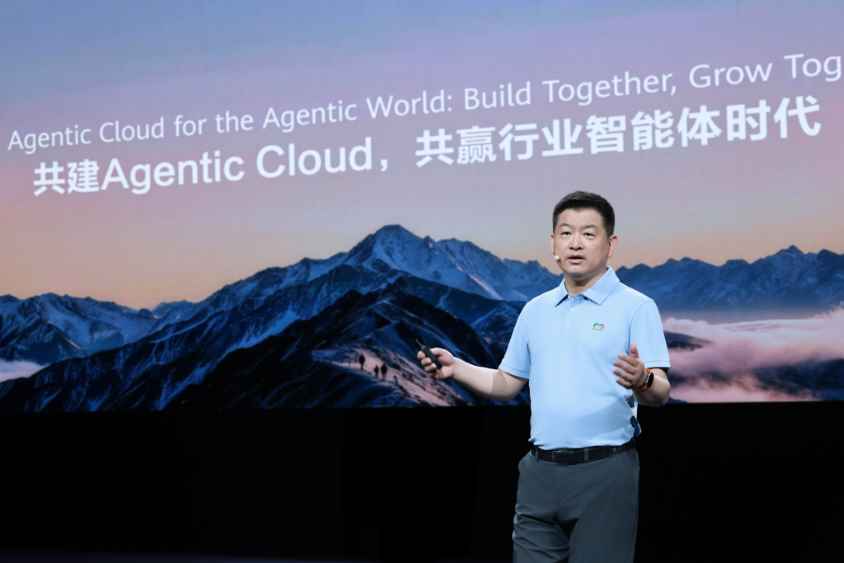
SHANGHAI, CHINA – Media OutReach Newswire – 18 September 2026 – On September 18, Dr. Peter Zhou, Director of the Board at Huawei and CEO of Huawei Cloud, delivered a keynote titled “The Agentic Cloud for the Agentic World: Build Together, Grow Together” at HUAWEI CONNECT 2026. He shared Huawei Cloud’s latest progress. He announced the global launch of the latest AI Cluster Service (AICS), a key step in Huawei Cloud’s strategy to strengthen the silicon bedrock on the cloud and reinforce the foundation for agentic AI. The keynote also highlighted the Agentic Model as a Service (MaaS) platform, which brings together diverse models to accelerate model capabilities as services at scale. The AgentArts enterprise-grade agent platform already serves over 100 enterprises. The Industry AI Foundry has accumulated more than 1,000 industry assets, with over 1,000 projects deployed. The Industry AI Foundry now includes two new zones, Smart Government Zone and AI Hardware Zone, to drive agents toward large-scale adoption. These efforts, taken together, are building a thriving AI ecosystem on the cloud.
Building Agentic Infra for agents
Dr. Peter Zhou also highlighted that in the agentic era, infrastructure no longer simply exists to provide compute. Instead, its purpose has expanded to making every token more efficient, coordinating general and AI compute, enabling models to keep learning, and, more importantly, running agents securely and reliably within real production environments. Huawei Cloud has defined Agentic Infra, a new paradigm around efficient tokens, enhanced memory, unified general & AI scheduling, and secure autonomy. To date, Agentic Infra has served over 3,500 customers.
The latest AICS is built on a five-level fast recovery mechanism with full-chain observability. It supports over 40 days of stable training on cloud and is capable of fault recovery within 10 minutes. Furthermore, supported by coordinated optimization across scheduling, cache, and algorithms, it delivers 20% higher token throughput than the previous generation of compute service. The latest AICS will be commercially available in China on September 30 and in markets outside China on November 30.
The Context Memory Storage (CMS) solution addresses the needs of long-horizon agent tasks for memory capacity and access efficiency. It provides a petabyte-scale memory space, twice the storage capacity of comparable industry products, and supports high-speed terabyte-scale memory reads with 50% higher performance than industry peers.
Agentic MaaS brings together diverse models, enabling developers to invoke state-of-the-art (SOTA) models from leading providers with just one click and no deployment required. At the event, MiniMax demonstrated its advanced multimodal model, which, combined with Huawei Cloud, delivers open, cutting-edge multimodal capabilities.
Building an enterprise-grade agent platform to help enterprises develop and use agents effectively
Huawei Cloud is advancing its enterprise-grade agent platform through a dual approach: commercial and open source. Built on AgentArts and its open-source edition openJiuwen, the platform opens up more than 5,000 general Model Context Protocol (MCP) assets and over 1,000 industry-specific MCP assets, making it easier for enterprises to develop, use, and manage agents. To date, the platform has served more than 100 customers, including the Shenzhen Longgang District Government, China Southern Power Grid, Guangzhou Laboratory, the University of Science and Technology of China, Kingsoft Office, Sichuan Yingu Carbon Sink Renewable Resources Co., Ltd., Changsha Thunder Cloud Network Technology Co., Ltd., and KingMed Diagnostics. At the event, Kingsoft Office shared its implementation practices based on Huawei Cloud’s agent platform. By deeply integrating the agent platform with the WPS 365 Document Center and WPS Comate, Kingsoft Office has built vertical office agents that are now deployed across multiple industries, including finance and government.
Huawei Cloud has announced that AgentArts will be commercially available in markets outside China on December 30. To date, the openJiuwen open-source community has surpassed 50,000 stars and 3.29 million downloads. Together with Chinasoft International, iSoftStone Group, and Beiming Software, Huawei Cloud has launched partner commercial editions and shared a broad market space, helping partners thrive on Huawei Cloud’s silicon bedrock.
Advancing the Industry AI Foundry to accelerate AI adoption at scale across industries
Through the Industry AI Foundry, Huawei Cloud brings together assets such as industry scenarios, models, data, knowledge, and agents, turning industry know-how from isolated project experience into reusable industry capabilities. It has built five industry-specific zones — Smart Healthcare Zone, Embodied AI Zone, AI for Science (AI4S) Zone, Smart Manufacturing Zone, and Smart Finance Zone — with over 1,000 industry-specific assets and more than 1,000 deployed projects.
Two new zones have been launched within the Industry AI Foundry: Smart Government Zone and AI Hardware Zone. The Smart Government Zone has already brought together 24 founding partners, covering a range of scenarios such as government office operations, public services, urban governance, and industry development. The AI Hardware Zone has onboarded 15 core partners, covering more than 20 device types, including AI glasses, AI toys, and AI recording cards, along with over 10 scenario templates and more than 110 scenario skills.
From infrastructure and enterprise-grade agent platforms to industry ecosystems, Huawei Cloud is committed to building an open agentic cloud, with open infrastructure to power AI, an open platform to support enterprises in effectively developing and using agents, and an open industry ecosystem to accelerate AI adoption at scale. Ultimately, Huawei Cloud looks to move forward with customers and partners to build and grow together in the agentic era.
Themed Advancing the Agentic World, HUAWEI CONNECT 2026 will delve into AI across three dimensions: strategy, technology, and ecosystems. You can expect an in-depth look at our latest strategic initiatives, and we’ll also be unveiling our all-new digital and intelligent infrastructure products, scenario-specific solutions for industries, and development tools. The event will run from September 17 to 19 at the Shanghai World Expo Exhibition & Convention Center and Shanghai Expo Center. For more information, please visit HUAWEI CONNECT 2026 online at www.huawei.com/en/events/huaweiconnect
Events
Advancing the Agentic World, Building a Solid Silicon Foundation
Published
4 days agoon
September 18, 2026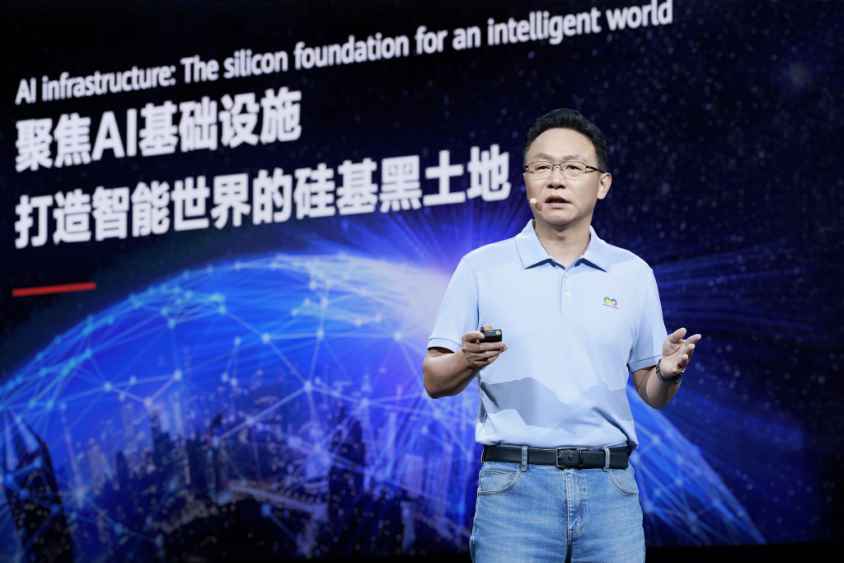
Key takeaways:
- Strategic focus: The rapid approach of an intelligent world is driving up demand for computing power. Huawei is focused on developing AI infrastructure, and is actively driving innovation in systems and architecture centered around SuperPoDs and SuperClusters. These efforts are aimed at building a solid silicon foundation for the intelligent world.
- Technological breakthroughs: Huawei unveiled the Atlas 960E SuperPoD, the first in the industry to use NPO. The company also launched an upgraded TaiShan 950 SuperPoD, as well as the OceanStor M900 (a memory context storage system). Interconnected with UnifiedBus, Huawei’s agentic SuperCluster can scale up to one million NPUs.
- Open ecosystems: Huawei is actively building out open computing ecosystems. To date, the Kunpeng ecosystem has attracted 4.16 million developers from around the world. CANN has moved to sustained, community-driven open-source development. Ascend now spans over 90 leading third-party open-source projects and is officially supported as a PyTorch accelerator backend.
SHANGHAI, CHINA – Media OutReach Newswire – 17 September 2026 – HUAWEI CONNECT 2026 kicked off today in Shanghai. The first keynote of the date was by David Wang, the Deputy Chairman of the Board and Rotating Chairman at Huawei. In his speech (Advancing the Agentic World, Building a Solid Silicon Foundation), Wang highlighted the work the company is doing alongside industry stakeholders to build powerful AI infrastructure, lay a solid computing foundation, and address the challenges and opportunities in the intelligent world to come.
AI is sweeping the world faster than any previous technological revolution. Today, foundation model parameters are rapidly approaching 10 trillion, and are projected to exceed 100 trillion by 2030. AI agents can now work on the same task continuously, for hours on end. By 2030, they will be able to handle tasks that span months.
In China alone, the average number of inference tokens consumed every day has surged to around 500 trillion, and is expected to reach quintillions (1018) by 2030.
On-device AI is also advancing rapidly. On-device models for smartphones have expanded from three billion parameters in 2024 to 30 billion today, and will push toward hundreds of billions in the near future.
These trends will set a much higher bar for the scale, performance, and reliability of underlying technical systems. Only by building powerful AI infrastructure can the industry lay a solid foundation for the future intelligent world.
An intelligent world is approaching – and faster than ever. To lead the charge into this new world, Huawei is laser-focused on building out AI infrastructure – the silicon foundation for the future to come.
In particular, Huawei’s AI strategy is centered on computing power, with a focus on monetizing hardware. The company is also sharpening its competitive edge through systems and architectural innovation. Centering these efforts on SuperPoDs and SuperClusters, the company aims to build a solid computing foundation and offer a new option for the world.
Huawei is a major contributor to open computing ecosystems, and will continue to support native training for mainstream foundation models on its systems, as well as supporting a vast range of models and applications.
For customers, Huawei provides flexible on-premises and cloud compute solutions for its customers to accelerate intelligent transformation across industries.
With diverse forms of compute, including solutions for micro-, low-tier, mid-range, and massive computing power – Huawei is driving the expansion of on-device and in-vehicle AI, making intelligence truly ubiquitous.
Additionally, Huawei is dedicated to building next-generation communications networks to bring readily available compute and intelligence to every person, home, and organization.
SuperPoDs gain broad consensus, with adoption growing in industries, academia, and research institutes
To date, over 1,000 Atlas 900 A3 SuperPoDs have been deployed, and Atlas 950 SuperPoD is seeing large-scale commercial use. While adoption continues to grow, SuperPoDs have gained broad acceptance across industry, academia, and research institutions as a key direction for AI infrastructure. Currently, a SuperPoD is explicitly defined as a computing system in which multiple computing nodes are tightly coupled through high-speed interconnect protocols, featuring unified memory addressing across physical nodes — functioning like a single logical computer.
SuperPoDs are the go-to choice for AI infrastructure buildout. Right now, 100k-NPU computing clusters have become the baseline for training SOTA models. However, traditional server architectures result in intra-cluster communications that account for over 40% of total training time, severely constraining Model FLOPs Utilization (MFU). Simulation results from Huawei’s Markov Lab show that a 100k-NPU cluster built with 4k-NPU SuperPoDs can deliver a 2.75x increase in MFU compared to a 100k-NPU cluster composed of 8-NPU servers.
11-chip UnifiedBus-powered portfolio for SuperPoDs and SuperClusters; the Atlas 960E SuperPoD –the industry’s first to use NPO
The Ascend series of chips is the most critical component in Huawei’s 11-chip UnifiedBus-powered portfolio for SuperPoDs and SuperClusters. Development on Ascend 960 has exceeded the company’s expectations, with performance doubling as planned. Ascend 960DT will be available in Q1 2027, three quarters ahead of the company’s original roadmap. And the Ascend 960PR will be ready in Q3 2027, one quarter ahead of schedule.
“We’re evolving our Ascend chip series on a one-generation-a-year cycle,” said Wang in his keynote. “In 2028 and 2029, we will roll out the Ascend 970 and 980 chips, respectively. Thanks to the Tau (τ) Scaling Law, not only will their compute specifications continue to double, but you can also expect to see huge improvements across the board in terms of memory bandwidth, memory capacity, interconnect bandwidth, and more.”
In addition to Ascend chips, Huawei has also developed a complete portfolio of chips for AI infrastructure, based on UnifiedBus, delivering key capabilities that cover computing, interconnect, storage, and management.
“SuperPoDs are designed to coordinate multiple NPUs through interconnect,” continued Wang. “We have developed a next-generation optical interconnect product based on near-packaged optics (NPO): the High-density Optical-interconnect-Node Engine (Hi-ONE).” Built on Huawei’s proprietary technologies, Hi-ONE has a multi-physics design for balancing optical, mechanical, electrical, electromagnetic, and thermal performance, realizing a transmission capacity of 7.2 Tbit/s per single engine.
“This is the industry’s first NPO product ready for mass production, delivering the largest transmission capacity. It is also the industry’s first NPO product with a built-in light source.”
This product combines high bandwidth and high reliability with low latency and low power consumption. This, coupled with UnifiedBus, will make it far easier to scale up SuperPoD interconnect systems.
Recently, Huawei submitted an implementation agreement (IA) on NPO to the Optical Internetworking Forum (OIF), a standards organization. The response from numerous industry partners has been widely positive. Huawei will continue its efforts to further refine the NPO industry ecosystem.
Using Ascend 960 chips and Hi-ONE, Huawei has developed the industry’s first NPO-based SuperPoDs: the Atlas 960E SuperPoDs. A single Atlas 960E SuperPoD can scale up to 4,096 NPUs, delivering 8 EFLOPS of FP8 compute performance, with up to 1 petabyte of HBM capacity. With 5,500 Hi-ONE units, this SuperPoD doesn’t need the 48,000 800G optical modules that would traditionally be required to connect all the NPUs. This cuts power consumption by over 550 kilowatts, while doubling the system’s fault-free operating time, achieving 99.8% system availability.
Combining the upgraded TaiShan 950 SuperPoD and context memory storage to power an ultrascale cluster with 1 million NPUs
As SOTA models scale to 10 trillion parameters, training and inference can no longer rely on a single AI server or AI SuperPoD – they require a more complex computing system. This system includes AI SuperPoDs, general-purpose SuperPoDs, and an interconnect system that features peer-to-peer interconnect and zero protocol conversion. For inference, including a petabyte-scale KV cache cluster is also a must.
To meet these demands, Huawei has fully upgraded its TaiShan 950 SuperPoD. Powered by UnifiedBus all-optical networking, this new SuperPoD supports up to 4,096 nodes with a unified memory pool of up to 256 TB. This setup significantly improves agent performance. For sandbox-intensive workloads, startup speeds for 100,000 sandboxes are 30 times faster than traditional servers, and sandbox density can be improved by an additional 25%. For vector search across 10 billion x 1,000-dimensional vectors, this SuperPoD delivers twice the search efficiency of traditional servers.
Huawei has also launched OceanStor M900 – a UnifiedBus-powered context memory storage cluster that delivers multi-tier KV caching for agent-heavy and longer-context workloads. Designed for agentic inference, this cluster supports one-hop direct access and provides a petabyte-scale KV cache for the L3.5 layer. OceanStor M900 also uses hybrid media and an optimized retention algorithm, extending SSD read/write lifespan by 16-fold. This ensures a higher KV cache hit rate alongside long-term stability and reliability from the ground up.
Combining its strengths in computing and communications, Huawei has built a brand-new agentic SuperCluster to accelerate training and inference for 10-trillion-parameter models. This SuperCluster uses UnifiedBus to consolidate multiple interconnect protocols into a single unified protocol, significantly reducing protocol conversion overhead. This delivers peer-to-peer interconnect between subsystems like Ascend SuperPoDs, Kunpeng SuperPoDs, and KV cache clusters. The SuperCluster also comes with a multi-tier, high-bandwidth, and large-capacity storage system that enables direct single-hop access for all KV cache tiers.
With a two-tier, four-plane Clos architecture, the SuperCluster can interconnect up to 512,000 NPUs. When combined with a multi-rail topology, this cluster can support up to one million NPUs.
One of Huawei’s core strategies: Going open source and open system to build out computing ecosystems
The Kunpeng ecosystem is driving digital and intelligent innovation across a wide range of industries. To date, the Kunpeng ecosystem has attracted over 4.16 million developers and more than 7,200 ecosystem partners from around the globe. The community currently supports over 560 open-source projects worldwide. openEuler has seen more than 20 million installations, securing the largest share in China’s server OS market.
The Ascend ecosystem has reached a new inflection point. The Compute Architecture for Neural Networks (CANN) is the foundation of the Ascend ecosystem. Today, CANN has moved to sustained, community-driven open-source development, which has brought the platform from usable to user-friendly.
External CANN developers now comprise 61% of all CANN developers, outnumbering internal developers for the first time. With over 5,200 monthly active developers, the CANN community has become the most vibrant open-source community in China. What’s more, over 40 models have been natively pre-trained on Ascend and CANN, making it the only proven domestic stack capable of model pre-training.
Ascend now supports over 90 leading third-party open-source projects, including PyTorch, Triton, vLLM, and veRL. With strong support from the Linux Foundation, Ascend is the first official Chinese compute platform on PyTorch’s website. This gives developers around the world ready access to new innovations in the Ascend ecosystem.
Diverse forms of compute for ubiquitous on-device and in-vehicle AI
AI is expanding faster into all kinds of devices. To deliver an unparalleled AI experience across all scenarios, Huawei will continue to strengthen capabilities in four key areas:
First, Huawei will combine Kirin and Ascend chips to drive self-reliance and autonomy in on-device compute.
Second, Huawei will bring together Pangu models and third-party models to make on-device intelligence better and easier to use.
Third, HarmonyOS, as an Agent OS for ubiquitous intelligence, will be completely redefined from the ground up – spanning system architecture, how it operates, and interaction logic – to enable human-agent collaboration.
Fourth, Huawei will keep cultivating a diverse AI ecosystem, which is the foundation for its system agent Celia to thrive.
Huawei plans to build four on-device computing platforms: for AI phones, AI PCs, vehicles, and homes. Through cross-device and device-cloud compute synergy, Huawei will be able to provide distributed swarm intelligence, delivering integrated and continuous intelligent services across personal mobile, office, vehicle, and home spaces, ultimately bringing intelligence to every person and every space.
Building next-generation communications that prioritize readily available compute, because without networks, all compute is siloed
Next-generation communications networks are crucial for fully unleashing the value of AI compute. We are driving the upgrade to networks that, in addition to connecting people, will prioritize delivering readily available compute. These networks will be underpinned by 5G-A/6G, 10-gigabit optical networks, and multi-tier, low-latency bearer networks, delivering intelligent connectivity across data centers, the edge, and devices.
Concluding his keynote, Wang expressed that AI “may well be the final technological revolution in human history,” noting that its impact is deeper and broader, and coming faster than anyone could have ever imagined. “No single company,” he said, “can build an intelligent world alone.”
He stressed Huawei’s ongoing commitments moving forward:
Huawei will remain committed to building a solid silicon foundation to make computing power readily accessible to all.
The company will continue to open source its software, helping developers unleash their full potential.
It will continue to embrace a wide range of models and applications, unlocking value in every form.
“And we will continue to work together to drive shared success, growing together with our customers and partners around the world,” Wang concluded. “Let’s work together to build a fully connected, intelligent world.”
Themed Advancing the Agentic World, HUAWEI CONNECT 2026 will delve into AI across three dimensions: strategy, technology, and ecosystems. You can expect an in-depth look at our latest strategic initiatives, and we’ll also be unveiling our all-new digital and intelligent infrastructure products, scenario-specific solutions for industries, and development tools. The event will run from September 17 to 19 at the Shanghai World Expo Exhibition & Convention Center and Shanghai Expo Center. For more information, please visit HUAWEI CONNECT 2026 online at www.huawei.com/en/events/huaweiconnect
FAQs:
Q1: What is a SuperPoD, and why is it becoming increasingly important?
A SuperPoD is a computing system in which multiple computing nodes are tightly coupled through high-speed interconnect, enabling them to share unified memory and function like a single computer. As foundation model training and inference continue to scale up, SuperPoDs can reduce communications overhead in large-scale clusters and improve Model FLOPs Utilization (MFU). They have gained broad consensus across industry, academia, and research institutes in AI infrastructure, and are the go-to choice for AI infrastructure buildout.
Q2: What makes the Atlas 960E SuperPoDs special?
The Atlas 960E SuperPoD is the industry’s first NPO-based SuperPoD. A single Atlas 960E SuperPoD can scale up to 4,096 NPUs, delivering 8 EFLOPS of FP8 compute performance, with up to 1 petabyte of HBM capacity. With 5,500 Hi-ONE units, this SuperPoD doesn’t need the 48,000 800G optical modules that would traditionally be required to connect all the NPUs. This cuts power consumption by over 550 kilowatts, while doubling the system’s fault-free operating time, achieving 99.8% system availability. Atlas 960E SuperPoDs can provide efficient and reliable computing power for large-scale AI training and inference.
Q3: What is NPO, and what role does Hi-ONE play in a SuperPoD?
NPO stands for Near-Packaged Optics, an optical interconnect technology designed for high-speed connectivity. Hi-ONE, developed by Huawei, is the industry’s first NPO product ready for mass production. It delivers the largest transmission capacity at 7.2 Tbit/s and is currently the industry’s only NPO product with a built-in light source. Hi-ONE, coupled with UnifiedBus, will make it far easier to scale up SuperPoD interconnect systems.
Trending
-
Business5 days ago
Hong Kong’s First Five-Year Plan sets out long-term vision for development
-

 Business4 days ago
Afreximbank extends US$10-million facility to Azania Bank to support Small and Medium-sized Enterprises (SMEs) in Tanzania
-

 Business5 days ago
International Trade Centre (ITC) and DHL renew partnership to help small businesses trade
-

 Business5 days ago
Afreximbank and ZEP-RE deepen partnership to build trade, insurance and risk management expertise across Africa
-

 Business5 days ago
Emirates Skywards doubles the Miles on Emirates and flydubai flights
-
Business5 days ago
Hong Kong’s 2026 Policy Address: A Strategic Vision for a Bright New Era
-
Business4 days ago
Afreximbank and Development Bank of Southern Africa establish a Joint Project Preparation Facility to advance bankable projects in Southern Africa
-
Business4 days ago
Hong Kong sets out strategic vision for developing the Northern Metropolis and creating a global talent hub