Connect with us
Anglostratits

Events

Future Hospitality Summit (FHS) Africa 2026 Announces Award Recipients: Vimbai Masiyiwa and Colin Bell to Be Honoured in Nairobi

Published

on

Hospitality

The recipients will be celebrated as part of the event programme, including exclusive one-to-one interviews in which they will share reflections on their life stories, leadership journeys and the milestones that have shaped their impact on African hospitality

CAPE TOWN, South Africa, March 16, 2026/APO Group/ –FHS Africa (www.FutureHospitality.com/Africa), organised by The Bench, is proud to announce the 2026 recipients of the prestigious FHS Africa Awards.


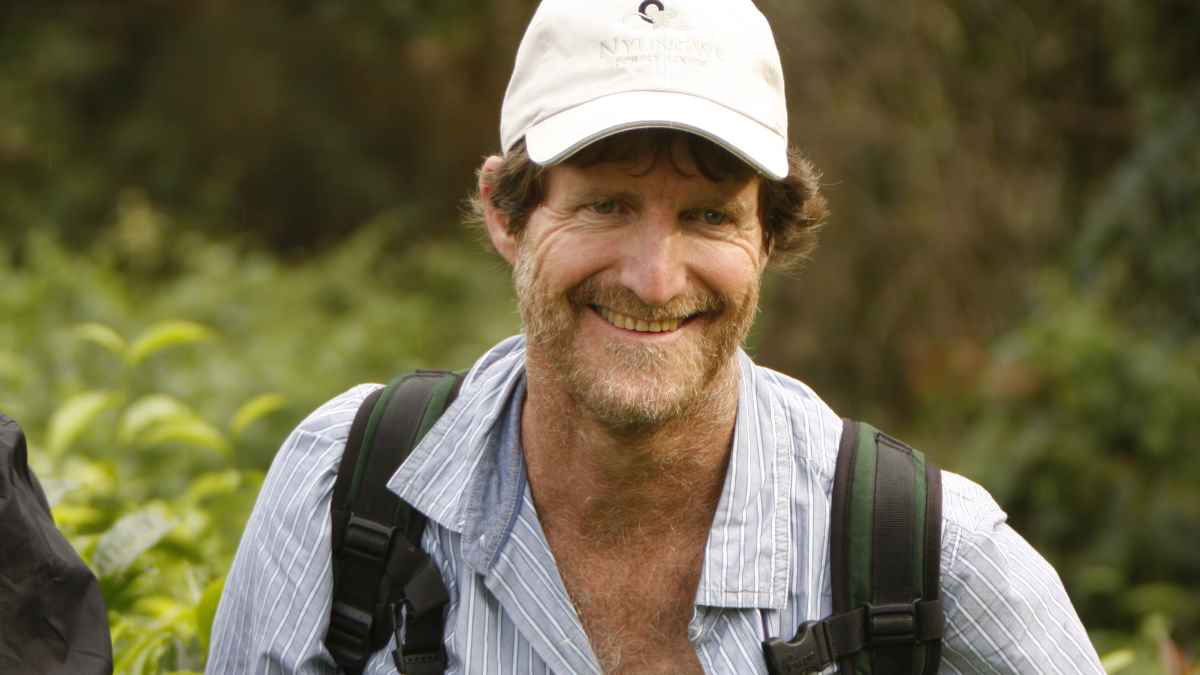
This year’s honourees are Vimbai Masiyiwa, Co-Founder and CEO of Batoka Africa, who will receive the Leadership Award, and Colin Bell, CEO of Natural Selection and former CEO of Wilderness, who will receive the Outstanding Contribution to Hospitality Award.

Both awards will be presented in Nairobi during FHS Africa 2026, taking place from 31 March to 1 April 2026. The recipients will be celebrated as part of the event programme, including exclusive one-to-one interviews in which they will share reflections on their life stories, leadership journeys and the milestones that have shaped their impact on African hospitality.

As Co-Founder and CEO of Batoka Africa, Vimbai Masiyiwa is shaping a new era of African hospitality. The company operates a portfolio of luxury safari properties in Zimbabwe, grounded in conservation, sustainability and community empowerment.

Hospitality, at its best, connects guests to wild places in meaningful ways while safeguarding those places for generations to come

Under her leadership, Batoka Africa has championed responsible tourism that protects biodiversity while creating meaningful economic opportunity for local communities. Masiyiwa is recognised for advancing gender inclusion in leadership and for building an African-owned brand that competes confidently on the global stage while remaining deeply rooted in shared value and local impact.

Commenting on the award, Vimbai Masiyiwa said: “I am deeply honoured to receive the FHS Africa Leadership Award. For us at Batoka Africa, hospitality is about stewardship, of land, of culture and of opportunity. This recognition reflects the dedication of our teams and the communities we work alongside in Zimbabwe. I look forward to sharing our journey in Nairobi and celebrating the continued evolution of African-led hospitality.”

Colin Bell is one of the most influential figures in African conservation tourism. Through his leadership at Natural Selection and previously at Wilderness, he has helped shape a model of high-end, conservation-driven safari experiences that balance commercial success with environmental stewardship. Over the course of his career, Bell has played a central role in expanding conservation tourism into new territories, strengthening partnerships with governments and communities, and demonstrating how hospitality can directly support biodiversity protection and local livelihoods. His work has positioned African safari tourism as a global benchmark for sustainable luxury.

Colin Bell said: “I’m deeply grateful for this recognition from FHS Africa. Hospitality, at its best, connects guests to wild places in meaningful ways while safeguarding those places for generations to come. I look forward to reflecting on that journey in Nairobi and celebrating the collective effort of so many people who have shaped Africa’s conservation tourism story.”

Matthew Weihs, Growth Director at The Bench, added: “Vimbai Masiyiwa and Colin Bell are two exceptionally worthy winners. Both have redefined what leadership in African hospitality looks like – purpose-driven, commercially astute and deeply committed to community and conservation. We cannot wait to showcase their stories and personal journeys on stage in Nairobi at FHS Africa 2026.”

FHS Africa 2026 will bring together hospitality investors, owners, operators and industry leaders from across the continent and beyond for two days of forward-looking discussion, high-level networking and celebration in Nairobi.

Distributed by APO Group on behalf of Future Hospitality Summit Africa (FHS Africa).


Energy

Africa shifts from carbon market potential to delivery as Carbon Markets Africa Summit (CMAS) 2026 opens in Kigali

Published

on

Carbon Markets Africa Summit

African governments, development finance institutions and global climate leaders call for high-integrity markets, investment-ready projects and greater value for African communities

KIGALI, Rwanda, October 15, 2026/APO Group/ –Africa must move beyond carbon market potential towards delivery, building high-integrity, investable markets that attract long-term capital while protecting national climate priorities and ensuring greater value reaches African countries and communities.


That was the central message from the opening keynote sessions of the Carbon Markets Africa Summit (CMAS) 2026 in Kigali, Rwanda, where policymakers, investors, project developers, development finance institutions and international climate organisations gathered to accelerate Africa’s participation in global carbon markets.

Representatives from 45 countries, including 21 African nations, are participating in the summit, where discussions have shifted decisively from market readiness to implementation, investment and transactions.

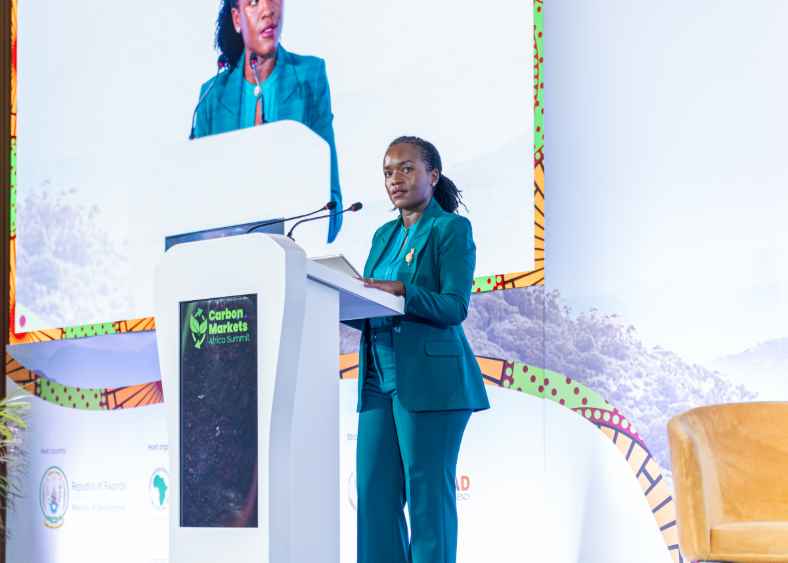
Officially opening the summit, Hon. Dr Bernadette Arakwiye, Rwanda’s Minister of Environment, said Africa’s carbon markets must be shaped by African priorities and deliver tangible benefits for the continent.

“The question before us is therefore no longer simply whether Africa is ready. It is whether we can deliver at scale, with integrity and with innovation.”

Minister Arakwiye said progress is already evident as African countries establish carbon market frameworks, grant authorisations, sign bilateral agreements and develop projects. However, she cautioned that carbon finance remains concentrated in a relatively narrow range of project types. She called for diversification into renewable energy, electric mobility, sustainable waste management, industrial decarbonisation, agriculture and landscape-scale nature-based solutions.

Minister Arakwiye identified three priorities for scaling Africa’s carbon markets: accessible methodologies suited to African contexts; project preparation and readiness finance; and long-term demand at fair value.

“Trust is the currency of this market,” she said. “To our buyers and investors, I say: look closely at these efforts. Reward them with long-term demand, fair prices and patient capital.”

From potential to execution

The call for delivery was echoed by Hon. Hamad Yusuf Masauni, Tanzania’s Minister of State in the Vice President’s Office responsible for Union Affairs and Environment, who said the continent now has an opportunity to reposition itself in global carbon markets.

“For too long, Africa has been spoken about as a continent of potential. At the Carbon Markets Africa Summit, we declare that the era of potential is giving way to the era of execution.”

Minister Masauni stressed the importance of moving high-quality, bankable projects through to issuance and offtake rather than focusing solely on the size of project pipelines.

“Credibility is built one verified tonne, one closed deal and one community that sees real benefit at a time.”

The importance of ensuring value reaches communities was also central to remarks from Maxwell Gomera, UNDP Resident Representative in South Africa and Director of the Africa Sustainable Finance Hub.

Gomera called for market infrastructure capable of carrying value “from the buyer all the way to the farmer”, backed by strong community rights, enforceable benefit-sharing, early-stage finance and partnerships focused on delivery.

Africa urged to compete on integrity, not price

For too long, Africa has been spoken about as a continent of potential

Speakers also stressed that Africa’s competitive advantage should be the quality and integrity of its carbon assets rather than simply offering the lowest-priced credits.

Perumal Arumugam, Manager of Markets and Non-Markets and Stakeholder Interaction at UN Climate Change (UNFCCC), said Africa should move beyond asking how it can participate in carbon markets and instead consider how carbon markets can advance African priorities.

“Africa should not compete simply by offering the cheapest tonnes. Africa should compete by offering credible and creditable tonnes, a sustainable tonne, and a tonne that the world can trust.”

He said success should ultimately be measured not only in credits issued, but in investment mobilised, mitigation unlocked, value reaching communities, stronger economies and African countries retaining control over their climate transitions.

Speaking on behalf of AUDA-NEPAD, Esterine Fotabong similarly called for African countries to scale carbon markets on their own terms, supported by predictable authorisations, functioning registries and credible monitoring, reporting and verification systems.

She also highlighted the need to build greater African capacity in validation and verification and expand access to carbon finance in sectors such as agriculture.

Global demand will reward quality

Representing the European Commission, Lukas Visek, Deputy Head of the Directorate-General for Climate Action Task Force for Carbon Pricing and Carbon Markets, signaled future European demand for international carbon credits while stressing that quality requirements would be stringent.

“Additionality and permanence are not negotiable,” he said. “Quality, however, will be rewarded.”

The message to developers was clear: projects being developed for future international demand will need robust data, genuine additionality, strong community participation and demonstrable alignment with national and global climate goals.

Turning carbon projects into investable assets

The summit’s opening programme then moved directly from policy to capital and deal flow, with leaders from the African Development Bank (AfDB), Development Bank of Southern Africa (DBSA) and Kigali International Financial Centre (KIFC) examining the practical barriers preventing more investment from reaching African projects.

Policy certainty, early-stage project preparation, bankable pipelines, robust governance and appropriate financial risk-sharing were identified as critical to accelerating capital flows.

Dr Anthony Nyong, Director of Climate Change and Green Growth at the African Development Bank, emphasised that carbon markets should ultimately be viewed through the lens of African development.

“We don’t have carbon projects. We have development projects.”

Greg Fyfe, Chief Investment Officer at DBSA, highlighted the catalytic role development finance institutions can play by supporting project preparation, providing patient capital and absorbing risks private investors are unable to take.

The opening sessions underscored a decisive shift in the African carbon market conversation: from readiness to delivery, from fragmented projects to investable pipelines, and from selling credits to building markets capable of delivering lasting economic, social and climate value.

As CMAS 2026 continues in Kigali, attention now turns to connecting credible African projects with buyers and capital, unlocking transactions and ensuring Africa plays a leading role in shaping the next generation of global carbon markets.

Distributed by APO Group on behalf of VUKA Group.


Continue Reading

Energy

Nigeria Mining Week puts investment, bankable projects and local value creation in focus

Published

on

Nigeria Mining Week enters its final day after two days of frank discussion about what it will take to turn Nigeria’s mineral wealth into viable projects, stronger local industries and long-term investment

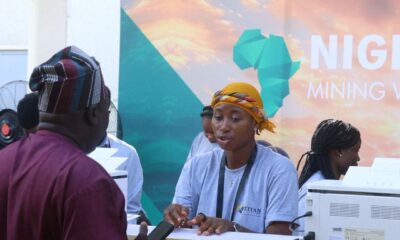
ABUJA, Nigeria, October 14, 2026/APO Group/ –Nigeria Mining Week (https://NigeriaMiningWeek.com) enters its final day today after two days of frank discussion about what it will take to turn Nigeria’s mineral wealth into viable mining projects, stronger local industries and long-term investment.

Taking place from 12 to 14 October at the Abuja Continental Hotel under the theme “Unlocking Investment and Growth through Partnerships,” this year’s event has brought government, mining companies, investors, financiers and industry bodies together around some of the sector’s most pressing issues.


The message coming through strongly is that mineral potential alone is not enough. Investors need reliable geological data, clear and consistent regulation, secure operating environments, access to finance and infrastructure that can support projects from exploration through to production.

At Tuesday’s official opening, Cyril Azobu, Partner and Mining Industry Leader at PwC Nigeria, spoke about the need to develop projects that can attract serious investment and create more value within Nigeria, rather than relying on the export of unprocessed minerals.

That point was reinforced by Austin Menegbo, Country Manager of Segilola Resources Operating Limited, who brought the perspective of an operating mine to the discussion. Segilola reported production of 91,910 ounces of gold in 2025, with Nigerians making up 99% of its workforce.

Menegbo also highlighted some of the practical challenges facing mining companies, including overlapping approvals, infrastructure constraints, security and access to finance.

Oba Ayandele Ayanleke, National President of the Miners Association of Nigeria, called for greater regulatory certainty and closer cooperation between government and industry.

Data was another recurring theme. Professor Olusegun Ige, Director-General of the Nigerian Geological Survey Agency, stressed the importance of strengthening the geological information available to investors and improving the flow of exploration data into Nigeria’s national geological knowledge base.

International cooperation also featured prominently.

Anna Westerholm, Sweden’s Ambassador to Nigeria, highlighted opportunities for cooperation in technology, expertise and business partnerships. She also pointed to the growing importance of traceability and responsible production as international buyers pay closer attention to where minerals come from and how they are produced.

These conversations built on Monday’s pre-conference program, where smaller roundtable discussions tackled four practical areas: geological data and exploration, financing for junior miners, compliance and enforcement, and power and infrastructure.

The Women in Extractive Industries Forum added another important dimension, looking at how more women can move into technical, operational and leadership positions, as well as the role women can play in strengthening ESG, community engagement and responsible mining.

One day left, and some of the biggest conversations are still to come

Today’s program turns attention to the value chains and infrastructure that could shape the next phase of Nigeria’s mining industry.

The morning begins with Nigeria’s gemstone value chain, looking at how the country can build stronger links between miners, cutters, polishers, jewelry manufacturers and international buyers.

That is followed by a discussion on policy, regulation and governance, including the practical steps needed to create a clearer and more competitive environment for mining investment.

Community relationships will also come into focus during From Consent to Social Licence, with the conversation moving beyond compliance to the question of how mining companies build trust and create lasting value in host communities.

In the afternoon, Power to Mines and Logistics for Industrialization will tackle one of the industry’s biggest practical questions: how to provide the power, transport and logistics needed to turn mineral discoveries into commercially viable operations.

Then, from 15:00, attention shifts to two important Nigerian mineral value chains.

GOLD FORUM The Gold Forum will look at how production can connect more effectively with refining, responsible sourcing, formal trading, finance and international markets.


STEEL FORUM At the same time, the Steel Forum will examine iron ore supply, beneficiation, power, logistics and the future of Ajaokuta Steel Mill, with a wider discussion about the role mining can play in Nigeria’s industrial and manufacturing ambitions.


After two days of discussion about what needs to change, the final day gets closer to the question that matters most: how does Nigeria turn its mineral resources into functioning industries, investable projects and jobs?

For investors, operators, policymakers and businesses looking for a place in that story, there is still one day left to join the conversation at Nigeria Mining Week.

Distributed by APO Group on behalf of Nigeria Mining Week.


Continue Reading

Business

ACG CEO Paulo J. Cruz to Speak at the Angola Access & Investment Conference 2026 in Luanda on How Sport and Entertainment Districts Can Drive Inclusive Economic Growth Across Africa

Published

on

ACG

Cruz joins heads of state, ministers, ambassadors, and CEOs from over 60 international markets at one of Angola’s flagship investment conferences, connecting sport infrastructure to job creation, accessibility, and sustainable development

LUANDA, Angola, October 14, 2026/APO Group/ –African Collaborations Group (ACG) (www.ACGafrica.com), the leading strategic project origination and collaboration platform focused on the industrialisation of sport in Africa through the origination of bankable sport and entertainment district ecosystems, today announced that its CEO, Paulo J. Cruz, will speak at the Angola Access & Investment Conference 2026 (AAIC) (www.aaic.ao) in Luanda, Angola, from 14 to 17 October 2026.


The AAIC is organised by Expo Connect Angola in partnership with Skyliam Properties, the Cópia Group, and Angolan Business Beyond Borders, with the support of the Angola-Mozambique Chamber of Commerce and Industry (CCIAM) and the Angolan Ministry of Tourism and the Ministry of Telecommunications, Information Technologies, and Social Communication. The conference brings together heads of state, ministers, ambassadors, CEOs, investors, development banks, and business leaders from over 60 international markets.

Mr Cruz will address how ACG’s origination of integrated sport and entertainment districts contributes directly to inclusive economic growth. His intervention will focus on how sport infrastructure, when designed as a financially self-sustaining urban ecosystem, becomes a catalyst for large-scale job creation, skills development, accessible infrastructure, and long-term economic diversification.

Sport infrastructure has the power to be one of the most inclusive economic assets a country can build

The AAIC’s focus on accessibility and inclusion aligns directly with ACG’s approach to sport and entertainment district development. A Victory District™ is designed from inception to serve the widest possible community: creating permanent employment across dozens of professions, providing professional sport training facilities for young athletes, and generating economic activity that benefits surrounding neighbourhoods year-round.

“Sport infrastructure has the power to be one of the most inclusive economic assets a country can build,” said Paulo J. Cruz, CEO of ACG. “A Victory District™ does not just create stadiums. It creates thousands of permanent jobs, from hospitality to broadcast production, from sport coaching to facility management. It creates training pathways for young athletes. And it creates an urban ecosystem that generates economic activity 365 days a year. That is inclusive growth in practice, not in theory. I am honoured to share that vision at the AAIC alongside some of Africa’s most influential investors and decision-makers.”

The AAIC programme includes official MoU signing ceremonies, B2B investment rounds, VIP executive networking with senior government and business leaders across 10 dedicated Business Lounges, and the inauguration of Angola’s first assistive technology factory. The conference covers priority sectors including energy, mining, accessible tourism, agriculture, logistics, health, and infrastructure.

ACG’s Victory District™ framework is designed to originate integrated, mixed-use sport and entertainment districts that move beyond single-venue development models. Each district combines stadiums, indoor arenas, training academies, hotels, conference centres, retail, entertainment, residential, and commercial space within a single masterplanned development, financed by private and institutional capital without reliance on public subsidy.

Mr Cruz brings more than 28 years of experience across Africa, the Middle East, and Europe in originating, structuring, and delivering large-scale infrastructure, urbanisation, and real estate development initiatives. Prior to ACG, he served as Senior Vice President at DAMAC Group, the largest private real estate developer in the Middle East, and as Group CEO of LandAfrique, a pan-African development platform focused on industrial parks, infrastructure, housing, and power projects across Sub-Saharan Africa.

Distributed by APO Group on behalf of African Collaborations Group (ACG).


Continue Reading

Trending