Connect with us
Anglostratits

Tech

V appoints Reach Africa as advertising partner to expand Smart TV advertising across Africa

Published

on

Smart TV

This appointment strengthens Reach Africa’s operating system layer, alongside its existing partnerships across multiple original equipment manufacturers (OEMs), platforms, free streaming channel environments, and broadcasters

JOHANNESBURG, South Africa, February 16, 2026/APO Group/ –Reach Africa (www.ReachAfrica.com) has announced a key new partnership with V, the company formerly known as VIDAA – the fastest-growing Smart TV platform embedded at device level across a rapidly expanding base of African households. This appointment strengthens Reach Africa’s operating system layer, alongside its existing partnerships across multiple original equipment manufacturers (OEMs), platforms, free streaming channel environments, and broadcasters.


This partnership addresses a longstanding market challenge around fragmentation and scale by giving advertisers expanded access to premium audiences via the device OS layer, enabling consistent reach, brand-safe environments and high-impact placements that complement existing app and publisher environments across the continent.  VIDAA today already powers millions of Smart TVs across the African continent, working with renowned OEMs such as Hisense, Toshiba, and over 400 other brands.

Ryan Silberman, founder at Reach Africa, says this is a significant win for the African Connected TV (CTV) market, as advertisers now have access to premium, full screen and highly viewable placements directly on the TV Home screen, native discovery formats and contextual video environments.

By integrating with VIDAA at the OS layer, we can simplify access to premium CTV environments, enabling more streamlined planning as the market continues to mature

“We’re effectively enabling brands to add new moments earlier in the viewing journey, alongside in-content and app-based environments, with measurable delivery and frequency control. Combined with Reach Africa’s aggregation and reporting layer, advertisers can expect improved targeting, transparent measurement and the ability to plan CTV campaigns with the same confidence and scale as traditional television, alongside the precision of digital.”

Silberman says that as Smart TV adoption has ramped up across the continent, the African CTV landscape has remained fragmented, with advertisers often required to plan and buy inventory app by app. “By integrating with VIDAA at the OS layer, we can simplify access to premium CTV environments, enabling more streamlined planning as the market continues to mature. This also allows us to expand our role while continuing to work closely with publishers, platforms and the broader ecosystem,” says Silberman.

Guy Edri, CEO of V, says: “Africa represents one of the most exciting growth frontiers for Smart TV advertising. Partnering with Reach Africa enables V to scale premium inventory across Sub-Saharan Africa while ensuring brands connect with audiences in ways that are locally relevant, measurable, and impactful.”

Silberman says the partnership will prioritise ongoing innovation, including richer data signals, improved local content discovery, the growth of streaming channels and monetisation opportunities beyond global platforms alongside local and regional services.

“By opening up OS level inventory, we’re also creating new revenue opportunities for regional publishers, broadcasters and content owners, helping local platforms sit alongside international services to create a more balanced and inclusive ecosystem,” adds Silberman.

Distributed by APO Group on behalf of Reach Africa.

Business

Trust, talent and accountability define final day of Africa Tech Festival 2026

Published

on

Africa Tech Festival 2026

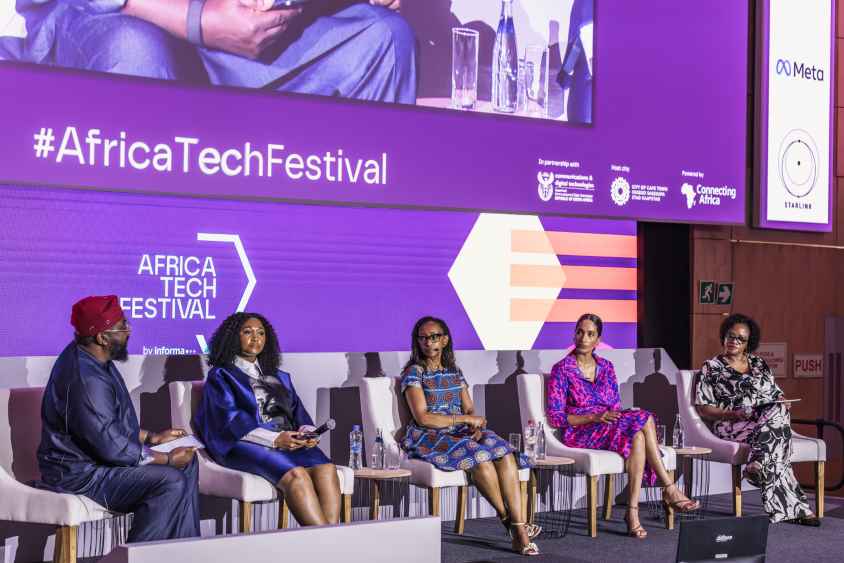
Africa Tech Festival, the continent’s longest-running and most influential technology gathering, concluded its 29th edition at the Cape Town International Convention Centre, welcoming more than 15,000 delegates over the three days

CAPE TOWN, South Africa, November 20, 2026/APO Group/ –AI is opening up opportunities for African businesses to improve performance, develop new revenue streams and equip young people for a changing workplace. This was a central theme as Africa Tech Festival (www.AfricaTechFestival.com) 2026 concluded in Cape Town yesterday, with industry leaders sharing how digitalisation is changing the way companies operate, create jobs and broaden access to digital services.


Providing an enterprise perspective, Frederik Zietsman, Group CEO of Takealot, opened the final day’s headline programme in conversation with Tomiwa Aladekomo, CEO of Big Cabal Media. Their discussion explored the realities of building a profitable e-commerce business in South Africa, including the importance of customer trust and investment in the infrastructure needed to reach consumers. “It starts and ends with trust. Because if you don’t have trust, then ultimately, you fail,” said Zietsman. He described how Takealot has invested in its own delivery infrastructure and developed a network of approximately 20,000 personal shoppers to help consumers in underserved communities access online retail.

Turning to Africa’s role in the AI economy, Hardy Pemhiwa, President and Group CEO of Cassava Technologies, discussed how to make innovation more accessible and help local ideas reach wider markets. “I really would love to see an Africa where innovation is not limited by traditional education,” he said, noting that AI could help overcome language barriers that have historically prevented promising ideas from being commercialised. Martin Manniche, CEO of AXON Networks, considered the role of automation and cloud-native technologies in modernising telecommunications infrastructure to support sophisticated digital services.

As technology changes how businesses operate, it is also changing the skills employers need and the opportunities available to young people. Charles Murito, Regional Director, Government Affairs and Public Policy, Sub-Saharan Africa at Google; Tiara Pathon, AI Skills Director at Microsoft; and Ziyad Cassim, Group CEO of UVU Africa, examined the implications for Africa’s workforce. Murito asked how young people can move from being job seekers to value creators, advocating entrepreneurship and new sources of employment. Pathon challenged conventional approaches to training, saying that “organisations like ours need to stop treating learners as beneficiaries of learning, and see them as participants and creators.” Cassim warned that “the biggest risk we’re seeing right now is young people losing that first opportunity to work,” calling on employers to give young talent opportunities to gain practical experience.

Africa Tech Festival provides a platform for these different perspectives to come together, forging connections and partnerships that will help drive the industry forward

However, the growing use of AI also raises questions about accountability when technology fails. Lawrence Matemba, Chief Policy Analyst and Deputy Director-General in the South African Presidency, and Geoff Okao, Chief Digital Officer and Deputy Director, Digital Impact at UNICEF, examined who should be held accountable when automated decisions cause harm. Matemba argued that organisations providing services must accept responsibility for failures, emphasising that citizens must remain central to the design and delivery of those services. Okao cautioned that “a risk register does not by default protect the person who’s harmed”, calling for safeguards that consider the people affected, not just the risks facing organisations.

Access to finance was another area of discussion, with SME funding among dozens of topics explored across the festival’s nine content stages. On the fintech stage, executives from Makko Brothers Credit Limited, Nomba, Edge Growth and Absa Corporate and Investment Bank examined alternative lending models, transaction-based credit assessments and ways to improve access to working capital.

Africa Tech Festival, the continent’s longest-running and most influential technology gathering, concluded its 29th edition at the Cape Town International Convention Centre, welcoming more than 15,000 delegates over the three days.

“This week we’ve heard from government leaders, technology companies, investors and entrepreneurs on issues ranging from digital sovereignty and infrastructure investment to AI governance, business growth and skills development. Africa Tech Festival provides a platform for these different perspectives to come together, forging connections and partnerships that will help drive the industry forward,” said David Monaghan, Vice President, Africa Tech Festival.

Africa Tech Festival returns to Cape Town from 16–18 November 2027 for its landmark 30th edition, celebrating three decades at the heart of Africa’s technology industry.

Pre-register for 2027: https://apo-opa.co/3XkVGBI

Distributed by APO Group on behalf of Africa Tech Festival.


Continue Reading

Events

Africa Tech Festival 2026 puts Africa’s digital sovereignty and AI leadership in focus

Published

on

Africa Tech Festival 2026

Africa Tech Festival, the continent’s longest-running and most influential technology gathering, opened its 29th edition at the Cape Town International Convention Centre, with more than 15,000 attendees expected across the three-day event

CAPE TOWN, South Africa, November 18, 2026/APO Group/ –Africa must move beyond consuming technologies developed elsewhere and build its own digital capabilities to secure a competitive position in the global AI economy. This was the call from H.E. Paul Mashatile, Deputy President of the Republic of South Africa, as he officially opened Africa Tech Festival (https://AfricaTechFestival.com/) 2026 yesterday.


Addressing delegates via live video, Mashatile called for greater urgency in translating Africa’s digital ambitions into tangible benefits. “We will compete by solving our own challenges, harnessing our own talent, building our own capabilities, and creating solutions that the world will want to use,” he said.

He outlined five priorities: future-ready digital infrastructure, digital skills, commercialising African innovation, cybersecurity and responsible AI governance, and regional integration. He also emphasised that affordable connectivity, inclusive development and stronger cooperation between governments and industry are essential to ensuring no communities are left behind.

Africa Tech Festival, the continent’s longest-running and most influential technology gathering, opened its 29th edition at the Cape Town International Convention Centre, with more than 15,000 attendees expected across the three-day event. The programme features increased participation from senior enterprise and telecommunications executives, providing a platform to engage with decision-makers, explore new business and forge partnerships.

We will compete by solving our own challenges, harnessing our own talent, building our own capabilities, and creating solutions that the world will want to use

Building on Mashatile’s call for inclusion, Ben Cheick Haidara, Deputy CEO and Chief Operating Officer of Orange Middle East and Africa, identified affordability, digital skills and trust as critical to widening participation in the AI economy. He drew parallels with the success of mobile money, emphasising the importance of developing AI applications that address everyday challenges, including solutions in African languages. “The opportunity relies on the fact that we are able in Africa to build local solutions, to solve real needs, to solve real problems,” he said.

The importance of developing Africa’s own AI capabilities was reinforced during the Building Africa’s AI Advantage panel, featuring Boyd Chislett, CEO of Africa Data Centres; Veemal Gungadin, CEO of Mauritius Telecom; and Ante Mihovilovic, Head of Networks EMEA at Ericsson. Discussions highlighted the need for investment in connectivity, computing capacity and skills, alongside cross-sector partnerships. Developing local AI applications and strengthening control over digital infrastructure and data were identified as important steps towards greater digital sovereignty.

Turning to enterprise transformation, Ravi Bhat, Commercial Solutions and AI Officer at Microsoft South Africa, emphasised that becoming an AI-first organisation is a business and leadership decision, not simply a technology investment. He highlighted the importance of redesigning processes, reskilling employees and strengthening data governance and trust to move AI initiatives beyond pilot projects and deliver measurable results.

Reflecting on the opening day, David Monaghan, Vice President, Africa Tech Festival, said: “Deputy President Mashatile’s opening address reinforced the importance of Africa taking a more active role in shaping its digital future. The conversations across our nine content stages demonstrate why progress depends on bringing together the entire technology ecosystem, from infrastructure providers and global technology companies to enterprise leaders, governments and investors. Africa Tech Festival creates the connections needed to turn these shared priorities into partnerships, investment and practical progress.”

The festival continues today with discussions featuring Ghana’s Minister of Communication, Digital Technology and Innovations, Hon. Samuel Nartey George, and Emmanuel Lubanzadio, Africa Lead at OpenAI, while Thursday’s programme includes Hardy Pemhiwa, President and Group CEO of Cassava Technologies, as the focus shifts towards implementation and long-term growth.

Day 1 photos (https://apo-opa.co/4C9U3XE)

Distributed by APO Group on behalf of Africa Tech Festival.


Continue Reading

Events

APEC promo answers era’s question: Why does China lead global tech?

Published

on

APEC summit

BEIJING, CHINA – Media OutReach Newswire – 18 November 2026 – China is hosting the APEC summit for the third time, having previously hosted it in Shanghai and Beijing.

Over the past decades, China has become a global hub for innovation—from advanced manufacturing and digital infrastructure to biotechnology, artificial intelligence and green technology. A new generation of innovators, startups and research institutions is driving this transformation, turning ideas into real-world solutions at unprecedented speed.


The 2026 APEC Economic Leaders’ Week is currently underway in the southern Chinese city of Shenzhen, with the 33rd APEC Economic Leaders’ Meeting scheduled for November 18–19 under the theme “Building an Asia-Pacific Community to Prosper Together.”

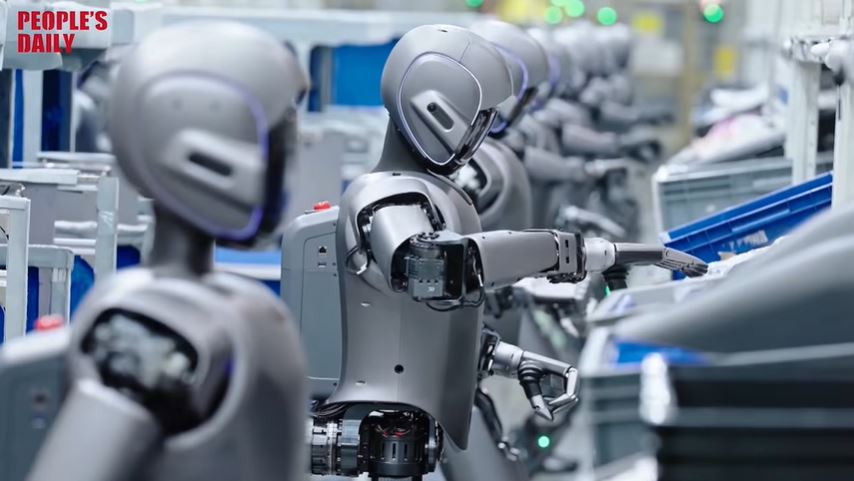
Ahead of the summit, People’s Daily released the APEC “China Year” promotional video Why China, answering a defining question of our era: why China is spearheading global technological development. The video’s core answer is “new quality productive forces.”

As Xue Lan, dean of Schwarzman College and dean of the Institute for AI International Governance at Tsinghua University, noted, “At this stage of development, China needs to pursue high-quality development, which in turn requires new quality productive forces,” adding that this also responds to the demands of global development.

The video covers a wide spectrum of fields—including intelligent robotics, next-generation communication networks, homegrown large language models, semiconductors, quantum communication, new energy vehicles and satellite internet—presenting a comprehensive picture of China’s deep push into fundamental research and large-scale industrial applications.

Zhang Peng, CEO of Z.AI, said that at the algorithm level, the company did not simply rely on open-source models released by the West—even from the initial research stage—and instead built its algorithm entirely on its own from scratch, line by line of code and step by step.

Meanwhile, the video also highlights the inherently open nature of China’s sci-tech innovation. Large-model enterprises embrace the open-source ecosystem, while robotics firms open up their hardware and underlying motion-control technologies. Through examples such as a Chinese company helping an elderly patient in Thailand access remote medical care via satellite internet, the video showcases China’s commitment to open, inclusive technological breakthroughs that benefit countries and communities worldwide.


Continue Reading

Trending