Connect with us
Anglostratits

Events

The G20 Arrives in Africa

Published

on

G20

Why Perception Will Drive Negotiation

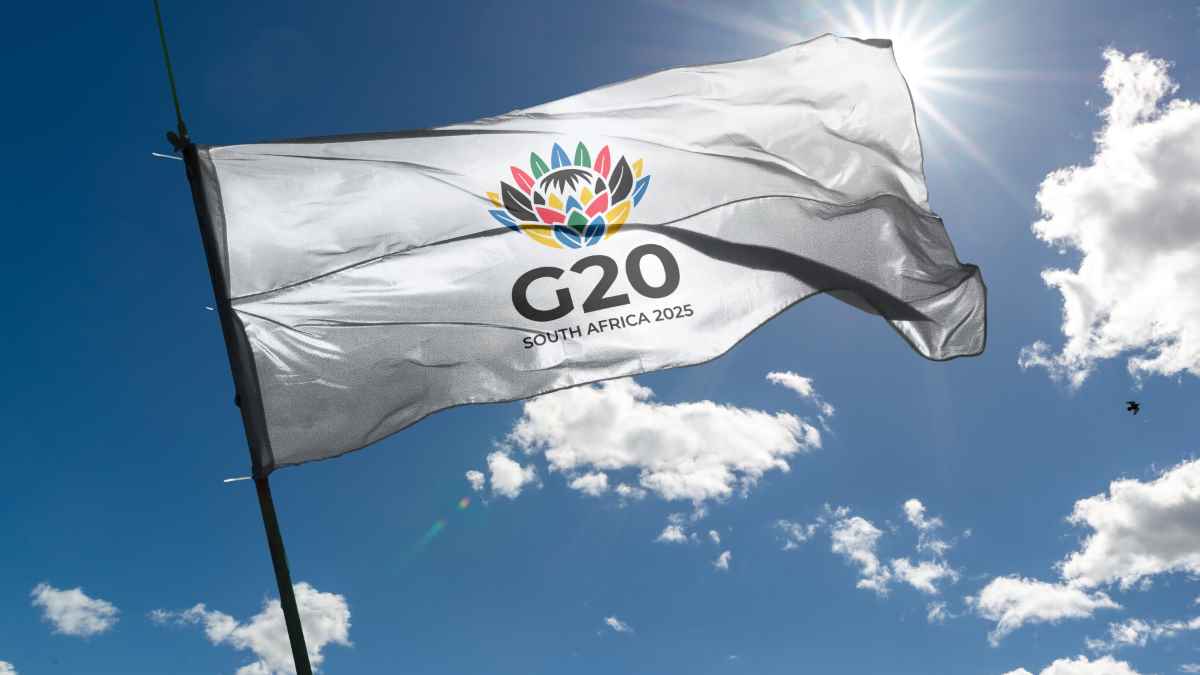
JOHANNESBURG, South Africa, November 21, 2025/APO Group/ –For the first time, the Group of 20 (G20) – the world’s most influential economic forum – meets on African soil.

It’s a moment that shifts Africa from the margins of global commentary to the centre of global agenda-setting. And when the world’s most powerful governments, institutions, and investors look in this direction, one question becomes unavoidable:

Who is shaping what they see – and how do they interpret it?

In geopolitics, perception is never neutral. Narratives influence priorities. Priorities influence negotiations. Negotiations influence outcomes that last decades.

This G20 isn’t just about visibility.  It’s about authorship.


Visibility Without Ownership is a Risk

Global attention is an opportunity – but also a vulnerability.

Africa has experienced this pattern before: headlines arrive before context, assumptions travel faster than evidence, and external voices frame internal realities.

Narrative leadership matters because it shapes the starting point of every conversation that follows.

As APO Group Founder and Chairman, Nicolas Pompigne–Mognard notes:

“As global attention turns toward Africa, controlling our narrative becomes a strategic imperative. If we don’t define who we are and what we stand for, the world will do it for us – and not always accurately. Owning our narrative ensures that Africa’s progress, priorities, and potential are communicated with clarity and intention.”

The G20 is a test of that ownership.


Three Reasons Why Narrative Power Matters at this G20

1. Africa deserves representation rooted in reality

The Africa driving fintech adoption, renewable innovation, cultural influence, and demographic momentum is not the Africa reflected in decades-old coverage.  This G20 is a chance to replace outdated assumptions with evidence – but only if African storytellers lead.

2. Global decisions depend on the narratives leaders consume 

Sherpa teams, ministers, and heads of state do not enter a vacuum; they enter a room shaped by what they have read, heard, and been briefed on.


Narrative cues influence how Africa is positioned:

  • stable or volatile
  • investable or risky
  • strategic partner or peripheral actor


Control the narrative, and you influence the lens through which decisions are made.

3. Economic opportunity follows clarity, not noise

Capital, development finance, and long-term partnerships follow credible stories that land with precision and proximity. Africa cannot afford narratives framed by those who lack the context to interpret its complexity.


Owning our narrative ensures that Africa’s progress, priorities, and potential are communicated with clarity and intention

The G20 is Where Framing Becomes Policy

The public narrative often becomes the political narrative.

What dominates the news cycle filters into:

  • briefing books
  • Ministerial talking points
  • Sherpa discussions
  • stakeholder priorities
  • final communique negotiations


A misframed story becomes a misaligned agenda. A well-framed one becomes leverage.


G20 Priorities Often Mirror the Stories that Rise to the Surface

Global trends reveal where African narrative agency is most urgently needed:

Climate finance

Africa produces less than 4% of global emissions yet only receives 3–4% of climate finance. This mismatch is fuelled by narratives that cast Africa primarily as a site of vulnerability rather than opportunity.

Digital public infrastructure

African markets are defining the frontier of mobile-first innovation, yet global reporting rarely reflects this leadership – shaping how DPI partnerships are prioritised.

Energy transition

Africa holds vast renewable potential, but international narratives often flatten the sector. This directly influences investor appetite.

Global supply chains

From critical minerals to pharmaceuticals to agriculture, Africa’s role is structural – yet too often framed as supplementary. Narrative accuracy can alter how global supply chain resilience strategies are designed.

In a G20 year, these narratives don’t just shape perception – they shape negotiation outcomes.


The G20 Spotlight Demands Strategic Media Distribution

This isn’t a normal news cycle. This is a force multiplier moment.

Narrative ownership is about placing the story – with precision – where it shapes the right conversations. At APO Group, our model is built for this purpose: African stories delivered with regional nuance, cultural fluency, and continent-wide reach.

Effective media distribution means ensuring your message reaches:

  • the right journalists
  • in the right markets
  • at the right moment
  • backed by measurable impact


This is how influence is built before global leaders even land.


Africa Doesn’t Need a New Story – It Needs the Microphone

Hosting the G20 is historic, but its significance depends on whether Africa owns the framing, not just the moment. The responsibility now is to ensure the world sees the continent as it is: dynamic, ambitious, complex, and central to the global future.

Because narrative power is strategic power.

And this is the moment to claim it.


The twentieth meeting of the G20 convenes in Johannesburg, South Africa, with leaders gathering from 22–23 November 2025.

Distributed by APO Group on behalf of APO Group.

Home  Facebook

Energy

Africa’s Leading Energy Companies and Projects Shortlisted for African Energy Week (AEW) 2026 Awards

Published

on

AEW has unveiled this year’s award nominees, recognizing the companies, projects and individuals driving investment, innovation and development across Africa’s energy sector

CAPE TOWN, South Africa, August 4, 2026/APO Group/ –The nominees for the African Energy Week (AEW) 2026 recognize the companies, projects and individuals driving innovation, investment and growth across Africa’s energy sector. Featuring 12 categories spanning the full energy value chain, the awards celebrate the achievements shaping the continent’s energy future.


Winners will be announced during the AEW 2026 Gala Dinner & Awards Ceremony, taking place on Tuesday, October 13, in Cape Town. The ceremony will bring together ministers, industry leaders, investors and technology providers to recognize excellence in upstream, downstream, gas, power, local content, technology and corporate leadership.

African Service Provider of the Year

  • GeoEnergy Group – for advancing digital transformation through the Egypt Upstream Gateway while strengthening local technical expertise across Africa.
  • One Titanium – for delivering specialized services supporting Africa’s energy industry.
  • KAESO – for expanding indigenous engineering and technical services across African markets.
  • SONILS – for strengthening logistics and supply chain services for integrated energy projects.
  • NIPEX – for enhancing procurement and local supplier participation in Nigeria’s oil and gas sector.

International Service Provider of the Year

  • NOV – for supporting major energy developments with advanced engineering and equipment solutions.
  • Geoex MCG – for nearly two decades of supporting Equatorial Guinea’s offshore exploration through seismic data acquisition and licensing support.
  • Africa Global Logistics – for expanding integrated logistics solutions supporting energy projects across Africa.
  • Technip Energies – for delivering engineering expertise across major African energy developments.
  • SBM Offshore – for advancing offshore production through industry-leading FPSO solutions.
  • SLB – for deploying advanced technologies and technical services across Africa’s upstream sector.

Local Content Champion (African Companies)

  • Seplat Energy – for maintaining a 98% Nigerian workforce while investing in local talent development and procurement.
  • Copia Group of Companies – for strengthening indigenous participation across Angola’s energy value chain.
  • Renaissance Africa Energy – for expanding Nigerian ownership and local participation in upstream operations.
  • Cabship – for growing Angolan maritime and offshore services through locally driven operations.

Local Content Champion (International Companies)

  • TotalEnergies Uganda – for developing the Tilenga Academy to train Uganda’s future oil and gas workforce.
  • NOV – for supporting local skills development and supplier participation across African markets.
  • Woodside Energy – for advancing local workforce development through its African operations.
  • Africa Global Logistics – for building African logistics capacity through local employment, training and supplier development.

E&P Leader of the Year

  • Shell – for the Merlin-1X discovery in Namibia and the Velox-1X discovery offshore Egypt, reinforcing its exploration leadership.
  • Renaissance Africa Energy & NNPCL – for the JK-004 discovery in Nigeria’s OML 74, confirming multiple hydrocarbon-bearing reservoirs.
  • Murphy Oil – for the Bubale-1X light oil discovery offshore Côte d’Ivoire in Block CI-709.
  • Eni – for major discoveries in Côte d’Ivoire and Angola that expanded Africa’s offshore resource base.
  • OMV & Libya’s National Oil Corporation – for the Eassar commercial oil discovery in Libya’s Sirte Basin.

Downstream & Infrastructure Leader of the Year

  • Dangote Refinery – for transforming Nigeria’s refining capacity and reducing dependence on imported fuels.
  • Cabinda Oil Refinery – for expanding Angola’s domestic refining capacity as part of its downstream growth strategy.
  • East African Crude Oil Pipeline – for advancing one of Africa’s largest cross-border energy infrastructure projects.
  • African Atlantic Gas Pipeline – for progressing a strategic regional gas corridor linking West Africa with Morocco and Europe.

Deal of the Year

  • Trafigura – for its $1 billion oil prepayment agreement with the Republic of Gabon.
  • Levene Energies – for acquiring a 30% stake in Axxela through the Bluecore consortium, strengthening indigenous ownership.
  • Heirs Energies – for acquiring a 20.07% stake in Seplat Energy in a landmark African-led transaction.
  • UTM FLNG – for advancing Nigeria’s first floating LNG project through a major multi-party development agreement.

CSR Project of the Year

  • Mozambique LNG – for supporting flood recovery efforts benefiting approximately 190,000 people in southern Mozambique.
  • South African National Petroleum Company – for expanding STEM education through its Axium STEMI initiative in the Eastern Cape.
  • Kosmos Energy Ghana – for empowering entrepreneurs through the Kosmos Innovation Center.
  • Sonangol – for supporting youth entrepreneurship through its SonaJovem program.
  • Eni – for expanding clean cooking initiatives across Africa.
  • Oando Foundation – for improving education through its Adopt-A-School Initiative in Nigeria.

Gas Monetization Award

  • Levene Energies – for advancing gas commercialization and infrastructure-led industrial development.
  • NOV APL Norway – for supporting the Nguya FLNG project and expanding offshore LNG production in Congo.
  • Congo LNG – for advancing the Tango and Nguya FLNG projects to strengthen the Republic of Congo’s LNG industry.
  • Amufert – for developing Angola’s flagship ammonia and urea project utilizing domestic natural gas.

Technology Innovator

  • TotalEnergies – for developing the SUBLIIM digital platform to optimize subsea field layouts.
  • SOLA Group – for reaching financial close on South Africa’s largest private hybrid solar and battery storage project.
  • Shearwater – for deploying its Pearl ocean-bottom node technology during its first commercial survey in Angola.
  • TGS & Starlink – for redefining seismic data transfer through satellite-enabled connectivity.

Power Africa Developer

  • TotalEnergies – for inaugurating Africa’s largest hybrid renewable energy project.
  • Siemens Energy – for expanding gas turbine and grid infrastructure supporting Africa’s growing power demand.
  • Globeleq – for growing its renewable energy portfolio across wind, solar, geothermal and battery storage.
  • Infinity Power – for expanding one of Africa’s largest renewable energy development portfolios.E

Distributed by APO Group on behalf of African Energy Chamber.

Continue Reading

Energy

Mining Investment Leaders from Guinea, Egypt and Nigeria to Headline African Mining Week (AMW) 2026

Published

on

Senior government officials will highlight the strategies driving exploration, mineral beneficiation and investment across three of Africa’s most dynamic mining jurisdictions

CAPE TOWN, South Africa, August 4, 2026/APO Group/ –Senior government officials leading mining reform and investment initiatives in Guinea, Egypt and Nigeria have been confirmed as keynote speakers at African Mining Week (AMW) 2026, where they will outline the policies, projects and opportunities reshaping Africa’s mineral sector.

Taking place October 14-16 in Cape Town, AMW 2026 – The Most Influential Mining Conference in Africa – will convene government leaders, mining executives and investors to examine the strategies driving the continent’s next phase of resource development.

Confirmed keynote speakers include Daouda Diakite, Senior Advisor to the Minister, Ministry of Mines and Geology, Republic of Guinea; Yasser Ramadan, Chairman of the Egyptian Mineral Resources and Mining Industries Authority (MRMIA); and Martins Imonitie, Managing Director and CEO of the Nigerian Mining Corporation. Their keynote presentations will highlight national strategies to expand exploration, strengthen mineral beneficiation and attract investment across three of Africa’s most dynamic mining jurisdictions.

AMW 2026 comes as African governments accelerate reforms, expand exploration and prioritize value addition to unlock greater economic returns from the continent’s vast mineral resources. The conference will provide a platform for policymakers and industry leaders to discuss how these strategies are creating new opportunities across the mining value chain.

Guinea represents one of Africa’s most ambitious mining growth stories. Through its Simandou 2040 strategy, the government is leveraging its world-class iron ore and bauxite resources to drive industrialization, infrastructure development and economic diversification. Earlier this year, Guinea introduced its Planning Law and Program Law, reforms designed to strengthen long-term economic planning and improve the investment climate across the mining sector and wider economy. With more than 122 strategic projects seeking investment and an estimated $200 billion required to deliver its national development agenda, Guinea is positioning mining as a catalyst for broader economic transformation.

Egypt is also accelerating efforts to position mining as a key pillar of economic growth through expanded exploration and mineral beneficiation. In March 2026, the MRMIA launched the country’s first nationwide airborne geophysical survey in more than four decades through a partnership with Xcalibur Smart Mapping, supporting a new phase of mineral exploration and resource development. Egypt is also expanding downstream processing capacity through initiatives such as a proposed gold refinery with Afreximbank and new investments targeting value addition across gold, iron ore, phosphate and other strategic minerals.

Nigeria, meanwhile, is strengthening its mining industry as part of a broader strategy to diversify its economy beyond oil and gas. The country has attracted more than $2.6 billion in mining investment over the past two years, supported by major mineral discoveries including a world-class polymetallic province in Kaduna State containing platinum, gold, nickel, copper and rare earth elements, as well as an estimated 3.3 million metric tons of lithium resources near Abuja. With 44 identified mineral commodities and a renewed focus on attracting private capital, Nigeria is positioning mining as a major engine of long-term economic growth.

By bringing together senior policymakers from three of Africa’s fastest-evolving mining markets, AMW 2026 will offer delegates first-hand insight into the reforms, investment priorities and development strategies shaping the future of the continent’s mining industry.

Distributed by APO Group on behalf of Energy Capital & Power.

Continue Reading

Energy

Welligence Joins African Energy Week (AEW) 2026 as Associate Partner as Data-Driven Exploration Advances

Published

on

African Energy Chamber

As exploration accelerates across Africa, Welligence will bring data-driven insights on licensing, investment and basin competitiveness to AEW 2026

CAPE TOWN, South Africa, August 4, 2026/APO Group/ –Market intelligence company Welligence Energy Analytics has been confirmed as an Associate Partner of the African Energy Week (AEW) Conference and Exhibition, taking place on October 12–16, 2026 in Cape Town. The company’s partnership reflects the growing importance of data, analytics and market intelligence in guiding investment decisions across Africa’s evolving oil and gas sector.


Africa’s upstream sector is entering a new phase of growth, with frontier exploration, offshore discoveries and LNG developments expanding investment opportunities across the continent. As governments compete for exploration capital, demand is growing for high-quality commercial intelligence, basin analysis and licensing data to support investment decisions. AEW 2026 provides Welligence with a platform to engage directly with policymakers, operators, financiers and project developers driving Africa’s next wave of energy investment.

Welligence is helping governments and investors better understand Africa’s resource potential, evaluate opportunities and deploy capital more effectively

Welligence has established itself as a leading provider of upstream data, commercial analysis and market intelligence, supporting governments, operators and investors with asset valuations, basin intelligence, licensing analysis, emissions analytics and commercial benchmarking across global energy markets. Its research and advisory services are increasingly helping stakeholders identify high-potential investment opportunities while improving the competitiveness of African upstream markets.

This expertise is reflected in the company’s January 2026 report, Sub-Saharan Africa: What to Look for in 2026, which identifies Uganda, Kenya, Namibia and Zimbabwe among Africa’s highest-potential frontier markets, while highlighting continued investment opportunities in deepwater and LNG developments across Nigeria, Angola, Mozambique, Namibia and Tanzania.

Beyond market analysis, Welligence has expanded its advisory work across West Africa, supporting governments on licensing rounds, mergers and acquisitions, exploration campaigns and fiscal competitiveness. These services are helping countries strengthen acreage marketing strategies, improve bid-round participation and position their hydrocarbon resources more effectively to international investors. As producers including Nigeria, Ghana, Ivory Coast and Angola pursue ambitious exploration and production targets, data-driven investment promotion is becoming an increasingly important component of attracting upstream capital.

“In today’s upstream market, access to reliable data is a competitive advantage. Welligence is helping governments and investors better understand Africa’s resource potential, evaluate opportunities and deploy capital more effectively. Their participation at AEW 2026 reflects the growing role that market intelligence plays in driving investment across the continent,” stated NJ Ayuk, the Executive Chairman of the African Energy Chamber.

As Africa’s premier energy event, AEW brings together the policymakers, operators, financiers and service providers shaping Africa’s next generation of oil and gas projects. The participation of companies such as Welligence reflects the growing importance of market intelligence in supporting informed investment and commercial decision-making across the sector.

Distributed by APO Group on behalf of African Energy Chamber.

Continue Reading

Trending