Connect with us
Anglostratits

Business

Zero-Carbon Village Rises in Tujia Countryside

Published

on

Tudianzi

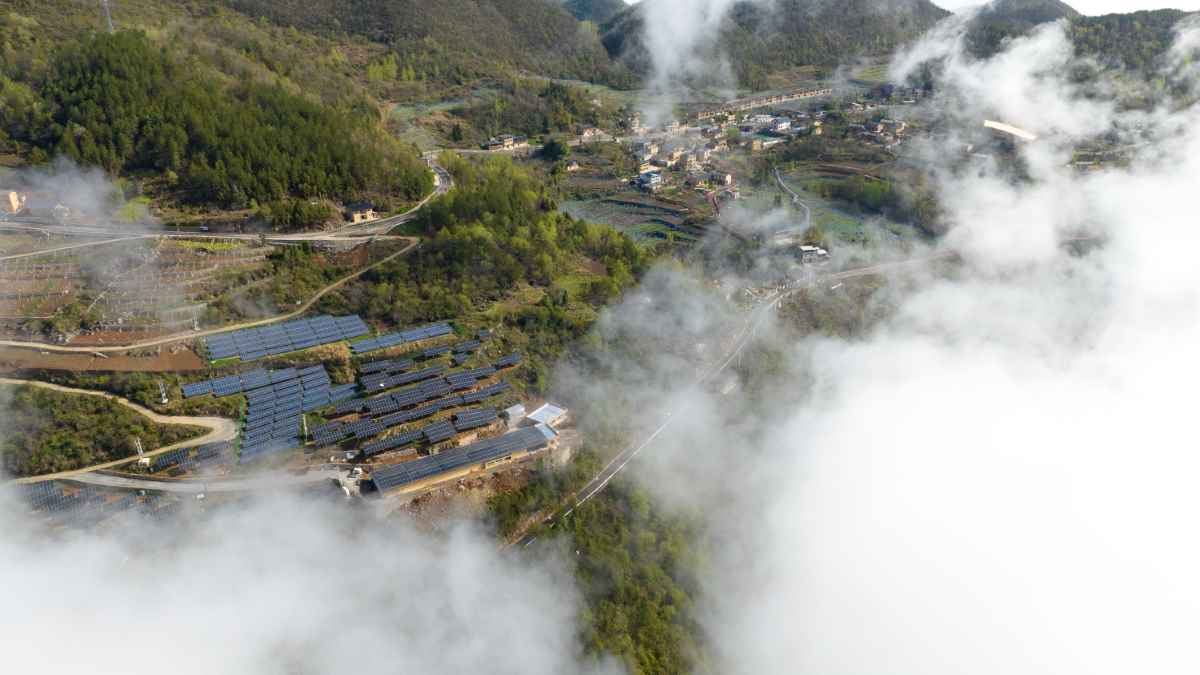
WUHAN, CHINA – Media OutReach Newswire – 22 April 2025 – During April’s Pear Blossom Festival, Tudianzi village, nestled deep in the mountains of central China’s Hubei Province, has welcomed over 50,000 visitors in just two days. In Tudianzi Village, tourists marveled at innovations like solar-storage integrated streetlights illuminating country paths, high-power EV charging stations eliminating range anxiety, and traditional Tujia cuisine cooked in all-electric kitchens — a vivid showcase of sustainable rural revitalization.

From Tudianzi Village, perched 1,200 meters above sea level, the mist-shrouded Wu Gorge stretches into the distance, while terraced pear blossoms blanket the slopes. A light breeze carries the delicate floral fragrance, marking the most picturesque season for this Tujia ethnic mountain village.

“The table actually charges my phone wirelessly!” exclaimed tourist Ms. Tan, surprised when her phone began charging on a solar-powered bench in the food corridor.

Located in Badong County, Enshi Tujia and Miao Autonomous Prefecture, Tudianzi Village earned its name during the Ming Dynasty as a rest stop for merchants on the ancient Tea Horse Road. Long secluded in the mountains, the village has now gained fame as a model for rural energy revolution, achieving 24/7 zero-carbon operations and 100% green electricity supply.

Solar panels are ubiquitous here — on rooftops, pavilions, plaza corridors, chicken coops, and pigsties. “The village’s solar capacity reaches 1,800 kW. At full capacity for one hour, it can generate 1,800 kWh, enough to power the entire village for a day,” said Chen Wentao, person in charge of the State Grid Enshi’s development department.

Reliable electricity was once a distant dream for villagers. Aging power infrastructure — characterized by extensive grid coverage, outdated single-radial network designs, and seasonal load fluctuations — left communities vulnerable to frequent and prolonged outages, particularly during extreme weather.

“Whenever thunderstorms struck, power lines would fail, plunging the entire village into darkness,” recalled 75-year-old Hu De’an. Like many residents, Hu once relied entirely on firewood for light and heat. “Our homes were filled with smoke, but seeing firewood piled under the eaves was the only way we felt secure,” he said.

In September 2020, China unveiled its ambitious “dual carbon” goals to the world: achieving peak carbon emissions by 2030 and carbon neutrality by 2060.

Studies showed that traditional biomass fuels like firewood, burned through direct combustion, operate at a mere 10-15% efficiency while generating heavy carbon emissions. This inefficiency has thrust rural China into a critical dilemma — how to build resilient, clean energy networks that meet growing demand without compromising sustainability.

A breakthrough came in March 2023 when China’s National Energy Administration and three other ministries launched a landmark initiative. The plan prioritizes pilot projects to accelerate rural energy transitions, coupling clean power adoption with broad rural revitalization objectives. By August 2023, State Grid Hubei Electric Power had spearheaded a flagship demonstration project in Tudianzi Village, targeting three pillars: stable clean energy supply, efficient resource utilization, and green industrial development.

During a recent visit to Tudianzi’s black pig breeding base — an operation producing over 4,000 hogs annually — reporters observed a model of integration. Solar panels crowned the spotless pigsty roofs, while odor-free pathways defied backward farm.

The transformation stems from a 30-kilowatt biogas plant constructed adjacent to the facility. Engineered by local power authorities, the system collects manure from the breeding base and kitchen waste from nearby households, channeling them into a closed-loop cycle of “biomass resources – biogas – electricity – fertilizer”.

“Biogas is converted into electricity, while its byproducts — digestate and residues — are processed into fertilizers for farmland, achieving circular biomass utilization and clean energy supply,” said Su Lei, senior engineer of State Grid Hubei Electric Power Research Institute. Notably, the installation of an 80-cubic-meter gas storage tank ensures nighttime green power supply and enables off-grid operations when integrated with flexible energy storage systems.

For local farmer Feng Cailong, the project has brought tangible economic gains. “Previously, disposing pig waste cost over 40,000 yuan annually. Now, delivering it directly to the biogas plant not only cuts disposal expenses but also saves more than 60,000 yuan yearly in electricity, disinfection, and fertilizer costs for forage cultivation,” he informed.

These developments epitomize Tudianzi’s rural energy transformation. After nearly two years of construction, the village has established a low-carbon energy system dominated by wind and solar power, featuring agile microgrid-distribution network interactions and coordinated “source-grid-load-storage” operations. A multidimensional industrial ecosystem integrating renewable energy, livestock farming, and eco-tourism is taking shape.

In 2024, the village’s electricity consumption surged to 537,000 kWh, a 188% increase from 2022. Since launching its energy revolution, Tudianzi’s annual renewable energy output reaches 1.44 million kWh, equivalent to saving 472 tons of standard coal while reducing CO₂ emissions by 1,436 tons and SO₂ by 43 tons annually.

“With the village’s total installed renewable energy capacity now reaching 1,871 kilowatts, we not only achieve full green power supply for the entire village but also export substantial surplus electricity to external grids,” explained Yang Lin, official of the Development and Reform Commission of Enshi Tujia and Miao Autonomous Prefecture.

Events

As global power structures shift, Invest Africa convenes The Africa Debate 2026 to redefine partnership in a changing world

Published

on

Debate

The Africa Debate 2026 will provide a platform for this essential, era-defining discussion, convening leaders to explore how Africa and its partners can build more balanced, resilient and sustainable models of cooperation

LONDON, United Kingdom, February 5, 2026/APO Group/ –As African economies assert greater agency in a rapidly evolving global order, Invest Africa (www.InvestAfrica.com) is delighted to announce The Africa Debate 2026, its flagship investment forum, taking place at the historic Guildhall in London on 3 June 2026.

Now in its 12th year, The Africa Debate has established itself as London’s premier platform for African investment dialogue since launching in 2014, convening over 800 global decision-makers annually to shape the future of trade, finance, investment, and development across the continent.

Under the theme “Redefining Partnership: Navigating a World in Transition”, this year’s forum will focus on Africa’s response to global economic realignment with greater agency, ambition and economic sovereignty.

The Africa Debate puts Africa’s priorities at the centre of the conversation, moving beyond traditional narratives to focus on ownership, resilience and long-term value creation.

“Volatility is not new to Africa. What is changing is the opportunity to respond with greater agency and ambition,” says Invest Africa CEO Chantelé Carrington.

“This year’s edition of The Africa Debate asks how we strengthen economic sovereignty — from access to capital and investment to financial and industrial policy — so African economies can take greater ownership of their growth. Success will be defined by how effectively we turn disruption into leverage and partnership into shared value.”

The Africa Debate 2026 will provide a platform for this essential, era-defining discussion, convening leaders to explore how Africa and its partners can build more balanced, resilient and sustainable models of cooperation.

Key challenges driving the debate

Core focus areas for this year’s edition of The Africa Debate include:

This year’s edition of The Africa Debate asks how we strengthen economic sovereignty — from access to capital and investment to financial and industrial policy

Global Realignment & New Partnerships

How shifting geopolitical and economic power structures are reshaping Africa’s global partnerships, trade dynamics and investment landscape.

Financing Africa’s Future

The growing need to reform the global financial architecture, new approaches to development finance, as well as the strengthening of market access and financial resilience of African economies in a changing global system.

Strategic Value Chains

Moving beyond primary exports to build local value chains in critical minerals for the green economy. Also addressing Africa’s energy access gap and mobilising investment in renewable and transitional energy systems.

Digital Transformation & Technology

Unlocking growth in fintech, AI and digital infrastructure to drive productivity, inclusion, and the next phase of Africa’s economic transformation.

The Africa Debate 2026 offers a unique platform for high-level dialogue, deal-making, and strategic engagement. Attendees will gain actionable insights from leading policymakers, investors and business leaders shaping Africa’s economic future, while building strategic partnerships that define the continent’s next growth phase.

Registration is now open (http://apo-opa.co/46b19gj).

Distributed by APO Group on behalf of Invest Africa.

Continue Reading

Business

Zion Adeoye terminated as Chief Executive Officer (CEO) of CLG due to serious personal and professional conduct violations

Published

on

CLG

After a thorough internal and external investigation, along with a disciplinary hearing chaired by Sbongiseni Dube, CLG (https://CLGglobal.com) has made the decision to terminate Zion Adeoye due to serious personal and professional conduct violations. This process adhered to the Code of Good Practice of the Labour Relations Act, ensuring fairness, transparency, and compliance with South African law.

Mr. Adeoye has been held accountable for several serious offenses, including:

  • Making malicious and defamatory statements against colleagues
  • Extortion
  • Intimidation
  • Fraud
  • Misuse of company funds
  • Theft and misappropriation of funds
  • Breach of fiduciary duty
  • Mismanagement

His actions are in direct contradiction to our firm’s core values. We do not approve of attorneys spending time in a Gentleman’s Club. CLG deeply regrets the impact this situation has had on our colleagues and continues to provide full support to those affected.

We want to express our gratitude to those who spoke up and to reassure everyone at the firm of our unwavering commitment to maintaining a respectful workplace. Misconduct of any kind is unacceptable and will be addressed decisively.

We recognize the seriousness of this matter and have referred it to the appropriate law enforcement, regulatory, and legal authorities in Nigeria, Mauritius, and South Africa. We kindly ask that the privacy of the third party involved be respected.

Distributed by APO Group on behalf of CLG.


Continue Reading

Business

The International Islamic Trade Finance Corporation (ITFC) Strengthens Partnership with the Republic of Djibouti through US$35 Million Financing Facility

Published

on

ITFC

This facility forms part of the US$600 million, three-year Framework Agreement signed in May 2023 between ITFC and the Republic of Djibouti, reflecting the strong and growing partnership between both parties

JEDDAH, Saudi Arabia, February 5, 2026/APO Group/ –The International Islamic Trade Finance Corporation (ITFC) (https://www.ITFC-IDB.org), a member of the Islamic Development Bank (IsDB) Group, has signed a US$35 million sovereign financing facility with the Republic of Djibouti to support the development of the country’s bunkering services sector and strengthen its position as a strategic regional maritime and trade hub.

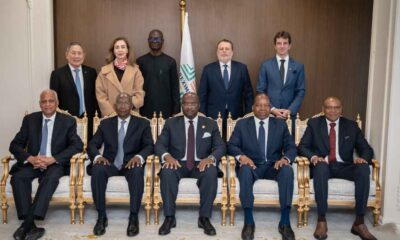
The facility was signed at the ITFC Headquarters in Jeddah by Eng. Adeeb Yousuf Al-Aama, Chief Executive Officer of ITFC, and H.E. Ilyas Moussa Dawaleh, Minister of Economy and Finance in charge of Industry of the Republic of Djibouti.

The financing facility is expected to contribute to Djibouti’s economic growth and revenue diversification by reinforcing the competitiveness and attractiveness of the Djibouti Port as a “one-stop port” offering comprehensive vessel-related services. With Red Sea Bunkering (RSB) as the Executing Agency, the facility will support the procurement of refined petroleum products, thus boosting RSB’s bunkering operations, enhancing revenue diversification, and consolidating Djibouti’s role as a key logistics and trading hub in the Horn of Africa and the wider region.

We look forward to deepening this partnership, creating new opportunities, and leveraging collaborative programs to advance key sectors and drive sustainable economic growth

Commenting on the signing, Eng. Adeeb Yousuf Al-Aama, CEO of ITFC, stated:

“This financing reflects ITFC’s continued commitment to supporting Djibouti’s strategic development priorities, particularly in strengthening energy security, port competitiveness, and trade facilitation. We are proud to deepen our partnership with the Republic of Djibouti and contribute to sustainable economic growth and regional integration.”

H.E. Ilyas Moussa Dawaleh, Minister of Economy and Finance in charge of Industry of the Republic of Djibouti, commented: “Today’s signing marks an important milestone in the development of Djibouti’s bunkering services and reflects our strong and valued partnership with ITFC, particularly in the oil and gas sector. This collaboration supports our ambition to position Djibouti as a regional hub for integrated maritime and logistics services. We look forward to deepening this partnership, creating new opportunities, and leveraging collaborative programs to advance key sectors and drive sustainable economic growth.”

This facility forms part of the US$600 million, three-year Framework Agreement signed in May 2023 between ITFC and the Republic of Djibouti, reflecting the strong and growing partnership between both parties.

Since its inception in 2008, ITFC and the Republic of Djibouti have maintained a strong partnership, with a total of US$1.8 billion approved primarily supporting the country’s energy sector and trade development objectives.

Distributed by APO Group on behalf of International Islamic Trade Finance Corporation (ITFC).

Continue Reading

Trending