Connect with us
Anglostratits

Events

South Africa Strengthens Workforce Readiness Ahead of Critical Minerals Boom

Published

on

Energy Capital

African Mining Week 2026, scheduled for October 14–16 in Cape Town, will highlight initiatives by South Africa and other African mining markets to equip their workforce for the anticipated surge in the global critical minerals sector

CAPE TOWN, South Africa, February 25, 2026/APO Group/ –As South Africa accelerates the expansion of its critical minerals sector – including plans to unlock an estimated R40 trillion in iron reserves – skills development has become a cornerstone of its long-term growth strategy. By targeting R2 trillion in investment over the next five years, the country recognizes that a well-trained workforce not only drives operational efficiency but also strengthens investor confidence, positioning South Africa as a globally competitive hub for critical mineral investment.


Skills Development and National Critical Minerals Strategy

Enhancing skills development supports South Africa’s broader agenda of increasing employment opportunities and strengthening economic resilience, while channeling mineral wealth into local industrialization. The country aims to tackle youth unemployment by creating opportunities for 1.8 million young people by 2030. As one of South Africa’s largest employers, supporting nearly 900,000 jobs, the mining sector plays a critical role in achieving this goal.

In his February 2026 State of the Nation Address, South African President Cyril Ramaphosa emphasized the expansion of public employment programs, including the Community Work Program and Presidential Employment Stimulus, to provide skills development and employment for youth and women. “For too many people, life remains hard. Jobs are scarce and opportunity is out of reach,” stated Ramaphosa.

The expansion of these initiatives and the country’s 2030 youth employment target align closely with South Africa’s critical minerals strategy, which prioritizes human capital development as a key enabler of industrial growth and energy transition objectives.

We want to contribute to South Africa’s agenda of empowering the next generation of miners while unlocking the country’s full mining potential

International Research Collaboration Strengthens Long-Term Skills Ecosystem

A major boost to workforce development in critical minerals was announced in mid-February through a partnership between the European Union (EU) and South Africa’s Energy and Water Sector Education and Training Authority and the Council for Scientific and Industrial Research. The initiative includes €2 million in funding from the EU to establish a dedicated platform to strengthen skills development and research and workforce readiness across the critical minerals and battery value chain.

Part of the EU’s broader Clean Trade and Investment Partnership, under which €15.5 billion has been committed to strengthening South Africa’s critical minerals sector, the skills initiative aims to:

  • Expand Technical and Vocational Education and Training institutional capacity
  • Provide specialized training aligned with battery minerals, refining and recycling
  • Facilitate internships and Work-Integrated Learning placements with industry partners
  • Create employment pathways for graduates entering critical mineral industries

Complementing government and multilateral initiatives, private sector players are also investing in workforce development. In mid-February, mining major Anglo American announced plans to establish a Global Institute of Critical Minerals Research, bringing together universities and research institutions from South Africa, the UK and other global mining hubs.

“We want to contribute to South Africa’s agenda of empowering the next generation of miners while unlocking the country’s full mining potential,” stated Anglo American CEO Duncan Wanblad

With South Africa leading in terms of global production of platinum group metals, manganese and chrome – and now seeking to unlock its untapped iron ore potential – strategic skills development initiatives will strengthen the country’s position in the evolving critical minerals space.

African Mining Week 2026: Driving Collaboration and Investment

Against this backdrop, the upcoming African Mining Week conference, scheduled for October 14–16 in Cape Town, is set to play a key role in advancing dialogue on workforce readiness, investment and strategic partnerships. The event will convene policymakers, mining companies, academic institutions and global investors to assess Africa’s preparedness to meet rapidly growing global demand for critical minerals, which is projected to quadruple by 2040.

Distributed by APO Group on behalf of Energy Capital & Power.

Business

Industrial competitiveness takes centre stage at C&I Energy + Storage Summit Johannesburg

Published

on

C&I Energy

The summit opens with a shared question: how can businesses protect production and investment while navigating changes to the systems that supply their energy and water

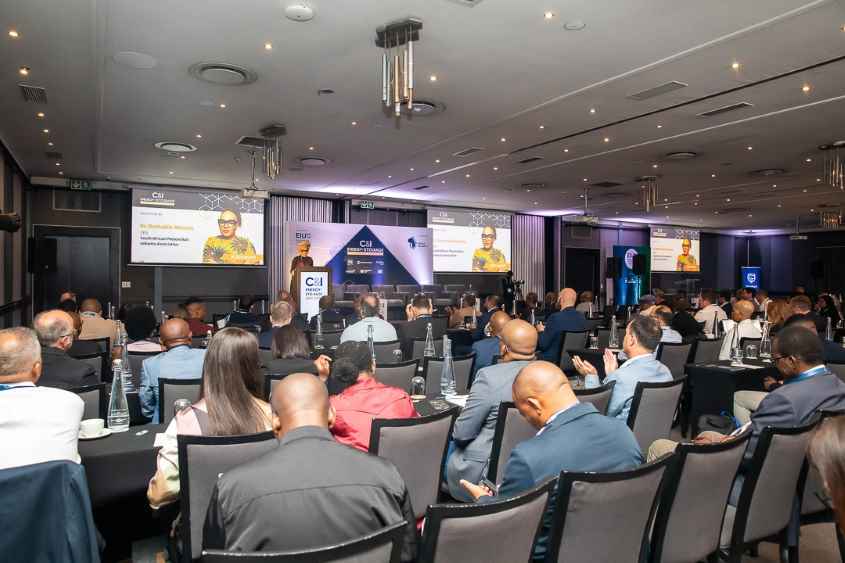
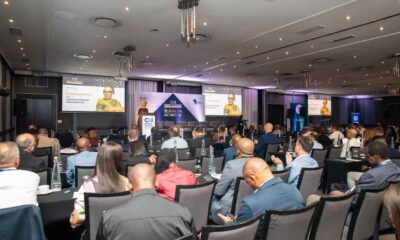
JOHANNESBURG, South Africa, October 27, 2026/APO Group/ –Rising electricity and water costs, changing energy procurement options and pressure to decarbonise are putting South Africa’s industrial competitiveness under scrutiny. These challenges will lead the opening agenda of the C&I Energy + Storage Summit Johannesburg, which begins tomorrow, bringing the relationship between infrastructure resilience and business performance into focus.

Held alongside the Energy Intensive Users Group (EIUG) Conference, Data Centre Summit and Water Security Africa on 28–29 October, the summit opens with a shared question: how can businesses protect production and investment while navigating changes to the systems that supply their energy and water?


Following welcomes from Chanelle Hingston, VUKA Group Director: Power, Energy & Water, and EIUG Chairman Murendeni Matshinyatsimbi, NTCSA CEO Monde Bala will deliver the keynote address. He is expected to explore how grid expansion, fair access and system reliability can support a competitive electricity market and unlock industrial investment.

These opening contributions will set the context for the keynote panel, “Threats and opportunities in South Africa’s industrial future”. Moderated by Kay Walsh, Managing Director of Nova Economics, the discussion brings together Gaylor Montmasson-Clair, Founding Director of Southern Transitions; Charles Dos Santos, Managing Director of Air Products South Africa; and Lubabalo Luyaba, Senior Water Specialist at the World Bank.

The panel will examine how escalating tariffs, electricity market reform and pressure on water resources are influencing industrial competitiveness. Wheeling frameworks, market liquidity and regulatory clarity will feature alongside the growing need for resilient water supply and better water management.

For commercial and industrial businesses, these issues have direct implications for operating costs, procurement decisions and long-term investment. The discussion will explore how companies can manage regulatory uncertainty, strengthen resilience and assess opportunities in energy procurement and carbon markets.

Water security will receive further attention through a keynote address and MOU signing featuring Ramateu Monyokolo, Chairperson of AWSISA. Earlier morning discussions will ask what a loss of Johannesburg’s water supply would mean for business and explore water’s role as a strategic asset.

The opening agenda will lead into practical Day 1 sessions on reducing energy costs, electricity market reform and financing the transition. Industrial case studies from Isuzu Motors South Africa, Sibanye-Stillwater and Harmony Gold Mining Company will examine approaches to cost certainty and energy security.

Across the day, the emphasis will be on decisions businesses can act on: improving efficiency, diversifying supply and investing in infrastructure that supports reliable operations and sustained competitiveness.

Sponsors across the events include WEG, Gold Sponsor; Standard Bank, Gold and Registration Sponsor; Huawei, EIUG Gold and Registration Sponsor; NOA and South32, EIUG Gold Sponsors; Envusa Energy, Scatec (Lyra) and Seriti Green, EIUG Silver Sponsors; LONGi and MATTLA Engineering Solutions, Bronze Sponsors; Africa International Advisors, EIUG Bronze Sponsor; Webber Wentzel, Water Bronze Sponsor; and Air Liquide and Air Products, Session Sponsors.

Download the full programme to explore the keynote speakers, industry case studies and practical sessions taking place on 28–29 October: https://apo-opa.co/4sqc9QL

Distributed by APO Group on behalf of VUKA Group.


Continue Reading

Energy

Libya Energy & Economic Summit (LEES) 2027 Places Infrastructure at the Center of Libya’s Energy Expansion with Dedicated Forum

Published

on

From gas processing and ports to downstream infrastructure and regional pipelines, LEES 2027 will examine the infrastructure required to support Libya’s next phase of energy growth

TRIPOLI, Libya, October 26, 2026/APO Group/ –Libya’s push to expand oil and gas production is creating a parallel requirement for investment in the infrastructure needed to process, transport and commercialize additional energy supplies. With more than $20 billion committed to the Waha concessions alone and major gas, industrial and logistics projects advancing, infrastructure integration is emerging as a key component of the country’s investment agenda.


Against this backdrop, the Libya Energy & Economic Summit (LEES) 2027, taking place January 23–25 in Tripoli, will feature a dedicated Infrastructure and Integration Forum. The forum will examine how Libya can convert its growing resource base into productive domestic infrastructure and stronger regional ties.

As Libya seeks to process more hydrocarbons domestically and capture greater value from refined products, the country’s National Oil Corporation (NOC) is pursuing refinery modernization and expanded petrochemical manufacturing. That strategy is being reinforced by upstream expansion, including a more than $20 billion, 25-year Waha development deal with TotalEnergies and ConocoPhillips targeting up to 850,000 barrels per day (bpd) of additional capacity.

Meanwhile, the National Development Agency has signed 13 agreements with Chinese companies for projects at the 1,000-hectare Magroun Industrial Zone, covering industrial chemicals, advancing manufacturing and construction materials. The Ministry of Industry’s 100-Day Plan is supporting the country’s wider development push through infrastructure and digital reforms aimed at improving industrial investment.

Gas provides another major infrastructure opportunity set to be showcased at LEES 2027. Eni’s $8 billion Structures A&E project is designed to move offshore gas to the Mellitah treatment plant, with infrastructure targeting 750 million cubic feet per day (mmscf/d) in 2027. The project follows the successful start-up of the Sabratha Compression Project in June 2026. Led by Eni in partnership with the NOC – through the Mellitah Oil & Gas joint venture – the project has an overall compression capacity of 440 mmscf/d.

On the maritime side, the $2.7 billion Misurata Port expansion is set to transform the facility into a major Mediterranean logistics hub, with planned capacity of 4 million containers annually and 8,400 direct jobs. The project also incorporates local supplier development, linking maritime expansion with efforts to build domestic supply chains.

Beyond domestic infrastructure Libya is strengthening its connections to regional neighbors. The country is advancing negotiations with Egypt for an 800-km Tobruk-Alexandria crude pipeline, estimated at $1.5 billion–$2 billion and targeting initial capacity of 150,000–250,000 bpd. The NOC is also working to maximize the 11-billion-cubic-meter annual capacity of the GreenStream pipeline, connecting coastal facilities in Libya to European markets via Sicily.

Taken together, these projects show an increasingly integrated Libyan investment agenda – connecting upstream production with downstream industry, gas infrastructure, logistics and cross-border energy markets. LEES 2027’s Infrastructure and Integration Forum will bring those investment opportunities together in one platform, highlighting the NOC and Ministry-led push to build the infrastructure required for Libya’s next phase of economic growth.

For more information about LEES 2027, please visit https://LibyaSummit.com/​.

Distributed by APO Group on behalf of Energy Capital & Power.


Continue Reading

Energy

Ghana Energy Minister John Jinapor to Speak at MSGBC Oil, Gas & Power 2026

Published

on

Etu Energias

Ghana’s Energy Minister joins MSGBC Oil, Gas & Power 2026 as the country advances upstream investment, gas monetization and infrastructure development

DAKAR, Senegal, October 26, 2026/APO Group/ –Ghana’s Minister for Energy and Green Transition Dr. John Abdulai Jinapor will participate as a speaker at MSGBC Oil, Gas & Power 2026 in Dakar, Senegal, from December 1–3. His participation comes as Ghana pursues upstream investment, domestic gas monetization and power-sector reforms to strengthen energy security and attract capital.


Minister Jinapor’s participation brings Ghana’s experience in balancing hydrocarbon development, electricity reliability and renewable energy investment to a regional forum focused on cross-border infrastructure and resource development. The fifth edition, held at the CICAD under the high patronage of President Bassirou Diomaye Faye, will connect policymakers, operators and investors across the MSGBC basin.

Ghana’s latest initiatives combine upstream recovery with major downstream infrastructure plans. On October 20, Jinapor pledged to lead inter-ministerial talks addressing land acquisition, compensation and financing hurdles facing the proposed $28-billion Petroleum Hub in Jomoro, following an agreement between the Petroleum Hub Development Corporation and a United Arab Emirates consortium led by Global Sphere.

https://apo-opa.co/4ijaUOu

The proposed development includes a 300,000-barrel-per-day refinery, petrochemical facilities and deepwater ports, with construction targeted for early 2027. If delivered, the project could expand domestic processing capacity, support industrial activity and position Ghana as a regional petroleum-products trading hub.

At African Energy Week 2026 in Cape Town, Jinapor also reported $3.5 billion in upstream investment commitments for Ghana’s Jubilee, Tweneboa, Enyenra and Ntomme, and Offshore Cape Three Points fields. The commitments support expansion and drilling campaigns as the country seeks to reverse declining production and sustain output from mature offshore assets.

His contribution will enrich regional discussions at MSGBC Oil, Gas & Power 2026, fostering opportunities for cross-border cooperation

https://apo-opa.co/4BoGjrs

Gas supply and power-sector efficiency remain central to that strategy. Ghana is implementing its Second Gas Processing Plant, while plans for additional offshore infrastructure aim to increase gas availability; the government has also reported savings of $500 million from reducing liquid-fuel imports for electricity generation.

https://apo-opa.co/4jGStFP

Regional integration offers another route to improving supply security. Jinapor recently outlined discussions with Nigeria on exchanging Ghanaian electricity for Nigerian natural gas delivered through the West African Gas Pipeline, while Ghana is procuring a 200 MW battery energy storage system alongside a 200 MWp solar facility.

https://apo-opa.co/4Bxfr94

These measures complement efforts to address energy-sector liabilities, which exceeded $3 billion at the start of 2025, and improve payments to independent power producers. Ghana’s longer-term plans include expanding renewable capacity, increasing electricity access to 99% by 2030 and developing nuclear power as part of its future generation mix.

“Minister Jinapor’s participation brings valuable perspective on how Ghana is mobilizing investment across upstream production, gas monetization and power infrastructure to strengthen energy security and support industrial growth. His contribution will enrich regional discussions at MSGBC Oil, Gas & Power 2026, fostering opportunities for cross-border cooperation, infrastructure development and investment partnerships across West Africa,” says Sandra Jeque, Vice President, Energy Capital & Power.

MSGBC Oil, Gas & Power 2026 will also feature Senegal’s Minister of Energy and Petroleum Dr. El Hadji Abdourahmane Diouf; Guinea-Conakry’s Minister of Energy Laye Sékou Camara; Algeria’s Minister of State for Hydrocarbons Mohamed Arkab and Minister of Energy and Renewable Energies Mourad Adjal; Guinea-Bissau’s Minister of Natural Resources Baldé; and Mali’s Minister of Energy and Water Tiémoko Traoré.

Organized by Energy Capital & Power and held under the High Patronage of Senegalese President Bassirou Diomaye Faye, MSGBC Oil, Gas & Power 2026 takes place December 1–3 in Dakar and will convene heads of state, ministers, investors, operators and development partners from Mauritania, Senegal, The Gambia, Guinea-Bissau and Guinea-Conakry. Explore opportunities and secure your participation at www.MSGBCOilGasandPower.com.

Distributed by APO Group on behalf of Energy Capital & Power.


Continue Reading

Trending