Connect with us
Anglostratits

Business

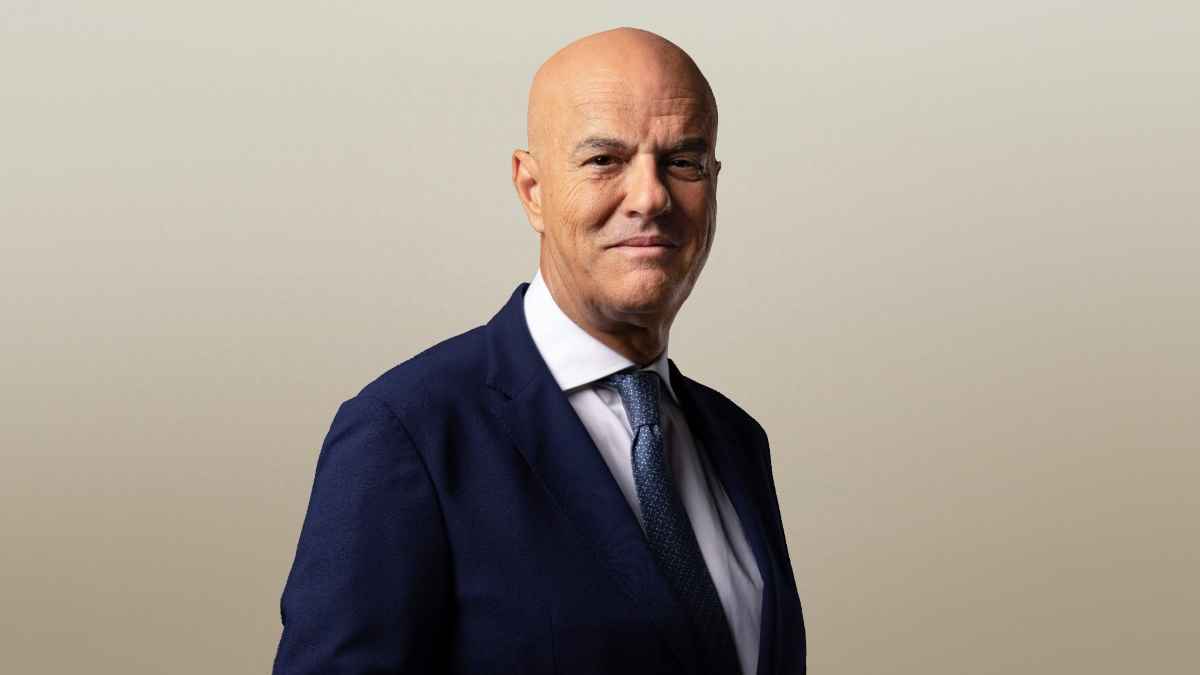
The Way of a Legend; An Italian Champion of African Energy: Eni Chief Executive Officer (CEO) Claudio Descalzi (By NJ Ayuk)

Published

on

Energy

As a longtime promoter of African energy potential, Descalzi has overseen major hydrocarbon projects in countries from Congo to Libya to Nigeria — both oil and natural gas

JOHANNESBURG, South Africa, September 23, 2025/APO Group/ —By NJ Ayuk, Executive Chairman, African Energy Chamber (https://EnergyChamber.org/).

Eni CEO Claudio Descalzi has never stopped making Africa his and Eni’s first choice for investment.

I know Mr. Descalzi as a shrewd negotiator, a disciplined CEO, and a strong advocate of natural gas development on our continent. As he champions African energy independence and sovereignty, natural gas has been and remains key to his work in Africa.

Even during difficult times, he has persisted in furthering his company’s investments in Africa, as he did following the Russian invasion of Ukraine. At that critical time, he encouraged the EU to consider imports from Africa to replace Russian petroleum, including the 20 billion cubic meters (bcm) of Russian gas Italy was importing annually.

As a longtime promoter of African energy potential, Descalzi has overseen major hydrocarbon projects in countries from Congo to Libya to Nigeria — both oil and natural gas. Under his leadership, Eni has launched some of the continent’s fastest-moving liquefied natural gas (LNG) projects while prioritizing low carbon output.

Along with the business side of his role, the CEO has encouraged the company’s country managers and executives to take on many social responsibility efforts in Africa.

On a more personal note, when you talk to many African President’s, Ministers and business leaders, he is always a source of wise counsel — something I see as the mark of a true legend. He is always willing to work with others and share his experiences and knowledge about doing business in other markets.

The Man and the Company

A native of Milan and a 1979 physics graduate of the city’s namesake university, Descalzi has a deep history with Eni, having started in 1981 as a field petroleum engineer. His broad understanding of the industry and the company has been forged within many roles of increasing responsibility — in Africa, the Middle East, China, and — from 2010 to 2014 —as Chairman of Eni UK.

In May of 2014, he took on the role of CEO for Eni.

Among the founding CEOs of the 2014 Oil and Gas Climate Initiative, Descalzi is also a member of the European Round Table for Industry and co-chair of the Oil and Gas Governors Community of the World Economic Forum.

A Visiting Fellow at The University of Oxford, he has received many significant industry awards, among them the esteemed Charles F. Rand Memorial Gold Medal award from the Society of Petroleum Engineers and the American Institute of Mining Engineers.

To its great credit, Eni has been working in Africa since the 1950s to develop the continent’s resources and form partnerships that secure a supply of natural gas and advance the world’s energy transition.

Those efforts, employing a mix of traditional, renewable, and bio energy, are making progress toward the 2050 Net Zero target in 13 African countries. It’s also important to note that the company employs thousands in Africa, and that 80% of the gas it produces there goes to local markets.

Eni Activity in Africa Under Descalzi’s Leadership

Egypt, Algeria, and Libya have been cornerstones of Eni’s African presence. Eni’s history in Libya began in 1959 with the acquisition of its first concession. After a 10-year hiatus in onshore drilling in Libya, caused primarily by the country’s civil war, Descalzi made sure that Eni was one of the first companies to re-enter the country in 2024.

Eni’s activities in Algeria date back to the early 1980s, and Algeria remains one of the company’s largest suppliers of gas to Europe.

Egypt, meanwhile, gained global attention in 2015 with Eni’s Zohr discovery, one of the largest gas finds ever in the Mediterranean.

Internal demand in these countries — because of demographic growth — is increasing at about 7 to 8% every year, this means they need gas … they need investment

Eni now plans to invest close to USD9 billion each in Algeria and Egypt, as well as Libya, over the next four years. Descalzi has stated (https://apo-opa.co/46MtAlb), “Internal demand in these countries — because of demographic growth — is increasing at about 7 to 8% every year, this means they need gas … they need investment.”

In Angola, I was lucky to have been with Mr. Descalzi when his efforts alongside BP to launch the Agogo floating production, storage, and offloading (FPSO) vessel and to form the first major international oil company (IOC) joint venture in Africa, Azule Energy.  During a recent meeting with Angolan President Lourenco in Luanda, the two leaders talked about Azule’s exploration and delivery achievements. They noted that the Agogo, planned to become the first carbon-neutral FPSO in Angola, began production 10 months ahead of the original plan.

As the biggest independent equity oil and gas producer in Angola, Azule Energy holds 18 licenses, 11 of which are operating and producing a total of 210,000 barrels per day (bpd).

Congo:  In 2023, Descalzi was instrumental in launching the Congo LNG project, encompassing the installation of two floating LNG (FLNG) plants to process gas from the country’s current and future fields, helping foster European energy security, while providing sufficient gas for Africa. Tango FLNG, with a 0.6 million tons per annum (MTPA) capacity, began production in December 2023. Nguya FLNG is set to begin production (2.4 MTPA) by the end of this year, boosting the total capacity of the project to 3 MTPA.

In Côte d’Ivoireunder Descalzi’s leadership, Eni has been working since 2015, and is currently working in 10 deepwater blocks.

Eni’s Baleine field offshore project is the first net-zero upstream project in the world for Scope 1 and 2 emissions. After Eni fast-tracked the building project, it went from discovery to first oil in less than 19 months.

Baleine Phase 1 began production in 2023, and Phase 2 started producing in December 2024. Phase 2 is expected to meet local energy needs by connecting with pipeline constructed during Phase 1 and solidifying Côte d’Ivoire’s status as a producer.

Elsewhere on the continent:  In Mozambique, while many companies evacuated due to escalating violence and terror attacks in Cabo Delgado province since 2017, the CEO chose to proceed with Eni’s Coral South and Coral Norte FLNG projects, achieving a final investment decision (FID) for Coral South in 2017 and advancing Coral Norte to pre-FID stage, despite serious security concerns. In Namibia, Descalzi is looking toward more exploration. And, as a legacy producer in Nigeria, Eni, under his leadership, plans to continue working on deepwater and LNG projects, while expanding into the agri-feedstock sector as per the company’s 2023-2026 plan (https://apo-opa.co/3IakaGU).

Social Responsibility Efforts

Eni’s social responsibility initiatives include something very dear to Descalzi’s heart — facilitating clean cooking in sub-Saharan Africa.

Currently, approximately 1 billion Africans lack access to clean cooking. The African Energy Chamber is heartened to see Descalzi’s efforts on this front, including Angola’s Clean Cooking Program, begun in 2024, which already benefits over 500,000 residents in seven of the country’s provinces. He is pushing to get 2 million people in the country access to clean cooking technology very quickly.

On the employment front, Descalzi is ensuring the training and development of Africans — and that they are hired at the highest levels. He is also empowering African women by providing jobs throughout the company. Countless African women can tell stories of him giving them opportunities in the industry.

I would compare Mr. Descalzi to Patrick Pouyanné, the CEO of TotalEnergies, in his engagement with African presidents. He personally goes to each country Eni operates in, unlike most CEOs. He builds personal relationships with presidents and ministers, showing a humility that has made him one of the most favorite CEOs among the IOCs in Africa.

This was illustrated in his September 2025 meetings with Angola’s President Lourenco, where the two talked about Azule’s continuing work on the health, education, and economic diversification fronts. This work includes support for Luanda’s Cardiopulmonary Hospital Complex, business training and financial education programs, and construction and rehabilitation of 14 facilities to help educate over 17,000 children.

His style is not to stop with getting to know the well-knowns, either. He sits with young Africans and jokes with them, motivates and encourages them.

We Applaud Descalzi

It is fitting that we applaud a man who has made a global energy giant a truly African company. Eni’s expertise is evident in all it does in Africa, with its great exploration teams and the projects it completes in a timely, technically savvy way.

In his own quiet way, without international fanfare, Descalzi has worked to the benefit of Africa and Africans.

Descalzi’s care for Africa shows; although he oversees operations across Europe, Asia, the Middle East, and the Americas, he engages the most with Africa, making Africa the largest part of his work.

In short, Africa is part of his family.

Distributed by APO Group on behalf of African Energy Chamber.

Business

Africa Launches the First Pan-African Pact for Insurance Inclusion

Published

on

Africa

400 decision-makers gathered in Cotonou to accelerate access to insurance and contribute to doubling insurance penetration by 2040

DAKAR, Senegal, June 23, 2026/APO Group/ –Faced with a major paradox representing nearly 19% of the world’s population while accounting for less than 1% of global insurance premiums African insurance stakeholders are mobilizing.


From July 6 to 8, 2026, the Federation of African National Insurance Companies (FANAF) will organize the General Assembly on Insurance for All at the Sofitel Hotel in Cotonou, Benin, a major pan-African gathering dedicated to inclusive insurance.

The event will bring together nearly 400 African decision-makers from governments, regulatory and supervisory authorities, insurance and reinsurance companies, financial institutions, development banks, technical and financial partners, as well as professional organizations from across the continent.

The ambition is clear: to foster a shared vision and concrete commitments aimed at accelerating access to insurance for African populations while strengthening the sector’s contribution to the continent’s economic and social development priorities.

The discussions will culminate in the adoption of the Pan-African Pact for Insurance Inclusion and a 2026–2030 Strategic Action Plan, designed to structure collective action around an ambitious objective: contributing to the doubling of insurance penetration across the FANAF region by 2040.

An Economic, Social and Development Imperative

Within the CIMA zone, insurance penetration remains below 1% of GDP, compared to more than 6% globally.

As a result, millions of households, farmers, entrepreneurs, SMEs and informal sector actors remain deprived of essential protection mechanisms against health, climate, economic and social risks.

For FANAF, this reality now constitutes a major development challenge.

Africa cannot build sustainable growth without strengthening protection mechanisms for its populations, businesses and investments

“Africa cannot build sustainable growth without strengthening protection mechanisms for its populations, businesses and investments. The Cotonou General Assembly must mark the starting point of a new continental ambition for African insurance and its role in the continent’s economic transformation,” said Mamadou Koné, President of FANAF.

Beyond Insurance: A Driver of Continental Transformation

For FANAF, insurance is no longer merely a risk coverage mechanism. It is also a strategic lever for economic resilience, savings mobilization, investment security, SME financing, support for climate transitions and the strengthening of financial inclusion.

Through this General Assembly, FANAF seeks to reposition insurance as a key stakeholder in Africa’s economic, social and financial transformation.

A Pact to Accelerate Action

The conclusions of the General Assembly will lead to the adoption of the Pan-African Pact for Insurance Inclusion, a reference framework intended to mobilize governments, regulators, market players, financial institutions and development partners around shared objectives.

The Pact will be accompanied by a 2026–2030 Strategic Action Plan defining priority intervention areas, coordination mechanisms and monitoring arrangements for the commitments undertaken.

A broad mobilization of public, private and financial partners will support its implementation in order to translate commitments into tangible results for African populations and economies.

Cotonou 2026: Building a Shared Vision

Beyond the insurance sector, the General Assembly aims to create an unprecedented platform for dialogue between governments, regulators, investors, financial institutions, technical partners and market actors in order to identify the levers needed to accelerate insurance inclusion across the continent.

Holding this event in Benin reflects the country’s broader economic and financial transformation momentum and illustrates the collective determination of African stakeholders to develop solutions tailored to the continent’s realities.

Through this initiative, FANAF intends to make Cotonou 2026 a defining moment for the future of African insurance and the starting point of a lasting continental mobilization in favor of insurance inclusion.

Distributed by APO Group on behalf of Fédération des Sociétés d’Assurances de Droit National Africaines (FANAF).


Continue Reading

Business

Flat6Labs and International Finance Corporation (IFC) Launch StartAlgeria, a Capacity-Building Program Designed to Empower the Organizations Progressing Algeria’s Startup Ecosystem

Published

on

Flat6Labs

StartAlgeria comes at a key moment for Algeria’s entrepreneurship landscape, shifting the focus toward improving how the ESOs operate by providing them with international best practices

ALGIERS, Algeria, June 23, 2026/APO Group/ –Flat6Labs (www.Flat6Labs.com) and IFC in collaboration with the Ministry of Knowledge Economy, Startups and Micro-Enterprises are launching StartAlgeria, a capacity-building program that puts Entrepreneur Support Organizations (ESOs) at the forefront of Algeria’s ecosystem future. The program is designed to equip Algerian ESOs reinforcing pre-seed and seed-stage startups with the expertise, frameworks, and networks needed to contribute to a stronger, more competitive entrepreneurship ecosystem in Algeria and expand into global markets.


StartAlgeria comes at a key moment for Algeria’s entrepreneurship landscape, shifting the focus toward improving how the ESOs operate by providing them with international best practices adapted to each organization’s needs, a community-driven approach that focuses on peer learning, and facilitating connections with investors, policymakers, and key stakeholders.

Algeria’s entrepreneurial community is among the most dynamic and vibrant in the region, and the potential is not just real, it is ready to scale

StartAlgeria will pilot a first cohort focusing on incubators in the capital, Algiers. Following a call for application, the selected ESOs will go through a structured program comprising workshops and masterclasses covering key areas such as startup selection, program design and delivery, and investment readiness. In addition to the core program, participating ESOs will benefit from 6months of post-program mentorship, focusing on areas such as fundraising strategy, partnership development, financial sustainability, and program improvement. This sustained engagement’s goal is to provide a lasting impact in how Algerian ESOs operate and what they’re able to offer the startups they champion.

Yehia Houry, CEO of Flat6Labs, shares “Algeria’s startup ecosystem is demonstrating remarkable potential and a rapidly growing level of maturity, driven by an ambitious new generation of founders, increasing institutional support, and a strong national commitment to innovation and entrepreneurship. The opportunity today lies in further empowering entrepreneurship support organizations to match this momentum by strengthening their ability to identify and nurture high-potential startups, deliver impactful and results-driven programs, and create stronger connections between entrepreneurs and sources of capital. With the right support structures in place, Algeria is well positioned to become one of the leading innovation hubs in the region.”

“Algeria’s entrepreneurial community is among the most dynamic and vibrant in the region, and the potential is not just real, it is ready to scale. Through StartAlgeria, we are committed to ensuring that the organizations standing behind founders are equipped with the tools, frameworks, and expertise to take them from early ideas to investment-ready ventures. This program is a direct expression of IFC’s long-term confidence in Algeria’s private sector and in the ecosystem’s capacity to produce the next generation of high-impact companies.” underscored Cemile Hacibeyoglu Ceren, WBG Resident Representative in Algeria.

“The launch of StartAlgeria marks an important step in reinforcing Algeria’s startup support ecosystem. By strengthening the capabilities of Entrepreneur Support Organizations, we are investing in the long-term growth, resilience, and international competitiveness of Algerian startups. This initiative reflects our shared ambition to build a dynamic innovation-driven economy and create new opportunities for entrepreneurs across the country,” said H.E Mr. Noureddine Ouadah, Minister of Knowledge Economy, Startups and Micro-Enterprises.

This IFC program is implemented in partnership with the Government of the Netherlands.

Distributed by APO Group on behalf of Flat6Labs.

Continue Reading

Business

Hong Kong unlocks new opportunities with Central Asia

Published

on

Hong Kong

HONG KONG SAR – Media OutReach Newswire – 23 June 2026 – Led by Chief Executive of the Hong Kong Special Administrative Region (HKSAR), John Lee, a high-level delegation visit to Kazakhstan and Uzbekistan (May 31 – June 5) is already paying dividends, forging fresh opportunities to deepen ties between Central Asia, Hong Kong and the Chinese Mainland.

The business delegation comprised over 70 representatives from Hong Kong and Mainland enterprises of various sectors.

During the visit, 96 bilateral memoranda of understanding and agreements were reached, including a total of 15 co-operation documents at the government level between Kazakhstan and Uzbekistan respectively.

“The examples of agreements and co-operation are just so abundant that they range from the service sector to heavy industries such as mining and infrastructure development,” Mr Lee said. “I think the sky is the limit.”

The multiple outcomes achieved during the trip demonstrate Hong Kong’s role as a functional platform for the Belt and Road (B&R) Initiative, as the city actively plays its roles as a “super connector” and “super value-adder” to promote broader and deeper co-operation between the two places and establish a hub-to-hub co-operation model.

“Kazakhstan is an important commercial and logistics hub connecting China and Europe. It is also the place where the Belt and Road Initiative was first proposed, and is Hong Kong’s largest trading partner in Central Asia. There are broad prospects for further co-operation,” Mr Lee said, adding that a lot of B&R projects are also being pursued in Uzbekistan.

“For example, Uzbekistan sits in the heart of the corridor of Asia and Europe, so logistical development, railway development, and also how we can complement and supplement each other in cargo handling will be an area for a very wide range of co-operation.”

The Chief Executive also encouraged companies in Central Asia to leverage Hong Kong’s advantages under the “one country, two systems” principle.

“Under this unique principle, Hong Kong has its own economic, social, legal, legislative and judicial systems. We are the only common law jurisdiction in China. We have our own currency, with no capital or foreign exchange controls. We are, as well, a separate customs territory,” Mr Lee said.

Building on the positive outcomes from the delegation’s mission to Central Asia, Mr Lee welcomed the Deputy Prime Minister of Kazakhstan, Kanat Bozumbayev, to Hong Kong (June 10) and they both attended the Alatau City Investment Round Table (June 11).

Speaking at the event, Mr Lee said Hong Kong could contribute to the future success of Kazakhstan’s innovative, high-tech Alatau City in three concrete ways: as a gateway to global capital; a gateway to the Chinese Mainland and the Greater Bay Area; and as a partner in talent and technology.

“We share a development vision with Alatau City and Kazakhstan,” Mr Lee said, “Today, right here, right now, is a golden opportunity to bring our two economies closer together.”

He looked forward to Hong Kong and Kazakhstan achieving complementary advantages and co-ordinated development across different sectors and welcomed enterprises in Kazakhstan to make good use of Hong Kong’s premier financial and innovation and technology platforms, as well as its world-leading professional services, to explore more business opportunities.


Continue Reading

Trending