Connect with us
Anglostratits

Tech

Every thing leaves a trace: eDNA technology empowers environmental protection in China

Published

on

eDNA

BEIJING, CHINA – Media OutReach Newswire – 16 June 2026 – Since 2021, the China Zhi Gong Party has been carrying out a Yangtze River eco-environmental protection project in partnership with east China’s Anhui Province.

Faced with the complex challenge of river basin management, the party’s central committee has leveraged its intellectual resources, bringing together a think tank of leading experts to launch a five-year “science and technology empowerment” initiative across the Jianghuai region, the area around the lower reaches of the Huaihe River and the Yangtze River.

Among them is Zhang Wei, a member of the China Zhi Gong Party and a professor at Peking University. She has led her team in monitoring biodiversity in Chaohu Lake and the main and branch tributaries of the Wanjiang River in Anhui Province through eDNA technology, which can precisely identify minute traces of life in water and even detect invasive species that are difficult to spot with bare eyes.

“We capture or collect these minute traces of environmental information and then amplify them,” said Zhang.

Without the need to fish or disturb aquatic life, this technology allows scientists to assess the biodiversity of a water body simply by analyzing genetic information from water samples. This approach has opened up new pathways for evaluating the effectiveness of the fishing ban on the Yangtze River and conducting biodiversity monitoring.

Over the past five years, Zhang’s team has worked closely with Anhui University and local environmental protection authorities to establish multiple sampling sites in Chaohu Lake and the Wanjiang River. She hopes that through targeted oversight, eDNA monitoring technology will be promoted and applied on a more comprehensive scale.

“We hope to set an example so that everyone can do their part to support environmental protection and monitoring in this way,” Zhang said.

Business

Cassava Artificial Intelligence (AI) deploys NVIDIA Nemotron to accelerate agentic AI adoption across its markets

Published

on

Cassava is deploying NVIDIA Nemotron models as a locally hosted, managed inference service through the Cassava AI Multi-Model Exchange (CAIMEx)

BERLIN, Germany, October 21, 2026/APO Group/ –Cassava Technologies (www.CassavaTechnologies.com), a global technology leader, has announced the expansion of its AI Factory capabilities with NVIDIA Nemotron open models, helping enterprises and service providers to grow and innovate with AI more effectively and affordably.


Cassava is deploying NVIDIA Nemotron (https://apo-opa.co/4dRrqnx) models as a locally hosted, managed inference service through the Cassava AI Multi-Model Exchange (CAIMEx) (https://apo-opa.co/4i0dw5a). By making open models available as APIs on Cassava’s AI Factory, CAIMEx gives enterprises greater flexibility to choose the right mix of models for their applications without having to build and operate their own model-serving infrastructure.

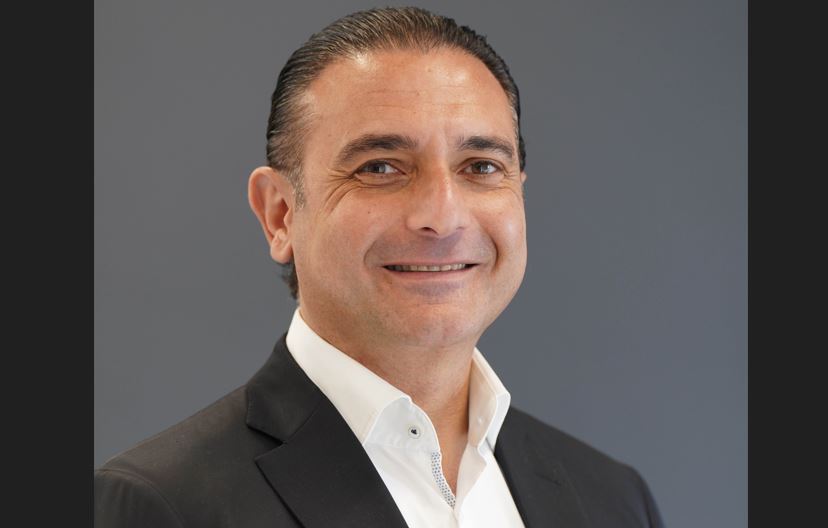
“Expanding our AI Factory across our markets is about creating the capacity and economics needed for businesses to build and deploy AI solutions at scale. By bringing NVIDIA Nemotron into CAIMEx, improving the efficiency of every GPU cycle and introducing flexible token offerings, we are giving enterprises and service providers more choice in how they access and deliver these capabilities to their customers,” said Ahmed El Beheiry, Group Chief Technology & AI Officer, Cassava Technologies.

Expanding our AI Factory across our markets is about creating the capacity and economics needed for businesses to build and deploy AI solutions at scale

NVIDIA Nemotron brings efficient reasoning and tool-use capabilities to CAIMEx, helping customers build AI agents that can work through complex tasks and interact with business tools. Its open model weights, training data and recipes also give developers a customizable foundation that they can fine-tune to build specialised agents tailored to their applications.

As businesses mature and the AI agents take on longer-running tasks and access business systems, security and guardrails become critical requirements. These need to be built into the infrastructure, and Cassava is using NVIDIA OpenShell to bring model compute, governed agent execution and independent security enforcement together for customers’ agentic workloads to its AI Factory.

The CAIMEx Token Optimiser is designed to improve the economics of generative and agentic AI by identifying information that has already been processed and, where appropriate, reusing it rather than processing the same content again. This reduces computing requirements and helps customers use their AI tokens more efficiently. The approach applies to both Cassava-hosted and third-party AI models, helping enterprises reduce unnecessary processing as their AI usage scales.

The expansion is the latest step in Cassava’s development of an integrated AI ecosystem, giving businesses access to locally hosted infrastructure, models, and services, fostering trust and confidence in data security and control while supporting their growth.

Distributed by APO Group on behalf of Cassava Technologies.


Continue Reading

Events

Wuzhen Summit Puts Spotlight on Tongxiang’s Expanding AI Industry

Published

on

Wuzhen Summit

TONGXIANG, CHINA – Media OutReach Newswire – 20 October 2026 – The 2026 World Internet Conference Wuzhen Summit will open on Nov. 2, bringing technology leaders, researchers and companies to the historic water town as Tongxiang firms expand AI applications from commercial cleaning and autonomous delivery to industrial control and data-center cooling.

For Tongxiang, long associated with the annual internet conference, the summit is also a chance to demonstrate how local companies are commercializing AI technologies for customers at home and abroad.


Ahead of the event, reporters visited seven Tongxiang-based companies working in robotics, intelligent vehicles, synthetic data, industrial automation, logistics and computing infrastructure.

Singapore Changi Airport earlier this year placed a fourth order for commercial cleaning robots from CenoBots, a Tongxiang-based company whose machines are used in airports, supermarkets, hospitals, factories and warehouses.

CenoBots has sold products in more than 40 countries and regions. Its customers include Changi Airport, British retailer Tesco, the University of Minnesota and pharmaceutical company Novo Nordisk. This year, the company supplied about 600 autonomous cleaning robots for Tesco Express stores across the United Kingdom.

“Cleaning robots are appearing in more and more settings,” said Shen Jizhong, CenoBots’ co-founder and vice president. “It is much like electric vehicles becoming a familiar sight on the roads — a trend that is gathering pace.”

The company’s machines are adapted to different settings. Hospital robots must move through busy corridors without disrupting patient care, while those used in supermarkets navigate around shoppers and carts. Factory robots operate near forklifts, and airport models must handle both fine debris in carpeted areas and small obstacles on smooth floors.

CenoBots continues to refine its robots through real-world testing, focusing on reliable operation and consistent cleaning performance across diverse environments. The company has expanded its research, development and production facilities in Tongxiang from approximately 3,000 square meters in its early years to more than 20,000 square meters. Local malls, hospitals and sports venues have also served as long-term testing sites.

While CenoBots focuses on service robots, TEEMO is developing the vehicle platforms that support autonomous mobility. The company makes drive-by-wire skateboard chassis and core components for autonomous vehicles used in last-mile delivery, patrols and logistics.

Its standardized chassis can be equipped with different vehicle bodies and hardware for specific uses. One of TEEMO’s strategic customers, autonomous delivery-vehicle maker Zelos, was selected for all lots in China Post’s centralized procurement program for 7,000 autonomous delivery vehicles.

TEEMO’s customers already span the United States, the Middle East, India and Russia, said Zhang Yongjian, the company’s director of operations.

“In some overseas markets, distances are long, populations are dispersed and last-mile delivery is difficult to staff,” Zhang said. “Autonomous delivery vehicles have strong potential there, and overseas business will become an important growth driver for us.”

Other Tongxiang companies are concentrating on the data and perception systems that allow machines to function in physical environments.

Dayan Technology, founded in Tongxiang in May 2025, provides synthetic-data and toolchain services for autonomous-driving and humanoid-robotics companies. It combines real-world data collection, digital twins and simulated training environments to help developers train robots before they are deployed.

Its wearable devices record human movement and interactions with objects. A haptic glove uses liquid-metal and pressure sensors to capture hand gestures, finger movements and contact force. A multi-camera headset records a user’s visual field, body posture, hand movements and the position of nearby objects.

Dayan said its tactile-perception model can process touch signals in milliseconds. The technology is intended to help robots do more than identify objects visually: They can learn how firmly to grip an item, recognize when it is slipping and apply force without causing damage.

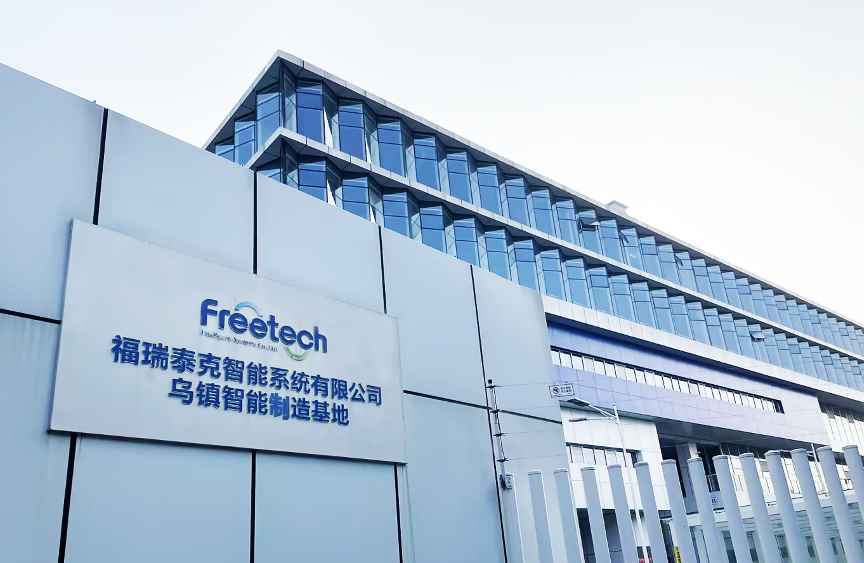
Freetech is applying related sensing and decision-making capabilities to intelligent driving. The company develops intelligent-driving systems and 4D imaging radar for passenger and commercial vehicles, and said its technology has been selected for hundreds of vehicle programs.

Its ODIN AI platform supports products at different levels of driving automation. The radar is designed to complement cameras in heavy rain, fog, darkness and abrupt changes in light, including when vehicles enter or leave tunnels.

At its intelligent-manufacturing base in Wuzhen, Freetech is also using AI in production. An in-house system reads customer orders and calculates the components and materials needed for each production line before manufacturing begins. The company said the system has increased overall efficiency by more than 20%.

“Transportation combined with a specialized function will be an important direction for the future,” said Dr. Zhang Lin, Freetech’s founder and CEO.

Freetech sees potential applications beyond passenger vehicles, including robots, elder-care vehicles, mining equipment and agricultural machinery.

Beyond mobility, Tongxiang firms are using AI to address the complexity of industrial operations. Founded in 2019, Shuhan Technologies provides on-premises industrial AI for chemical plants, energy facilities and wastewater-treatment systems. Its AI-driven control layer continuously ingests data from central control systems and field sensors, identifies dynamic conditions and autonomously adjusts operating parameters in real time.

“Fundamentally, all industrial process challenges can be framed as control and optimization problems,” said Zhai Zhengjun, Shuhan’s Chief Technology Officer.

At a coal chemical plant with annual capacity of 1.2 million metric tons, Shuhan said its system reduced raw-material consumption by 6%. The company estimated that the deployment generated more than 176 million yuan, or about $26 million, in annualized economic benefits and reduced carbon emissions by more than 500,000 metric tons.

SENAD is targeting bottlenecks in logistics operations, including loading, unloading, sorting and pallet handling. It develops autonomous loading and unloading robots, as well as a multimodal logistics model called Robot Insight, for sectors including beverages, tobacco, consumer goods, pharmaceuticals and logistics.

Tongxiang’s AI sector also includes companies addressing the infrastructure needed to run increasingly powerful computing systems. SynthCool is tackling a basic constraint of the AI boom: heat.

SynthCool develops two-phase liquid-cooling systems to address the heat generated by increasingly powerful processors. Inadequate cooling can trigger thermal throttling, reducing performance and energy efficiency.

“Heat dissipation is infrastructure,” said Zhu Zhijiang, SynthCool’s general manager.

SynthCool’s two-phase cooling technology uses the latent heat of vaporization to remove heat from processors. The cooling fluid absorbs heat and boils into vapor, which is then condensed back into liquid and recirculated.

Depending on ambient conditions and system design, two-phase cooling can also support free cooling and reduce reliance on compressor-based refrigeration. Waste heat may be recovered where temperatures and local demand make reuse practical.

According to SynthCool, its technology supports heat dissipation of more than 3,000 watts per chip and heat flux above 250 watts per square centimeter. Under comparable cooling requirements, the system requires approximately one-third of the flow needed by conventional single-phase water-cooled cold plates, helping reduce piping requirements and pumping demand.

SynthCool’s portfolio includes two-phase direct-to-chip and immersion cooling solutions, along with distribution units and control systems for AI data centers.



Continue Reading

Events

Huawei Commits to Advancing an Intelligent, Green Europe with Customers and Partners

Published

on

Huawei

FLORENCE, ITALY – Media OutReach Newswire – 16 October 2026 – The 11th Huawei Connect Europe was held today in Florence, Italy. Adolfo Urso, the Italian Minister of Enterprises and Made in Italy, Eugenio Giani, President of the Tuscany Region, Italy, and Sara Funaro, Mayor of Florence, delivered remarks at the event.

Thousands of attendees, including industry leaders, technology experts, and partners from around the globe, gathered at the event to explore how digital technologies such as artificial intelligence (AI) will accelerate Europe’s twin digital and green transition under the theme “Advancing Intelligent & Green Europe”.


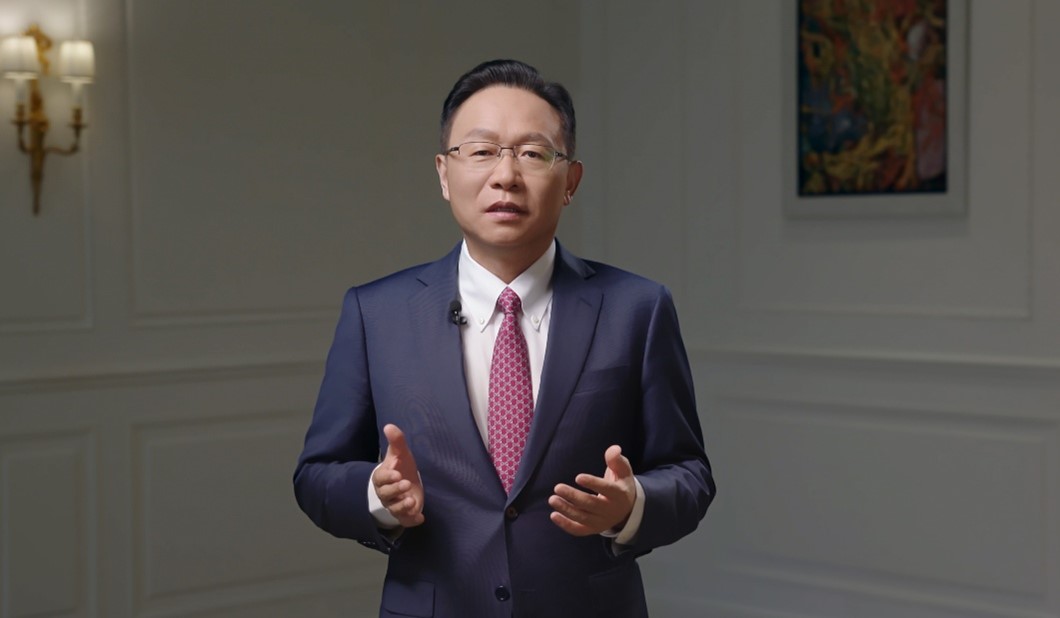
David Wang, Deputy Chairman of the Board and Rotating Chairman at Huawei, said in his opening keynote: “As Europe’s digital and green transitions continue to progress, Huawei is working with over 5,000 partners to solve real customer challenges through technological innovation. The intelligent world is coming, faster than ever, and industries across Europe are preparing for a major leap in productivity, powered by AI and other advanced technologies. Huawei has been and will remain in Europe, for Europe. Working alongside customers and partners, we are committed to open collaboration to seize opportunities, driving shared success and helping build a more intelligent, greener Europe.”

– Building a customer-centric “Huawei + Partners” collaboration system for a sustainable future in Europe

Leo Chen, Huawei’s Senior Vice President and President of Enterprise Sales, also spoke at the event, explaining the company’s strategy for the European market: “Huawei is in Europe, for Europe. We dive into local customer needs and turn technology into action to drive Europe’s twin green and digital transition.”

Chen went on to explain that Huawei has two focuses in the region, developing innovative products and solutions tailored to local industry scenarios, and empowering local partners to better serve European customers.

Building on the company’s existing “Huawei + Partners” collaboration system, Huawei additionally launched the SCALE framework for Europe at this event. This framework covers five key initiatives: Scenario-based Solutions, Co-Innovation, Aligned Marketing, Local Service, Consistent Quality, and Efficient Collaboration. These initiatives are aimed at helping local partners innovate around customer needs, integrate Huawei solutions into their offerings more easily, and improve their service capabilities.

Other guests who spoke at the event on their own insights into Europe’s twin transition strategy and intelligent industry practices included: Pierre Francois Rudant, Head of Technology, Auchan Retail; Federico Ascoli, Head of Platforms, Extended Group Management Board, Also; Sergio Grassi, a Country Manager of Zeliatech and Chief Revenue Officer for Value, Green and Services of Esprinet Group Italy; and Marcel Poser, Co-founder, Screening Eagle Technologies.

For more details, see the official website of HUAWEI CONNECT 2026 * FLORENCE: https://www.huawei.com/eu/events/huaweiconnect-florence
The issuer is solely responsible for the content of this announcement.


Continue Reading

Trending