Connect with us
Anglostratits

Tech

Blending Heritage and Innovation, China’s Shangcheng District Hums with Dynamic Vitality

Published

on

Google

HANGZHOU, CHINA – Media OutReach Newswire – 23 June 2026 – On June 1, the Google Cross-border E-commerce Acceleration Center announced its upcoming settlement in Shangcheng District, Hangzhou City, east China’s Zhejiang Province. This marks that Shangcheng has taken the lead in building a world-class digital hub to support local enterprises in going global. It will also serve as a powerful engine for Hangzhou-based businesses to expand into global markets, according to the information office of Shangcheng District government.

Shangcheng District is a place where time-honored cultural heritage blends perfectly with the rhythms of the modern era. Here, the profound heritage of the Southern Song imperial city, robust momentum of cutting-edge scientific and technological innovation, and vibrant international consumption thrive side by side. History converges with the future, and culture complements technology and fashion, composing a harmonious melody that spans thousands of years.

Home to the ruins of the Southern Song imperial city, Shangcheng has been the core of Hangzhou since the Sui and Tang dynasties, carrying forward the elegant Song-style culture for over 800 years. In recent years, the local government has fully advanced the initiative to inherit and promote Song-style culture. It has built an open-air museum and launched a number of cultural tourism routes themed on Song aesthetics, advancing the coordinated development of historic district preservation and urban renewal.

Qinghefang Historical and Cultural Characteristic Block still retains the architectural layout of the Ming and Qing dynasties. The timeless herbal aroma of Hu Qing Yu Tang Chinese Pharmacy and the exquisite fan craftsmanship of Wang Xing Ji have been passed down through generations. Guided by the philosophy of living heritage, the millennia-old culture has become the deepest foundation for Shangcheng’s development.

Scientific and technological innovation acts as the core driving force for Shangcheng’s high-quality development. In 2025, the district launched the construction of a Central Innovation District (CID) to unleash new productive forces. Covering an area of 122 square kilometers, the entire district has evolved from a traditional commercial center into an innovation ecosystem powered mainly by artificial intelligence.

Shangcheng has set up a ten-billion-yuan industrial fund for artificial intelligence and embodied intelligence, providing financial support for cutting-edge tech enterprises from R&D to commercialization. The district is home to more than 50,000 college graduates under the age of 35, with a total talent pool of 420,000. Its index for the commercialization of scientific and technological achievements ranks among the top tier in Zhejiang Province.

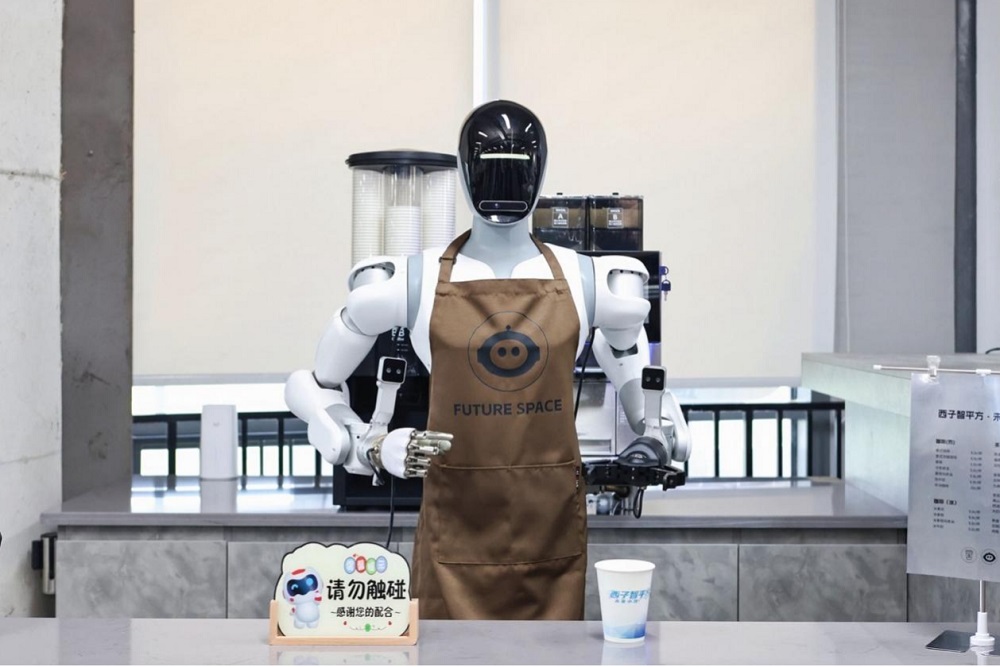
Driven by this strategy, a host of innovation platforms have flourished. Renovated from old industrial workshops, Xizi Smart Industrial Park stands as a landmark in Shangcheng’s tech landscape. It now gathers over 30 humanoid robot enterprises, and the Zhejiang Humanoid Robot Training Base was officially inaugurated here in early 2026. At the base, humanoid robots have been put into use in factories and daily scenarios, with continuous breakthroughs made in core technologies such as motion control and environmental perception.

The integration of time-honored culture and advanced technology has also given rise to booming international consumption in Shangcheng. The district is speeding up the development of an international fashion and consumption hub and empowering consumption scenarios with digital technologies, steadily striving to become the leading district for digital and smart fashion consumption.

Adjacent to West Lake, Hubin Pedestrian Street attracts 40 million visits annually and houses over 1,200 renowned domestic and international brands. Digital and smart applications have been widely introduced here to create distinctive experiences, bringing technological fun to ordinary consumption.

As one of China’s most influential garment distribution hubs, Sijiqing Fashion Street is undergoing a full transformation into an international tourist and consumption destination. Digital design and flexible manufacturing have reshaped its traditional supply chains, while original designer brands and trendy cultural venues inject youthful vitality into the area. A new international landmark featuring strong commercial appeal and unique cultural charm is taking shape.

“Rooted in history and culture, driven by scientific and technological innovation, and connected via international consumption, Shangcheng demonstrates to the world how an eastern urban district strikes a balance between preservation and innovation, enabling millennia-old heritage to write a new chapter in the contemporary era,” said an official of the district government.
 

Business

Huawei Wireless Unveils Innovation Breakthroughs to Pioneer New Communications Networks

Published

on

Huawei

The innovation breakthroughs for pioneering new communications networks include RetinaMIMO, new materials, and OSCAR solution among other root technologies. By tackling coverage, energy consumption, and capacity challenges, the breakthroughs drive ubiquitous experience, simplified and green networks, and superior spectral efficiency. The breakthroughs have unlocked a wealth of new capabilities, including the world’s first commercial U6 GHz device VitaAAU, GigaGreen Plus series, and UBBPi series.
Huawei promotes A2A-T standards and drives commercial open-source OpenAN through extensive partnerships to build an open telecom agent ecosystem.


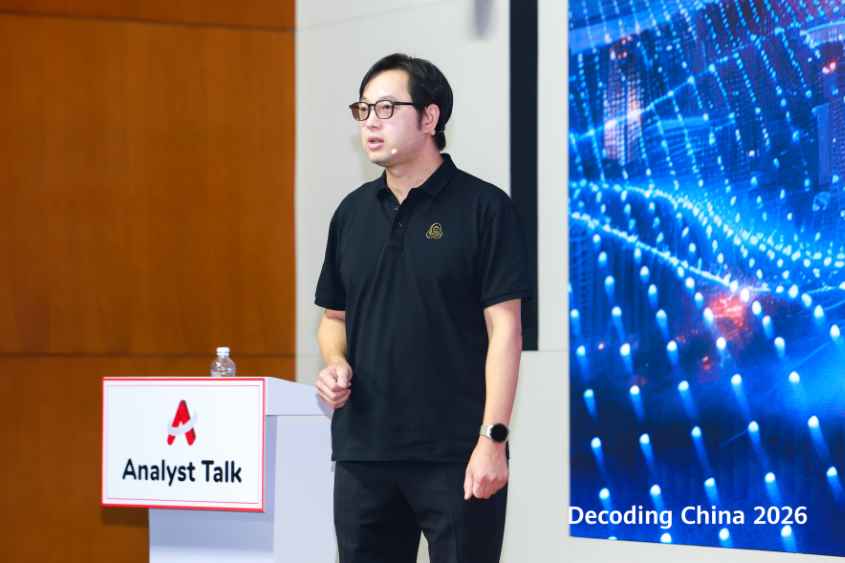
SHANGHAI, CHINA – Media OutReach Newswire – 29 October 2026 – At Huawei Decoding China 2026, Fang Xiang, Corporate Vice President and President of Wireless Network Solution of Huawei, unveiled a series of innovation breakthroughs to pioneer new communications networks. The innovation breakthroughs mark major leaps in root technologies focused on ubiquitous experience, simplified and green networks, and superior spectral efficiency. With the breakthroughs, Huawei has launched the world’s first commercial U6 GHz device VitaAAU, GigaGreen Plus series, and UBBPi series. Additionally featuring the new progress in open ecosystem for telecom agents, the breakthroughs will lay a solid foundation for new communications networks.

With booming intelligent devices and services, new devices, traffic, and applications are taking shape in the mobile industry. The new devices are expanding network connectivity from people to things and agents, increasing the number of connections by 100 times. Device-cloud synergy for intelligent services calls for stronger uplink capabilities to support training and inference, shifting network focus from downlink dominance to both uplink and downlink. With new applications, come a diversity of new interaction modes, calling for higher standards in experience and driving networks to support ubiquitous steady ultra-low latency with a high reliability.

As the world steps into an intelligent era, the value of connectivity is not only about quantity—it’s more about quality. This has been inspiring Huawei to convert cutting-edge breakthroughs into the commercial practices of new communications networks by focusing on root technologies for ubiquitous experience, simplified and green networks, and superior spectral efficiency.

Pioneering ubiquitous experience

RetinaMIMO is a new pioneering technology designed to solve the challenge of concurrent ultra-high bandwidth and ubiquitous coverage. It features the industry’s first Retina scanning system that allows RF link topologies to be reconstructed to eliminate coverage collapse in the vertical direction. It also adopts a reconstructed antenna array architecture to address the diminishing marginal gains as array elements (AEs) increase.

Based on RetinaMIMO, Huawei has launched the world’s first commercial U6 GHz device VitaAAU. Compared with similar products with 1024 AEs, VitaAAU widens coverage by about 30%, enabling U6 GHz to match C-band in both horizontal and vertical directions. This enables operators to deliver U6 GHz coverage for new communications networks on their C-band sites, minimizing overall TCO. To date, VitaAAU has seen commercial adoption in the UAE and other markets, with peak downlink speeds exceeding 10 Gbps, making ubiquitous premium experience a reality.

Pioneering simplified, green networks

Huawei’s pioneering EP power amplifier (PA) architecture capitalizes on new materials and technologies to solve the problem of energy efficiency decline on higher frequency bands, maximizing energy conversion efficiency. The industry’s first-ever multimode dielectric filters allow antennas to have small dimensions and low power consumption on multi-channel networks with high frequency bands. Powered by new materials, technologies, and architectures, VitaAAU antenna is reduced to 1.5 m in diameter while supporting “0 Bit 0 Watt 0 Loss”, delivering superior energy saving efficiency. These innovations enable Huawei’s GigaGreen Plus series products to achieve significant reductions in dimensions, weight, and power consumption, better positioned to power simplified and green networks.

Pioneering superior spectral efficiency

Multi-band, multi-cell, and multi-user interference is a major restrictive factor of capacity. The time scaling of the Tau (τ) law is introduced to base stations for the first time to realize optimal dynamic resource scheduling across all domains based on the OSCAR solution. With low-latency bus and high-speed interconnect technology, a high-speed architecture is built to enable the real-time exchange of massive data. Thanks to software and hardware synergy, new UBBPi series products improve average user experience by 1.3 times while reducing power consumption by approximately 40%, further improving spectral and energy efficiency.

Pioneering open-source autonomous networks

Autonomous networks have emerged as an inevitable choice to deal with the growing AI services and increasing network complexity. RANSpirit is another industry first from Huawei, implementing single-domain network autonomy based on the telecom foundation model and digital twins. To date, RANSpirit is serving more than 1.2 million cells across 25 networks around the world, providing assistance to more than 2,000 engineers.

Extensive agent collaboration relies on an open, win-win ecosystem. This galvanizes Huawei to join industry partners to develop ecosystem standards, communities, and industry alliances. In terms of standards, Huawei adapts to the TM Forum, building a cross-agent foundation on the A2A-T standard and framework agreed upon by the industry. In terms of communities, Huawei jointly promotes neutral open-source communities and donates open-source agent components to the Linux Foundation, driving global collaboration and innovation. With regard to industry alliances, Huawei has taken the initiative to pool ecosystem strengths to accelerate business implementation based on the GSMA industry platform.

Fang concluded with the reiteration of Huawei’s unswerving pursuit of dual-drive innovation to promote new breakthroughs in mobile networks and work with partners from around the world to deepen the OpenAN ecosystem, advancing new communications networks through technological innovation and open collaboration.

FAQs

Q1: Why is it challenging to balance ultra-high bandwidth and ubiquitous coverage?

Ultra-high bandwidth depends on higher frequency bands. As we know, a higher frequency leads to a greater propagation loss of electromagnetic waves and a weaker ability for them to penetrate obstacles, because high-frequency signals attenuate fast and have short coverage distances, while ubiquitous coverage requires signals to travel a long distance in complex environments. Inherently, the two priorities pull in sharply opposite directions.



Continue Reading

Business

Cassava Technologies becomes an authorised reseller of Claude on Amazon Bedrock

Published

on

The agreement allows Cassava to give organisations across Africa another route to access these capabilities, helping them adopt AI technology more easily as they prepare for future growth

LONDON, United Kingdom, October 27, 2026/APO Group/ –Cassava Technologies (www.CassavaTechnologies.com), a global technology leader, has become authorised to resell access to Anthropic’s Claude models through Amazon Bedrock.

Claude is Anthropic’s state-of-the-art large language model, offering features like advanced reasoning, vision analysis, code generation, and multilingual processing. The agreement allows Cassava to give organisations across Africa another route to access these capabilities, helping them adopt AI technology more easily as they prepare for future growth.


Our goal is simple, advanced AI within reach of every business, government, researcher, entrepreneur and university across the emerging markets globally

“What matters to our customers is being able to use AI in their business, and that starts with access to the best models. Bringing Anthropic’s Claude to them through Amazon Bedrock delivers on this need, which is supported by the infrastructure, partnerships and services African businesses need to adopt them responsibly and take a greater part in the digital economy. Our goal is simple, advanced AI within reach of every business, government, researcher, entrepreneur and university across the emerging markets globally,” said Hardy Pemhiwa, President and Group CEO of Cassava Technologies.


Through Amazon Bedrock, organisations can access Anthropic’s Claude models and incorporate them into their own applications and services. Cassava’s authorised reseller status gives African customers a way to access Claude through a local partner focused on serving businesses across the continent.


Through its digital ecosystem, which encompasses connectivity, cloud, cyber security and AI solutions, along with a continent-wide data centre footprint, Cassava is investing in the infrastructure and solutions needed to support the wider adoption of artificial intelligence across Africa.

Distributed by APO Group on behalf of Cassava Technologies.


Continue Reading

Business

Idris Elba’s Akuna Group launches free Artificial Intelligence (AI) filmmaking programme for creators in five African countries, in collaboration with Google

Published

on

Over fifty weeks, selected creators will move from a twelve-week academy into mentoring, pitching and production; Selected funded teams will make their films, which will be showcased in October 2027

Creators need a route from the classroom to the screen, and this programme carries them all the way, from their first application to a finished, funded film

FREETOWN, Sierra Leone, October 26, 2026/APO Group/ —An AI filmmaking programme for African creators opens today in Ghana, Kenya, Nigeria, Sierra Leone and South Africa. Applications are live at (https://AkunaLearning.com).

Akuna Learning, from The Akuna Group, chaired by Sir Idris Elba, today opened applications for From Script to Screen with AI, a free programme that equips eligible African creators to tell stories on screen leveraging artificial intelligence. Delivered in collaboration with Google and supported by US$1 million funding from Google.org, with curriculum developed by Curious Refuge, the programme is open to aspiring filmmakers in Ghana, Kenya, Nigeria, Sierra Leone and South Africa.


Applications are open now at (https://AkunaLearning.com) and close on 15 November 2026. The programme is free to apply and, for those selected, free to attend.

Over fifty weeks, selected creators will move from a twelve-week academy into mentoring, pitching and production. Selected funded teams will make their films, which will be showcased in October 2027. Creators will maintain control of their work, with no claim of ownership rights by the programme or partners running it.

From foundation to funded film

Every participant will complete a foundational course in AI filmmaking; then participants will be able to choose to specialise in one of five creative pathways:

  • Fiction: narrative filmmaking and scripted storytelling, from short film to series.
  • Documentary: real-world stories and factual filmmaking.
  • Animation: animated storytelling, motion design and visual world-building.
  • Advertising: branded storytelling, commercial content and creative campaigns.
  • Screenwriting: script development, dialogue and structure, writing from page to screen.

The programme is structured in five stages:

  1. Applications & Selection (October 2026 to January 2027). One open call across all five countries, closing on 15 November 2026, with review panels in each country and a final panel looking across all five.
  2. Learn & Get Certified (February to April 2027). Twelve weeks of online training with Curious Refuge, with weekly Akuna facilitation, in-person meet-ups in every country and certification at the end.
  3. Get Mentoring (April to June 2027). Graduates put forward their own one-page ideas. Shortlisted idea owners build teams, which then spend four weeks with mentors and subject experts.
  4. Pitch Your Film (June to July 2027). Mentor-endorsed teams pitch to panels drawn from Akuna, Google and the wider industry. Selected projects are funded.
  5. Produce Your Film (July to October 2027). Funded teams make their films with creative and technical support, then take them to festivals and showcases. The programme is for aspiring and emerging visual storytellers: filmmakers, screenwriters, animators, advertisers, digital content creators, photographers, designers, editors and visual artists. Applicants do not need AI experience, a film school qualification or a set number of years in the industry.


Sir Idris Elba, Chairman of The Akuna Group, said: “For me, this is about learning. This is about access to courses that help educate creators across the continent to tell their stories. Through Akuna Learning, we’re partnering with Google and Curious Refuge on ‘From Script to Screen with AI’, a remarkable training and mentorship programme teaching African filmmakers to use AI tools. Selected projects will receive production funding, and creators will retain control of their work. I’m looking forward to seeing the stories they choose, and how the education leads to employment and self-momentum, but helps shape the narrative of Africa.”

Khaled Gad, Chief Executive Officer of The Akuna Group, said: “Training on its own does not build an industry. Creators need a route from the classroom to the screen, and this programme carries them all the way, from their first application to a finished, funded film. It opens on the same day and runs to the same standard in all five countries. You do not need a film school background or any experience with AI to apply. You need finished work that shows what you can do, and your application in by 15 November.”

How to apply

Applications are submitted online at (https://AkunaLearning.com) between 26 October and 15 November 2026. Applicants must:

  • physically reside in Ghana, Kenya, Nigeria, Sierra Leone or South Africa;
  • be 18 or older on the date of application;
  • have access to a laptop, reliable internet and consistent power for the duration of the programme;
  • be able to commit fully to the twelve-week academy from February to April 2027, and to the later stages if they progress.

Applicants should include existing creative work, however modest, that shows their talent and commitment. Women are strongly encouraged to apply.

Distributed by APO Group on behalf of The Akuna Group.


Continue Reading

Trending