Connect with us
Anglostratits

Business

Unstoppable Africa 2025: Africa’s Artificial Intelligence (AI) Ambitions and Digital Future Go Global

Published

on

Africa

Global Africa Business Initiative highlights groundbreaking projects shaping Africa’s digital and financial future

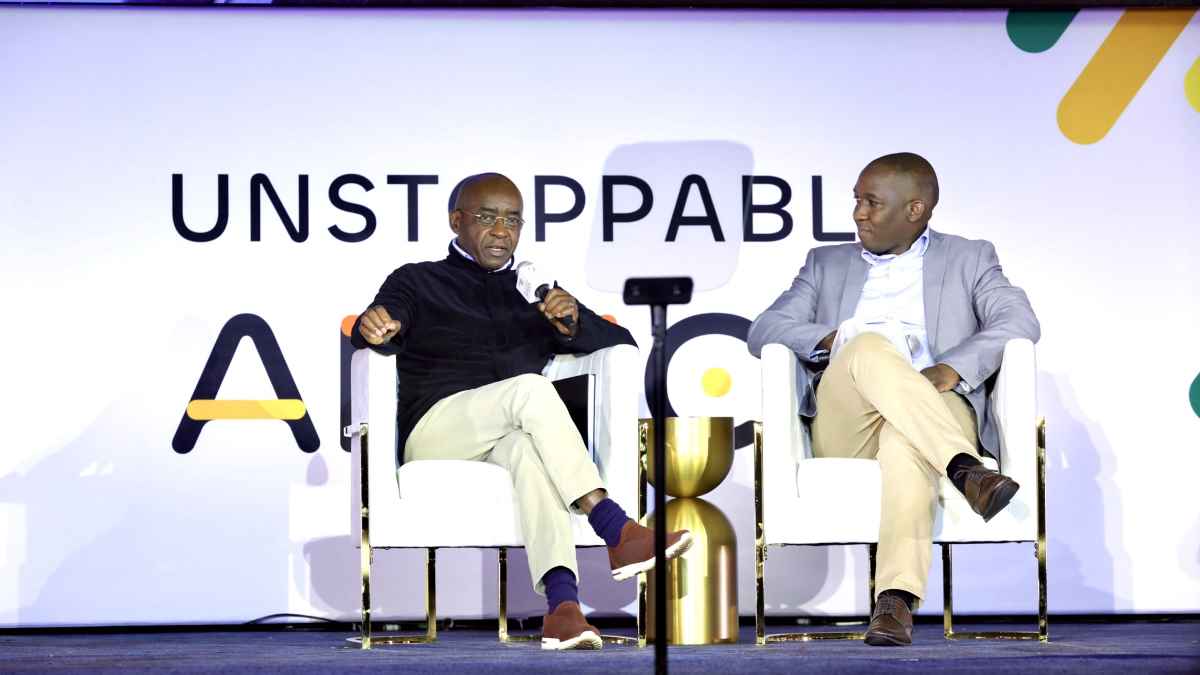
NEW YORK, United States of America, September 23, 2025/APO Group/ –Major projects and initiatives that are set to position Africa at the heart of global innovation, notably the expansion of the continent’s AI infrastructure, were announced today at Unstoppable Africa 2025 in New York as CEOs convened to discuss Africa’s place in the global economy. This marks a significant step in enabling the continent’s stakeholders to develop local AI solutions designed to address some of Africa’s most pressing challenges.

Zimbabwean billionaire, Founder and Executive Chairman of Econet Global and Cassava Technologies, Strive Masiyiwa, announced that steps are underway to establish Africa’s first network of AI factories. Powered by NVIDIA GPUs, the facilities will be completed by the end of 2026, setting the stage for homegrown innovation and accelerating Africa’s participation in the global AI economy.

Another announcement came from Meta, presented by Kojo Boakye,Vice President,  Public Policy Director for Africa, Middle East & Turkey. The company signalled upcoming investment opportunities in Africa’s digital ecosystem, highlighting its confidence in the continent’s growing tech and AI potential.

These initiatives reflect a shift toward locally led solutions and long-term planning, with a focus on robust systems, adoption of advanced technologies, and capital investment to drive regional integration and global competitiveness.

The second day of Unstoppable Africa 2025, flagship event of the Global Africa Business Initiative (GABI), united business leaders, African heads of state, global investors, and international institutions to accelerate the continent’s economic transformation. New commitments in infrastructure, advanced technologies and investment highlighted growing confidence in Africa’s private sector.

Africa’s resilience is about how we build on what we have and how we strengthen our markets, our economies and our democracies

In the financial services sector, the Africa Finance Corporation (AFC) in collaboration with African Pension and Social Security Institutions launched the  ’Africa Savings for Growth’ initiative to explore ways to channel African institutional savings into longer-term investments that support inclusive growth. The continent-wide initiative builds on AFC’s 2025 analysis identifying at least $1.17 trillion in institutional assets across Africa, much of it still allocated to short-term, low-yield instruments.

The Global Africa Business Initiative launched two new GABI Action Pathways focused on digital transformation and healthcare aiming to connect businesses, governments, and innovators working in sectors critical to Africa’s competitiveness and resilience.

The Healthcare Action Pathway aims to improve access to medical services through digital tools, build stronger regional supply chains, attract investment, and support the growth of Africa’s healthcare workforce. The Digital Transformation Action Pathway focuses on upgrading government services, expanding internet access and digital infrastructure, training people for future jobs, helping small businesses with tech and funding, and promoting responsible use of AI and data.

Discussions on Day Two focused on new partnerships, Africa’s digital growth, and the continent’s thriving sports and creative industries, including music and fashion.

The forum concluded by highlighting Ava DuVernay, acclaimed director, screenwriter, producer, and founder of ARRAY; 15 year-old Ellyanne Wanjiku Chlystun-Githae, Climate & Health Champion at Seeds for Leadership; Mpumelelo Tevin Mhlongo, Paralympic champion and triple world record holder; Marcus Samuelsson, chef, restaurateur, and author; and international singer-songwriter, Tiwa Savage, who also performed at the end of the event. Their inspiring contributions echoed the forum’s central message of empowerment, innovation, and sustainable progress across the continent.

Closing the forum, Deputy Secretary-General of the United Nations, Amina J. Mohammed said, “When people say Africa is resilient, they’ve got a different definition to resilience than we have. Africa’s resilience is about how we build on what we have and how we strengthen our markets, our economies and our democracies and I believe that the values and principles that we all hold are important. Unstoppable Africa is a space to remind ourselves that this is who we are, it is our narrative, on our terms that we go forth.”

Unstoppable Africa is the leading African business forum held outside the continent. Hosted by United Nations Secretary General António Guterres and H.E. Mahmoud Ali Youssouf, Chairperson of the African Union, the event took place just ahead of the 80th session of the UN General Assembly in New York. Unstoppable Africa aims to accelerate the continent’s economic transformation and empower Africa to take a leading role in shaping the markets of the future.

Distributed by APO Group on behalf of Global Africa Business Initiative.

Business

Afreximbank supports Veenocks’ US$145 million project for industrial expansion and regional growth

Published

on

Afreximbank

PPF-funded studies enabled Veenocks to broaden its medium-term regional growth plans, while a US$81.9 million senior loan supports an expansion expected to triple annual production capacity

CAIRO, Egypt, November 2, 2026/APO Group/ –African Export-Import Bank (Afreximbank) (www.Afreximbank.com) has supported the development and expansion of Veenocks Limited’s porcelain tile manufacturing plant in Sagamu, Ogun State, Nigeria, through its Project Preparation Facility (PPF) and a US$81.9 million senior term loan. The project has a total estimated cost of US$145 million.


Afreximbank and Veenocks signed a US$2 million project preparation facility agreement in August 2024 to finance technical, commercial, financial, legal, environmental and social studies needed to establish the project’s bankability.

The studies financed through the PPF, complemented by Afreximbank’s pan-African experience, enabled Veenocks to broaden its growth ambitions beyond its primary focus on the Nigerian market. This support informed the company’s plans to pursue regional opportunities over the medium term, with target markets including Togo, Benin, Burkina Faso, Niger, Cameroon, Ghana, Mauritania and Senegal.

The Bank’s US$81.9 million senior term loan supports implementation of the plant’s expansion, providing financing for investment in additional manufacturing capacity. The expansion is expected to increase the plant’s total annual production capacity from 3.3 million to 9.9 million square metres, creating a stronger production base to meet domestic demand and pursue regional opportunities.

Veenocks demonstrates how project preparation, commercial expertise and senior debt financing can support African industrial investment

The existing plant employs more than 200 people directly. The expansion is expected to create an additional 300 direct jobs, alongside indirect employment across raw material supply, logistics and distribution.

The preparation financing has been fully repaid from senior debt, completing the PPF’s funding cycle for Veenocks and replenishing capital to support further projects.

Mrs. Kanayo Awani, Executive Vice President, Intra-African Trade and Export Development, Afreximbank, said:

“Veenocks demonstrates how project preparation, commercial expertise and senior debt financing can support African industrial investment. The studies financed through Afreximbank’s Project Preparation Facility have helped strengthen the project’s bankability and broaden the company’s regional growth ambitions. Our senior debt financing supports the plant expansion needed to convert those ambitions into increased productive capacity, and stronger foundations for intra-African trade.”

Mrs. Awani added: “Full repayment of the preparation financing ensures capital is available to support more indigenous African investors and projects. This is the PPF’s revolving model in practice: the funds that have been repaid are used to support initiatives that add value to local resources and expand manufacturing.”

Mr. Adebisi Abidemi Adebutu, Group President of R28 Holdings, the parent company of Veenocks Limited, said:

“This investment represents an important step towards our ambition of building a globally competitive manufacturing business in Nigeria, producing world-class tiles to European quality standards and reducing Nigeria’s dependence on imported tiles. The PPF was instrumental in broadening our growth plans and positioning us to penetrate regional markets over the medium term. With Afreximbank’s financing, we can now deliver the expansion phase of this project. The facility will allow us to add value to Nigeria’s raw materials, create quality jobs and increase the supply of our porcelain tiles, manufactured here in Nigeria, to customers at home and across the region. Our vision is to set the global benchmark for quality in tile manufacturing and to become Africa’s first choice for porcelain tiles.”

Distributed by APO Group on behalf of Afreximbank.


Continue Reading

Energy

Energy costs, storage value and industrial competitiveness led Day 2 of C&I Energy + Storage Summit

Published

on

Energy

Energy security, industrial competitiveness and infrastructure readiness emerged as closely connected priorities, with discussions highlighting what businesses need to turn investment plans into operational gains

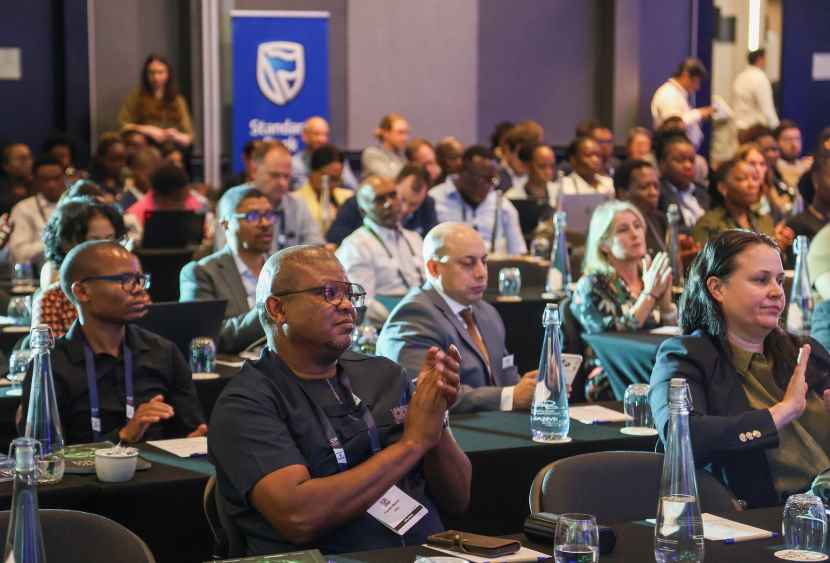
JOHANNESBURG, South Africa, November 2, 2026/APO Group/ –How can South African businesses turn energy investment into lower operating costs, stronger resilience and long-term competitiveness? This question drove the second day of VUKA Group’s (https://WeAreVUKA.com/) C&I Energy + Storage Summit in Johannesburg, with discussions examining the commercial value of storage, industrial energy strategies and the infrastructure needed to support Africa’s growing digital economy.


The programme brought together business leaders, energy specialists, financiers and public-sector representatives to address practical decisions facing commercial and industrial users, alongside the EIUG Conference, Water Security Africa and Data Centre Summit.

Energy security, industrial competitiveness and infrastructure readiness emerged as closely connected priorities, with discussions highlighting what businesses need to turn investment plans into operational gains.

Energy storage featured prominently, with panellists examining how tariff optimisation, peak shaving and renewable energy integration can strengthen its value beyond backup power. The investment case, however, needs to account for battery degradation, warranties and operational risk.

Addressing the attendees, Junaid Munshi, Group Executive: Distribution for Eskom told the audience: “For an industrial business, solar and storage can improve the energy cost position. But the opportunity extends beyond the customer’s electricity bill. Where network capacity is constrained, coordinated battery use may relieve pressure on the infrastructure serving that business and, where proven technically dependable, could defer or reduce grid investment. The asset behind your meter can therefore also become a resource beyond it.”

The asset behind your meter can therefore also become a resource beyond it

The EIUG session “Industrialisation under threat?” put changing electricity consumption under scrutiny, asking whether lower demand reflected efficiency gains or weakening industrial output. Tariffs, investment conditions and industrial growth remained central to the discussion, highlighting the need to assess energy trends against the health of the wider economy.

At the Data Centre Summit, Africa’s AI ambitions brought power availability and infrastructure readiness into focus. Discussions on grid access, wheeling and network investment highlighted the importance of planning digital growth alongside the electricity infrastructure needed to sustain it.

For businesses developing energy projects, public-private engagement sessions explored infrastructure co-investment, municipal coordination and workable wheeling agreements.

Water Security Africa reinforced the wider resource-security challenge through industrial resilience case studies, digital water technologies and lessons from case studies.

Across the discussions, the practical message was consistent: competitive businesses need more than access to technology and capital. They also need reliable infrastructure, workable commercial arrangements and coordinated delivery.

The afternoon programme translated these themes into business decisions. “The C&I energy playbook” drew together insights from across the summit, while the closing “decision clinic” addressed real project challenges, from choosing between onsite solar and wheeled power to sizing batteries and preparing projects for financing. Experts from DBSA, Standard Bank, SustainableDNA and the City of Tshwane contributed practical guidance.

Download the programme to review the full Day 2 agenda and participating speakers: https://apo-opa.co/4eEKq9a

Distributed by APO Group on behalf of VUKA Group.


Continue Reading

Business

Smarter power systems bring new demands for integration, security and infrastructure

Published

on

Digitalisation

CAPE TOWN, South Africa, November 2, 2026/APO Group/ —

Digital technologies are changing how power systems are monitored and developed, but their value depends on how effectively they can be integrated into existing infrastructure.

Utilities and energy organisations are working with a growing range of connected technologies, including smart meters, Internet of Things (IoT) devices and artificial intelligence (AI). These tools create opportunities to improve access to system data and support more informed operational decisions.


Introducing them into established power environments, however, raises questions around legacy integration, system security and the infrastructure required to support greater connectivity. Organisations must consider how new digital capabilities will interact with existing assets, processes and technology platforms.

The expansion of data centres adds another dimension to this discussion. As AI and digital services develop, the energy and infrastructure requirements associated with processing and storing data are becoming part of the wider conversation about Africa’s digital ambitions.

These interconnected issues are explored in the Industry Insights Smart Solutions Volume, published by ESI Africa as created by VUKA Group. The volume examines the opportunities and challenges associated with digitalisation, IoT, AI and smart metering in power and energy systems, alongside the industry implications of data centre growth.

Download the Industry Insights Smart Solutions Volume (https://apo-opa.co/4eePfWx)

Connecting established infrastructure with smart technology

For many utilities and infrastructure operators, digital transformation must take place alongside systems and assets already in operation. The challenge is to introduce smarter capabilities without overlooking the security, compatibility and operational considerations associated with established infrastructure.

The ESI Africa on-demand webinar Securing the bridge between legacy and smart extends this discussion by considering the relationship between legacy environments and emerging smart systems.

Watch Securing the bridge between legacy and smart on-demand (https://apo-opa.co/4ktnFsn)

Digital infrastructure also influences the extent to which African organisations can develop and deploy artificial intelligence. Data centres form part of the physical foundation required to support that ambition, connecting questions about technology development with those concerning power and infrastructure.

The webinar The digital infrastructure Gold Rush: What Africa needs to turn its AI ambition into reality considers what the continent requires to develop the infrastructure supporting its AI ambitions.

Watch The digital infrastructure Gold Rush on-demand (https://apo-opa.co/4eePbWN)

Digitalisation becomes part of the wider energy agenda

The practical impact of smart technologies reaches beyond individual devices or software platforms. Digitalisation influences how infrastructure is planned, financed, operated and secured, making it part of the broader conversation about the future of African power systems.

That conversation will continue at Enlit Africa 2027, taking place at the CTICC, Cape Town from 11 to 13 May 2027. The event provides a platform for stakeholders across the energy sector to engage with the technologies, infrastructure priorities and investment considerations affecting the industry.

Pre-register for Enlit Africa 2027 (https://apo-opa.co/4sJQbs8)

Developing investable infrastructure

Africa’s digital and energy ambitions also depend on projects moving from concept towards implementation. This requires project preparation, credible development pathways and connections between project owners and the organisations able to finance or support delivery.

The Project & Investment Network connects African infrastructure projects with investors, financiers and solution providers. ESI Africa’s African Infrastructure Elites is the Host Media Partner of the network, which invites organisations to submit projects and investors to register their interest.

Submit a project or become an investor (https://apo-opa.co/4e6vtN2)

The infrastructure discussion continues

As digital technologies develop, the relationship between smart systems, data centres and energy infrastructure will require continued industry attention. Integration, security, investment and infrastructure capacity will remain central considerations for organisations adopting connected technologies.

The forthcoming Smart Solutions & Data Centres Volume 2027 will continue examining the developments affecting smart technology and the infrastructure supporting Africa’s digital growth.

Join the Smart Solutions & Data Centres Volume 2027 waiting list (https://apo-opa.co/4ziADhn)

Distributed by APO Group on behalf of VUKA Group.


Continue Reading

Trending