



Business
The Africa Private Sector Summit (APSS) has inaugurated new Governance Boards


They were selected in an open, competitive process from Africa’s five regions – Central Africa, East Africa, North Africa, Southern Africa, and West Africa, plus the Diaspora (5+1)
ACCRA, Ghana, February 19, 2024/APO Group/ —
Mr. Kingsley K. Asah, the APSS Board Secretary announced that the newly reconstituted Advisory Board and Board of Directors (Executive Board) of the Africa Private Sector Summit (APSS) LBG (https://AfricaPrivateSectorSummit.org/) were inaugurated on February 12, 2024 in a joint virtual induction and inauguration meeting of both boards. The APSS is a pan-African, private sector-led non-profit organization established to promote intra-African trade and investment and an enabling business environment for the implementation of the African Continental Free Trade Agreement (AfCFTA). APSS is headquartered in Accra, Ghana. https://AfricaPrivateSectorSummit.org/. The board members of the APSS are eminent businessmen, women, and commercial professionals from across the continent. They were selected in an open, competitive process from Africa’s five regions – Central Africa, East Africa, North Africa, Southern Africa, and West Africa, plus the Diaspora (5+1) in alignment with the continent’s regions as formally recognized by the African Union.
Professor Kingsley Moghalu, Chairman of both the Advisory Board and the Executive Board and a former Deputy Governor of the Central Bank of Nigeria, addressed the new Boards, saying, “This is a new dawn for the Africa Private Sector Summit. Effective corporate governance will define our brand and drive our work as we engage with African governments, the continent’s private sector, and other partners to enable the private sector’s driving role in the implementation of the AfCFTA by ensuring that obstacles to doing business on the continent are removed”. https://apo-opa.co/3SN5EpA
The APSS has launched a continent-wide advocacy campaign, which will be supported by high-level and inclusive stakeholder convenings across the continent in 2024, to obtain the adoption of a Charter on the Private Sector Bill of Rights for an Enabling Business Environment (Private Sector Bill of Rights, PSBoR) by the African Union Heads of State and Government at the AU Summit in February 2025. The PSBoR contains 24 specific proposed rights that, if adopted by African leaders and domesticated in national laws and policy, will be a game-changer for trade and investment in the continent and ensure the success of the AfCFTA treaty in practice.
Effective corporate governance will define our brand and drive our work as we engage with African governments, the continent’s private sector, and other partners


The PSBoR rights include security and stable environments for businesses, effective governance, infrastructure to ease the movement of goods, services, and people, education systems that provide young Africans with the skills needed by businesses for competitive productivity, efficient legal systems, and efficient clearing of cargo at ports and other processes of international trade. Other rights include free movement of persons in the continent, the right to efficient tax rules that avoid multiple taxation, the right to equal opportunity for market competition, the right to consultation of the private sector on policy, laws, and regulations that affect them, and the right to do business without engaging in bribery and corruption. https://apo-opa.co/3SK0MS7
The APSS Board induction and inauguration included a brief recap by J. Wendell Addy, founding Chair of the APSS and now a member of the Advisory Board, of the organization’s founding in 2021 and the process that led to the formulation of the Private Sector Bill of Rights with funding support was provided by the United Nations Economic Commission for Africa (UNECA). Dr. Lucy Shuryel Newmann, CEO of APSS, presented the APSS Strategy Plan for 2024-2026, which was adopted by the boards, while the boards also received a presentation of a Corporate Governance Overview by a consulting firm. The combined Advisory Board and Executive Board meeting adopted the APSS Constitution and the APSS Board Charter, which spell out the distinct but connected roles of the Advisory and Executive Boards as well as EXCO. In a corporate governance innovation, both boards are chaired by the same individual to ensure interconnectivity and effectiveness in their functioning, supported by the same board secretary.
Composition of the new APPS Advisory Board: Prof. Kingsley Chiedu Moghalu (African Diaspora) is the Chairman and the following individuals are members by regional representation: Mr. Judson Wendell Addy (African Diaspora), Mr. Benjamin Acheampong (African Diaspora). Kingsley Kweku Nkansah Asah – Board Secretary (West Africa), Mr. Adeyemi Adeyinka (African Diaspora), Dr. Eng. Sherif El-Gabaly (North Africa), Dr. Eugenia Xoliswa Kula (Southern Africa), Mr. Otsile Mphela (Southern Africa), Assoc. Professor Nakijoba Rosemary (East Africa), Mrs. Pheona Nabaasa Wall (East Africa), Mr. Otunba Bimbo Ashiru (West Africa), Mr. Guevera Yao (African Diaspora), Mr. Adama Gaye (West Africa), Dr. M’Zee Fula-Ngenge (Central Africa), Mr. Gerald F.B.Cooper (African Diaspora).
Composition of the new APSS Executive Board: Professor Kingsley Chiedu Moghalu (African Diaspora) is the Chairman, Mr. Kingsley Kweku Nkansah Asah (West Africa) is the Board Secretary, Prof. Sampson Ndoga (Southern Africa), Dr. Jeannine Uwimana-Nicol (East Africa), Mrs. Lesly Priscilla Dacleu Djiengue (Central Africa), Mrs. Mary Concilia Anchang (Central Africa), Dr. Chabuka J Kawesha (Southern Africa), Mrs. Mamotake C. Matekane (Southern Africa), Professor Eunice Ngozi Egbuna (West Africa), Ms. Davisha L Johnson (African Diaspora), Mr. Denis Karera (East Africa), Mr. Jaswinder Bedi (East Africa), Ms. Akuna Cook (African Diaspora), Dr. Lucy Surhyel Newman (West Africa) is the CEO.
Composition of the APSS EXCO: Dr. Lucy Surhyel Newman (West Africa) is the CEO and Chair of EXCO, Mr. Adedayo Dayo-Dunmoye (West Africa), is the Projects Director and Mr. Fortunate Kwiringira (East Africa) is the Technical Director.
Distributed by APO Group on behalf of Africa Private Sector Summit (APSS).















Business
Enlit Africa seeks contributions that move the conversation from strategy to execution: ensuring a Future Fit Africa


Business
CEM Africa Awards 2026 set to recognise Africa’s leading Customer Experience (CX) talent and innovation

The 2025 awards attracted more than 80 entries and 31 finalists, culminating in eight award winners


The calibre of organisations and individuals recognised through the CEM Africa Awards demonstrates just how much extraordinary CX work is being done across the continent
JOHANNESBURG, South Africa, September 25, 2026/APO Group/ –Customer experience professionals, teams and organisations across Africa have just days remaining to enter the 2026 CEM Africa Awards, with free applications closing on 30 September 2026.
Taking place on 10 November 2026 at the NH Hotel in Sandton, Johannesburg, the Customer Experience Africa Awards form part of the CEM Africa platform and recognise the individuals, teams, technologies and initiatives raising the standard of customer experience across the continent.
For organisations considering whether to enter, the company they could be keeping provides a compelling indication of the calibre of the awards.
A growing roll call of African CX leaders
The 2025 awards attracted more than 80 entries and 31 finalists, culminating in eight award winners. Finalists represented organisations spanning financial services, technology, telecommunications, retail, insurance, public services and social impact.
Among them were Absa, Capitec Bank, Santam, Telesure Investment Holdings, Equity Bank, Takealot.com, NTT DATA, Frogfoot, Telviva, Harambee Youth Employment Accelerator, the University of Pretoria and South Africa’s Department of Social Development.
The 2025 winners included Serisha Iyer of Absa Corporate and Investment Banking, named Rising Star in CX; Alma Angela Olela of Jubilee Health Insurance, named CX Leader of the Year; and Franco Cotumaccio of Shadow Global, winner of Breaking Barriers in CX.
Corporate winners included Telesure Investment Holdings for Best Overall CX Solution, Krisp for Best Use of AI, Telviva for Best Enterprise Contact Centre Platform, Harambee Youth Employment Accelerator for Best Customer Experience Team of the Year and the University of Pretoria for Best Citizen Experience Initiative.
That follows a 2024 edition in which winners included NCBA Bank, MultiChoice, Digital Solutions Group, Absa Bank and Telviva, alongside individual CX leaders from across the continent.
More than a trophy
For entrants, recognition through the CEM Africa Awards puts their work in front of a wider African CX community and an independent judging panel drawn from across the industry.
The 2026 judging panel includes global CX specialist Ian Golding; Andrew (Dré) Enebeli, Head of CX & Engagement at Access Bank; Dr Oliver Museka, President and Founder of IRDM College Eswatini; Jonathan Daniels, Managing Director of CX Centric; Joven Pillay, Partner and Head of Customer Consulting at KPMG; and Qaalfa Dibeehi, Managing Partner at Human2Outcome.
This year’s awards recognise excellence across four broad pillars – People, Innovation, Transformation and Government – covering categories including CX Leader of the Year, Rising Star in CX, Breaking Barriers in CX, Best Overall CX Solution, Best Use of AI, Best Enterprise Contact Centre Platform, Best Customer Experience Team of the Year, Best Digital Transformation in Public Services and Best Citizen Experience Initiative.
“The calibre of organisations and individuals recognised through the CEM Africa Awards demonstrates just how much extraordinary CX work is being done across the continent. These awards give that work a platform. Whether it is a major transformation programme, an innovative use of technology or an individual changing how their organisation thinks about the customer, we want to make sure Africa’s best work is being seen and recognised.”
- Briteny Price, Event Manager and CEM Africa Awards Director
Final opportunity to enter
Applications for the 2026 CEM Africa Awards are free and remain open until 30 September 2026. Finalists will be announced in October, ahead of the awards ceremony on 10 November at the NH Hotel, Sandton.
Organisations, teams and individuals working to improve customer and citizen experience across Africa are encouraged to submit their entries before the deadline.
Apply for the CEM Africa Awards 2026 by 30 September 2026
Submit your application (https://apo-opa.co/4hdcimx)
Explore the CEM Africa Awards
Visit the CEM Africa Awards website (https://apo-opa.co/4iNXzzM)
Distributed by APO Group on behalf of VUKA Group.
Business
Emirates to bring the A350 to Nairobi, introducing next-generation cabin experiences


-

 Energy3 days ago
Democratic Republic of the Congo (DRC) Brings Oil Development Push to African Energy Week (AEW) 2026 as Hydrocarbons Minister Leads Sector Agenda
-
Business5 days ago
African Energy Week (AEW) 2026 Technical Sessions Put Technology Behind Africa’s Next Energy Projects in Focus
-
 Business4 days ago
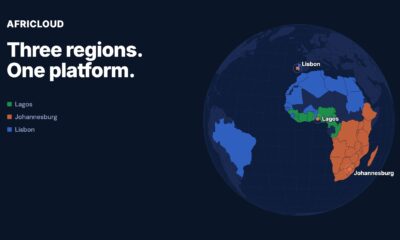
AFRICLOUD Opens Lagos Region and Local-Currency Payments in African Markets
-

 Business3 days ago
Africa Finance Corporation (AFC) Supports Successful Close of ₦729 Billion Series 2 Bonds to Advance Nigeria’s Power Sector Reforms
-

 Business5 days ago
Rising power costs put energy strategy at the centre of industrial competitiveness
-

 Business4 days ago
Hong Kong outlines strategies for deepening development of the Guangdong-Hong Kong-Macao Greater Bay Area and enhancing green transformation
-

 Business4 days ago
Alamein Africa Forum to bring together key political and business leaders
-
Business3 days ago
South Africa’s Orange Basin Gains Momentum as Navitas Takes Block 1 CBK Operatorship