In an industry still affected by unprecedented disruptions and transformations, Stellantis and its dealer network in Europe have strengthened their partnership to improve customer experience and streamline the overall customer journey
AMSTERDAM, Netherlands, November 1, 2023/APO Group/ —
Net revenues of €45.1 billion, up 7% compared to Q3 2022, mainly reflecting improved volume and consistent pricing, partially offset by foreign exchange impacts; Consolidated shipments(1) of 1,427 thousand units, up 11% versus Q3 2022, with Enlarged Europe, Middle East & Africa, North America and South America reporting year-over-year improvements; Total new vehicle inventory of 1,387 thousand units at September 30, 2023. Company inventory of 388 thousand units, up 158 thousand units from December 31, 2022 reflecting a return to more normal levels after a multi-year period of materially-constrained supplies; Tentative agreement reached with both UAW and Unifor. Work stoppages negatively impacted Net revenues by approximately €3 billion, compared to planned production, through October; Global BEV sales up 37% versus Q3 2022 mainly driven by the Jeep® Avenger and growing commercial BEV vehicles sales led by the Citroën ë-Berlingo; The Company repurchased €0.5 billion in shares during Q3 2023. During the nine months ended September 30, 2023, €1.2 billion in shares were repurchased. The Company expects to complete the announced €1.5 billion 2023 Share Buyback Program during Q4 2023. “In the first half of this year, Stellantis (www.Stellantis.com) emerged as the industry leader for AOI, AOI margin, and Industrial Free Cash Flows among its comparable peers. Today, we are focused on maintaining our momentum by delivering industry-leading profitability and cash flows, addressing critical near-term industry challenges, and continuing our electrification and technology transformation. This growth is propelling the execution of our Dare Forward 2030 strategy”: Natalie Knight, CFO.
Stellantis N.V. continued to build momentum in Q3 2023, delivering a 7% year-over-year increase of Net revenues driven by continued strength in shipments. The Company’s “Third Engine”(5) achieved 25% revenue growth year-over-year. Global BEV sales were up 37% versus third quarter 2022, led by the following vehicles: Jeep® Avenger, Citroën Ami, Peugeot E-208, Fiat New 500e, and Citroën ë-Berlingo. Key activities executed to achieve the Dare Forward 2030 strategic plan include:
Care: In an industry still affected by unprecedented disruptions and transformations, Stellantis and its dealer network in Europe have strengthened their partnership to improve customer experience and streamline the overall customer journey. With the signing of over 8,000 sales and 25,000 aftersales contracts across 10 strategic European countries, it is clear that Stellantis and its business partners share the same goals when it comes to simplification, multi-brand approach, customer centricity, and quality assurance. Austria, Belgium, Luxembourg, and Netherlands have already adopted the new contracts, with the rest of Europe to begin adopting the new model starting in 2024.
Tech: Peugeot revealed the first application of STLA Medium – the first of Stellantis’ four global BEV-by-design platforms – with the new E-3008, offering a best-in-class range of up to 700 km, charging time, performance, efficiency, and driving pleasure. Fiat returned to the B-segment, leading the way for sustainable urban mobility, with the new 600e, which boasts state-of-the-art safety features and an electric range of more than 400km (WLTP(6) combined cycle) and more than 600 km (WLTP(6) urban cycle) in the city. Fiat also unveiled the new Topolino micro-mobility offer with a 75km range and a safe top speed of 45 km/h. The Company also announced the start of all-electric van production at Ellesmere Port – the UK’s first EV-only volume manufacturing plant – and the first Stellantis plant globally dedicated to electric vehicles.
Coming to the market soon is the all-electric Citroën ë-C3. The first affordable European electric car, the ë-C3 delivers best-in-class comfort, and easy electric life thanks to a 44kWh battery pack providing up to 320km (199 miles) WLTP(6) driving range, at fair and net prices in many European markets, starting at €23,300.
Stellantis celebrated the opening of its state-of-the-art Battery Technology Center at the Mirafiori complex in Turin, Italy. The center enhances the Company’s capabilities to design, develop and test battery packs, modules, high-voltage cells, and software to power upcoming Stellantis brand vehicles.
The Company continued to strengthen its global electrification ecosystem and support its carbon neutrality ambitions: (i) concluding testing with Aramco on the compatibility of 24 engine families to use advanced drop-in eFuels, which will lower CO2 emissions of a potential 28 million Stellantis vehicles currently on the road; (ii) unveiling with Saft the Intelligent Battery Integrated System, which the project team intends to make commercially available on Stellantis vehicles before the end of this decade; (iii) announcing plans for a sixth gigafactory globally to support its bold electrification plan of securing approximately 400 GWh of battery capacity; it will be the second facility to be built in the U.S. with Samsung SDI; (iv) investing in Controlled Thermal Resources Holdings Inc.’s Hell’s Kitchen project to produce up to 300,000 metric tons of lithium carbonate equivalent each year; and (v) completing its 33.3% purchase of Symbio, a leader in zero-emission hydrogen mobility to help secure Stellantis’ leadership position in hydrogen-powered vehicles.
Value: To accelerate the transition to electric vehicles in North America, Stellantis and six major global automakers will create an unprecedented charging network installing at least 30,000 high-powered charge points.
Stellantis is also implementing a multifaceted strategy designed to manage and secure the long-term supply of vital microchips, delivering the objectives laid out in Dare Forward 2030. Stellantis’ strategy combines agreements with chip makers for critical semiconductors, purchase of mission-critical parts, and full visibility of future chip needs.
The Company repurchased €0.5 billion in shares during Q3 2023. During the nine months ended September 30, 2023, €1.2 billion in shares were repurchased. The Company expects to complete the announced €1.5 billion 2023 Share Buyback Program during Q4 2023.
In October 2023, the Company announced its plans to acquire approximately 20% of Leapmotor for approximately €1.5 billion and to form Leapmotor International, a 51/49 Stellantis-led joint venture with exclusive rights for the export and sale, as well as manufacturing, of Leapmotor products outside Greater China.
In October 2023, the Company introduced Pro One as the enhanced strategic offensive of its commercial vehicles business to achieve global leadership, encompassing the professional offerings of six iconic brands of Stellantis – Citroën, FIAT Professional, Opel, Peugeot, Ram and Vauxhall, and to support achievement of the Dare Forward 2030 strategic plan targets.
On October 31, 2023 at 2:00 p.m. CET / 9:00 a.m. EDT, a live audio webcast and conference call will be held to present Stellantis’ Third Quarter 2023 Shipments and Revenues. The audio webcast and recorded replay will be accessible under the Investors section of the Stellantis corporate website at www.Stellantis.com. The presentation material is expected to be posted under the Investors section of the Stellantis corporate website at approximately 8:00 a.m. CET / 3:00 a.m. EDT on October 31, 2023.
Upcoming events:
Full Year 2023 Results – February 15, 2024
Investor Day 2024, Auburn Hills, Michigan, USA – June 13, 2024
Q3 2023
Q3 2022
Change
FY 2023 GUIDANCE – CONFIRMEDAdjusted Operating Income Margin(2) Double-DigitIndustrial Free Cash Flows(3) Positive€1.5 billion Share Buyback Program On-Track2023 INDUSTRY OUTLOOK(4)*North America +8% (from 5%)Enlarged Europe +10% (from 7%)Middle East & Africa +10% (from 7%)South America Stable (from 3%)India & Asia Pacific +5% (unchanged)China +2% (unchanged)*2023 Industry Outlook changed for NA, EE, MEA and SA compared to outlook provided on Jul 26 ’23
All reported data is unaudited. Reference should be made to the section “Safe Harbor Statement” included elsewhere within this document.
Segment Performance
NORTH AMERICA
Q3 2023
Q3 2022
Change
Shipments up 7%, led by Chrysler (in particular Pacifica PHEV) which more than doubled y-o-y; Dodge and Ram also improved; Jeep shipments down due to the discontinued current generation Cherokee and scheduled downtime of the Compass, partially offset by Grand Cherokee which nearly doubledNet revenues up 2%, primarily due to higher volumes, positive net pricing and positive mix, mostly offset by unfavorable FX translation effects
YTD 2023
YTD 2022
Shipments (000s)
470
441
+29
1,493
1,400
Net revenues (€ million)
21,523
21,071
+452
67,439
63,514
ENLARGED EUROPE
Q3 2023
Q3 2022
Change
Shipments up 11%, driven by increased shipments of Opel/Vauxhall (in particular Astra), Fiat Professional (led by Ducato) and Peugeot (led by 208), as well as increased demand for BEVs, led by Jeep AvengerNet revenues up 5%, mainly due to increased volumes and stable net pricing
YTD 2023
YTD 2022
Shipments (000s)
599
538
+61
2,077
1,900
Net revenues (€ million)
14,124
13,486
+638
48,985
44,805
MIDDLE EAST & AFRICA
Q3 2023
Q3 2022
Change
Consolidated shipments up 102%, led by robust growth in Fiat shipments; Opel, Peugeot and Citroën models also grew significantly, partially offset by a decrease in Jeep brand shipmentsNet revenues up 128%, primarily due to increased volumes and positive net pricing, partially offset by negative FX translation effects, mainly from Turkish lira
YTD 2023
YTD 2022
Combined shipments (000s)(1)
139
87
+52
440
286
Consolidated shipments (000s)(1)
105
52
+53
313
190
Net revenues (€ million)
3,021
1,324
+1,697
7,719
4,363
SOUTH AMERICA
Q3 2023
Q3 2022
Change
Shipments up 7%, due to higher Fiat volumes (led by Fastback), Fiat Professional, Peugeot and Ram shipmentsNet revenues up 8%, mainly due to increased volumes and favorable net pricing, partially offset by negative FX translation effects, mostly Argentinian peso
YTD 2023
YTD 2022
Shipments (000s)
227
213
+14
647
616
Net revenues (€ million)
4,285
3,965
+320
11,848
11,198
CHINA AND INDIA & ASIA PACIFIC
Q3 2023
Q3 2022
Change
Consolidated shipments down 33%, due to decreased shipments of Jeep and Peugeot; mitigated by increased Alfa Romeo (due to all-new Tonale)Net revenues down 38%, mainly due to decreased volumes and negative FX translation effects
YTD 2023
YTD 2022
Combined shipments (000s)(1)
37
48
(11)
127
148
Consolidated shipments (000s)(1)
20
30
(10)
78
92
Net revenues (€ million)
705
1,138
(433)
2,691
3,290
MASERATI
Q3 2023
Q3 2022
Change
Shipments down 20%, due to lower volumes in China; Levante and Ghibli shipments down, partially offset by higher Grecale volumesNet revenues down 21%, primarily due to decreased volumes and unfavorable FX translation effects
YTD 2023
YTD 2022
Shipments (000s)
5.3
6.6
(1.3)
20.6
16.8
Net revenues (€ million)
496
630
(134)
1,805
1,571
Reconciliations
Net revenues from external customers to Net revenues
Q3 2023
(€ million)
NORTH AMERICA
ENLARGED EUROPE
MIDDLE EAST & AFRICA
SOUTH AMERICA
CHINA AND INDIA & ASIA PACIFIC
MASERATI
OTHER(*)
STELLANTIS
Net revenues from external customers
21,522
14,077
3,022
4,320
705
495
995
45,136
Net revenues from transactions with other segments
(*) Other activities, unallocated items and eliminations
Rankings, market share and other industry information are derived from third-party industry sources (e.g. Agence Nationale des Titres Sécurisés (ANTS), Associação Nacional dos Fabricantes de Veículos Automotores (ANFAVEA), Ministry of Infrastructure and Sustainable Mobility (MIMS), Ward’s Automotive) and internal information unless otherwise stated.
For purposes of this document, and unless otherwise stated industry and market share information are for passenger cars (PC) plus light commercial vehicles (LCV), except as noted below:
Middle East & Africa exclude Iran, Sudan and Syria;
South America excludes Cuba;
India & Asia Pacific reflects aggregate for major markets where Stellantis competes (Japan (PC), India (PC), South Korea (PC + Pickups), Australia, New Zealand and South East Asia);
China represents PC only; and
Maserati reflects aggregate for 17 major markets where Maserati competes and is derived from S&P Global data, Maserati competitive segment and internal information.
Prior period figures have been updated to reflect current information provided by third-party industry sources.
Commercial Vehicles include vans, light and heavy-duty trucks and passenger vehicles registered or converted for commercial use.
EU30 = EU 27 (excluding Malta), Iceland, Norway, Switzerland and UK.
Low emission vehicles (LEV) = battery electric (BEV), plug-in hybrid (PHEV) and fuel cell electric (FCEV) vehicles.
All Stellantis reported BEV and LEV sales include Citroën Ami and Opel Rocks-e; in countries where these vehicles are classified as quadricycles, they are excluded from Stellantis reported combined sales, industry sales and market share figures.
Safe Harbor Statement
This document, in particular references to “FY 2023 Guidance”, contains forward looking statements. In particular, statements regarding future financial performance and the Company’s expectations as to the achievement of certain targeted metrics, including revenues, industrial free cash flows, vehicle shipments, capital investments, research and development costs and other expenses at any future date or for any future period are forward-looking statements. These statements may include terms such as “may”, “will”, “expect”, “could”, “should”, “intend”, “estimate”, “anticipate”, “believe”, “remain”, “on track”, “design”, “target”, “objective”, “goal”, “forecast”, “projection”, “outlook”, “prospects”, “plan”, or similar terms. Forward-looking statements are not guarantees of future performance. Rather, they are based on the Company’s current state of knowledge, future expectations and projections about future events and are by their nature, subject to inherent risks and uncertainties. They relate to events and depend on circumstances that may or may not occur or exist in the future and, as such, undue reliance should not be placed on them.
Actual results may differ materially from those expressed in forward-looking statements as a result of a variety of factors, including: the Company’s ability to launch new products successfully and to maintain vehicle shipment volumes; changes in the global financial markets, general economic environment and changes in demand for automotive products, which is subject to cyclicality; the Company’s ability to realize the anticipated benefits of the merger; the Company’s ability to offer innovative, attractive products and to develop, manufacture and sell vehicles with advanced features including enhanced electrification, connectivity and autonomous-driving characteristics; the continued impact of unfilled semiconductor orders; the Company’s ability to successfully manage the industry-wide transition from internal combustion engines to full electrification; the Company’s ability to produce or procure electric batteries with competitive performance, cost and at required volumes; a significant malfunction, disruption or security breach compromising information technology systems or the electronic control systems contained in the Company’s vehicles; exchange rate fluctuations, interest rate changes, credit risk and other market risks; increases in costs, disruptions of supply or shortages of raw materials, parts, components and systems used in the Company’s vehicles; changes in local economic and political conditions; changes in trade policy, the imposition of global and regional tariffs or tariffs targeted to the automotive industry, the enactment of tax reforms or other changes in tax laws and regulations; the level of government economic incentives available to support the adoption of battery electric vehicles; various types of claims, lawsuits, governmental investigations and other contingencies, including product liability and warranty claims and environmental claims, investigations and lawsuits; material operating expenditures in relation to compliance with environmental, health and safety regulations; the level of competition in the automotive industry, which may increase due to consolidation and new entrants; the Company’s ability to attract and retain experienced management and employees; exposure to shortfalls in the funding of the Company’s defined benefit pension plans; the Company’s ability to provide or arrange for access to adequate financing for dealers and retail customers and associated risks related to the establishment and operations of financial services companies; the Company’s ability to access funding to execute its business plan; the Company’s ability to realize anticipated benefits from joint venture arrangements; disruptions arising from political, social and economic instability; risks associated with the Company’s relationships with employees, dealers and suppliers; the Company’s ability to maintain effective internal controls over financial reporting; developments in labor and industrial relations and developments in applicable labor laws; earthquakes or other disasters; and other risks and uncertainties.
Any forward-looking statements contained in this document speak only as of the date of this document and the Company disclaims any obligation to update or revise publicly forward-looking statements. Further information concerning the Company and its businesses, including factors that could materially affect the Company’s financial results, is included in the Company’s reports and filings with the U.S. Securities and Exchange Commission and AFM.
_________________________________________
Notes:
(1) Combined shipments include shipments by Company’s consolidated subsidiaries and unconsolidated joint ventures, whereas Consolidated shipments only include shipments by Company’s consolidated subsidiaries. Figures by segments may not add up due to rounding.
(2) Adjusted operating income/(loss) excludes from Net profit/(loss) adjustments comprising restructuring, impairments, asset write-offs, disposals of investments and unusual operating income/(expense) that are considered rare or discrete events and are infrequent in nature, as inclusion of such items is not considered to be indicative of the Company’s ongoing operating performance, and also excludes Net financial expenses/(income) and Tax expense/(benefit). Effective from January 1, 2023, our Adjusted operating income/(loss) includes Share of the profit/(loss) of equity method investees. The comparatives for the respective periods for 2022 have been adjusted accordingly.
This change was implemented as management believes these results are becoming increasingly relevant due to the number of partnerships Stellantis has recently engaged in, and will continue to engage in in the future, around electrification and other areas critical to the future of mobility.
Unusual operating income/(expense) are impacts from strategic decisions, as well as events considered rare or discrete and infrequent in nature, as inclusion of such items is not considered to be indicative of the Company’s ongoing operating performance. Unusual operating income/(expense) includes, but may not be limited to: impacts from strategic decisions to rationalize Stellantis’ core operations; facility-related costs stemming from Stellantis’ plans to match production capacity and cost structure to market demand, and convergence and integration costs directly related to significant acquisitions or mergers.
(3) Industrial free cash flows is calculated as Cash flows from operating activities less: cash flows from operating activities from discontinued operations; cash flows from operating activities related to financial services, net of eliminations; investments in property, plant and equipment and intangible assets for industrial activities; contributions of equity to joint ventures and minor acquisitions of consolidated subsidiaries and equity method and other investments; and adjusted for: net intercompany payments between continuing operations and discontinued operations; proceeds from disposal of assets and contributions to defined benefit pension plans, net of tax. The timing of Industrial free cash flows may be affected by the timing of monetization of receivables, factoring and the payment of accounts payables, as well as changes in other components of working capital, which can vary from period to period due to, among other things, cash management initiatives and other factors, some of which may be outside of the Company’s control.
(4) Source: IHS Global Insight, Wards, China Passenger Car Association and Company estimates
(5) Refers to the aggregation of the South America, Middle East & Africa and China and India & Asia Pacific segments for presentation purposes only
(6) Worldwide Harmonized Light Vehicles Test Cycle
New facility expands in-country drilling and completion fluids capability, advancing the next phase of SLB’s growth in Mozambique
PEMBA, Mozambique, October 9, 2026/APO Group/ –SLB (NYSE: SLB) (www.SLB.com) announced the opening of a new fluids systems plant in Pemba, Mozambique. The new facility strengthens in-country capacity to prepare, store and deliver drilling and completion fluids for offshore operations, reinforcing the infrastructure needed as Mozambique’s offshore activity grows and its role as a strategic energy hub for East Africa continues to expand.
The commissioning of the plant, also known as a liquid mud plant, coincides with SLB marking 70 years of operations in Mozambique. It reflects the company’s long-term commitment to investing in people, infrastructure and capability that support the country’s long-term offshore energy development plans.
With an initial storage capacity of 21,000 barrels, the liquid mud plant provides a scalable platform for future growth, supporting multiple customers and rising offshore activity while improving logistics and enhancing operational flexibility.
As SLB marks 70 years in Mozambique, this investment reflects our confidence in the country’s future and our commitment to supporting its energy ambitions
“As SLB marks 70 years in Mozambique, this investment reflects our confidence in the country’s future and our commitment to supporting its energy ambitions,” said Miguel Baptista, Central, East and Southern Africa, Managing Director, SLB. The new liquid mud plant strengthens local energy infrastructure, expands opportunities for local content development, and enhances our ability to support customers as they deliver some of Africa’s most significant offshore energy resources.”
The liquid mud plant project was delivered with strong local participation and that momentum is expected to continue into operations. During project delivery, more than 100 jobs were created in Pemba with nationals representing 80% of the workforce, reflecting a focus on building local capability.
The project was delivered with a strong focus on safety, operational integrity, and quality, achieving more than 67,000 hours worked without a recordable safety incident.
This key infrastructure strengthens SLB’s ability to support consistent service quality and enhance supply chain readiness for increasing offshore activity across Mozambique, supporting customers execute safely and efficiently while developing local skills and expertise.
Key Points:
SLB has commissioned a new fluids system plant in Pemba, expanding in-country drilling and completion fluids capability for offshore operations.
With an initial storage capacity of 21,000 barrels, the facility provides a scalable platform to support growing offshore activity in Mozambique.
The investment marks the next phase of SLB’s growth in Mozambique, strengthening local capability and supporting long-term offshore energy development.
Battery energy storage systems (BESS) are becoming critical system infrastructure, supporting flexibility, reducing avoidable curtailment, shifting energy into periods of demand and strengthening security of supply
JOHANNESBURG, South Africa, October 9, 2026/APO Group/ –The South African Energy Storage Association (SAESA) (www.SAESA.org.za) welcomes the prioritisation of 4,600 MW of battery energy storage under the first Integrated Resource Plan (IRP) 2025 Section 34 determination.
The timing is significant. Recent Integrated Energy Plan (IEP) modelling and assumptions discussions highlighted a fundamental shift that South Africa’s energy planning now needs to capture: we cannot plan the future power system by counting megawatts of generation alone.
We must plan for when energy is available, where it is available, how it moves through a constrained grid and how it is stored and dispatched when the system needs it most.
The announcement reinforces that shift. Battery energy storage systems (BESS) are becoming critical system infrastructure, supporting flexibility, reducing avoidable curtailment, shifting energy into periods of demand and strengthening security of supply.
For SAESA, the message for the IEP is clear: storage, flexibility and system services must be modelled as integral components of South Africa’s future electricity architecture, with their contribution considered from the outset of generation planning.
“The IEP must plan the power system we are becoming, not simply model the power system we have inherited,” says SAESA.
The IEP must plan the power system we are becoming, not simply model the power system we have inherited
Partnership with C&I Energy + Storage Summit
SAESA is an association partner of the C&I Energy + Storage Summit, created by VUKA Group, taking place on 28–29 October 2026 at The Maslow Hotel, Sandton, Johannesburg.
The summit brings together commercial and industrial energy users, project developers, financiers, regulators and solution providers to explore practical approaches to energy security, procurement and storage deployment.
For businesses assessing how storage can support their operations, the event offers an opportunity to meet SAESA and engage with the wider energy community on the decisions shaping South Africa’s evolving electricity system.
Commercial and industrial energy decision-makers are invited to apply to attend as hosted buyers. Qualifying buyers receive complimentary summit access and curated opportunities to engage with industry partners.
Meet SAESA at C&I Energy + Storage Summit: Join the Hosted Buyer Programme
The Hosted Buyer Programme connects commercial and industrial energy decision-makers with solution providers shaping South Africa’s evolving private energy market.
Qualified energy buyers receive complimentary access to the summit and curated engagement with industry partners exploring energy procurement, storage deployment and project development.
Expanding credible rating coverage can improve the information available to investors and support the development of deeper domestic and regional capital markets
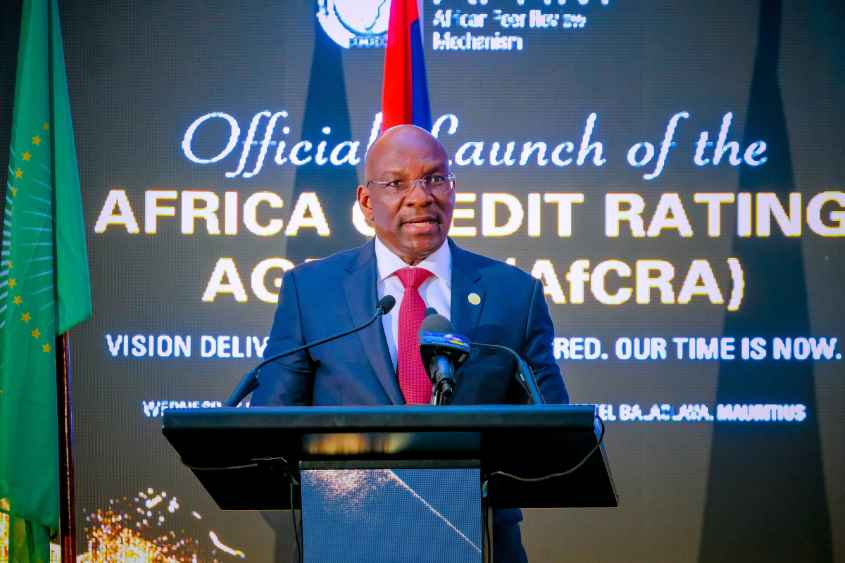
PORT LOUIS, Mauritius, October 8, 2026/APO Group/ –African Export-Import Bank (Afreximbank) (www.Afreximbank.com) welcomes today’s launch of the Africa Credit Rating Agency (AfCRA), an important milestone in strengthening Africa’s financial architecture and expanding the continent’s capacity to generate credible, independent analysis of African credit risk.
Credit ratings play an important role in determining access to capital, influencing investor perceptions and shaping the cost at which governments, institutions and businesses can finance development. It is therefore essential that assessments of African credit risk are independent, rigorous and evidence-based, while reflecting a complete understanding of the structures, institutions and economic realities being assessed.
The establishment of AfCRA adds an important African-led source of credit opinion to the market. Its value will not be measured by whether it produces more favourable ratings, but by the credibility of its analysis, the quality of its data and transparency of its methodology, and its ability to deepen understanding of African sovereigns, sub-sovereigns and corporate credit.
This is particularly important given that many African issuers remain unrated, while local-currency and sub-sovereign markets continue to have limited rating coverage. Expanding credible rating coverage can improve the information available to investors and support the development of deeper domestic and regional capital markets.
AfCRA must set a new benchmark for the continent, maintain its independence, and remain wholly owned and controlled by Africans
Alongside fellow members of the Alliance of African Multilateral Financial Institutions (AAMFI), Afreximbank has consistently maintained that African Multilateral Financial Institutions should be assessed on the basis of their fundamentals, performance, legal frameworks, mandates and operating models. Ensuring that these institutional characteristics are properly understood is essential to achieving informed, balanced and credible assessments of African risk.
Commenting on the uniqueness of the African market, and need for AfCRA’s rating methodology to reflect this, Mr Denys Denya, Senior Executive Vice President, Afreximbank, said: “The rating methodology AfCRA develops must recognise the uniqueness of our environment and its institutional structures. The Agency must set its own standards and not follow those set elsewhere — it must build a unique identity that conforms to an ‘African best practice.”
Highlighting the need for the autonomy of the Africa Credit Rating agency as it takes off, Mr Denya added: “Most importantly, AfCRA must set a new benchmark for the continent, maintain its independence, and remain wholly owned and controlled by Africans. We must all use it, and in return expect a complete assessment of where we (Africa) stand: the strengths the market has ignored, and the weaknesses we still need to fix.”
AfCRA should therefore be seen as complementary to existing international and regional rating agencies, broadening the range of credible analysis available to investors and issuers while strengthening competition, transparency and analytical capacity within Africa’s credit markets.
As Africa seeks to mobilise the scale of capital required for industrialisation, trade, infrastructure and economic transformation, credible African institutions that improve information, strengthen market confidence and deepen the continent’s financial markets will become increasingly important.
Afreximbank congratulates the African Union, the African Peer Review Mechanism (APRM) and all those involved in bringing AfCRA from concept to launch, and looks forward to the contribution the Agency will make to deeper, more transparent and more efficient African capital markets.
Distributed by APO Group on behalf of Afreximbank.
We use cookies on our website to give you the most relevant experience by remembering your preferences and repeat visits. By clicking “Accept”, you consent to the use of ALL the cookies.
This website uses cookies to improve your experience while you navigate through the website. Out of these, the cookies that are categorized as necessary are stored on your browser as they are essential for the working of basic functionalities of the website. We also use third-party cookies that help us analyze and understand how you use this website. These cookies will be stored in your browser only with your consent. You also have the option to opt-out of these cookies. But opting out of some of these cookies may affect your browsing experience.
Necessary cookies are absolutely essential for the website to function properly. These cookies ensure basic functionalities and security features of the website, anonymously.
Cookie
Duration
Description
cookielawinfo-checkbox-analytics
11 months
This cookie is set by GDPR Cookie Consent plugin. The cookie is used to store the user consent for the cookies in the category "Analytics".
cookielawinfo-checkbox-functional
11 months
The cookie is set by GDPR cookie consent to record the user consent for the cookies in the category "Functional".
cookielawinfo-checkbox-necessary
11 months
This cookie is set by GDPR Cookie Consent plugin. The cookies is used to store the user consent for the cookies in the category "Necessary".
cookielawinfo-checkbox-others
11 months
This cookie is set by GDPR Cookie Consent plugin. The cookie is used to store the user consent for the cookies in the category "Other.
cookielawinfo-checkbox-performance
11 months
This cookie is set by GDPR Cookie Consent plugin. The cookie is used to store the user consent for the cookies in the category "Performance".
viewed_cookie_policy
11 months
The cookie is set by the GDPR Cookie Consent plugin and is used to store whether or not user has consented to the use of cookies. It does not store any personal data.
Functional cookies help to perform certain functionalities like sharing the content of the website on social media platforms, collect feedbacks, and other third-party features.
Performance cookies are used to understand and analyze the key performance indexes of the website which helps in delivering a better user experience for the visitors.
Analytical cookies are used to understand how visitors interact with the website. These cookies help provide information on metrics the number of visitors, bounce rate, traffic source, etc.
Advertisement cookies are used to provide visitors with relevant ads and marketing campaigns. These cookies track visitors across websites and collect information to provide customized ads.


















 Business5 days ago
 Business4 days ago
 Business5 days ago
 Events5 days ago
 Business2 days ago
 Events3 days ago