Connect with us
Anglostratits

Energy

South Africa’s Upstream Petroleum Resources Development Act (UPRD Act): Can Legal Certainty Revive Major Investment After IOCs’ Exit?

Published

on

African Energy Chamber

South Africa’s new Upstream Petroleum Resources Development Act offers a fresh regulatory framework, but is it enough to bring supermajors back, or will independent players now dominate the landscape?

CAPE TOWN, South Africa, February 6, 2026/APO Group/ –The high‑profile exit of global energy major TotalEnergies from deepwater Blocks 11B/12B and 5/6/7 – home to the Brulpadda and Luiperd gas discoveries – was a significant setback for South Africa’s plans to use domestic resources to boost energy security and economic growth. TotalEnergies, together with partners QatarEnergy and CNR International, gave up their stakes after determining that the discoveries could not be commercially developed under the existing market conditions and regulatory framework.


The exits underscored long‑standing industry frustrations with South Africa’s legal and regulatory environment, widely seen as lacking the clarity and predictability that deepwater investors demand. That backdrop helps explain the government’s passage of the Upstream Petroleum Resources Development Act (UPRD Act) – a standalone legislative framework designed to replace the petroleum provisions embedded in the old Mineral and Petroleum Resources Development Act and provide a bespoke upstream regime.

At its core, the UPRD Act aims to accelerate exploration and production of South Africa’s petroleum resources by providing clear rules and stable rights for companies – key to attracting major investment. It combines exploration and production rights into a single petroleum right, sets out controlled licensing rounds, guarantees third-party access to infrastructure, and establishes the Petroleum Agency of South Africa as a clear regulatory authority. The law also promotes active participation by the State and previously disadvantaged South Africans, mandates local content, allows a share of output to be sold for strategic stock purposes, and separates oil and gas regulation from mining rules to reduce red tape and simplify operations.

Yet the big question remains: will this new legal certainty be enough to lure back the supermajors, or has the landscape shifted toward leaner, more aggressive independent companies seeking opportunities where majors have stepped away?

 It shows how regulatory reform is essential to restoring investor confidence

“Simply put, TotalEnergies’ exit was a blow to South Africa’s energy industry. These discoveries brought to light alternative energy solutions for a country plagued with a decade‑long energy crisis. However, without clear, predictable rules, even world‑class discoveries struggle to progress to commercial development. It shows how regulatory reform is essential to restoring investor confidence,” states NJ Ayuk, Executive Chairman of the African Energy Chamber.

The UPRD Act now provides that framework, but timing is crucial. The regulations needed to put the Act into practice are still being finalized, and until these rules – covering licensing, environmental safeguards and rights administration – are published and tested in early rounds, investor confidence is likely to remain cautious.

For supermajors, investment decisions are increasingly guided by a global strategy that prioritizes projects with clearer returns and lower regulatory risk. With growing pressure to meet climate targets and streamline their portfolios amid the energy transition, deepwater frontier projects in emerging markets are less appealing unless they come with clear, predictable terms.

This creates an opening for independent and smaller players. Companies like Africa Energy Corp. – which increased its stake in Block 11B/12B after the majors’ exit – could view South Africa’s upstream sector as a promising opportunity. With leaner cost structures and a greater tolerance for frontier risk, these players can advance projects that supermajors may avoid, potentially driving local value creation and technology transfer through a different investment model.

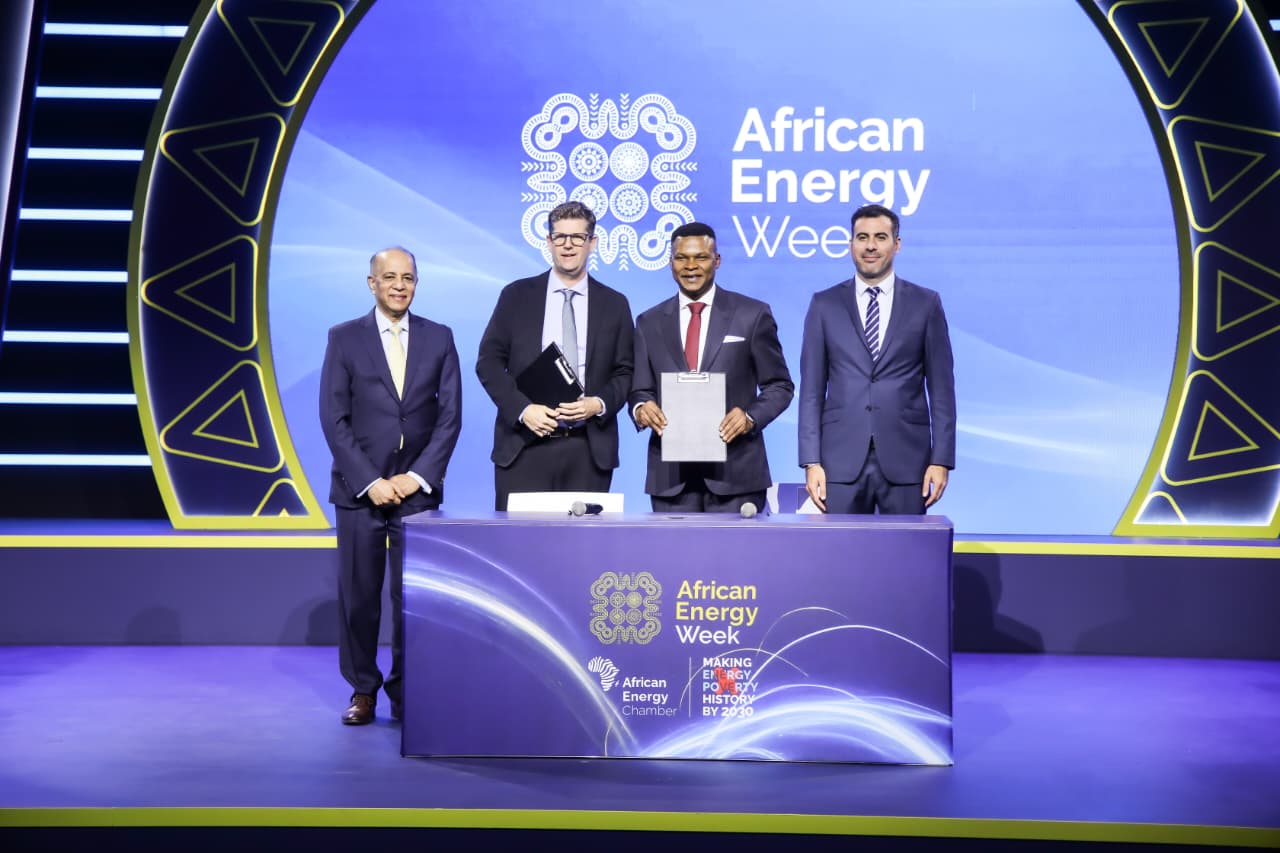
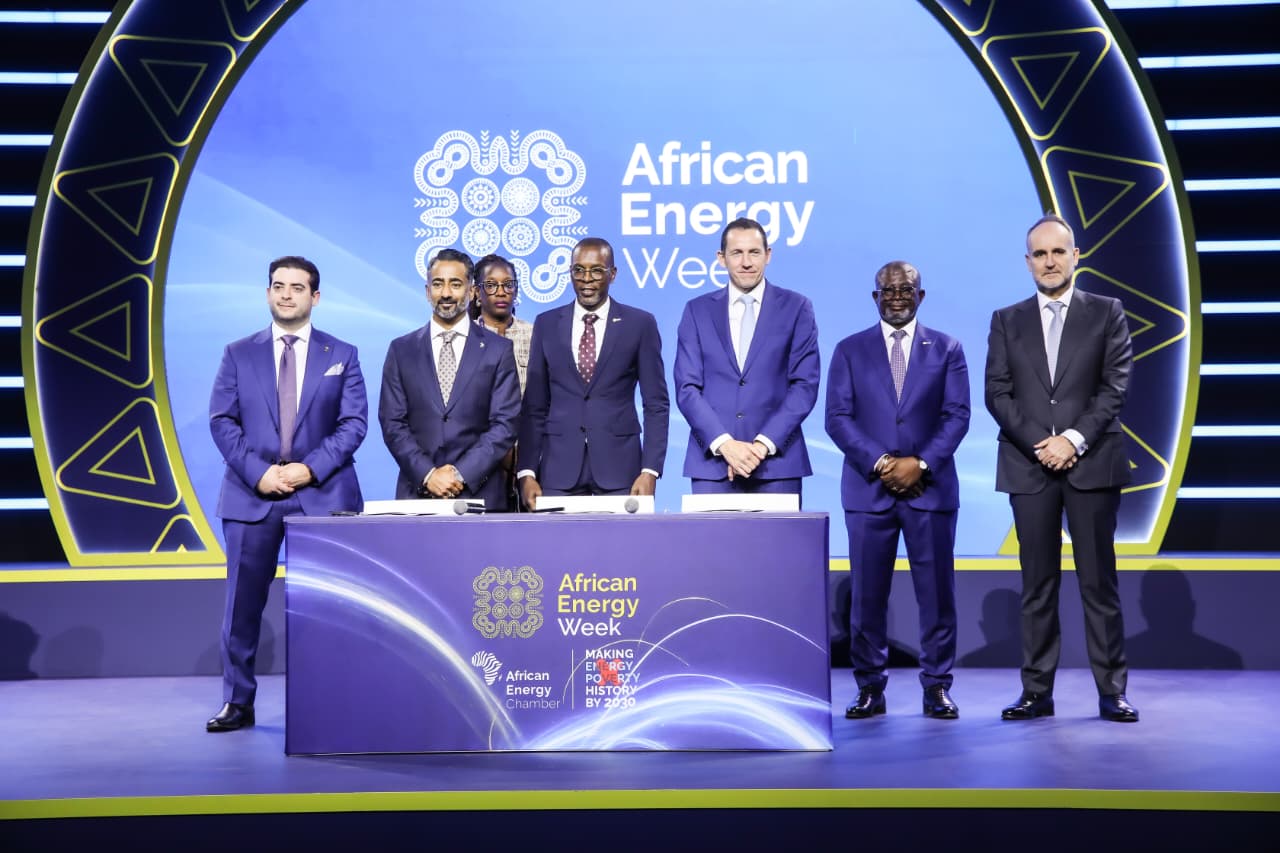
Looking ahead to African Energy Week (AEW) 2026 – the continent’s premier energy summit bringing together governments, investors and service companies – the UPRD Act is expected to be a central topic in discussions surrounding South Africa. AEW offers a high‑profile platform to showcase the country’s evolving policy landscape and could set the stage for the first post‑Act licensing round. Industry leaders are likely to debate whether the framework delivers on its promise of stability and what conditions might be needed to attract supermajors back.

Ultimately, South Africa’s upstream rebound will depend on execution: if the regulations foster transparency, competitive terms and confidence in governance, the UPRD Act could be a turning point. If not, the sector may settle into a new normal where ambitious independents, rather than supermajors, drive the next chapter of oil and gas development.

Distributed by APO Group on behalf of African Energy Chamber.

Energy

TotalEnergies Expands Angola Offshore Strategy as Martin Deffontaines Returns to Angola Oil & Gas (AOG) 2026

Published

on

TotalEnergies

TotalEnergies is spearheading a diverse investment approach in Angola, targeting frontier opportunities while scaling brownfield production

Martin Deffontaines, Country Manager for Angola at energy major TotalEnergies has been confirmed as a speaker at the Angola Oil & Gas (AOG) Conference and Exhibition – taking place September 9­­–10 with a pre-conference day on September 8. His participation comes at a pivotal time for the company as it expands its offshore strategy and is expected to provide insight into how one of the industry’s leading operators is positioning itself for Angola’s next phase of offshore growth.

TotalEnergies is driving a multi-faceted exploration and production strategy in Angola, balancing brownfield optimization with frontier exploration and large-scale deepwater developments. As one of the country’s biggest oil producers, the company’s recent investments signal a long-term commitment to the market as well as its broader ambitions to support Angola’s goals of sustaining production above one million barrels per day (bpd).

At the core of this strategy is unlocking additional value from producing assets. Just this month, the company signed a Principles Agreement with the National Oil, Gas & Biofuels Agency (ANPG) to extend its license for Block 32 to 2043. The agreement establishes the general terms for the continuous development of the block, while outlining the possible application of the Incremental Production Decree to bolster production. Block 32 is one of the country’s biggest producing assets, covering six fields and featuring the Kaombo project.

Beyond operational assets, TotalEnergies is pursuing new frontiers in Angola. The company signed an agreement in March 2026 with the ANPG and ExxonMobil for the allocation of four blocks in the Benguela and Namibe Basins – namely 40, 41, 42 and 58. The agreement lays the foundation for the signing of the respective contracts for the blocks. This follows another agreement signed in 2025 between TotalEnergies, ExxonMobil and the ANPG for the study and evaluation of the Free Areas of Blocks 17/06 and 32/21 – two of the country’s longest-producing assets. The agreement aims to identify new leads across the blocks, supporting future production growth.

The company’s ongoing project portfolio further highlights the scale of its ambitions in Angola. Central to this is the Kaminho deepwater project – the first major deepwater development in the Kwanza Basin. Representing a $6 billion investment, the project is expected to produce approximately 70,000 bpd through an FPSO designed with lower-emission technologies. FID was reached in 2024, with production on track for 2028. Kaminho builds on TotalEnergies recent project momentum, which saw two offshore projects start operations in 2025. The Begonia and CLOV Phase 3 developments added 60,000 bpd to the company’s Angolan portfolio, cementing its position as a major operator.

Deffontaines’ participation at AOG 2026 comes as these themes move to the forefront of Angola’s oil and gas agenda. As one of the country’s largest international investors, TotalEnergies continues to shape discussions around production sustainability, exploration strategy and offshore project economics. His presence at the event underscores both the scale of the opportunity and the growing international confidence in Angola’s deepwater market.


Distributed by APO Group on behalf of Energy Capital & Power.

Continue Reading

Business

Congo’s Minister Onanga to Fast-Track Deals, Drive Local Content and Expand Floating Liquefied Natural Gas (FLNG) in New Investment Push

Published

on

Congo

High-level talks between the Republic of Congo’s Minister of Hydrocarbons Stev Simplice Onanga and the African Energy Chamber focused on accelerating deal flow, strengthening local content and SNPC, and advancing FLNG expansion to position the country as a regional gas hub

BRAZZAVILLE, Republic of the Congo, May 20, 2026/APO Group/ –The African Energy Chamber (AEC) (www.AfricanEnergyChamber.org) has reinforced its strategic partnership with the Republic of Congo following a high-level meeting between Executive Chairman NJ Ayuk and newly appointed Minister of Hydrocarbons Stev Simplice Onanga in Brazzaville this week, setting the stage for a renewed push to accelerate investment, strengthen local capacity and expand the country’s LNG footprint.


Held shortly after Minister Onanga’s appointment, the meeting underscored a shared commitment to faster, more efficient deal-making across Congo’s oil and gas sector. Both sides emphasized that reducing delays in project approvals and execution will be critical to maintaining Congo’s competitiveness and attracting new capital into upstream and gas development.


A key focus of discussions was the development of a stronger local industry. Minister Onanga outlined a clear ambition to see Congolese companies grow beyond traditional service roles to become operators, license holders and regional players capable of competing across African markets. This includes building companies that not only support domestic projects, but can also export expertise and services beyond Congo.


The AEC welcomed this vision, committing to work closely with the Ministry to help develop a new generation of competitive Congolese firms. This effort will focus on strengthening technical capacity, expanding access to opportunities in field development and drilling, and ensuring local companies are positioned to participate more meaningfully across the value chain.


In parallel, Minister Onanga called for enhanced collaboration to strengthen Société Nationale des Pétroles du Congo (SNPC), with the goal of transforming it into one of Africa’s leading national oil companies. The vision is for SNPC to evolve beyond its current partnership model with international oil companies to take on a more operational role – managing assets, leading projects and driving exploration and production both domestically and, over time, internationally.


“Congo is focused on building a stronger national energy ecosystem from the ground up,” said Ayuk. “We agreed with the Minister on the need to develop Congolese companies into competitive players that can scale beyond borders. Strengthening SNPC is central to this, so it becomes a more active operator, managing and developing assets. This is about building long-term capacity in-country and positioning Congo as a leading force in African energy.”

With Minister Onanga, we’re seeing a real commitment to getting things done – moving deals faster, empowering Congolese companies and scaling LNG


Beyond local industry development, the meeting reinforced Congo’s broader ambition to strengthen its position within Africa’s energy landscape. Minister Onanga highlighted his intention to align national strategy with continental priorities, drawing on his experience as former Chair of the African Petroleum Producers’ Organization (APPO) Board of Governors. Continued engagement with institutions such as APPO and OPEC will remain central to this approach.


Gas development – particularly floating LNG (FLNG) – emerged as another key pillar of the discussion. Congo has already made significant progress through projects such as Eni’s Congo LNG development, where the 0.6 mtpa Tango FLNG and the upcoming Nguya FLNG facility are expected to increase the country’s LNG export capacity to around 3 mtpa.


Building on this momentum, discussions pointed to the potential for additional FLNG developments. With ongoing conversations around new projects and favorable conditions aligning, a future FLNG expansion could further scale production and reshape Congo’s role in the regional gas market. Expanding capacity would not only strengthen export revenues, but also support domestic gas utilization and industrial growth.


“With Minister Onanga, we’re seeing a real commitment to getting things done – moving deals faster, empowering Congolese companies and scaling LNG,” added Ayuk. “The stars are aligning for Congo to lead the continent in floating LNG. If this momentum continues, there’s no doubt the country can position itself as one of Africa’s leading gas hubs.”


With a renewed focus on fast-tracked investment, local industry development and LNG expansion, the AEC’s engagement with Congo signals a more execution-driven phase for the country’s energy sector – one aimed at building in-country value, strengthening regional influence and delivering long-term growth.


Distributed by APO Group on behalf of African Energy Chamber.

Continue Reading

Energy

Rand Refinery Joins African Mining Week (AMW) as Silver Sponsor Amid Regional Market Expansion Strategy

Published

on

Energy Capital

African Mining Week 2026 will showcase lucrative investment, partnership, and knowledge-exchange opportunities across Africa’s gold downstream sector, as Rand Refinery intensifies its investment and expansion strategy across the continent

CAPE TOWN, South Africa, May 19, 2026/APO Group/ –Amid a strategy to expand from a South Africa-focused refiner into a pan-African downstream leader, Rand Refinery has joined African Mining Week (AMW), an Influential African Mining Conference, scheduled for October 14-16, 2026 in Cape Town, as a silver sponsor.

Rand Refinery’s participation reflects a broader strategic alignment between the company’s expansion agenda and AMW’s focus on supporting and enabling local beneficiation and promoting artisanal and small-scale mining (ASM) responsible sourcing frameworks.


In terms of volumes, the latest market information indicates that Africa produces 1000tpa of mined gold (more than any other continent), with large-scale mining (LSM) and ASM being almost evenly balanced (500tpa production each). On its current trajectory, African ASM volumes are expected to eclipse those of LSM.


The focus on ASM as a transformational imperative is valid, and Rand Refinery is an active participant in the precious metals supply chain, working alongside other upstream and downstream actors to ensure that the communities and countries with gold resources benefit in a sustainable manner.


Under the theme Mining the Future: Unearthing Africa’s Full Mineral Value Chain, AMW 2026 offers a critical interface between refiners, miners, regulators, and financial institutions, as African countries intensify efforts to capture more value from responsible mineral production.


A key pillar of Rand Refinery’s 2026 strategy is its expansion into high-growth gold markets beyond South Africa. In January 2026, the company partnered with Ghana’s Gold Coast Refinery (GCR) to support the Ghana Gold Board to locally refine artisanal and small-scale (ASM) gold and elevate responsible sourcing standards in West Africa. The partnership also positions Rand Refinery in a rapidly growing and historically fragmented supply segment: ASM operations, enabling the company to enhance traceability and strengthen compliance with global standards for ethical sourcing and anti-money laundering.


The partnership potentially allows the monetization of ASM supply streams in the formal gold ecosystem, complementing Rand Refinery’s established role in refining output from responsible large-scale producers. AMW 2026 represents a timely platform for the company to provide an update on its projects and contribution to Africa’s gold sector.


As demand for regional refining capacity expands, along with central bank buying programs, companies such as Rand Refinery will be crucial.


Central bank gold purchases are projected to average around 585 tons per quarter in 2026, underscoring sustained global demand. In Africa, gold now accounts for approximately 17% of total reserves – up from less than 10% in 2022–2023 – while physical holdings increased from 663 tons in 2022 to an estimated 738 tons in 2025.


This upward trajectory is driving demand for trusted refining and value addition services, positioning Rand Refinery as a key partner in the region. Against this backdrop, AMW provides a strategic platform for central banks and gold buyers to engage directly with one of the world’s largest integrated single-site precious metals refining and smelting complexes and strengthen regional beneficiation and national reserve strategies.


At AMW, Rand Refinery executives will participate in panel discussions and networking sessions, engaging stakeholders on partnership opportunities that support a more integrated, transparent and value-driven African gold ecosystem.

Distributed by APO Group on behalf of Energy Capital & Power.

Continue Reading

Trending