Connect with us
Anglostratits

Energy

Nigeria Mining Week promises high-level engagement on critical minerals and industrialisation roadmap
Published

on

Nigeria

“New Critical Minerals Forum will focus on needs for global energy transition”
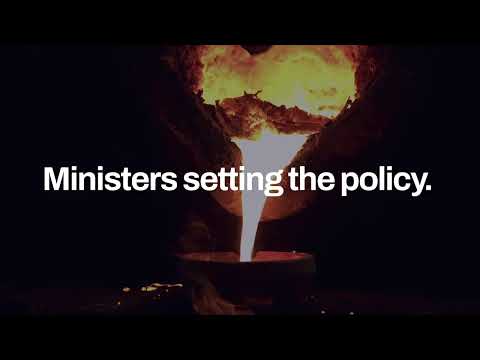
CAPE TOWN, South Africa, July 28, 2026/APO Group/ –Hot on the heels of Nigeria’s unveiling of a strategic roadmap designed to convert the country’s mineral wealth into investments in clean energy manufacturing and domestic value addition, the organisers of the Nigeria Mining Week conference and expo have revealed this year’s packed and topical programme.

Convening at the Abuja Continental Hotel in the Nigerian capital from 13 to 14 October, this longstanding mining gathering of note supports Nigeria’s ambition to become a regional refining and processing powerhouse. The theme of this year’s event is “Unlocking Investment and Growth through Partnerships.”

DOWNLOAD THE BROCHURE (https://apo-opa.co/4yPtbdV)

Unveiling strategic roadmaps

Says Samukelo Madlabane, Event Director – Mining Portfolio, VUKA Group: “The Nigerian government has sought to boost beneficiation and industrialisation in its mining sector by mandating local processing, opening large scale mineral plants and unveiling strategic roadmaps that link critical minerals to clean energy manufacturing. Recent initiatives focus on lithium, copper and bauxite, aiming to move beyond raw exports and build integrated value chains.”

Earlier this month, the Council for Critical Minerals Development in the Global South presented a Critical Minerals Roadmap to the Minister of Solid Minerals Development, Dr Dele Alake, outlining strategies to harness Nigeria’s lithium, copper and bauxite resources in order to strengthen local industries, advance mineral beneficiation and draw investment into green manufacturing.

Madlabane adds: “Nigeria Mining Week is perfectly timed for this defining moment in this nation’s mining sector. Our new Critical Minerals Forum will focus on the minerals needed for the global energy transition, such as lithium, REEs, graphite, copper, and other battery or tech minerals, and how Nigeria must position itself to attract serious investment and unlock the country’s rapidly expanding opportunities.”

The Nigeria Mining Week programme highlights include:

Critical Minerals Forum: 13 October

  • Strategic Leadership in the Critical Minerals Race

This session will focus on positioning Nigeria with US and EU MSP initiatives and Asian cathode makers, ensuring bankable offtake term sheets, scaling REE projects responsibly, building infrastructure and traceability rules, and securing independent assurance to strengthen buyer confidence.

  • Building Reliable Pathways from Nigeria to Global Battery, Magnet & EV Markets

International buyers demand clear technical specifications, impurity thresholds and QA/QC standards before agreements with Nigerian projects. Success depends on structuring long term supply contracts, strengthening traceability and ESG documentation, and building credibility with partners across Asia, Europe, the US and the Gulf to secure sustainable supply chain integration.

Exploration & Geological Data:

Unlocking Nigeria’s Exploration Potential

This session explores how investment grade datasets, AI driven discovery and geoscience portals can unlock capital for Nigeria’s mining sector. Experts highlight data standards, licensing simplification and environmental safeguards to accelerate investor confidence and global competitiveness within 12 months.

Financing & Investment:

Financing Exploration & Junior Mining Companies

This session examines Nigeria’s data room requirements, capital structures and licensing reforms to attract investment. Experts highlight clean titles, ESG credibility, traceability and offtake signals as essential for DFIs, investors and global buyers to commit confidently within tight timelines.

Our new Critical Minerals Forum will focus on the minerals needed for the global energy transition, such as lithium, REEs, graphite, copper, and other battery or tech minerals

Industrialisation:

From Ore to Industry – Beneficiation & Refining

This session focuses on commissioning strategies for Nigeria’s lithium and gold projects, contracting for feed security, realistic OPEX benchmarks, and training partnerships. Experts outline pathways from first product to battery grade chemicals and value added metals supported by regulatory adjustments.

Gemstones:

Developing Nigeria’s Gemstone Value Chains

Exploring the formalisation of Nigeria’s artisanal gemstone mining through cooperatives, traceability and certification, experts will highlight international grading standards, models from Tanzania and Zambia, domestic gemstone clusters and incentives to attract global buyers, processors and jewellery manufacturers.

Policy, Regulation & Governance:

Building a Clear, Predictable and Competitive Policy Environment

Nigeria’s mining sector needs regulatory reforms to strengthen licensing predictability, improve contract stability, enhance transparency through NEITI and MCO, align beneficiation and ASM formalisation with global standards, and draw lessons from Zambia, Namibia, Botswana and Ghana to boost investor confidence.

ESG & Sustainability:

ESG that Wins Investments

This session will focus on how Nigeria must define evidence grade traceability for US and EU buyers, adopt global water and tailings practices, apply CDA designs from Ghana Botswana and Peru, meet gender inclusion KPIs within 12 months, and secure independent assurance to strengthen financing and offtake terms.

Infrastructure & Power Integration:

Power to Mines & Logistics for Industrialisation

This session will examine IPP and cogen models from India Australia and Brazil, lessons from the Lobito Corridor for Nigerian rail port power integration, ballast and aggregate standards, digital logistics tools to reduce losses, and PPP structures enabling long tenor corridor financing.

Side events and forums

Other well-known side events and forums that make a welcome return to Nigeria Mining Week and always add to the engaging atmosphere include:

  • The Gold Forum
  • The Steel & Industrial Minerals Forum
  • The Women in Extractive Industries Forum
  • The CEO Roundtable
  • The Deal Room
  • – Project Showcase & Private Capital Engagement

Industry support

Over the last 11 years, Nigeria Mining Week has become thé gathering place for many mining pioneers and suppliers, and many have become longstanding partners of the Abuja gathering. Titan Minerals Ltd is returning as the diamond plus sponsor; KMDC, Kursi, Lovol, Sinogrand, and XCMG have already signed up as diamond sponsors; and SMT Nigeria is back as a platinum sponsor.

The event will gather 3,000+ attendees, 75+ world class speakers and 150+ exhibitors and solution providers. Countries that are expected to have a strong presence with international pavilions are UK, EU, US, China, UAE, Canada, South Africa and India.

The Nigeria Mining Week conference and expo is organised by the Miners Association of Nigeria, in partnership with PwC, VUKA Group and Mining Review Africa, with the Nigerian Ministry of Mines and Steel Development as official host. NEITI is the event’s transparency partner.

DOWNLOAD THE BROCHURE (https://apo-opa.co/4yPtbdV)

Distributed by APO Group on behalf of VUKA Group.

Business

International Oil Companies (IOCs) Build the Case for Mauritania, Senegal, Gambia, Bissau, and Conakry (MSGBC) as Global Gas Hotspot

Published

on

Etu Energias

The CEO Regional Leadership Panel at MSGBC Oil, Gas & Power 2026 will examine what is driving investment into the basin’s gas sector and how countries can compete for a larger share of global capital

DAKAR, Senegal, September 28, 2026/APO Group/ –The MSGBC basin is moving from frontier exploration toward commercial gas production, and the investment conversation is shifting with it. The CEO Regional Leadership Panel at MSGBC Oil, Gas & Power 2026 – “Is MSGBC the Next Global Gas Hotspot?” – will bring together senior executives from international oil companies and energy investors to examine the forces driving capital into the region’s gas sector. The panel will also explore how MSGBC countries can compete for a larger share of global investment by monetizing the basin’s emerging gas resources.


The basin now has a producing track record to support its monetization ambitions. The Greater Tortue Ahmeyim (GTA) LNG project, located on the maritime border between Mauritania and Senegal, reached commercial operations in mid-2025, with production ramping up to approximately 2.4 million tons per annum. The milestone marked Senegal’s entry into the global LNG market and established the basin as an emerging source of LNG for international markets.

Mauritania’s gas trajectory shows how the country is pursuing multiple routes to monetization. In July 2026, Saudi developer ACWA Power signed agreements for the 230 MW N’Diago combined-cycle gas turbine plant, the country’s first large-scale gas-fired independent power project, which is expected to use domestic gas from GTA to supply the national grid. Meanwhile, the BirAllah field, estimated to contain around 50 trillion cubic feet of gas resources, remains one of Mauritania’s major undeveloped gas opportunities as the country seeks to advance its development. Together, these projects illustrate Mauritania’s strategy of pursuing both export revenues and domestic industrialization – a dual approach that will be examined by investors at MSGBC 2026.

The basin’s southern frontier will also feature prominently in the discussion. Chevron has entered Guinea-Bissau with exploration interests in offshore Blocks 5B and 6B, while Eni signed an exploration license for The Gambia’s offshore Block A1 and secured reconnaissance permits covering 15 blocks offshore Guinea. Apus Energy, meanwhile, is advancing the Sinapa and Esperança licenses in Guinea-Bissau. The entry and expansion of international and independent operators across the southern MSGBC reinforce the investment case for early positioning across the wider basin.

Anchoring the panel’s discussion will be the development of regional gas infrastructure, including the African Atlantic Gas Pipeline, which is advancing toward an intergovernmental agreement between Nigeria and Morocco targeted for Q4 2026. The approximately 6,900-km pipeline, with planned capacity of up to 30 billion cubic meters per year, would pass through the five MSGBC countries and provide producers with a pipeline-based complement to LNG exports and domestic gas-to-power strategies.

For investors attending MSGBC Oil, Gas & Power 2026, the panel will offer an opportunity to assess how these converging developments are translating into bankable opportunities across the basin – and where the next wave of gas investment could emerge.

Explore opportunities, foster partnerships and stay at the forefront of the MSGBC region’s oil, gas and power sectors. Visit www.MSGBCOilGasAndPower.com to secure your participation at the MSGBC Oil, Gas & Power 2026 conference, December 1-3, Dakar. To sponsor or participate as a delegate, please contact sales@energycapitalpower.com.

Distributed by APO Group on behalf of Energy Capital & Power.


Continue Reading

Business

African Energy Week (AEW) 2026 to Spotlight Venezuela’s New Investment Framework as Global Capital Returns

Published

on

Energy

The Venezuela Global Investment Forum at African Energy Week 2026 will examine how regulatory reform, new production participation structures and international partnerships are reshaping the country’s investment landscape

CAPE TOWN, South Africa, September 28, 2026/APO Group/ –Venezuela’s energy sector is entering a period of significant commercial change, with a reworked hydrocarbons framework beginning to translate into new agreements with international energy companies. At African Energy Week (AEW) 2026, the Venezuela Global Investment Forum: Shaping the Renaissance of a Hydrocarbon Giant will bring Venezuelan policymakers, national oil company executives and international investors together to examine the opportunities emerging from that transition.


The forum comes as Venezuela moves from regulatory reform toward implementation. In January 2026, the country enacted a reform of its Organic Hydrocarbons Law, introducing new contractual mechanisms for primary hydrocarbon activities and establishing a framework intended to give private operators greater responsibility for project development. The reform also incorporated Production Participation Contracts (PPCs), creating a structure under which private companies can assume operational and financial responsibility for projects.

Recent transactions show how quickly that framework is being put into practice. In September, Eni signed a 25-year Hydrocarbon PPC with PDVSA for the development of the giant Junín 5 field in the Orinoco Belt, becoming the project’s exclusive operator with responsibility for its technical, financial and commercial management.

Venezuela is demonstrating that regulatory reform has to be matched by real investment, real projects and opportunities for companies to participate across the energy value chain

GeoPark has likewise entered Venezuela through a 25-year PPC covering the Bare Block. The agreement, announced in September, is valued at approximately $1.2 billion and involves an asset with more than 15.7 billion barrels of oil originally in place and more than 1,100 existing wells.

Chevron has also expanded its position. On September 2, the company announced updated terms for its Venezuelan joint ventures, including additional acreage in the Orinoco Belt and plans to invest more than $7 billion over five years. Chevron said the investment program is expected to more than double production from its Venezuelan operations to approximately 600,000 barrels per day compared with 2026 levels.

These developments give the Venezuela Global Investment Forum a timely commercial focus. Delegates will examine the details of the reformed hydrocarbons law, PPC structures, fiscal incentives, mechanisms for international arbitration and other provisions designed to improve the conditions for international capital. The broader investment opportunity is substantial: Venezuela holds more than 300 billion barrels of proven oil reserves and more than 195 trillion cubic feet of natural gas, while the rehabilitation of its energy sector is expected to require substantial investment in production, infrastructure and refining.

The forum will also highlight the South-South dimension of Venezuela’s reopening. For African energy producers, the country’s experience offers areas of potential cooperation around mature-field rehabilitation, infrastructure development, technology transfer, workforce development and investment frameworks for resource monetization. The African Energy Chamber (AEC) has already engaged with Venezuelan institutions on investment promotion, technical knowledge transfer and cooperation across the energy value chain.

“Venezuela is demonstrating that regulatory reform has to be matched by real investment, real projects and opportunities for companies to participate across the energy value chain,” said NJ Ayuk, AEC Executive Chairman. “The Venezuela Global Investment Forum gives investors an opportunity to understand the new framework directly from Venezuelan leaders and to look at where capital, technology and expertise can support the country’s energy recovery while creating stronger South-South partnerships.”

As Venezuela seeks to restore production and rehabilitate infrastructure, the forum will provide a platform for investors to assess the commercial structures underpinning that effort and engage directly with the institutions and companies shaping the next stage of the country’s energy industry.

Distributed by APO Group on behalf of African Energy Chamber.


Continue Reading

Business

Société Nationale des Hydrocarbures (SNH) Joins African Energy Week (AEW) 2026 as Platinum Partner as Cameroon Expands Its Energy Value Chain

Published

on

African Energy Chamber

Cameroon’s national hydrocarbons company will use its Platinum Partnership at AEW 2026 to highlight investment across refining, gas development, regional energy cooperation and the wider transformation of the country’s petroleum sector

CAPE TOWN, South Africa, September 25, 2026/APO Group/ –Société Nationale des Hydrocarbures (SNH) will join African Energy Week (AEW) 2026 as a Platinum Partner, placing Cameroon’s national hydrocarbons company at the heart of discussions on how African producers can expand investment, strengthen energy security and build greater value around domestic resources.


Taking place October 12–16 in Cape Town, AEW 2026 will bring together governments, national oil companies, investors and industry leaders from across the continent. For SNH, the partnership comes as Cameroon advances projects extending well beyond conventional upstream activity, from new refining infrastructure and gas development to cross-border energy cooperation.

A major focus is the CSTAR refinery and tank farm project in Kribi, which SNH describes as a strategic component of the transformation of Cameroon’s petroleum sector. The planned refinery will have a capacity of 30,000 barrels per day and is being developed near the Kribi Deep Sea Port. Following board meetings in Dubai in May, SNH said the CSTAR entities reviewed operational and financial priorities and adopted resolutions aimed at implementing the planned infrastructure at the Mboro site, with the company positioning the development as part of efforts to strengthen Cameroon’s petroleum infrastructure and energy sovereignty.


Gas development is another area where SNH is pursuing opportunities with regional implications. In February, Cameroon and Equatorial Guinea signed a unitization agreement covering the Yoyo-Yolanda transboundary gas field, following years of negotiations. SNH and Equatorial Guinea’s GEPETROL signed the agreement alongside Chevron, which is involved in the project. SNH has described the field as holding an estimated 2.5 trillion cubic feet of gas, with the development concept including two export pipelines and separate processing facilities at Bipaga in Cameroon and Punta Europa in Equatorial Guinea.

SNH represents the kind of African national energy institution that is increasingly important to the continent’s next investment cycle


The agreement illustrates the regional dimension of Cameroon’s hydrocarbons strategy, while also highlighting SNH’s role as the state’s implementing arm in energy-sector development. The company’s mandate covers the promotion of the national petroleum and gas domain, negotiation and monitoring of petroleum and gas contracts, commercialization of the state’s hydrocarbons and development of gas projects for power generation, domestic use and exports.


At the same time, Cameroon is seeking to reinvigorate its upstream sector. SNH launched a new promotion cycle for nine free blocks in August 2025, spanning the Douala-Kribi-Campo and Rio del Rey basins, with the company reporting in June 2026 that the results of the call for expressions of interest had been published.


“SNH represents the kind of African national energy institution that is increasingly important to the continent’s next investment cycle,” said NJ Ayuk, Executive Chairman of the African Energy Chamber. “Its role extends from resource promotion and commercialization to major infrastructure and regional gas projects, creating multiple entry points for investors, technology providers and financial partners. As a Platinum Partner, SNH will bring Cameroon’s broader energy ambitions directly to the companies and institutions shaping Africa’s energy future.”


With its participation at AEW 2026, SNH will have an opportunity to engage investors across the full hydrocarbons value chain – from exploration and production to refining, gas monetization, logistics and regional cooperation – while positioning Cameroon as a market for projects that can translate its existing resource base into greater domestic and regional value.

Distributed by APO Group on behalf of African Energy Chamber.


Continue Reading

Trending