Connect with us
Anglostratits

Business

News24 named South Africa’s Most Trusted News Brand for the Fourth Consecutive Year

Published

on

News24

The annual report surveyed 93 432 people in 46 countries and ranked South Africa second overall in terms of trust in media

CAPE TOWN, South Africa, June 15, 2022/APO Group/ — 

News24 (www.News24.com) has for the fourth consecutive year been named as South Africa’s most trusted news source, according to the 2022 Digital News Report by the Reuters Institute for the Study of Journalism at the University of Oxford. The report was released on Wednesday.

The annual report surveyed 93 432 people in 46 countries and ranked South Africa second overall in terms of trust in media. It found that between 2019 and 2022, trust in media grew from 49% to 61% in the country. 

Of the people surveyed in Africa, the report found that 61% of South Africans trusted most news, most of the time. This was compared to 58% in Nigeria and 57% in Kenya.

News24 scored 85% on the trust barometer, followed by eNCA on 84%. The rest of South Africa’s top ten trusted news brands are: BBC News, SABC News, Sunday Times, Mail & Guardian, TimesLive, The Citizen, EWN and regional or local newspapers.

Over the past year, we have exposed countless corrupt officials, unscrupulous businesspeople, sex offenders and dodgy politicians who abuse power and mislead the public

In terms of growth, the report found that City Press, Sowetan and Daily Sun had grown by as much as six percentage points in 2022.

The report found that South African news publications were increasingly emphasising the importance of trust as part of their journalistic brand value. The institute acknowledges News24’s recent decision to change its slogan from “Breaking News. First” to “Trusted News. First”.

This move followed News24’s introduction of a subscription service for its premium investigative journalism, opinion and analysis in August 2020. In the 18 months after launch, News24 managed to convert 50 000 readers to paying subscribers.

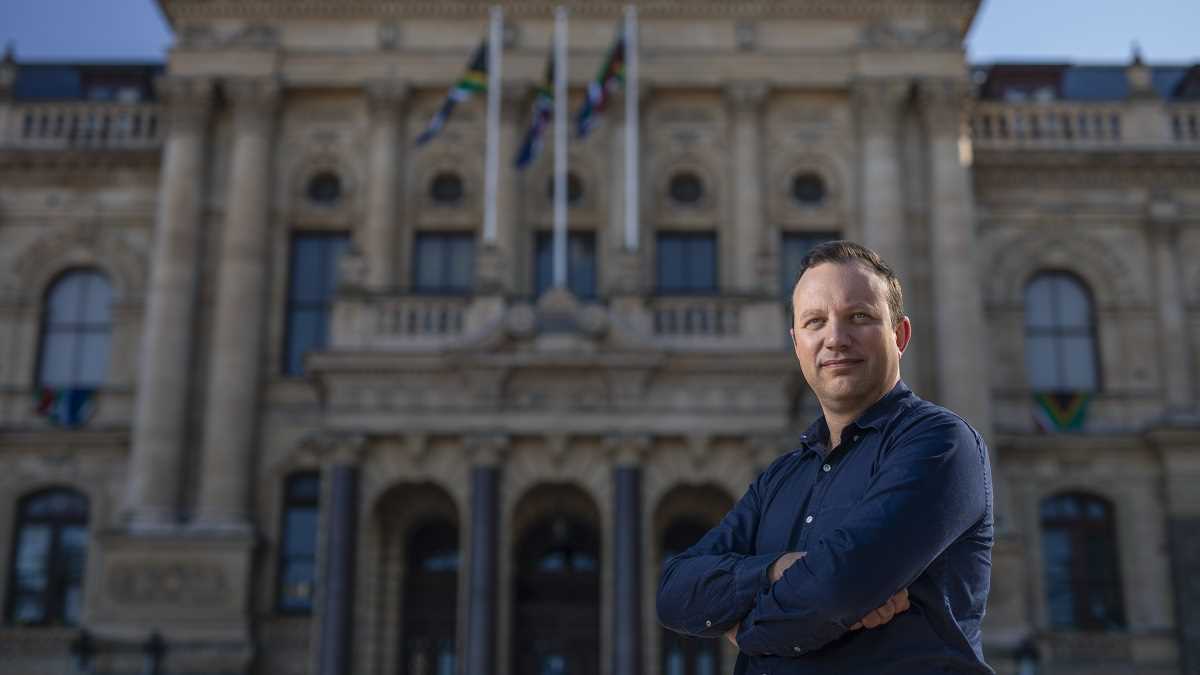
News24 editor-in-chief Adriaan Basson said he was extremely proud of his team for again grabbing the top spot in this survey. “Trust is to golden metric. Over the past year, we have exposed countless corrupt officials, unscrupulous businesspeople, sex offenders and dodgy politicians who abuse power and mislead the public. It is incredibly satisfying and a massive vote of confidence to know the public sees and appreciates this.”

In its global analysis of the 46 countries surveyed, the Reuters Institute found that much of the public was either turning away from important stories or selectively avoiding them. This included stories about the pandemic, the Russia/Ukraine war as well as the cost-of-living crisis. It also found that there was a general decline in trust and an overall declining interest in the news, although South Africa bucked the trend.

Distributed by APO Group on behalf of News24.

Business

Afreximbank welcomes launch of Africa Credit Rating Agency as an important step in strengthening Africa’s financial architecture

Published

on

Expanding credible rating coverage can improve the information available to investors and support the development of deeper domestic and regional capital markets

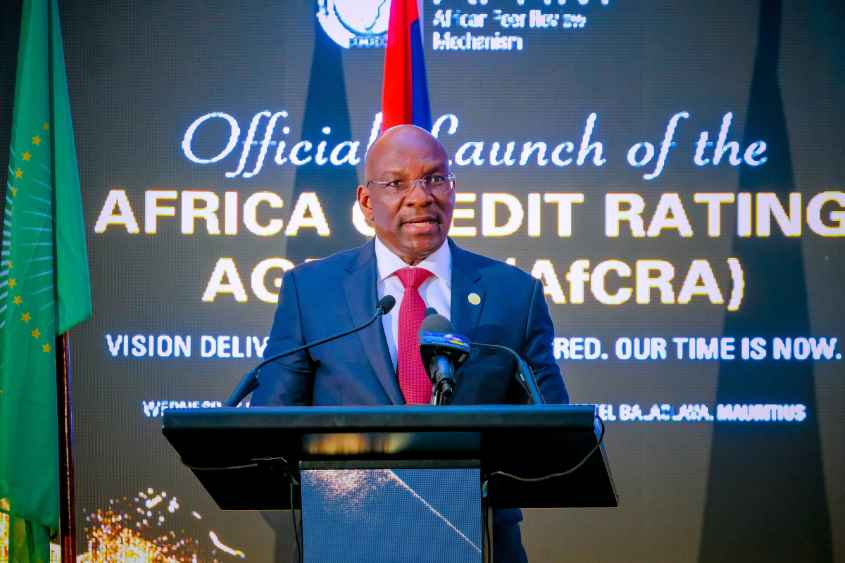
PORT LOUIS, Mauritius, October 8, 2026/APO Group/ –African Export-Import Bank (Afreximbank) (www.Afreximbank.com) welcomes today’s launch of the Africa Credit Rating Agency (AfCRA), an important milestone in strengthening Africa’s financial architecture and expanding the continent’s capacity to generate credible, independent analysis of African credit risk.


Credit ratings play an important role in determining access to capital, influencing investor perceptions and shaping the cost at which governments, institutions and businesses can finance development. It is therefore essential that assessments of African credit risk are independent, rigorous and evidence-based, while reflecting a complete understanding of the structures, institutions and economic realities being assessed.

The establishment of AfCRA adds an important African-led source of credit opinion to the market. Its value will not be measured by whether it produces more favourable ratings, but by the credibility of its analysis, the quality of its data and transparency of its methodology, and its ability to deepen understanding of African sovereigns, sub-sovereigns and corporate credit.

This is particularly important given that many African issuers remain unrated, while local-currency and sub-sovereign markets continue to have limited rating coverage. Expanding credible rating coverage can improve the information available to investors and support the development of deeper domestic and regional capital markets.

AfCRA must set a new benchmark for the continent, maintain its independence, and remain wholly owned and controlled by Africans

Alongside fellow members of the Alliance of African Multilateral Financial Institutions (AAMFI), Afreximbank has consistently maintained that African Multilateral Financial Institutions should be assessed on the basis of their fundamentals, performance, legal frameworks, mandates and operating models. Ensuring that these institutional characteristics are properly understood is essential to achieving informed, balanced and credible assessments of African risk.

Commenting on the uniqueness of the African market, and need for AfCRA’s rating methodology to reflect this, Mr Denys Denya, Senior Executive Vice President, Afreximbank, said: “The rating methodology AfCRA develops must recognise the uniqueness of our environment and its institutional structures. The Agency must set its own standards and not follow those set elsewhere — it must build a unique identity that conforms to an ‘African best practice.”

Highlighting the need for the autonomy of the Africa Credit Rating agency as it takes off, Mr Denya added: “Most importantly, AfCRA must set a new benchmark for the continent, maintain its independence, and remain wholly owned and controlled by Africans. We must all use it, and in return expect a complete assessment of where we (Africa) stand: the strengths the market has ignored, and the weaknesses we still need to fix.”

AfCRA should therefore be seen as complementary to existing international and regional rating agencies, broadening the range of credible analysis available to investors and issuers while strengthening competition, transparency and analytical capacity within Africa’s credit markets.

As Africa seeks to mobilise the scale of capital required for industrialisation, trade, infrastructure and economic transformation, credible African institutions that improve information, strengthen market confidence and deepen the continent’s financial markets will become increasingly important.

Afreximbank congratulates the African Union, the African Peer Review Mechanism (APRM) and all those involved in bringing AfCRA from concept to launch, and looks forward to the contribution the Agency will make to deeper, more transparent and more efficient African capital markets.

Distributed by APO Group on behalf of Afreximbank.


Continue Reading

Energy

Nigeria Mining Week 2026 sets the agenda for the sector’s next decade

Published

on

Nigeria Mining Week

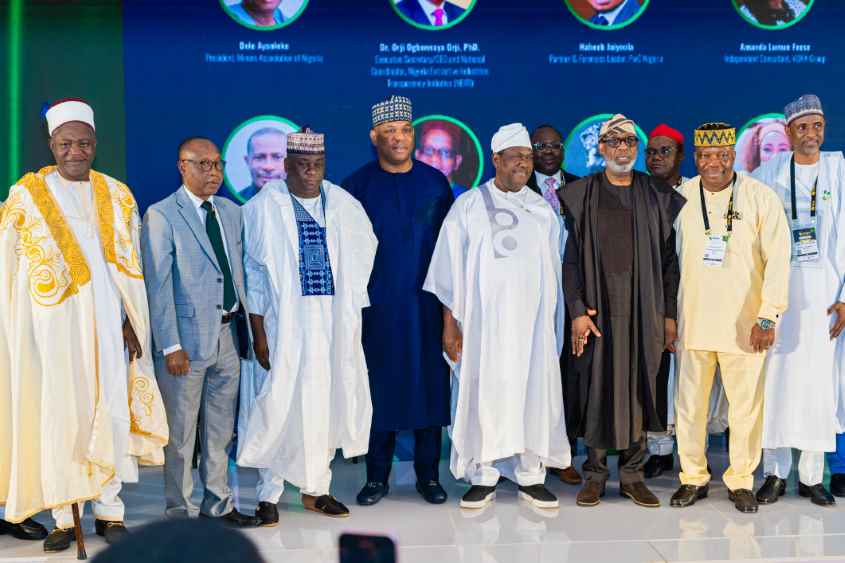
International Lithium Association and Mercuria Energy Trading NG join Nigeria Mining Week 2026 ahead of its opening in Abuja on 12 October

Nigeria has the mineral endowment to play a growing role in global supply chains, including critical minerals

CAPE TOWN, South Africa, October 8, 2026/APO Group/ —Programme and delegate passes: www.NigeriaMiningWeek.com

With less than a week to go, Nigeria Mining Week 2026 has added a global commodity trader and the world’s lithium trade association to its programme. Mercuria Energy Trading NG has signed as a Gold Sponsor, and the International Lithium Association (ILiA) has joined as a Supporting Association.


They join Nigeria’s mining leaders, investors and operators in Abuja from 12 to 14 October for three days on the questions that will define the sector’s next decade: who finances Nigerian projects, who buys their output, and how much of it is processed in Nigeria.

Now in its 11th edition, the event takes place at the Abuja Continental Hotel under the theme “Unlocking Investment and Growth through Partnerships”. More than 3,080 attendees and more than 90 sponsors and exhibitors are expected across seven strategic forums.

The decisions made on processing, financing and market access over the next few years will shape Nigerian mining for the decade ahead. Nigeria Mining Week puts the people making those decisions in the same room.

On the agenda

The programme follows six content pillars: exploration and geological data; financing and investment; industrialisation and processing; infrastructure and power; ESG, transparency and community development; and international and regional collaboration.

  • 12 October: pre-conference and roundtables on geological data, financing for junior miners, compliance and enforcement, and power and infrastructure.

Available to conference attendees only.

  • 13 October: conference and exhibition opening, the new Critical Minerals Forum, the Women in Extractive Industries Forum and technical workshops
  • 14 October: Gold Day, sessions on steel and industrial minerals, the Deal Room and further technical workshops

The Deal Room is a curated space for one-on-one meetings between mining projects and financiers, off-takers and strategic partners. Projects seeking offtake or financing can apply to take part.

International Lithium Association joins as Supporting Association

ILiA, the global trade association for the lithium industry, will take part in the Critical Minerals Forum on 13 October. Astrid Karamira, EMEA Representative Director at ILiA, joins the panel “Building Reliable Pathways from Nigeria to Global Battery, Magnet & EV Markets”.

The session looks at what Nigerian projects must do to reach international battery markets: technical and quality standards, traceability and responsible sourcing, export readiness, and the step from exploration success to commercial operation.

“Global buyers are asking more of their suppliers on quality, traceability and responsible sourcing than ever before. Nigeria Mining Week is an opportunity to discuss openly what those expectations mean in practice, and how Nigerian projects can meet them.”

Mercuria Energy Trading NG signs as Gold Sponsor

Mercuria Energy Trading NG is the Nigerian subsidiary of Mercuria, one of the world’s leading independent energy and commodity groups. It brings a buyer and offtaker perspective to the programme.

For many Nigerian projects, a credible buyer is the gap between a promising deposit and a financed mine. Mercuria will contribute to discussions on commodity trading and offtake partnerships, critical minerals supply chains, and infrastructure and logistics.

“Nigeria has the mineral endowment to play a growing role in global supply chains, including critical minerals. We look forward to sharing how trading, offtake and logistics partnerships can help Nigerian projects reach global markets.”

Event details

The programme is subject to change.

Distributed by APO Group on behalf of Nigeria Mining Week.


Continue Reading

Business

Global advertising spend surges 11.9% to $1.34trn this year despite consumer caution

Published

on

WARC

Social media is expected to record the strongest growth up 21.3% to $394.6bn
VOD (15.1%), retail media (14.3%), search (14.2%) and digital OOH (13.7%) are all set for double-digit increases
Technology and electronics (20.7%), travel and transport (19.3%) and automotive (17.8%) to be fastest growing product categories
Ad spend growth in 2027 expected to moderate (8.4%) to $1.46trn

WARC Media Global Ad Spend Forecast Q3 2026 update

8 October 2026 – Global ad spend is forecast to grow 11.9% to $1.34trn in 2026, according to the latest data from WARC Media. This comes on the back of strong 10.0% growth in 2024 and 2025.


Advertising investment continues to grow despite consumer pressure and geopolitical uncertainty, fueled by significant corporate AI investment and major events including the Olympics, FIFA World Cup, and US mid-term elections. While the economy has remained resilient to date, further escalations of global tensions pose potential downside risks.

Suzy Young, Head of WARC Media Data, says: “These are unusual times for advertising. Investment is accelerating even as many consumers face cost-of-living pressures and become more cautious with spending. This apparent contradiction reflects an increasingly uneven economy, where growth – particularly from the AI boom – is benefiting some companies, sectors and consumers more than others.”

Performance priority

Social media, search and retail media are three of the biggest channels for ad investment. Altogether they are expected to account for 66.4% of total global ad spend in 2026, rising to 70.0% in 2028.

Social media is set to register the strongest growth in ad spend this year, up 21.3% to $394.6bn, and is on course to exceed $500bn in 2028. Video on-demand (15.1% to $48.4bn), retail media (14.3% to $202.1bn), search (14.2% to $295.7bn) and digital OOH (13.7% to $21.7bn) will also see double-digit increases this year. Performance channels, which can adapt quickly to changing conditions, continue to benefit as uncertainty becomes the new norm.

Technology and electronics is forecast to be the fastest growing product category this year, rising 20.7% compared with 2025, followed by travel and transport (19.3%) and automotive (17.8%). Social media is expected to account for 40.2% of all tech and electronics spend in 2026.

2027 and 2028 ad spend outlook

Ad spend growth is expected to moderate in 2027, rising 8.4% to $1.46trn, reflecting tougher comparables and a normalisation from the exceptionally strong growth seen in recent years.

In 2028, ad spend will increase by a further 7.9% to $1.57trn – putting the market on course to be 2.3 times larger than it was a decade ago in 2019.

New AI destinations emerge

AI is driving advertising growth from multiple angles. New tech businesses are investing to acquire customers and build brands, while established companies spend heavily to compete in an increasingly crowded market. Simultaneously, AI tools are enhancing targeting, asset creation, and campaign optimisation – boosting ROI and fueling further investment.

AI is also opening new destinations for advertising. As generative search and AI assistants become gateways to product discovery and purchasing, ad dollars will follow – fundamentally reshaping where consumers encounter brands and where advertisers invest.

AI fuels ad triopoly

Alphabet, Amazon and Meta are set to take a combined market share of 59.7% of global ad spend (excluding China) this year – equivalent to $659.6bn. This is predicted to rise to 61.5%, or $804.1bn, in 2028.

Ad spend signals opportunity

Ad spend per capita vries dramatically across global markets. Developed economies like the US ($1395 per capita forecast for 2026), UK ($935), Austria ($850), and Switzerland ($825) show significantly higher advertising intensity, while China ($170), Brazil ($110), and India ($13) combine lower per-capita spending with massive consumer populations – highlighting substantial growth potential as these emerging markets mature.

WARC Media subscribers can read WARC’s global ad spend Q3 2026 update report in full.



Continue Reading

Trending