Connect with us
Anglostratits

Energy

Navigating South Africa’s energy challenges: insights for the Commercial and Industrial (C&I) sector

Published

on

commercial

In South Africa’s commercial and industrial (C&I) landscape, energy-intensive industries face mounting pressures from rising costs and the push toward sustainability. As the country grapples with transitioning from chronic energy insecurity to greater independence, sectors like mining, manufacturing and heavy industry are pivotal in driving economic resilience. Investments in renewables, storage solutions and innovative infrastructure are not just operational necessities but catalysts for broader growth, enabling companies to mitigate risks, reduce their carbon footprint and enhance competitiveness amid changing global trade dynamics.

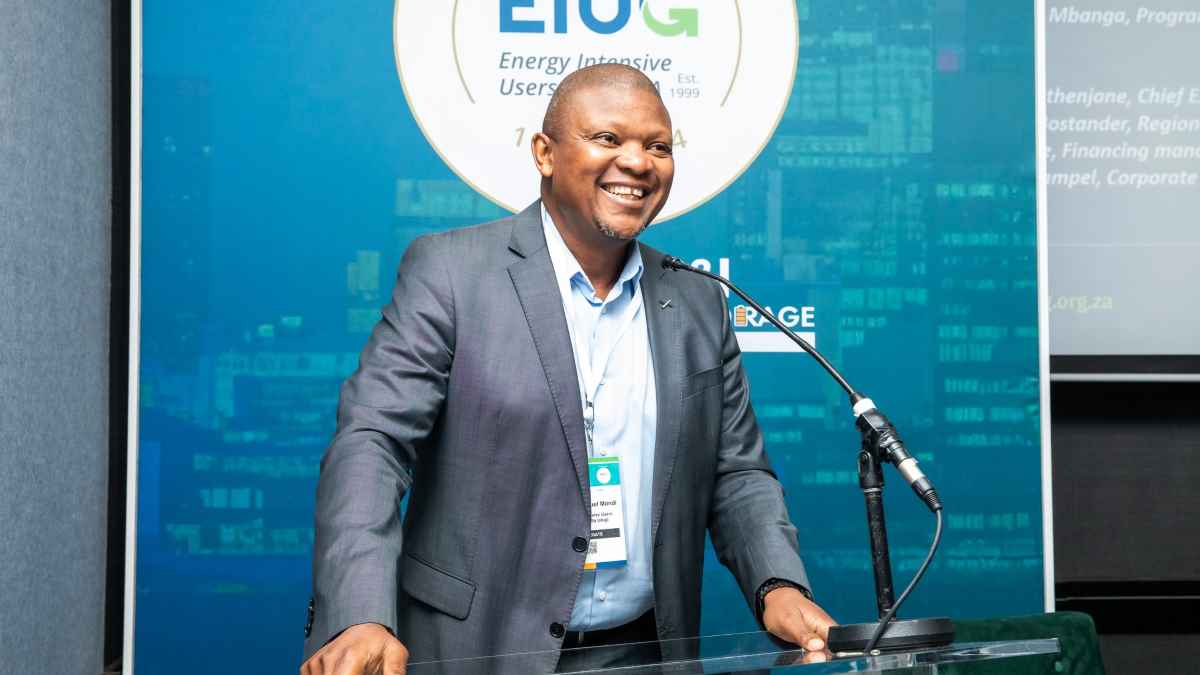
Against this background, the EIUG Conference 2025 (https://apo-opa.co/47i0Ujc) emerges as a key platform for unpacking this evolving energy ecosystem. In the context of South Africa’s electricity market reforms, the event delves into strategies for achieving reliable and affordable power. For instance, discussions on the next phase of market liberalisation—led by figures like Monde Bala, CEO of the National Transmission Company of South Africa (NTCSA)—offer clarity on how C&I players can navigate regulatory changes and unlock grid capacity.

“South Africa must accelerate its transition from energy insecurity to energy independence,” says Fanele Mondi, CEO of the EIUG. “The C&I sector plays a catalytic role in this shift – not only through investment and innovation, but by creating a resilient foundation for economic growth. This event convenes the right people, ideas and capabilities to make that transition a reality.”

Showcasing real-world advancements, the conference highlights transformative projects that demonstrate pathways to decarbonisation and grid stability. Examples include large-scale solar wheeling initiatives alongside investments in data centres and renewable developments. These case studies illustrate how C&I-led innovations can scale up, offering answers to questions around technical feasibility, financing and integration with existing infrastructure.

South Africa must accelerate its transition from energy insecurity to energy independence

Download the programme (https://apo-opa.co/4ockMv2)

Exploration of emerging technologies further equips attendees with options for diversifying the energy mix. Sessions on corporate energy storage, Small Modular Reactors (SMRs) and Gas-to-Power—drawing from leading organisations like CSIR, SANEDI, NECSA and the South African Oil & Gas Alliance (SAOGA)—break down viable alternatives, helping companies evaluate which solutions best align with their sustainability goals and cost constraints.

Leadership perspectives underscore the shift from viewing energy as a risk to a strategic enabler. A leader’s panel reframes energy security as a growth driver, while deeper dives into market design and power trading tackle how to foster a competitive environment amidst all the change.

Global influences, such as the EU Carbon Border Adjustment Mechanism (CBAM), add another layer of complexity for export-oriented sectors like iron, steel, aluminium and cement. Input from TIPS, The Manufacturing Circle and various EIUG members explore trade implications and adaptive responses, providing context for C&I entities on policy alignment and corporate strategies to maintain market access.

The keynote focus lies in integrating interconnected risks, such as water and energy management, where industries are increasingly adopting holistic frameworks to build operational resilience. The panel discussion provides practical perspectives on balancing these elements, addressing common queries from C&I firms about optimising resources in constrained environments.

Distributed by APO Group on behalf of VUKA Group.

Home  Facebook

Energy

Dietsmann Brings its Energy Maintenance and Robotics Expertise to African Energy Week (AEW) 2026

Published

on

African Energy Chamber

After decades keeping Africa’s oil, gas and power plants running, Dietsmann is bringing robotics and AI to the center of its work

CAPE TOWN, South Africa, June 12, 2026/APO Group/ –Dietsmann, the independent specialist in operation and maintenance (O&M) services for energy production facilities, will participate as a Bronze Sponsor at African Energy Week (AEW) 2026 – taking place from October 12-16 in Cape Town. The sponsorship deepens a presence in African energy that stretches back decades and reflects the company’s growing role in the policy conversation after it joined the African Energy Chamber (https://EnergyChamber.org) earlier this year.


Dietsmann’s participation at AEW 2026 reflects the growing role of specialist maintenance contractors in Africa’s energy industry. With much of the continent’s production now coming from mature fields, the contractors that keep those facilities running reliably and at lower cost have become more important than ever. Dietsmann has built its position over more than four decades, maintaining oil, gas and power plants across Angola, Nigeria, Gabon, Libya, Uganda and South Sudan, often in demanding offshore and remote environments.

The company’s expertise is also on display in the Republic of Congo, where industrial maintenance is its core business. There it maintains TotalEnergies’ offshore production facilities and services the 484 MW gas-fired Centrale Électrique du Congo, one of the country’s main power plants. In Angola, it has operated since 2000 through Sonadiets, a joint venture with Sonangol that was among the first of its kind between an African national oil company and a maintenance specialist.

Dietsmann knows that reliable operations are the foundation of energy security

Dietsmann also prioritizes workforce development in parallel to its technical work. The firm has organized local training programs in all its African host countries since the early 2000s, building maintenance skills among national employees through dedicated training centers and on-the-job campaigns. Its approach aligns closely with the local-content priorities that are defining this moment in African energy policy.

Maintenance itself is being reshaped by technology, and Dietsmann is among the contractors leading the shift across Africa. In partnership with the robotics firm Taurob, the company has deployed autonomous inspection robots, including ATEX-certified units built for hazardous environments, and is integrating drones and AI-based analytics to move maintenance from reactive repairs toward predictive monitoring.

The company’s CEO Cesare Canevese has carried a consistent message into African energy circles: reliable maintenance, digitalization and local skills are non-negotiables for continental energy security. He also notes that Dietsmann’s expertise travels across the energy transition, as the fundamentals of maintaining a facility change little whether it produces oil, gas or power – readying the company for work on Africa’s growing gas-to-power and LNG projects.

“Dietsmann knows that reliable operations are the foundation of energy security,” said NJ Ayuk, Executive Chairman of the African Energy Chamber. “Pairing decades of field experience with new technology and local skills development is how Africa keeps its existing assets producing for longer.”

As a Bronze Sponsor at AEW 2026, Dietsmann is expected to feature in discussions on operational reliability, local content and the digital technologies reshaping how Africa maintains its energy infrastructure.

Distributed by APO Group on behalf of African Energy Chamber.

Continue Reading

Energy

How Angola Made Local Content a Strategic Pillar of its Oil & Gas Sector

Published

on

African Energy Chamber

NJ Ayuk’s latest book, “Crude Oil: Power, Turnaround and Transformation in Angola,” illustrates how embedding local content as a core policy priority can reshape an entire energy ecosystem – from finance to skills development and indigenous enterprise growth

Across Africa, local content has long been treated as a compliance requirement, added onto projects rather than built into them. Angola is charting a different course, positioning local participation as a central driver of long-term value. As NJ Ayuk explores in his newly released Crude Oil: Power, Turnaround and Transformation in Angola, the country is redefining the role of indigenous companies within its oil and gas sector – and, in doing so, reshaping the industry itself.


This shift is part of a broader reform agenda. After years of declining production and reduced upstream investment, Angola moved to restore competitiveness, not just through fiscal reforms, but by rethinking how value is created and retained domestically.

A turning point came with Presidential Decree 271/20 in October 2020. The law strengthened and expanded local content requirements, making Angolan participation fundamental to the sector’s future. As President João Lourenço emphasized, the framework is designed to “aid in wealth creation and the promotion of economic diversification” while increasing the role of Angolan-owned companies.

At the institutional level, regulators such as the National Agency for Petroleum, Gas and Biofuels (ANPG) and the Petroleum Derivatives Regulatory Institute (IRDP) have embedded local content provisions into contracts, ensuring that international operators integrate local firms into their core operations.

At the same time, a supporting ecosystem has taken shape. Industry bodies like Angolan Indigenous Oil & Gas Service Companies Association (ASSEA) and the Association of Service Providers of the Angolan Oil & Gas Industry (AECIPA) are helping indigenous companies scale and compete, while demand for local services continues to rise. As AECIPA President Bráulio de Brito puts it in the book, “rather than companies coming in and looking for people, they are looking for companies.” Angolan firms are no longer acting as intermediaries, but taking on a more direct and substantive role as essential service providers.

Rather than companies coming in and looking for people, they are looking for companies

State-owned Sonangol has reinforced this trajectory by prioritizing domestic supply chains and capacity-building. Across the sector, stakeholders – from regulators to operators – are aligning around a shared goal: building Angolan capability at scale.

The impact is increasingly visible. Local companies are securing contracts across the value chain, from chemical supply and offshore services to inspection and certification. These roles point to a growing presence of local companies in the core operations of the industry.

The role of finance is equally critical, as Ayuk notes in Crude Oil. By extending local content requirements to the banking sector, Angola has addressed one of the key barriers to participation: access to capital. Domestic banks can now co-finance projects and support oilfield service providers. Institutions such as Banco BCS are offering tailored solutions – from factoring to foreign currency payments – enabling local companies to compete more effectively.

Meanwhile, partnerships with international oil companies are increasingly focused on knowledge transfer. Training programs, STEM initiatives and workforce development efforts led by operators such as ExxonMobil and TotalEnergies are helping build a more skilled, inclusive talent base, ensuring local content extends beyond ownership to expertise.

As Angola’s Minister of Mineral Resources, Oil & Gas Diamantino Azevedo has emphasized, local content is about integrating Angolan businesses into the sector, promoting technology and fostering competitive markets. It is, in effect, a tool for broader economic diversification, with spillover effects across industries from logistics to construction.

According to Ayuk, the rise of companies like Etu Energias – Angola’s largest private oil company – underscores what this model can deliver. With ambitious growth targets and an expanding portfolio, it represents a new generation of indigenous firms moving from participation to leadership.

Angola’s experience offers a clear lesson: local content works best when it is intentional, enforced and backed by institutions and capital. By embedding it at the heart of its oil and gas strategy, Angola is not only strengthening its industry, but redefining who benefits from it.

Crude Oil: Power, Turnaround and Transformation in Angola is now available for purchase. Buy the book on Amazon (https://apo-opa.co/4olvqAF)

Distributed by APO Group on behalf of African Energy Chamber.

Continue Reading

Energy

Venezuela Energy Week 2026 to Define New Investment Pathways as Hydrocarbons and Power Sector Reforms Move into Implementation

Published

on

Etu Energias

Venezuela Energy Week will serve as a key platform for clarifying how international capital can re-enter the hydrocarbons and power sectors through evolving operational and financial structures

CARACAS, Venezuela, June 10, 2026/APO Group/ –Venezuela Energy Week (VEW) 2026 is set to become a focal point for how the country’s hydrocarbons reforms are translating from policy into practice, as government stakeholders, PDVSA and international operators work to define the practical routes for investment entry into the oil and gas sector. With reforms now moving into implementation, attention is shifting from regulatory design toward the mechanisms that will determine how participation is structured, financed and sustained.


Venezuela’s current framework is being operationalized through a limited set of established and negotiated channels, including participation in PDVSA joint ventures, crude-backed repayment structures and production-linked agreements tied to existing oilfields. International operators such as Chevron, for instance, remain active within existing joint venture structures, including Petropiar in the Orinoco Belt and Petroboscán in western Zulia, which continue to underpin production and export activity under PDVSA-led arrangements.

Alongside joint venture activity, crude-based repayment mechanisms are becoming an increasingly important financial pathway for foreign participation. These arrangements – including crude-for-debt structures and production-linked repayment agreements – allow international partners to recover value through physical oil cargoes or allocated output rather than conventional financial transfers.

Companies such as Repsol and Eni have operated within similar frameworks, where repayment structures effectively shape cash flow recovery, exposure management and the timing of capital return. However, these mechanisms continue to operate under constraints, including delayed settlements, non-standard payment schedules and ongoing uncertainty around contract enforcement, all of which continue to weigh on long-term reinvestment planning. VEW 2026 will help stakeholders assess how these frameworks can be refined to improve predictability, strengthen implementation and support more scalable and sustained investment participation.

Beyond hydrocarbons, Venezuela is beginning to open selective pathways in the power sector. Recent policy discussions and incremental reforms have pointed toward greater private participation in electricity generation, alongside early-stage efforts to improve operational efficiency across the grid and expand space for independent power producers. While still in a gradual phase of liberalization, these developments suggest an additional entry point for international and regional investors, particularly in generation, infrastructure rehabilitation and distributed energy solutions.

As reforms progress, VEW 2026 will serve as a key platform for aligning policy intent with operational realities, bringing together public and private stakeholders to assess how existing mechanisms are functioning in practice and where adjustments may be needed. Key issues such as payment timing, contractual enforcement and risk allocation remain central to the investment environment, shaping whether current frameworks can support scalable reinvestment or remain limited to sustaining baseline production. Beyond policy direction, the event will help clarify investment entry points and how capital can be deployed across both hydrocarbons and emerging power sector opportunities.

Distributed by APO Group on behalf of Energy Capital & Power.

Continue Reading

Trending