Connect with us
Anglostratits

Business

Namibia Unveils Offshore Drilling Plans, New Licensing Opportunities
Published

on

Wood Mackenzie

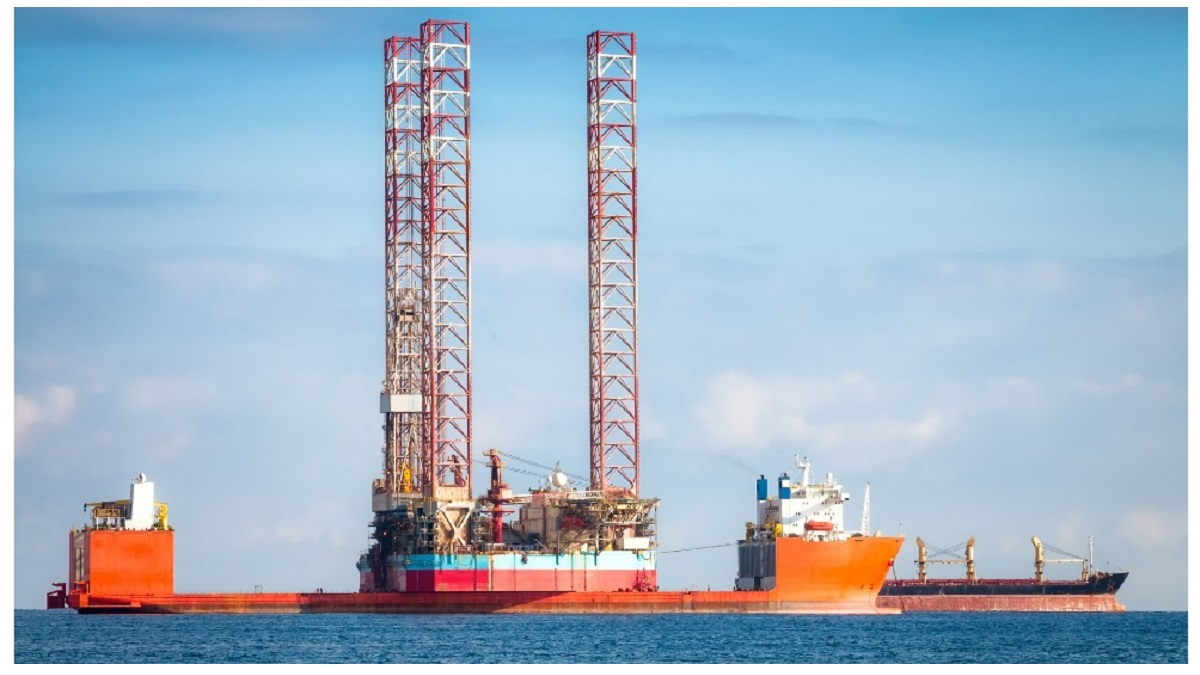
In a webinar hosted by the African Energy Chamber, Namibia’s Ministry of Mines and Energy and Wood Mackenzie on March 20, Namibia announced new offshore licensing opportunities and plans to drill seven wells in 2025

JOHANNESBURG, South Africa, March 20, 2025/APO Group/ –Namibia’s offshore oil and gas industry is set for significant growth in 2025, driven by new licensing opportunities and an uptick in drilling activities, Petroleum Commissioner Maggy Shino announced during a webinar hosted by the African Energy Chamber (https://EnergyChamber.org), Wood Mackenzie and Namibia’s Ministry of Mines and Energy. The move is set to attract fresh investment as the country cements its status as one of the world’s most promising oil frontiers.

“We are operating in an open licensing regime and will be receiving applications shortly,” Shino stated, noting that available acreage spans deepwater, ultra-deepwater and shallow-water environments.

Meanwhile, development is accelerating on two of Namibia’s most significant discoveries. TotalEnergies’ Venus project in Block 2913B remains on track for a final investment decision (FID) in 2026, with new data confirming better density and permeability compared to surrounding blocks. On Galp’s Mopane discovery, Shino revealed that 3,500Kmof high-density seismic data were collected this week to refine volume estimates and advance the project toward FID.

On Shell’s PEL 39 discovery – where the company recently wrote down $400 million – the Commissioner said Shell and its partners are analyzing data from the nine wells drilled so far to “ensure we have designed a pathway to development” and to determine the next steps.

Namibia’s offshore basin remains vastly underexplored, despite its enormous scale. “The scale is enormous – there’s 220,000 square kilometers of offshore license acreage,” said Ian Thom, Research Director for Sub-Saharan Africa Upstream at Wood Mackenzie. “With just over 20 exploration and appraisal wells drilled, this area is still hugely underexplored.”

The scale is enormous – there’s 220,000 square kilometers of offshore license acreage

“The resources are definitely there,” said Verner Ayukegba, Senior Vice President of the African Energy Chamber. “The big questions now revolve around sub-surface conditions, gas content and how best to commercialize these discoveries.”

Drilling activity in Namibia is set to ramp up in 2025, with seven wells expected this year alone. BW Energy plans to drill at the Kharas prospect within the Kudu license, while Rhino Resources awaits results from two high-impact wells in PEL 85. In South Africa’s Orange Basin, TotalEnergies is expected to drill in Block 3B/4B, and Shell may drill in an ultra-deepwater block near the maritime boundary with Namibia.

On the Kudu license, Shino stated that BW Energy has “identified new targets with upside potential – not only for gas, but also for oil within the main area,” with two wells planned by year-end.

As Namibia advances toward first oil production, the government is committed to ensuring that petroleum discoveries translate into long-term economic benefits for the nation. “We are offering a sustainable operating environment, ensuring all discoveries are in a race to first oil while making a lasting impact on the local economy,” said Shino. Namibia’s stable economy, industry alignment, respect for contract sanctity, expansive basins available for exploration and commitment to delivering sustainable energy resources position it as an attractive destination for investment.

Namibia’s exploration boom and available licensing opportunities will take center stage at African Energy Week (AEW): Invest in African Energies 2025, where government leaders, industry executives and investors will discuss the latest developments firsthand. With major discoveries advancing toward production and new blocks opening for investment, AEW offers unparalleled access to key decision-makers shaping Namibia’s energy future.

Distributed by APO Group on behalf of African Energy Chamber.

Business

African Petroleum Producers’ Organization (APPO) Chief Ghezali to Bring Pan-African Energy Perspective to Libya Energy & Economic Summit (LEES) 2027

Published

on

Etu Energias

APPO Secretary General Farid Ghezali will join government, industry and investment leaders in Tripoli as Libya targets higher oil and gas production and seeks to attract new capital into its upstream sector

TRIPOLI, Libya, September 2, 2026/APO Group/ –Farid Ghezali, Secretary General of the African Petroleum Producers’ Organization (APPO), will speak at the Libya Energy & Economic Summit (LEES) 2027, taking place January 23–25 in Tripoli, adding a senior continental voice to discussions on the country’s next phase of energy development.


The announcement comes as Libya seeks to raise oil and gas production and attract new investment across its upstream sector. The National Oil Corporation (NOC) reported crude output of 1.44 million barrels per day (bpd) in June 2026, while targeting 1.5 million bpd in the near term and 2 million bpd over the longer term. Meeting these targets will require further investment in exploration, field development, infrastructure and production capacity.

Against this backdrop, Ghezali’s participation at LEES 2027 will bring a pan-African perspective to the event, with the organization representing African oil-producing countries and promoting cooperation on petroleum policy, investment, technology, capacity building and the development of the continent’s hydrocarbon resources.

His participation also comes as APPO’s engagement with Libya deepens. Tripoli hosted the organization’s 2026 Training Officials Forum, reinforcing Libya’s role in continental energy cooperation. At LEES 2027, Ghezali will contribute to discussions examining how Libya can translate its resource base and production ambitions into new investment, partnerships and energy-sector growth.

The fifth edition of LEES will bring together governments, national oil companies, international operators, investors and service companies to explore opportunities across Libya’s oil and gas sector, alongside power and renewable energy. With Libya seeking to expand production while attracting the capital and technical expertise required to unlock new resources, the summit will provide a platform for dialogue between African producers and the international investment community.

Distributed by APO Group on behalf of Energy Capital & Power.


Continue Reading

Energy

Oil & Gas Arbitration in Africa Moves Up the Investor Agenda at African Energy Week (AEW) 2026

Published

on

African Energy Chamber

A dedicated Upstream E&P Forum panel will examine how resource nationalism, ESG requirements and geopolitical disruption are reshaping dispute resolution across Africa’s oil and gas sector

CAPE TOWN, South Africa, September 2, 2026/APO Group/ –As African governments seek greater state participation, higher local content and a larger share of resource revenues, the terms governing oil and gas investments are changing across the continent. Since 2014, 31 African countries have reformed their mining and petroleum codes, creating new commercial and regulatory considerations for international investors. The resulting environment is placing greater emphasis on how upstream agreements anticipate regulatory change, protect investments and resolve disputes when commercial assumptions shift.


African Energy Week (AEW) 2026, taking place October 12–16 in Cape Town, will bring this issue into focus through a dedicated session at the Upstream E&P Forum: Resource Nationalism, ESG and Investor Protection: The New Frontier of Oil and Gas Arbitration in Africa. Sponsored by Africa-focused legal and advisory firm CLG, the panel will bring together operators, investors, legal practitioners and government representatives to examine how commercial agreements can be structured to manage disputes before they escalate.

Nigeria provides a clear example of how the legal architecture around upstream investment is evolving. The Petroleum Industry Act, enacted in 2021, overhauled the country’s petroleum fiscal and regulatory framework, changing the terms governing production-sharing contracts, joint ventures and other upstream arrangements. Nigeria has also strengthened its dispute-resolution framework through the Arbitration and Mediation Act of 2023, while the Nigerian Upstream Petroleum Regulatory Commission has promoted an Alternative Dispute Resolution Center designed to provide a sector-specific mechanism for resolving upstream disputes.

You cannot do a deal in Africa today without thinking seriously about how you would resolve a dispute if the terms change

Senegal illustrates another dimension of the challenge. Following first oil at the Sangomar field in 2024 and a rapid production ramp-up, the government established a commission to review existing oil and gas contracts with operators including Woodside and bp. While governments retain the sovereign right to review their resource agreements, such processes can alter the commercial assumptions underpinning investments and raise questions around stabilization provisions, production-sharing terms and other contractual protections.

Across parts of West Africa, political transitions, security disruptions and changes to mining and petroleum legislation are adding further uncertainty for investors. At the same time, geopolitical shocks and shifting global energy policies are testing agreements that were negotiated under very different market conditions. For companies committing billions of dollars to long-life upstream projects, the ability to anticipate and manage those changes has become an increasingly important component of investment decisions.

Arbitration remains a central tool. A review by Nigerian law firm OAL found that by 2025, most cross-border oil, gas and power agreements in Africa expressly identified arbitration as the preferred dispute-resolution mechanism. At AEW 2026, the Upstream E&P Forum panel will examine why arbitration continues to dominate cross-border energy contracts and how bilateral investment treaties, domestic legislation, ESG obligations and changing regulatory requirements interact when disputes arise.

“You cannot do a deal in Africa today without thinking seriously about how you would resolve a dispute if the terms change. We’re increasingly seeing arbitration planning as part of the commercial conversation from the start, and rightly so,” said NJ Ayuk, Executive Chairman of the African Energy Chamber. “That commercial focus is central to AEW 2026, which brings governments, investors, operators and legal experts together to address the practical conditions required to unlock the continent’s next wave of energy investment.

The Resource Nationalism, ESG and Investor Protection session will examine the intersection of contractual protections, regulatory change, political risk and the technical complexities of energy projects, giving investors and governments a practical forum to consider how stronger dispute-resolution frameworks can support Africa’s next generation of oil and gas investment.

Distributed by APO Group on behalf of African Energy Chamber.


Continue Reading

Business

Project & Investment Network and African Infrastructure Elites: A stronger platform for African project visibility

Published

on

Project

The Project & Investment Network is a dedicated meeting ground for project developers, financiers, investors, utilities, municipalities, commercial and industrial energy users and strategic partners active in Africa’s power, energy and water sectors


CAPE TOWN, South Africa, September 2, 2026/APO Group/ –Africa’s power, energy and water sectors need more than good ideas. They need visibility, credibility, structured engagement and the right capital connections.

The Project & Investment Network (https://apo-opa.co/4qPyeal) (P&IN), created by VUKA Group, supports this by creating a curated environment where project owners can present opportunities and investors can identify high-potential developments aligned with their mandates. With African Infrastructure Elites (https://apo-opa.co/4h4j2mu) as Host Media Partner, these opportunities gain additional reach through one of Africa’s trusted power, energy, water and utility media platforms.

This partnership helps bridge a persistent gap in the market: strong projects need access to capital and investors need credible, well-positioned opportunities.

The Project & Investment Network is a dedicated meeting ground for project developers, financiers, investors, utilities, municipalities, commercial and industrial energy users and strategic partners active in Africa’s power, energy and water sectors.

Through this collaboration, African Infrastructure Elites will support The Project & Investment Network by amplifying the projects, people and investment conversations shaping Africa’s infrastructure future.

Upcoming opportunities to participate

P&IN will create opportunities for project owners and investors to engage across VUKA Group’s upcoming power, energy and water events:

Project & Investment Network Open: 23 October 2026, Serengeti Golf Club, Johannesburg, South Africa: Register your interest (https://apo-opa.co/4ygw8D6) in participating in the Open.

C&I Energy + Storage Summit Johannesburg: 28 – 29 October 2026, The Maslow Hotel, Sandton, Johannesburg, South Africa: A targeted platform for South Africa’s commercial and industrial sector, co-located with a C&I-focused Water Security Africa programme and the EIUG Conference. Find out more (https://apo-opa.co/4qTkLyv).

Enlit Africa: 11 – 13 May 2027, CTICC, Cape Town, South Africa: Africa’s leading power, energy and water conference and exhibition, hosted annually at the CTICC in Cape Town and attended by thousands of sector stakeholders from across the continent and beyond. Find out more (https://apo-opa.co/4yal5v6).

Water Security Africa: 11 – 13 May 2027, CTICC, Cape Town, South Africa: Co-located with Enlit Africa, this platform explores the water-energy-food nexus and the solutions needed to strengthen water resilience across Africa. Find out more (https://apo-opa.co/4zOtF4e).

Submit your project

Do you have a power, energy, water or infrastructure project seeking visibility, finance or strategic partners? Submit your project (https://apo-opa.co/4qPyeal) to the Project & Investment Network.

Apply as an investor


Are you looking for credible project opportunities across Africa’s power, energy and water sectors? Apply to participate as an investor (https://apo-opa.co/4qPyeal) in the Project & Investment Network.

For sponsorship enquiries, please contact Marcel du Toit: marel.dutoit@wearevuka.com

Why Africa Infrastructure Elites matters

The African Infrastructure Elites (https://apo-opa.co/4h4j2mu) is an annual initiative by ESI Africa that recognises the projects, leaders and innovations shaping Africa’s power, energy, water and transport markets. The platform profiles the people and projects driving measurable impact across the continent, from generation, transmission and distribution to water, storage, clean energy, infrastructure, mobility and sector-coupling solutions.

For project owners, being associated with Elites creates long-term visibility among decision-makers, policy influencers, technical specialists and investment stakeholders. For investors, it provides a trusted lens into the projects, companies and leaders advancing Africa’s energy, water and transport priorities.

Nominations for the 11th African Infrastructure Elites: Projects and People Magazine are open (https://apo-opa.co/3UQS6xY) until the 2nd of October 2026.

The theme for the 2026/27 edition, Access and Affordability Empowers Security for All, speaks directly to one of Africa’s most pressing development imperatives. Reliable and affordable access to electricity, clean water, sanitation and sustainable transport remains fundamental to economic growth, social wellbeing and long-term resilience.

Distributed by APO Group on behalf of VUKA Group.


Continue Reading

Trending