Connect with us
Anglostratits

Business

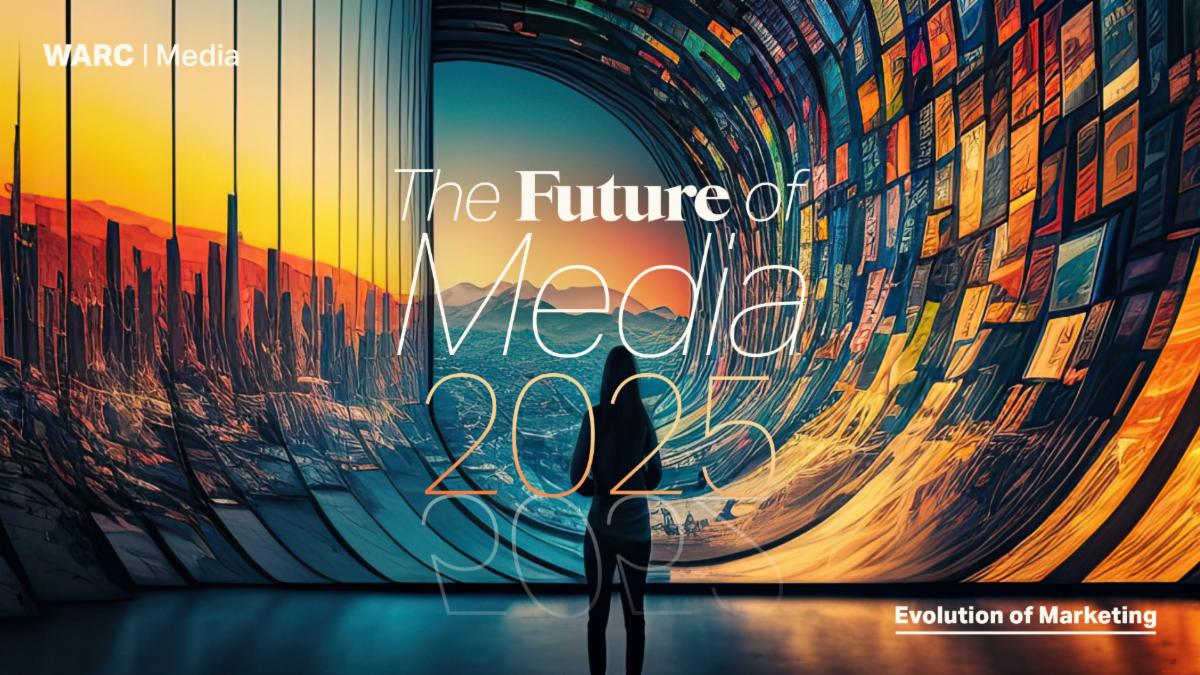
Media in 2025: defined by abundance, driven by algorithms
Published

on

Media
WARC releases The Future of Media 2025 highlighting trends in media planning, advertising investments and the media ecosystem
16 January 2025 – WARC’s latest forecasts show that global advertising spend surpassed $1trn for the first time in 2024, and is expected to grow 10.7% this year, to a total of $1.08trn. Global ad spend has more than doubled over the last decade, growing 2.8x faster than global economic output since 2014, with more media channels available to marketers than ever before.

The Future of Media 2025 report takes a look at how the endless optionality within the media ecosystem creates new opportunities for marketers to drive effectiveness and deliver growth. It looks at how Google search is being disrupted by social and retail platforms, as well as the growing influence of artificial intelligence (AI), and finally, the developments within the retail media and commerce sector and how advertisers can adjust to an environment where commerce is increasingly ‘everywhere’.
Paul Stringer, Managing Editor, Research & Insights, WARC, says: “Today, media is so vast, so complex, and so changeable, that it can be difficult for brands to make sense of it all. As we reach the midpoint of the decade, this is also the most exciting time to be a media planner.“Digital advertising has matured beyond direct-response to support brand-building and long-term effectiveness, advertisers are focusing more on quality over cost when deciding which media environments to advertise in, and signal fidelity is improving thanks to the growth of AI-powered media solutions and an influx of retail media and commerce media networks.“With this report we aim to help marketers navigate these challenges and opportunities as we explore the three key trends set to shape the media and advertising environment this year.”The key trends outlined in The Future of Media 2025 are:Planning in an era of abundanceMedia diversity brings new opportunities for brands to drive growth over the short- and the long-term using smart combinations of different media channels.Planning holistically and choosing the right combination will be different for every brand and vary by context and objective. Media quality, reach and price, will be critical in helping planners determine the optimum stack for brands.As spend and sentiment shifts to channels like social, influencers, podcasts and gaming, new tactics for brand building are emerging. Advertisers are adapting campaigns for platforms where attention is more fleeting, and lots of little exposures need to work together to improve brand outcomes.Across channels like search and social, advertisers will be required to adapt campaigns to fit the preferences of algorithms. This may mean adopting new methods and processes, or putting more trust in AI systems to automate parts of campaign management – even if this means sacrificing autonomy and control.New challenges and opportunities in searchThis year, more than $220bn will be spent on generic search globally, per WARC forecasts, with Google taking more than 80% of the share. However, social media is rivalling Google as the young people’s search platforms of choice for brand discovery.The future of search appears to be about intent rather than information, supported by sophisticated uses of AI.Developments in AI are leading traditional search providers and new entrants to compete to “identify consumer intent in ever more granular ways”. Access to these insights should help brands build a more sophisticated and nuanced understanding of audience behaviours, leading to more personalised and relevant communications.AI-driven search requires a rethinking of search engine optimization (SEO). In the near future, brands may need to optimise messaging and content to ensure they are visible and represented favourably in AI-based search results.This approach – which some are calling Large Language Model Optimisation (LLMO) – will require a different set of skills and processes compared to traditional SEO.Brands may need to adopt more diverse search strategies to account for the growing fragmentation of search experiences across retail and social platforms and variables such as audience, type of search and category.Retail growth fuels commerce media expansionCommerce is increasingly everywhere. Retail media is expanding, reaching $154.8bn in advertising spend globally in 2024 with a further 14.8% rise expected in 2025, per WARC Media. New commerce media platforms are launching, and social commerce is continuing to grow rapidly.Commerce media is becoming the infrastructure that underpins the entire digital advertising ecosystem, and offers brand building potential. Many retail and commerce media platforms now sell ads that allow advertisers to reach consumers across the purchase journey, from awareness all the way through to conversion.Advertisers will need to weigh up these opportunities carefully, supported by holistic measurement that allows them to show the impact of commerce on long-term brand and business metrics.New entrants may struggle to win spend from incumbents. Advertisers already admit to feeling overwhelmed by the number of options available in the commerce space and highlight a lack of standardisation across platforms as their biggest challenge with retailers. In the short-term, this may curtail the growth of new entrants as advertisers prioritise working with just a few large and established networks.Retail spending puts brand budgets at risk. Many advertisers appear to be divesting from traditional advertising channels to spend more on lower-funnel ads on retail media networks. Advertisers should protect traditional advertising budgets to avoid falling into a vicious cycle of weakening their brand, while raising the cost of driving performance on retail media properties.The Future of Media 2025 is based on data and insights from WARC, including WARC’s Marketer’s Toolkit global survey of 1000+ marketing executives, and external research. It is part of WARC’s Evolution of Marketing programme helping marketers address major industry shifts to drive effective marketing, and follows the recent publication of WARC’s The Voice of the Marketer 2025The Marketer’s Toolkit 2025 and The GEISTE report.WARC members can read the full report. Complementing The Future of Media 2025 and associated reports, are a series of podcasts.

Business

Aurionpro expands its multi-country transaction banking engagement with Diamond Trust Bank (DTB)

Published

on

Aurionpro

Aurionpro’s upgraded iCashpro platform for DTB delivers a unified digital experience across payments, trade, virtual accounts, and real-time reporting, enhancing straight-through processing, visibility, and control for both the bank and its corporate customers

MUMBAI, India, April 30, 2026/APO Group/ –Aurionpro Solutions Limited (www.AurionPro.com) (BSE: 532668 | NSE: AURIONPRO)a global leader in banking technology, announced the expansion and upgrade of its transaction banking engagement with Diamond Trust Bank (DTB), to modernize and enhance the bank’s corporate transaction banking capabilities across multiple countries.

Download Document: https://apo-opa.co/4edHUaC

This multi-country transaction banking upgrade covering Kenya, Uganda, and Tanzania aligns with DTB’s intent to enhance customer experience, streamline operations, and support growing transaction volumes as it expands its regional corporate banking footprint. DTB continues to focus on building a more agile, ‘digital-first’ banking experience, particularly around payments for its corporate customers across Africa, and is now well positioned to scale these capabilities. As part of its broader transformation agenda, the bank has been steadily investing in platforms that enhance scale, reliability, and service consistency across markets.

Through this partnership, we are proud to lead the next era of transformation in transaction banking, helping DTB enhance operational agility

Aurionpro’s upgraded iCashpro platform for DTB delivers a unified digital experience across payments, trade, virtual accounts, and real-time reporting, enhancing straight-through processing, visibility, and control for both the bank and its corporate customers. By enabling DTB to standardize and scale its transaction banking operations across countries, the platform ensures consistent service levels, stronger control, and improved efficiency. It also supports enhanced user experience, advanced security, and the flexibility to introduce new features as DTB expands its regional transaction banking footprint.

Murali Natarajan (https://apo-opa.co/48trPdk), Managing Director & CEO, DTB Kenya   commented: “We are delighted to strengthen and broaden our partnership with Aurionpro Solutions as part of DTB’s ongoing digital transformation journey across multiple markets. Our focus on innovation, operational excellence, and customer-centricity continues to guide our technology investments. This upgrade strengthens our transaction banking capabilities, enabling us to deliver greater value to our customers through robust digital channels and seamlessly integrated experiences.”

Ashish Rai, Group CEO, Aurionpro Solutions, commented: “We are pleased to deepen our multi-country engagement with Diamond Trust Bank and support the next phase of its transaction banking modernization. As DTB continues to scale across markets, platform resilience and consistency become paramount. Through this partnership, we are proud to lead the next era of transformation in transaction banking, helping DTB enhance operational agility, deliver superior experiences to corporate customers, and create long-term value across geographies.”

He added, “Aurionpro’s iCashpro lays a strong digital foundation for transaction & wholesale banks across the globe to grow their corporate and SME client portfolio today, while creating a clear roadmap for next- generation capabilities in AI-driven insights, advanced automation and API-led connectivity for businesses in Kenya and across Africa.”

Distributed by APO Group on behalf of Aurionpro Solutions Ltd.


Continue Reading

Business

Minerals Council Chief Executive Officer (CEO) Joins African Mining Week (AMW) as South Africa Improves Sectorial Investment Climate

Published

on

Energy Capital

Minerals Council CEO to share insights on policy, infrastructure and investment trends shaping South Africa’s mining industry

CAPE TOWN, South Africa, April 30, 2026/APO Group/ –The upcoming African Mining Week (AMW) conference will feature Mzila Mthenjane, CEO of the Minerals Council of South Africa, as a speaker. Scheduled for October 14 – 16, 2026 in Cape Town, the event will bring together global investors, policymakers and industry leaders, with Mthenjane’s participation highlighting the council’s commitment to engaging international stakeholders and promoting investment across South Africa’s mining sector.

His participation comes at a critical moment as the Minerals Council works closely with government on finalizing the Mineral Resources Development Bill 2025, a policy framework aimed at strengthening the country’s mining investment climate and the sector’s contribution to GDP. According to the council, the revised legislation will support new investment across the value chain as South Africa seeks to mobilize R2 trillion over the next five years to unlock its critical minerals potential.

The policy reforms come amid shifting production trends in the sector. In 2025, South Africa recorded declines in gold and platinum group metals output of 1.9% and 4.1%, respectively. The new regulatory framework is expected to strengthen public-private partnerships and stimulate investment, enabling South Africa to increase production and capitalize on strong global commodity prices. Increased private sector investments is crucial with South Africa seeking targeting to unlock an estimated R40 trillion in untapped iron ore potential as well as maintain its position as the world’s leading producer of chrome and manganese.

At AMW 2026, Mthenjane is expected to outline these trends, providing insights into how the council is contributing to addressing challenges disrupting the sector. Infrastructure and energy costs remain key concerns for industry players. To support the energy-intensive sector, South Africa approved a 35% reduction in electricity tariffs for major ferrochrome producers, helping stabilize an industry that has faced significant cost pressures after electricity prices surged by roughly 900% since 2008.

Logistics constraints are also a priority area for reform. South Africa’s economy is losing an estimated R1 billion per day due to inefficiencies across rail and port infrastructure. As a result, the government is considering measures supported by the Minerals Council to increase private sector participation in logistics. Planned reforms include rail modernization initiatives targeting 250 million tons of freight capacity by 2029, alongside port upgrades and private operator participation aimed at strengthening mineral exports and improving supply chain efficiency.

Beyond infrastructure and policy reforms, the Minerals Council is advocating for stronger exploration investment to support long-term industry growth.

At AMW, Mthenjane is expected to highlight these developments and outline the steps required to reinforce South Africa’s position in the global minerals supply chain. His insights will offer investors and stakeholders a timely perspective on opportunities within the country’s mining sector.

Distributed by APO Group on behalf of Energy Capital & Power.

Continue Reading

Energy

Seychelles Targets Energy Investment Push as Minister Jérémie Joins African Energy Week (AEW) 2026 as a Speaker

Published

on

African Energy Chamber

Seychelles energy minister will speak at AEW 2026, positioning her to highlight reforms, renewable projects and investment opportunities as the island nation advances its transition toward a diversified energy system

CAPE TOWN, South Africa, April 29, 2026/APO Group/ –Marie-May Jérémie, Minister of Environment, Climate, Energy and Natural Resources for Seychelles will participate as a speaker at this year’s African Energy Week (AEW) 2026, taking place from October 12–16 in Cape Town. Her participation underscores the country’s growing role in shaping Africa’s small-island energy transition agenda.

Minister Jérémie’s presence at AEW 2026 comes at a critical time as Seychelles accelerates efforts to reduce its heavy reliance on imported fossil fuels. The event provides a platform to attract investment, strengthen policy alignment and showcase bankable projects, positioning the country as a viable destination for private-sector participation in island energy systems.

Seychelles is demonstrating how policy reform and innovation can unlock investment in constrained environments

In May last year, international finance institution the World Bank approved the Renewable Energy Acceleration Program, a seven-year initiative aimed at modernizing the grid and increasing renewable energy penetration to 15% by 2030. The program focuses on unlocking private capital while strengthening transmission infrastructure to accommodate variable renewable energy sources.

Project development is gaining traction in the country, particularly in innovative technologies suited to Seychelles’ land constraints. The 5.8 MW Seysun Lagoon floating solar PV project, developed by independent renewable power producer Qair, is under construction and expected online in 2026.

Alongside renewables, Seychelles continues to pursue upstream opportunities to diversify its economy. The government approved new exploration entrants in 2025 and extended exiting petroleum agreements, while securing an infrastructure partnership with China. Multilateral estimates suggest over $800 million in investment will be required over the next 25 years.

Regulatory reform is central to this transition, with Seychelles introducing an independent power producer framework to open the market to private developers. Standardized power purchase agreements, grid access reforms and strengthened public-private partnership structures are being implemented to improve transparency, reduce risk and accelerate project bankability across solar, storage and emerging wind opportunities.

“Minister Jérémie’s participation highlights the strategic importance of island nations in Africa’s broader energy transition,” says NJ Ayuk, Executive Chairman, African Energy Chamber. “Seychelles is demonstrating how policy reform and innovation can unlock investment in constrained environments. Her insights will be critical to advancing dialogue on resilient, low-carbon energy systems across the continent.”

Distributed by APO Group on behalf of African Energy Chamber.

Continue Reading

Trending