Connect with us
Anglostratits

Business

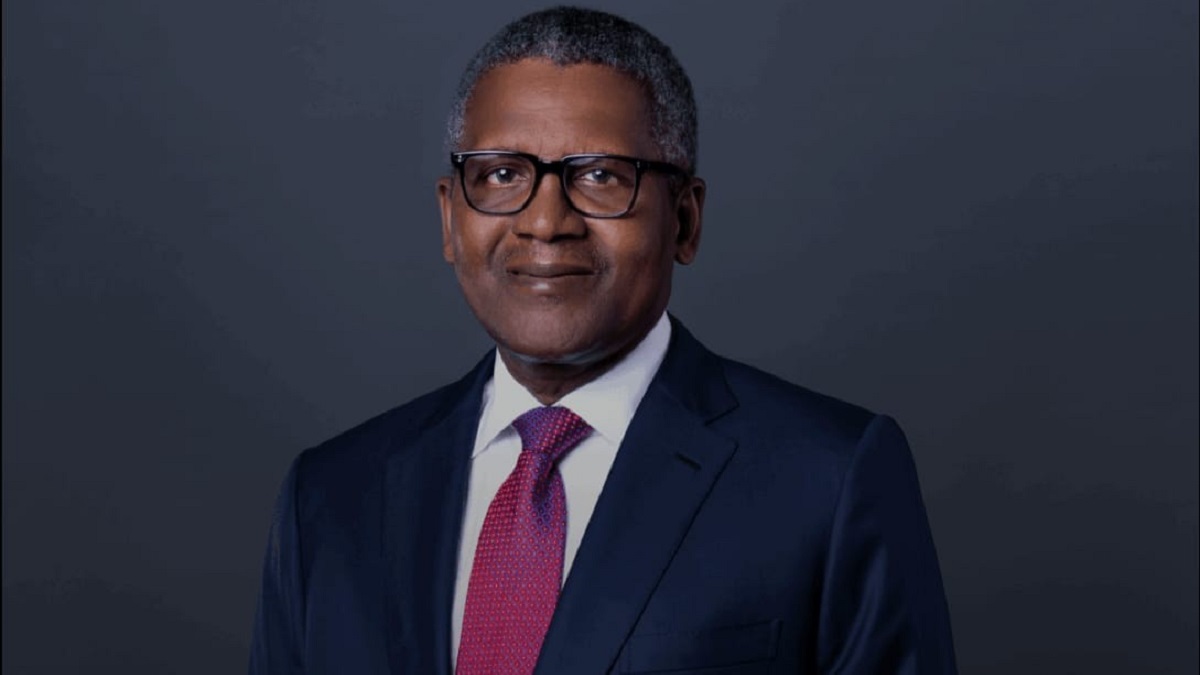
Aliko Dangote: African Energy Person of the Year 2026

Published

on

Aliko Dangote

Aliko Dangote is a visionary who has invested his time, resources, and unwavering belief in Africa’s potential to build industries, strengthen energy security, and create lasting economic opportunity across the continent

JOHANNESBURG, South Africa, May 18, 2026/APO Group/ –Each year, the African Energy Industry’s “African Energy Person of the Year” award celebrates individuals who have positively influenced Africa’s energy sector by facilitating projects that strengthen energy security, African development, energy additions, free markets, limited government, economic resilience, the prosperity of families, local content and improve African energy infrastructure. Previous awardees include Frank Fannon, former United States Assistant Secretary of State for Energy Resources; Mohammad Sanusi Barkindo, former OPEC Secretary General; Hage Geingob, former President of Namibia; Meg O’Neill, CEO of Woodside Energy; Benedict Oramah, President and Chairman of the Board of Directors of African Export-Import Bank; and João Lourenço, President of Angola.


The African Energy Chamber is pleased to present the 2026 award to Aliko Dangote.

This is a fitting honor for the Nigerian businessman and industrialist who has invested billions in Africa to strengthen energy security, build infrastructure, create jobs, reduce import dependence, support regional development, and promote African-led solutions to energy poverty.

A Career Devoted to African Growth

After his studies in business at Al-Azhar University in Cairo, Dangote ventured into a wide variety of industries, with enterprises in cement, sugar, salt, flour, and fertilizer. From a small trading business, he has built one of Africa’s largest conglomerates: Dangote Group, a multinational industrial powerhouse that develops African technical expertise, enhances domestic supply chains, and boosts industrial capacity — all resulting in greater opportunities for economic diversification.

Dangote has long recognized one of Africa’s biggest economic challenges: the need among African countries to export raw materials and import finished products. He adopted a long-term mission to help solve this dilemma by building manufacturing capacity, logistics systems, energy infrastructure, raw material processing, and transportation networks that will move more production and value creation inside Africa.

Under the direction of this transformative business leader, the Dangote Group is one of the most ambitious industrial conglomerates ever built in Africa. What makes the organization unique is not just its size, but its strategy: Instead of focusing on trading or resource extraction, Dangote has invested heavily in the physical infrastructure needed for industrialization across Africa.

But it’s when he turned his sights to hydrocarbons that Aliko Dangote’s story really comes alive.

Breaking the Import Dependence Cycle

In recent years, he gained global attention for the Dangote Refinery in Lekki near Lagos, Nigeria. This is one of the world’s biggest oil refineries (and the world’s largest single-train refinery), with a planned refining capacity of about 650,000 barrels per day. It includes a petrochemical complex and fertilizer facilities. The refinery produces gasoline, diesel, aviation fuel, and other refined petroleum products at a scale capable of transforming regional and international fuel markets.

This is not simply a refinery. It is a macroeconomic game-changer for Nigeria and a transformative project for African energy security.

For years, Nigeria’s dependence on imported refined products created fuel shortages, subsidy burdens, foreign exchange pressures, and opportunities for corruption tied to import systems and arbitrage networks. The Dangote Refinery has fundamentally altered that trajectory by enabling domestic refining at unprecedented scale while helping strengthen Nigeria’s energy sovereignty. At a time of global energy volatility, the refinery is a primary reason African economies remain resilient in the face of external fuel shocks.

The refinery also represents something even bigger for Africa: proof that the continent can build and operate world-scale industrial infrastructure.

At a time when geopolitical instability involving Iran and growing uncertainty around the Strait of Hormuz continue to threaten global shipping lanes and fuel supply chains, the Dangote Refinery has emerged as a strategic stabilizing force for both Nigerian and international energy markets. As supply disruptions intensify, the refinery actively helps fill fuel supply gaps beyond its borders. Today, refined products from Dangote are supplying markets across the continent, including Ghana, Cameroon, and Côte d’Ivoire. The refinery is already supplying fuel products to the United Kingdom, Europe, and the United States, and in June 2026, the refinery is expected to load its first major gasoline shipment to Asia.

Many critics doubted that the refinery would ever be completed.

Dangote faced skepticism from international observers, financing challenges, infrastructure bottlenecks, technical complexity, political uncertainty, and currency volatility. Despite these, and many other hurdles, Dangote’s steadfast determination and visionary leadership persisted to bring the project to fruition.

Today, the refinery stands as a symbol of African industrial ambition and confidence.

Its impact on Nigeria’s economy has been profound. According to S&P Global Ratings, Nigeria’s refining capacity is increasing significantly thanks to the Dangote Refinery. By reducing the nation’s need for refined fuel imports, the refinery played a key role in boosting the Nigerian gross foreign exchange reserves from $33 billion in 2023 to $50 billion by early March 2026.

And Dangote is not stopping there. In early 2026, plans for feasibility studies indicated the interest in expanding its current refining capacity to 1.4 million barrels per day. This move could position Nigeria among the world’s most significant refining hubs by the end of the decade, potentially rivaling refining centers in India and Asia by 2027 or 2028.

At the same time, the Dangote Group is expanding fuel storage and logistics infrastructure beyond Nigeria’s borders, with plans for new storage tank projects in Namibia and the potential development of a second refinery in East Africa. These efforts will undoubtedly further strengthening regional industrialization, supply reliability, and energy integration across the continent.

Sharing the Wealth

Dangote’s positive influence on African industry and economic development cannot be overstated. But he is more than a businessman or industrialist. He is also dedicated to helping his country and uplifting his fellow Nigerians. Among his philanthropic efforts, he leads the Aliko Dangote Foundation (ADF), which supports health initiatives, education, disaster relief, poverty reduction, and nutrition programs across Africa.

Established with the mission of reducing poverty and improving quality of life through strategic philanthropy and sustainable development initiatives, ADF is one of the largest private charitable foundations in Africa. Dangote himself has publicly committed a large portion of his wealth to philanthropy, including signing the Giving Pledge that encourages billionaires to donate most of their fortunes.

ADF became internationally known for supporting Nigeria’s campaign to eradicate polio. It partnered with the Bill & Melinda Gates Foundation, UNICEF, the World Health Organization, and various Nigerian government agencies in this work. It’s no coincidence that Nigeria was declared free of wild polio in 2020, after years of vaccination campaigns.

The foundation also supports nutrition initiatives targeting children, pregnant women, and vulnerable communities. Agricultural programs to strengthen poverty reduction and employment have included farmer support, fertilizer access, agricultural training, and rural development efforts.

ADF regularly donates large sums and relief materials to affected communities across Nigeria to provide emergency assistance during crises such as flooding, food shortages, displacement, and disease outbreaks. For instance, the foundation helped coordinate private-sector responses through the Coalition Against COVID-19 (CACOVID), contributing emergency funding for medical supplies, isolation centers, and food assistance.

The foundation, under Dangote’s leadership, also promotes programs designed to create sustainable livelihoods, including small business support, agricultural initiatives, women’s empowerment projects, and entrepreneurship development. Programs focus on helping communities move from aid dependency toward long-term economic participation. By collaborating with universities and educational institutions to strengthen research and learning capacity, Dangote is improving educational access and workforce readiness, especially for young Nigerians, through scholarships, school infrastructure, university programs, and vocational training.

ADF often works with African governments, international NGOs, UN agencies, community organizations, and global philanthropic institutions. Its partnership model is crucial because many African development challenges require coordination between public and private sectors. Its influence extends beyond charity into public health, economic policy, and development strategy across the region.

Aliko Dangote is a visionary who has invested his time, resources, and unwavering belief in Africa’s potential to build industries, strengthen energy security, and create lasting economic opportunity across the continent. The African Energy Chamber looks forward to seeing the impact of his efforts continue to unfold in the years ahead.

Distributed by APO Group on behalf of African Energy Chamber.

Energy

Gwede Mantashe Joins African Energy Week (AEW) 2026 as South Africa’s Petroleum Reforms Open the Orange Basin to Drilling

Published

on

African Energy Chamber

A new petroleum law and the prospect of fresh Orange Basin drilling is resetting South Africa’s upstream, and Minister Mantashe is taking the AEW host nation’s case to the global market

CAPE TOWN, South Africa, June 8, 2026/APO Group/ –Gwede Mantashe, Minister of Mineral and Petroleum Resources of the Republic of South Africa, has been confirmed as a featured speaker at the upcoming African Energy Week (AEW) 2026 Conference and Exhibition, where he is expected to lay out the reform agenda reshaping the country’s upstream oil and gas sector and its drive to convert long-stranded offshore gas into production.


South Africa is pursuing one of the most significant upstream overhauls in its history, anchored by a new law that gives oil and gas their own regulatory regime for the first time. The reforms position the host nation as both a destination for exploration capital and a future producer along an Atlantic margin that has drawn the world’s largest oil companies to the region.

At the center of the shift is the Upstream Petroleum Resources Development Act (UPRDA), which President Cyril Ramaphosa signed into law in October 2024. The Act separates petroleum from the mining statute that has long regulated both sectors. It also creates a single petroleum right covering exploration and production along with a 20% carried interest for the state. The UPRDA awaits a presidential proclamation to take effect, and implementing regulations that went through a further round of industry comment in early 2026 are now being finalized.

A clear petroleum framework and a credible state partner are what international capital needs to commit to the Orange Basin

Mantashe has emerged as the most forceful advocate for accelerating the sector. He has long-argued that South Africa must shift from importing refined products to producing its own, warning that dependence on foreign supply leaves the economy exposed to global price shocks. This shift becomes increasingly more importance in the current global climate, where supply security has become a major challenge – particularly for import-reliance economies such as South Africa. As such, Mantashe has repeatedly pressed for faster licensing and fewer legal delays to exploration. AEW 2026 is a key platform to bring this discussion to a global audience.

“South Africa has the geology for exploration. Now it is building the regulatory certainty it needs to turn discoveries into bankable projects,” said NJ Ayuk, Executive Chairman of the African Energy Chamber. “A clear petroleum framework and a credible state partner are what international capital needs to commit to the Orange Basin.”

Offshore, TotalEnergies – operator of Block 3B/4B in the Orange Basin – is preparing to begin drilling in South African waters in 2026 pending final regulatory approvals. The acreage sits on trend with the Venus discovery in neighboring Namibia, where TotalEnergies is developing the basin’s first oil project.

Onshore, momentum is building in Mpumalanga, where gas developer Kinetiko Energy’s Amersfoort project has logged sustained high-flow results and is advancing plans for an LNG pilot plant. Mantashe has also signaled that government is moving to lift the long-standing moratorium on shale gas development, with the Petroleum Agency of South Africa (PASA) estimating recoverable Karoo reserves at 209 tcf.

Mantashe is also expected to report on successes of the South African National Petroleum Company (SANPC), the state entity formed in May 2025 through the merger of PetroSA, iGas and the Strategic Fuel Fund. Positioned as the country’s petroleum champion, SANPC is intended to anchor state participation across the value chain as South Africa works toward 6 GW of gas-fired power by 2030.

As AEW 2026 prepares to convene policymakers, investors and operators at the Cape Town International Convention Centre from October 12-16, Mantashe’s address carries added weight as the host nation’s signal to the market. His message is expected to be direct: South Africa is open for upstream investment and ready to move from potential to production.

Distributed by APO Group on behalf of African Energy Chamber.

Continue Reading

Business

Mining Review Africa expands coverage to include global mining news

Published

on

vukagroup

The expanded editorial scope aligns with Vuka Group’s commitment to delivering timely, relevant and insightful content that supports informed decision-making across the mining value chain

CAPE TOWN, South Africa, June 8, 2026/APO Group/ –Vuka Group’s Mining Review Africa (https://WeAreVUKA.com), a leading source of mining industry news and insights, is expanding its editorial coverage to include major mining developments from around the world.


While Mining Review Africa remains firmly committed to reporting on the opportunities, challenges and successes shaping Africa’s mining sector, readers will now also benefit from coverage of international projects, investments, technologies, commodity markets and policy developments influencing the global mining industry.

The move reflects the increasingly interconnected nature of the mining sector, where developments in one region can have significant implications for investment decisions, supply chains, commodity markets, and mining operations worldwide.

Expanding our coverage enables us to deliver a more comprehensive view of the mining industry while maintaining our strong focus on Africa

“As the mining industry continues to evolve on a global scale, our readers are seeking greater context around international developments that impact Africa and the wider resources sector,” said Mining Review Africa Editor-in-Chief, Gerard Peter.

“Expanding our coverage enables us to deliver a more comprehensive view of the mining industry while maintaining our strong focus on Africa.”

Readers can expect enhanced reporting on major mining projects, mergers and acquisitions, sustainability initiatives, technological innovation, critical minerals, energy transition developments and regulatory changes from key mining jurisdictions worldwide.

The expanded editorial scope aligns with Vuka Group’s commitment to delivering timely, relevant and insightful content that supports informed decision-making across the mining value chain.

Mining Review Africa has established itself as a trusted voice within the African mining industry, providing news, analysis and thought leadership for mining professionals, investors, suppliers and policymakers. By broadening its coverage, the publication aims to give readers a deeper understanding of the global forces shaping the future of mining, while continuing to place African mining stories at the centre of its reporting.

For readers, this means access to a wider range of industry intelligence, bringing together African mining news and key international developments on a single trusted platform.

Distributed by APO Group on behalf of VUKA Group.

Continue Reading

Business

13,000 Hectare Wild Coast Conservation Property Comes to the Market in the Eastern Cape

Published

on

Coast Conservation

Tyityaba Nature Reserve, a proclaimed reserve covering roughly 13,000 hectares on the Wild Coast, has been listed at an indicative R145 million (about USD 8.9 million)

EAST LONDON, South Africa, June 8, 2026/APO Group/ –One of the largest privately held conservation properties in the Eastern Cape has been put up for sale. Tyityaba Nature Reserve, a proclaimed reserve covering roughly 13,000 hectares on the Wild Coast, has been listed at an indicative R145 million (about USD 8.9 million), according to the selling agent, Bass Property Group (www.BassPropertyGroup.co.za).

The property sits about 18 kilometres inland from Kei Mouth. Its status as a gazetted proclaimed reserve, a designation under South African law, ties the land to long-term conservation management and places it within a category of property that has drawn growing interest from investors looking for protected land. Listings of this scale are uncommon, and proclaimed reserves seldom change hands, making the sale a notable event in the regional market.

Scale and setting

Size is the reserve’s most distinguishing feature. It holds about 26 kilometres of frontage along the Kei River and a perimeter of roughly 81 kilometres, taking in rolling bushveld, riverine thicket and the open vistas typical of the Wild Coast, a region known for its biodiversity and its remoteness. The varied terrain supports a mix of habitats, from valley grassland to dense thicket, that sustains the reserve’s wildlife through the seasons.

That remoteness is relative. King Phalo Airport in East London, which has direct flights from Johannesburg and Cape Town, is about an hour away by road, placing the reserve within comfortable reach of major centres while preserving the seclusion that defines the Wild Coast.

Wildlife

The reserve carries buffalo, giraffe, leopard, zebra, blue wildebeest, eland and impala, along with a wide range of birdlife. Populations of spiral-horned antelope, such as nyala, kudu and bushbuck, are prolific and well established. Tyityaba has a long record of regulated, quota-based wildlife use carried out within South Africa’s conservation framework, and its established game populations would allow a new owner to continue managed conservation operations without a lengthy restocking period.

Twenty-six kilometres of river frontage and 13,000 hectares of established habitat take generations to form and cannot be recreated

Infrastructure

The main lodge has eight en-suite bedrooms and shared entertainment areas. The property also includes an abattoir and workshop, with several other farm dwellings spread across the holding that could house staff or be developed to accommodate guests. An airstrip on site would need upgrading before it could be used, though it raises the possibility of fly-in access alongside the road route from East London. Together, the existing buildings give a buyer a working base from which to operate or further develop the reserve.

How it can be bought

The land is made up of 26 portions across five titles. It can be bought as a single holding or, the agent says, divided among several owners as a development. That structure is part of what they expect will determine who comes forward.

“Tyityaba is a large landholding of a kind that rarely comes to the open market in South Africa,” said Hanlie Bassingthwaighte, a principal of Bass Property Group. “Its main strength is flexibility. It can work as a single-owner reserve or as the basis for a development shared among several owners.”

Price

The reserve is listed at an indicative R145 million (about USD 8.9 million). The agent attributes the figure to the property’s size, biodiversity and the range of ownership options it allows.

“Twenty-six kilometres of river frontage and 13,000 hectares of established habitat take generations to form and cannot be recreated,” said Joshua Bassingthwaighte, also a principal of the firm.

Distributed by APO Group on behalf of Bass Property Group.


Continue Reading

Trending