Connect with us
Anglostratits

Business

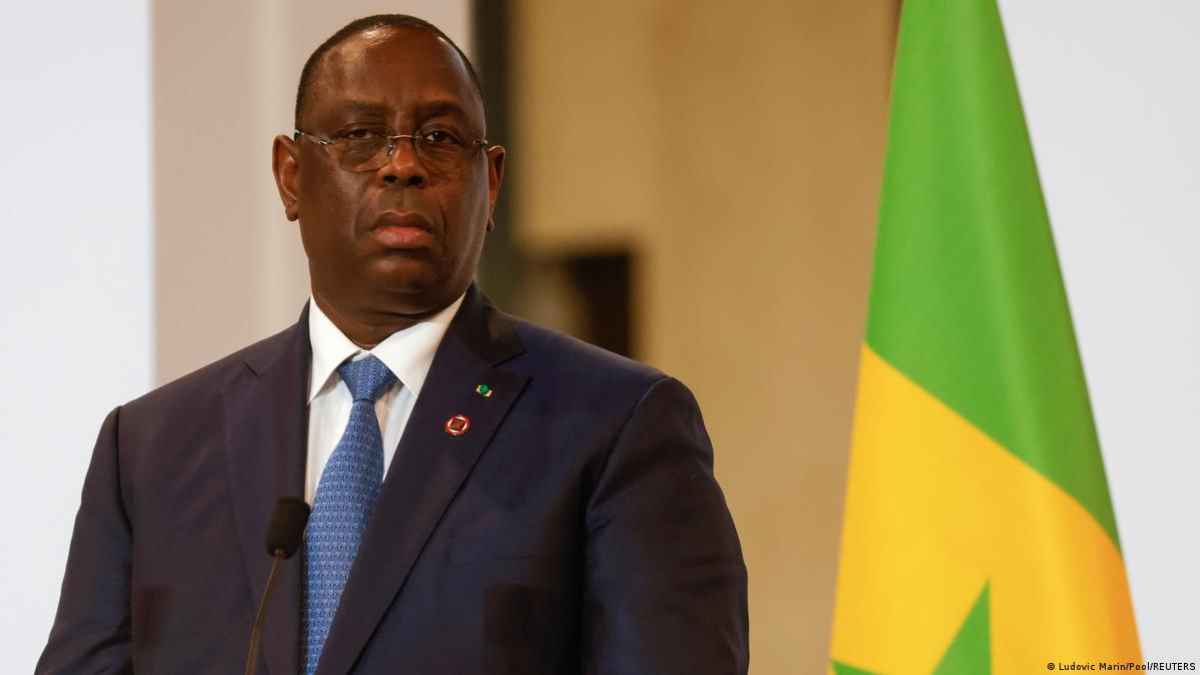
Macky Sall Has Excelled as an African Voice Speaking up for African Priorities (By NJ Ayuk)

Published

on

Sall

Sall has been particularly outspoken about Africa’s energy needs and the rights of African countries to continue extracting and capitalizing upon their oil and gas resources

JOHANNESBURG, South Africa, December 7, 2022/APO Group/ — 

By NJ Ayuk, Chairman, African Energy Chamber (http://www.EnergyChamber.org)

When African Union Chairman Macky Sall addressed the United Nations General Assembly last September, he wasn’t shy about speaking up for his continent. The gist of his message? There is absolutely no excuse for failing to ensure consistent African representation in the world’s key decision-making bodies.

“It is time to overcome the reticence and deconstruct the narratives that persist in confining Africa to the margins of decision-making circles,” said Sall, who also is the president of Senegal.

Sall’s speech was about the need to give Africa permanent seats at the UN Security Council so, as he put it, “Africa can finally be represented where decisions that affect 1.4 billion Africans are being taken.”

But that was far from the first time he has called upon the global community to seek and consider African perspectives. From the beginning of his one-year term as the African Union’s chairman last February, Sall said he wanted to see fair, equitable international partnerships that welcomed African contributions instead of dismissing African priorities.

“Our continent cannot be a field which is the feast of others,” Sall said during his inaugural speech.

He also has spoken up for greater African representation in the G20, which as of yet only has one African member (South Africa). Multilateralism must “serve the interests of all,” Sall argued in October, or it will suffer “loss of legitimacy and authority.”

I commend Chairman Sall for his tireless work, not only to insist that the global community listens to and respects African issues, but also to build awareness of just what those issues are.

He has put African needs and priorities — including infrastructure development, greater access to COVID-19 vaccinations, food security, and an end to energy poverty — in front of world leaders ranging from Chinese President Xi Jinping to U.S. President Joe Biden. He has done the same at global events, including the 2022 G20 summit and the COP27 climate conference.

Sall has been particularly outspoken about Africa’s energy needs and the rights of African countries to continue extracting and capitalizing upon their oil and gas resources, even in the face of tremendous global pressure for Africa to make a rapid switch to renewable energy sources. Sall has firmly stated that, when it comes to the global march toward net zero emissions, Africa will not be in lockstep with the rest of the world at the expense of our countries’ well-being.

We are in an era when Africa needs fierce advocates. Nations and international partnerships are fighting for their respective priorities, and unless African leaders are willing to stand up for what our continent needs, our objectives will be pushed aside. Sall has, indeed, taken a stand.

We will not accept that polluting countries, responsible for the situation of the planet, tell us that we are no longer going to finance fossil fuels

An Unwavering Voice for a Just Energy Transition

African energy was not Sall’s only priority as chairman of the African Union, but he did, rightfully, use his platform to expand global awareness of Africa’s unique energy needs in 2022. He pointed out the hypocrisy of wealthy countries that harnessed fossil fuels to industrialize and grow their economies telling developing African countries that the world’s zero-emission goals trumped their right to do the same.

“We will not accept that polluting countries, responsible for the situation of the planet, tell us that we are no longer going to finance fossil fuels,” Sall said in September.

He made similar remarks when he opened the MSGBC Oil, Gas & Power 2022 conference and exhibition, held Sept. 1-2 this year in Dakar. The MSGBC region comprises Mauritania, Senegal, the Gambia, Guinea-Bissau, and Guinea-Conakry.

“In this new configuration of the world, energy resources are major assets for Africa. Therefore, we must not accept that our continent is an object of world geopolitics, but an actor, aware of its natural wealth of interests, which acts on the competition instead of suffering it,” Sall said, adding that made no sense for African countries to stop exploiting their oil and gas resources while more than 600 million Africans lacked electricity. “While remaining committed to the implementation of the Paris Climate Agreement, we must continue to defend the interests of our countries in the run-up to COP27 next November in Egypt.”

And that’s exactly what happened. Sall and other African leaders fiercely defended Africa’s energy interests before and during COP27. The result? As multiple news outlets reported, African natural gas took center stage at the conference.

A Strong Collaborator

As I tweeted in November, Africa was fortunate to have Sall at COP27. He understands both sides of the African energy transition debate: the need for Africa to set the timing for its shift to renewables and the world’s need to address climate change. Sall advocated for ongoing natural gas production in Africa, which allows us to minimize carbon dioxide emissions while providing much-needed gas to generate electricity domestically, build our economies, and move toward industrialization. Sall also has pushed for the international community to help fund the renewable energy infrastructure Africa needs for a just transition and to provide financial support for African climate adaptation.

Climate adaptation measures have particularly been a priority for Sall. In his capacity as president of Senegal, he and the CEO of the Global Center on Adaptation (GCA), Patrick Verkooijen, partnered in 2022 to unlock $1 billion in climate finance for Senegal under the Africa Adaptation Accelerator Program (AAAP). The AAAP, Africa-led and Africa-owned, is working to bolster adaptation in agriculture, digital services, infrastructure, entrepreneurship, and jobs for young people. It was developed by the Global Center on Adaptation (GCA) and the African Development Bank (AfDB) in collaboration with the African Union.

Sall was among the trailblazers to convene the Africa Adaptation Leaders’ Event during COP27. He also co-wrote, with French President Emmanuel Macron and Dutch Prime Minister Mark Rutte, an opinion piece for the Guardian about the AAAP. It emphasized the critical importance of increased funding from developed countries for climate adaptation initiatives in developing countries, particularly those in Africa.

What we’ve seen is a pragmatic approach from Sall, one that recognizes the need for Africa to continue harnessing its oil and gas reserves while working diligently to move toward the transition to renewables — and to build climate resiliency into Africa’s economy.

When Sall’s one-year term at the helm of the African Union concludes February 5, the many challenges facing Africa will hardly be behind us. Nevertheless, I firmly believe that Sall has been making a vital difference in his role. Sall has said, loudly and clearly, that African voices will not be silenced. Thanks to Sall, it appears that the global community is starting to hear that message. That is a step in the right direction.

Distributed by APO Group on behalf of African Energy Chamber.

Business

Aurionpro expands its multi-country transaction banking engagement with Diamond Trust Bank (DTB)

Published

on

Aurionpro

Aurionpro’s upgraded iCashpro platform for DTB delivers a unified digital experience across payments, trade, virtual accounts, and real-time reporting, enhancing straight-through processing, visibility, and control for both the bank and its corporate customers

MUMBAI, India, April 30, 2026/APO Group/ –Aurionpro Solutions Limited (www.AurionPro.com) (BSE: 532668 | NSE: AURIONPRO)a global leader in banking technology, announced the expansion and upgrade of its transaction banking engagement with Diamond Trust Bank (DTB), to modernize and enhance the bank’s corporate transaction banking capabilities across multiple countries.

Download Document: https://apo-opa.co/4edHUaC

This multi-country transaction banking upgrade covering Kenya, Uganda, and Tanzania aligns with DTB’s intent to enhance customer experience, streamline operations, and support growing transaction volumes as it expands its regional corporate banking footprint. DTB continues to focus on building a more agile, ‘digital-first’ banking experience, particularly around payments for its corporate customers across Africa, and is now well positioned to scale these capabilities. As part of its broader transformation agenda, the bank has been steadily investing in platforms that enhance scale, reliability, and service consistency across markets.

Through this partnership, we are proud to lead the next era of transformation in transaction banking, helping DTB enhance operational agility

Aurionpro’s upgraded iCashpro platform for DTB delivers a unified digital experience across payments, trade, virtual accounts, and real-time reporting, enhancing straight-through processing, visibility, and control for both the bank and its corporate customers. By enabling DTB to standardize and scale its transaction banking operations across countries, the platform ensures consistent service levels, stronger control, and improved efficiency. It also supports enhanced user experience, advanced security, and the flexibility to introduce new features as DTB expands its regional transaction banking footprint.

Murali Natarajan (https://apo-opa.co/48trPdk), Managing Director & CEO, DTB Kenya   commented: “We are delighted to strengthen and broaden our partnership with Aurionpro Solutions as part of DTB’s ongoing digital transformation journey across multiple markets. Our focus on innovation, operational excellence, and customer-centricity continues to guide our technology investments. This upgrade strengthens our transaction banking capabilities, enabling us to deliver greater value to our customers through robust digital channels and seamlessly integrated experiences.”

Ashish Rai, Group CEO, Aurionpro Solutions, commented: “We are pleased to deepen our multi-country engagement with Diamond Trust Bank and support the next phase of its transaction banking modernization. As DTB continues to scale across markets, platform resilience and consistency become paramount. Through this partnership, we are proud to lead the next era of transformation in transaction banking, helping DTB enhance operational agility, deliver superior experiences to corporate customers, and create long-term value across geographies.”

He added, “Aurionpro’s iCashpro lays a strong digital foundation for transaction & wholesale banks across the globe to grow their corporate and SME client portfolio today, while creating a clear roadmap for next- generation capabilities in AI-driven insights, advanced automation and API-led connectivity for businesses in Kenya and across Africa.”

Distributed by APO Group on behalf of Aurionpro Solutions Ltd.


Continue Reading

Business

Minerals Council Chief Executive Officer (CEO) Joins African Mining Week (AMW) as South Africa Improves Sectorial Investment Climate

Published

on

Energy Capital

Minerals Council CEO to share insights on policy, infrastructure and investment trends shaping South Africa’s mining industry

CAPE TOWN, South Africa, April 30, 2026/APO Group/ –The upcoming African Mining Week (AMW) conference will feature Mzila Mthenjane, CEO of the Minerals Council of South Africa, as a speaker. Scheduled for October 14 – 16, 2026 in Cape Town, the event will bring together global investors, policymakers and industry leaders, with Mthenjane’s participation highlighting the council’s commitment to engaging international stakeholders and promoting investment across South Africa’s mining sector.

His participation comes at a critical moment as the Minerals Council works closely with government on finalizing the Mineral Resources Development Bill 2025, a policy framework aimed at strengthening the country’s mining investment climate and the sector’s contribution to GDP. According to the council, the revised legislation will support new investment across the value chain as South Africa seeks to mobilize R2 trillion over the next five years to unlock its critical minerals potential.

The policy reforms come amid shifting production trends in the sector. In 2025, South Africa recorded declines in gold and platinum group metals output of 1.9% and 4.1%, respectively. The new regulatory framework is expected to strengthen public-private partnerships and stimulate investment, enabling South Africa to increase production and capitalize on strong global commodity prices. Increased private sector investments is crucial with South Africa seeking targeting to unlock an estimated R40 trillion in untapped iron ore potential as well as maintain its position as the world’s leading producer of chrome and manganese.

At AMW 2026, Mthenjane is expected to outline these trends, providing insights into how the council is contributing to addressing challenges disrupting the sector. Infrastructure and energy costs remain key concerns for industry players. To support the energy-intensive sector, South Africa approved a 35% reduction in electricity tariffs for major ferrochrome producers, helping stabilize an industry that has faced significant cost pressures after electricity prices surged by roughly 900% since 2008.

Logistics constraints are also a priority area for reform. South Africa’s economy is losing an estimated R1 billion per day due to inefficiencies across rail and port infrastructure. As a result, the government is considering measures supported by the Minerals Council to increase private sector participation in logistics. Planned reforms include rail modernization initiatives targeting 250 million tons of freight capacity by 2029, alongside port upgrades and private operator participation aimed at strengthening mineral exports and improving supply chain efficiency.

Beyond infrastructure and policy reforms, the Minerals Council is advocating for stronger exploration investment to support long-term industry growth.

At AMW, Mthenjane is expected to highlight these developments and outline the steps required to reinforce South Africa’s position in the global minerals supply chain. His insights will offer investors and stakeholders a timely perspective on opportunities within the country’s mining sector.

Distributed by APO Group on behalf of Energy Capital & Power.

Continue Reading

Energy

Seychelles Targets Energy Investment Push as Minister Jérémie Joins African Energy Week (AEW) 2026 as a Speaker

Published

on

African Energy Chamber

Seychelles energy minister will speak at AEW 2026, positioning her to highlight reforms, renewable projects and investment opportunities as the island nation advances its transition toward a diversified energy system

CAPE TOWN, South Africa, April 29, 2026/APO Group/ –Marie-May Jérémie, Minister of Environment, Climate, Energy and Natural Resources for Seychelles will participate as a speaker at this year’s African Energy Week (AEW) 2026, taking place from October 12–16 in Cape Town. Her participation underscores the country’s growing role in shaping Africa’s small-island energy transition agenda.

Minister Jérémie’s presence at AEW 2026 comes at a critical time as Seychelles accelerates efforts to reduce its heavy reliance on imported fossil fuels. The event provides a platform to attract investment, strengthen policy alignment and showcase bankable projects, positioning the country as a viable destination for private-sector participation in island energy systems.

Seychelles is demonstrating how policy reform and innovation can unlock investment in constrained environments

In May last year, international finance institution the World Bank approved the Renewable Energy Acceleration Program, a seven-year initiative aimed at modernizing the grid and increasing renewable energy penetration to 15% by 2030. The program focuses on unlocking private capital while strengthening transmission infrastructure to accommodate variable renewable energy sources.

Project development is gaining traction in the country, particularly in innovative technologies suited to Seychelles’ land constraints. The 5.8 MW Seysun Lagoon floating solar PV project, developed by independent renewable power producer Qair, is under construction and expected online in 2026.

Alongside renewables, Seychelles continues to pursue upstream opportunities to diversify its economy. The government approved new exploration entrants in 2025 and extended exiting petroleum agreements, while securing an infrastructure partnership with China. Multilateral estimates suggest over $800 million in investment will be required over the next 25 years.

Regulatory reform is central to this transition, with Seychelles introducing an independent power producer framework to open the market to private developers. Standardized power purchase agreements, grid access reforms and strengthened public-private partnership structures are being implemented to improve transparency, reduce risk and accelerate project bankability across solar, storage and emerging wind opportunities.

“Minister Jérémie’s participation highlights the strategic importance of island nations in Africa’s broader energy transition,” says NJ Ayuk, Executive Chairman, African Energy Chamber. “Seychelles is demonstrating how policy reform and innovation can unlock investment in constrained environments. Her insights will be critical to advancing dialogue on resilient, low-carbon energy systems across the continent.”

Distributed by APO Group on behalf of African Energy Chamber.

Continue Reading

Trending