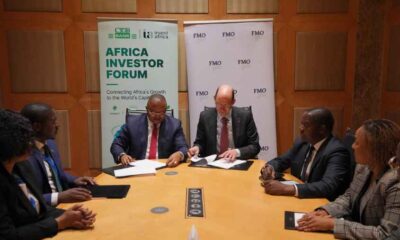
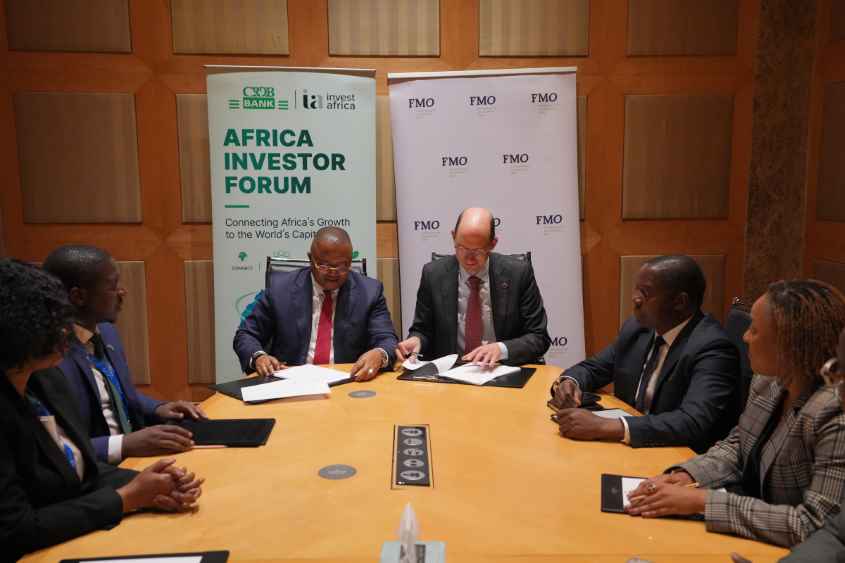
BANGKOK, Thailand, October 16, 2026/APO Group/ –CRDB Bank Plc signed a USD 75 million long-term financing facility with FMO, launched its Sustainable Development Impact Disclosure Framework, renewed its memorandum of understanding with Afreximbank, and marked the extension of a USD 10 million Shelter Afrique Development Bank facility to CRDB Bank DRC at the Africa Investor Forum on 15 October. The forum, hosted by CRDB Bank with Invest Africa (
https://www.InvestAfrica.com/) at the Sheraton Grande Sukhumvit, took place on the sidelines of the World Bank Group and IMF Annual Meetings. It brought CRDB’s Group leadership and its subsidiary teams in Tanzania, Burundi, Democratic Republic of Congo (DRC) and United Arab Emirates (UAE) together with development finance institutions, institutional investors and private capital, under the theme One Bank, Every Bridge: Connecting Africa’s Growth to the World’s Capital.
The facility from FMO, the Dutch Entrepreneurial Development Bank, will run for approximately ten years. It enhances CRDB’s Tier II capital base, which supports the Bank’s growth and resilience, and it expands the Bank’s capacity to lend to micro, small and medium enterprises (MSMEs), the segment that underpins entrepreneurship, job creation and inclusive economic development. For both institutions it advances a shared aim of financial inclusion and business growth across Tanzania and the wider region. The facility also includes support from the European Commission’s MSME platform guarantee, unlocking finance for this segment of society.
CRDB Bank has applied the Impact Disclosure Guidance to its impact strategy, helping the Bank to measure and monitor the anticipated and realized impacts of its operations and portfolio. The Guidance, published in October 2024 by the Impact Disclosure Taskforce co-chaired by J.P. Morgan and Natixis, was a voluntary standard for measuring and reporting development impact. CRDB’s framework rests on three objectives: equal access to financial services, local economic development and job creation, and digital financial innovation. These supported SDG 1 (No Poverty), SDG 2 (Zero Hunger), SDG 5 (Gender Equality) and SDG 8 (Decent Work and Economic Growth), and each carried metrics and targets against which the Bank would monitor its progress. CRDB Bank was the first Tanzanian issuer to adopt the Guidance.
Shelter Afrique Development Bank had extended a USD 10 million facility to CRDB Bank DRC to support affordable housing development and the construction value chain, and the two institutions marked the extension at the forum. It realised the memorandum of understanding they had signed at the 2025 World Bank and IMF Annual Meetings in Washington, D.C., which also provided for advisory support from Shelter Afrique to CRDB’s housing finance team across the full housing value chain.
CRDB Bank also renewed its memorandum of understanding with the African Export-Import Bank (Afreximbank), building on the two institutions’ 2023 agreement and broadening the scope of their cooperation. The renewed framework covers trade finance, syndication and structured financing, digital and payments platforms such as the Pan-African Payment and Settlement System (PAPSS), capital markets advisory, specialist insurance, and capacity building through staff training and secondments. It also links the CRDB Bank Foundation’s lending to women and youth-led enterprises with Afreximbank’s Export SME Programme, strengthening support for the small businesses at the centre of CRDB’s inclusion agenda.
Our objective is to convert Tanzania’s international relationships into investment, trade, technology, skills and sustainable economic growth
The forum opened with remarks from Dr. Abdulmajid Mussa Nsekela, Group CEO of CRDB Bank, followed by an executive panel exploring how partnerships between African institutions and Asian and international investors could mobilise capital. The programme also featured signing engagements and the official launch of the Sustainable Impact Disclosure Framework. The forum anchored an engagement week running from 13 to 16 October, featuring private roundtables and bilateral investor meetings focused on Burundi, the Democratic Republic of the Congo (DRC) and Tanzania. During these engagements, subsidiary leadership presented priority, bankable projects to investors.
Recognising the Government’s pivotal role in fostering an enabling policy and regulatory environment, aligning investment with national development priorities and facilitating capital flows, Tanzanian government leaders at the Africa Investor Forum underscored the importance of strong public-private partnerships in building investor confidence and unlocking sustainable economic opportunities. Their participation reaffirmed Tanzania’s commitment to translating international partnerships into tangible investments that drive economic growth, strengthen key sectors and create long-term value for its people.
Emmanuel Tutuba, Governor of the Bank of Tanzania, emphasised the importance of financial-sector resilience in supporting investment and economic growth. He said: “A sound and resilient banking sector is essential to mobilising investment and financing economic growth. Tanzania’s banking sector continues to demonstrate resilience, supported by strong capital and liquidity positions and a non-performing loan ratio that remains within the regulatory threshold. This provides an important foundation for banks, investors and businesses to work together to finance productive opportunities.”
Ambassador Khamis Mussa Omar, Minister of Finance of the United Republic of Tanzania, highlighted the role of international partnerships in advancing the country’s long-term development ambitions. He said: “Our objective is to convert Tanzania’s international relationships into investment, trade, technology, skills and sustainable economic growth. We welcome credible investors who are ready to partner with us in building a productive, competitive and sustainable economy, and we want investment conversations to lead to bankable projects, financing and measurable economic results.”
Dr. Abdulmajid Nsekela, Group CEO and Managing Director, CRDB Bank, said: “Bangkok was where we brought the whole of CRDB to investors, and that week put our Tanzania, Burundi and DRC teams in front of the international capital. The USD 75 million from FMO strengthened our balance sheet and widened our lending to MSMEs. The Impact Disclosure Framework gave investors targets to hold us to, and Shelter Afrique’s facility for CRDB Bank DRC put capital into affordable housing and the construction value chain. Each one was a bridge between African opportunity and global capital, which was what One Bank, Every Bridge meant in practice.”
Michael Jongeneel, Chief Executive Officer, FMO, said: “We are pleased to partner with CRDB Bank on this significant transaction, which reflects our shared commitment to strengthening access to finance for entrepreneurs and businesses that drive economic growth and job creation. By enhancing CRDB’s Tier II capital base and leveraging the support of the European Commission’s MSME Platform Guarantee, this facility will help expand financing for micro, small and medium enterprises across Tanzania. We commend CRDB for its continued leadership in advancing financial inclusion and fostering sustainable, inclusive economic development in the region.”
Alexandra Barry, Executive Director, Head of Development Impact Advisory, J.P. Morgan, said: “We would like to congratulate CRDB on this important milestone and the release of its Sustainable Development Disclosure. As the first Tanzanian entity to publish such a disclosure, the framework provides greater transparency around CRDB’s impact objectives, including how it intends to deliver and measure progress towards financial inclusion, job creation and gender equality.”
Thierno-Habib Hann, Managing Director and CEO, Shelter Afrique Development Bank, said: “The memorandum we signed in Washington last year set out an intention. This facility turned it into funding for CRDB Bank DRC, supporting affordable housing and the construction value chain around it. We were glad to see it move from paper to delivery.”










 Business5 days ago
 Tech4 days ago
 Business5 days ago
 Business5 days ago
 Tech4 days ago
 Energy4 days ago
 Events5 days ago
 Business4 days ago