Connect with us
Anglostratits

Energy

Legislative Reform and Community Engagement: Keys to the Lock on South African Oil and Gas Exploration (By NJ Ayuk)

Published

on

South African

In South Africa, similar projects could transform regions like Mossel Bay by boosting employment and government revenues while promoting sustainable development

JOHANNESBURG, South Africa, October 28, 2025/APO Group/ —By NJ Ayuk, Executive Chairman, African Energy Chamber (https://EnergyChamber.org/)

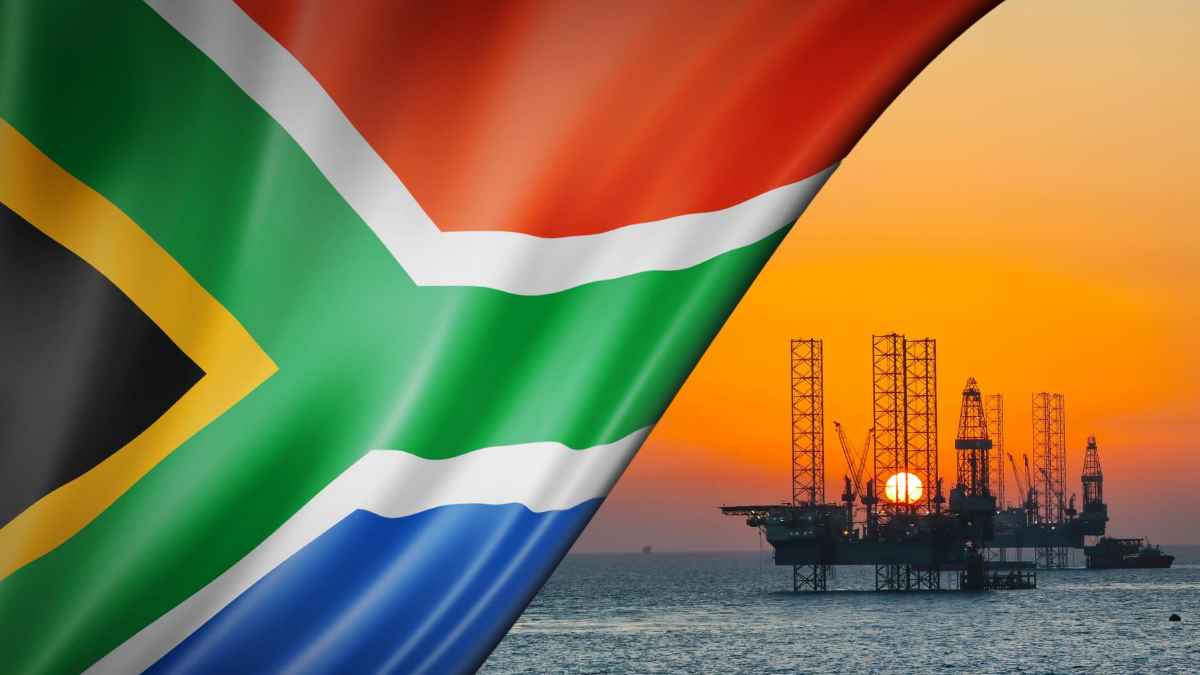
The waters off South Africa’s west coast represent a veritable treasure trove of economic opportunity for the country, considering that its majority share of the Orange Basin — the geological formation in which they sit — is estimated to hold approximately 30 billion barrels of potential oil resources. Over the border to the north, in Namibia, where the underlying geology is similar, streamlined exploration processes have facilitated the development of over 20 successful exploration and appraisal wells since 2022. During this same period, South Africa has drilled exactly zero wells in their territory.

Why is there such a disparity across the two sides of a single border?

It is easy to assign blame to the many legal challenges brought forth by foreign-funded environmental non-governmental organizations (NGOs) against industry operators in South Africa. After all, they were successful at halting projects collectively valued at upwards of USD 1.6 billion and driving major players like TotalEnergies to walk away from promising ventures such as the Luiperd-Brulpadda gas-condensate project in 2024. However, the actions of these NGOs are predictable and within the scope of their legal prerogatives. It’s time for stakeholders to stop playing “the blame game.”

To finally unlock the wealth of its resources and prevent similar holdups in the future, the South African oil and gas industry and their government partners must focus instead on implementing clear legislation, expanding engagement with affected communities, and finding a workable balance between environmental responsibility and economic progress. Of course, this is easier said than done — and the challenge is far from insignificant.

Fortifying Frameworks


Since 2021, court cases brought by NGOs funded by western institutions have stalled or postponed a total of five upstream oil and gas projects across South Africa — three on the West Coast and two on the East Coast. Plaintiffs have successfully argued that oil companies, including TotalEnergies and Shell, failed to conduct adequate consultations with coastal communities and that the mandatory environmental impact assessments (EIAs) they produced were insufficient.

A recent court ruling also mandated that TotalEnergies include emissions estimates for potential future commercial operations in its exploration EIAs, adding layers of complexity and causing additional delays.

Emmanuelle Garinet, TotalEnergies’ vice president of Africa exploration, described this permitting process as “unacceptable,” noting that securing a permit can take three to four years. In a global competition for exploration capital, such delays practically end all hope of attracting further investment. Eco Atlantic’s CEO, Gil Holzman, echoed this sentiment, warning that, “if you’re unable to explore, develop, and produce, the money goes elsewhere.”

Repeated legal challenges like these go beyond reasonable efforts to protect the environment. I view them as acts of lawfare — the strategic use of legal systems and procedures to delay or block energy development indefinitely. Even worse, they stem from a permitting process that is inherently vulnerable to such tactics. While NGOs have the legal right to raise their concerns, the current system allows for approvals to be contested endlessly, even when thorough environmental impact assessments are in place. The result is a climate of uncertainty and an investment deterrent, as companies tied up in court face escalating costs and growing risks.

With streamlined processes creating investor-friendly waters and productive wells right over the maritime border in Namibia, South Africa risks losing major operator interest at proposed exploration sites on its side of the Orange Basin.

To counter this, the government must introduce legislation that sets clear, enforceable standards for EIAs and community consultations. A framework like this would ensure that environmental concerns are thoroughly addressed during the approval process and limit the number of appeals that could take advantage of any legal loopholes.

As Garinet noted, legal challenges are a part of democracy, but there must be safeguards against the “abuse of law” by groups with agendas that do not align with the broader public interest.

Recent developments in onshore shale gas exploration offer South Africa a blueprint for a better direction. On October 16, 2025, Minister of Mineral and Petroleum Resources Gwede Mantashe announced that a long-standing moratorium on shale gas exploration, imposed in 2011 amid objections from environmental activists to hydraulic fracking in the ecologically sensitive Karoo region, will be lifted as soon as new regulations are published later this month. These regulations, finalized by the minister, aim to address environmental and safety concerns, including water challenges in the semi-arid Karoo, providing a controlled framework that could influence similar reforms to the governance of offshore projects.

The government must introduce legislation that sets clear, enforceable standards for EIAs and community consultations

Empowering Local Voices

Community engagement is the other critical piece of this puzzle. Historically, consultations related to oil and gas projects were superficial at best, lacking meaningful interaction with the populations closest to or most affected by the project at hand. This disregard fueled distrust, empowering the NGOs to challenge projects in court.

Since roughly 2020, encouraged by the global support for renewables, these groups have become adept at leveraging regulations to demand more thorough consultations and more comprehensive EIAs. While this has improved operator accountability, it has also impeded exploration.

To break this cycle, South Africa must adopt a proactive approach to community engagement. Petroleum Agency SA’s community awareness campaigns, which educate locals about oil and gas activities, offer a strong starting point. Expanding these initiatives to involve communities early in the EIA process would address environmental impact concerns while highlighting a project’s economic benefits to come.

An example of this kind of effort playing out can be found in Suriname, where TotalEnergies’ GranMorgu deepwater project is set to create 6,000 local jobs and add USD 1 billion to the economy. In the run-up to this project, TotalEnergies consulted and sought feedback from stakeholders in both the coastal districts and indigenous communities, establishing quarterly meetings and a grievance mechanism.

In South Africa, similar projects could transform regions like Mossel Bay by boosting employment and government revenues while promoting sustainable development. The new shale gas regulations offer another model as they respond to previous objections and legal challenges brought by environmental campaigners, demonstrating how inclusive frameworks can mitigate opposition and enable progress.

Government advocacy is critical to this strategy. While Minister Mantashe has long championed oil and gas, progress in addressing permitting delays had been sluggish until the October announcement. His recent commitment to lifting the shale gas moratorium reflects the renewed push to shift from emissions-heavy coal-fired plants, which supply the bulk of South Africa’s electricity, toward cleaner gas alternatives. As the minister himself acknowledged, “the economy needs a growth trigger, and oil and gas are those triggers.”

Furthermore, Tseliso Maqubela, deputy director general at the Department of Minerals and Petroleum Resources, admitted at African Energy Week 2025 that the government has been “found wanting on technical grounds” in consultation processes. A government initiative to correct this, by standardizing the protocols for EIAs and consultations, could reduce the frequency of NGO-led legal challenges.

Godfrey Moagi’s leadership of the recently established South African National Petroleum Company (SANPC), could be another positive. Moagi’s engagement within the industry and his outreach to both government ministries and the public could bridge the gaps between those entities. SANPC collaboration could also help to ensure that EIAs meet legal standards and community expectations while cutting down on litigation.

Following it Through

Legislative reform, community engagement, and government advocacy are not standalone solutions, however. To achieve success, they must work together like components of the proverbial well-oiled machine.

New legislation should mandate transparent consultation processes with defined time limits. Communities should be both heard and informed, but the power of an NGO acting on their behalf to so easily derail a project should also be checked.

Conversely, the government must also counter the perception that foreign-funded NGOs are deliberately blocking development. While their actions merit scrutiny, the focus should be on building a system that withstands legal challenges rather than vilifying advocacy groups acting within the bounds of the law.

By learning from Namibia’s and Suriname’s successes — where clear regulations and proactive engagement have attracted billions in investment — South Africa can create an equally attractive upstream environment. The impending lift of the shale gas moratorium demonstrates this potential, showing how targeted regulations can resolve longstanding delays and unlock the resources needed to grow the economy.

The stakes are high. If South Africa fails to act, it risks further abandonment by oil majors, which would leave its vast resources untapped. The contrast is stark when compared to Guyana, where ExxonMobil’s offshore production has transformed the economy, or to Namibia, where exploration is booming.

South Africa controls most of the Orange Basin, but it lags behind its northern neighbor thanks to bureaucratic and legal hurdles. The government must seize this moment to pass legislation that sets firm rules, expands community engagement, and builds trust with both investors and the local population. Only once all these pieces are in place can South Africa emulate the economic transformations seen elsewhere.

The time for half-measures and finger-pointing is over. Policymakers must act decisively to secure South Africa’s energy future.

Distributed by APO Group on behalf of African Energy Chamber.

Home  Facebook

Energy

U.S.-Africa Energy & Minerals Forum Expands to Critical Minerals and Supply Chain Security

Published

on

Africa

This year’s U.S.-Africa Energy & Minerals Forum in Houston signals a strategic shift toward integrated energy and critical minerals investment, strengthening U.S. partnerships across Africa’s resource and industrial value chains

HOUSTON, United States of America, February 26, 2026/APO Group/ –The U.S.-Africa Energy & Minerals Forum (USAEMF) has relaunched with a dedicated focus on critical minerals, marking an important evolution in its role as a platform for U.S.-Africa commercial engagement. Building on its foundation in energy, power and industrial projects, the forum’s expanded scope positions it at the center of investment conversations shaping the future energy economy.


Scheduled for July 21–22, 2026, in Houston, Texas, USAEMF comes at a time of surging global demand for copper, cobalt, lithium, manganese and rare earth elements, driven by electrification, battery storage, AI infrastructure and advanced manufacturing. Africa is increasingly critical to securing these materials, highlighting how energy and minerals are now interconnected pillars of industrial growth, geopolitical stability and decarbonization.

The forum’s minerals mandate deepens engagement with African producers – particularly the Democratic Republic of Congo (DRC), home to some of the world’s largest copper and cobalt reserves. Momentum is building through the U.S.–DRC strategic minerals framework and the U.S.-backed Orion Critical Mineral Consortium, a major investment platform supported by the DFC and private partners. The consortium is pursuing a 40% stake in the Mutanda and Kamoto copper-cobalt operations in a $9 billion transaction, securing long-term supply for allied markets while reinforcing cooperation on infrastructure, security and supply-chain governance.

Placing critical minerals at the center while maintaining strong hydrocarbons engagement strengthens U.S.-Africa commercial ties

U.S. financing is also expanding across the region, with the DFC managing a continental portfolio exceeding $13 billion to support mining, processing and transport infrastructure for critical mineral supply chains. Recent commitments include rare earth, graphite and potash projects in Malawi, Mozambique and Gabon; broader investments in Uganda, Tanzania, Zambia and South Africa; and $553 million linked to the development of the Lobito Corridor. The DFC is also a major backer of TechMet, a U.S.-supported investment firm valued at over $1 billion, which is raising up to $200 million to expand copper, cobalt, lithium and rare earth assets and pursue new opportunities across the DRC and Zambia. Together, these initiatives underscore Washington’s push to diversify battery-mineral supply while positioning Africa as a long-term partner in clean energy and industrial value chains.

Houston’s role as host city reflects the alignment between American industrial capacity and African resource development. Long established as a global energy hub, the city is expanding into energy transition technologies, advanced materials, carbon management and industrial innovation. By convening African governments with U.S. private equity, development finance institutions, exporters, insurers and technical service providers, the forum creates a commercial platform capable of converting mineral potential into bankable projects.

“The evolution from USAEF to USAEMF reflects a broader shift toward integrated energy and mineral development,” states Nadine Levin, Portfolio Director at Energy Capital & Power, forum organizers. “Placing critical minerals at the center while maintaining strong hydrocarbons engagement strengthens U.S.-Africa commercial ties and advances projects that deliver long-term shared value.”

While critical minerals define the forum’s strategic expansion, the U.S.’ longstanding role in Africa’s energy sector remains central to the platform’s value proposition. American energy companies continue to advance exploration and development across key upstream markets, support gas monetization in the Gulf of Guinea and revitalize mature production in North Africa. U.S. export credit and development finance are also helping unlock large-scale LNG capacity in Mozambique while supporting optimization and expansion across existing gas infrastructure in West Africa – demonstrating how American capital, engineering expertise and risk-mitigation tools convert resource potential into delivered energy systems.

USAEMF is the leading platform connecting U.S. capital and technical expertise with Africa’s energy and minerals sectors. For more information or to participate at the upcoming forum, please contact sales@energycapitalpower.com

Distributed by APO Group on behalf of Energy Capital & Power.

Continue Reading

Energy

Cameroon’s 2026 Licensing Round: A Regulatory and Compliance Guide for Prospective Bidders

Published

on

Cameroon

Cameroon’s 2026 licensing round provides access to blocks located in established producing basins with available subsurface data

SANDTON, South Africa, February 26, 2026/APO Group/ —Introduction

Cameroon’s 2026 licensing round represents one of the most structured and commercially compelling entry points into  proven producing basins in Central Africa in recent years. Within its mandate to promote and valorise hydrocarbon resources in the national oil and gas domain of the Republic of Cameroon, the The Société Nationale des Hydrocarbures (SNH) has brought to market nine blocks located in the Rio del Rey and Douala/Kribi-Campo basins, all of which lie in close proximity to existing producing fields and are supported by 2D and 3D seismic coverage, drilled wells, discovery wells, identified leads and undrilled prospects. This is taking place in a country with approximately 200 million barrels of proven oil reserves (U.S Energy Information and Worldometer Data) and significant gas potential, governed by a modern legislative framework under Law No. 2019/008 of 25 April 2019 instituting the Petroleum Code, its enabling acts and and Decree n° 2023/232 of May 04, 2023.

For investors, the decisive question is whether their bid satisfies the legal and regulatory conditions for participation and evaluation. Entry into the round is determined at the submission stage by a number of mandatory parameters: the choice of petroleum contract under the Petroleum Code, the commitment to a minimum work programme within the exploration periods, the ability to meet the corporate, technical, financial, environmental and local content requirements set out in the Call for Expression of Interest. These are the criteria against which bids will be assessed.

This article sets out the legal and regulatory framework governing participation in Cameroon’s 2026 licensing round. It focuses on the mandatory requirements bidders must satisfy under the Petroleum Code and the SNH Call for Expression of Interest.

Key Milestones in the Bidding Process

Although the licensing round was launched on 1 August 2025, the process is now approaching its final stages. With the data consultation period closing on 15 March 2026 and the bid submission deadline fixed for 30 March 2026, prospective bidders are in the critical phase of finalising their technical evaluation, corporate structuring and financing arrangements. At this stage, the focus is on the preparation of a compliant and competitive proposal. The Call for Expression of Interest sets out the procedural timetable below.

No Milestone Date
1 Launch of the licensing round 1 August 2025
2 Opening of data consultation period 1 September 2025
3 Close of data consultation period 15 March 2026
4 Deadline for submission of proposals 30 March 2026 – 12:00 noon (local time)
5 Public opening of proposals in the presence of

all bidding companies or their representatives:

30 March 2026- 13:00 (local time)
6 Publication of the results:


24 April 2026


Participation in the Licensing Round: Pre-Qualification and Eligibility

Participation in the licensing round is subject to the pre-qualification requirements of the Petroleum Code and the Call for Expression of Interest. Under Law No. 2019/008 of 25 April 2019 Sections 2 and 7, petroleum operations may be conducted only by a petroleum company, defined as a commercial company or public industrial and commercial establishment with the technical and financial capacity to carry out such operations in safe, hygienic and environmentally safe conditions, accordance with applicable laws and international standards.

The process is open to both Cameroonian and foreign petroleum companies and there is no nationality restriction. A foreign company must, prior to the signing of the petroleum contract, establish a locally registered subsidiary that will remain in place for the duration of the contract. Participation is therefore limited to legally constituted entities, and the corporate, financial and operational documentation required in the proposal effectively excludes individuals.

Bids may be submitted by a single company or by a consortium. In the case of a consortium, the legal structure of the bidding vehicle is examined prior to the technical evaluation of the proposal and, where only one petroleum company is involved, that company must act as operator and hold the majority participating interest.

The Call for Expression of Interest further provides that the State reserves the right, following evaluation of proposals and notification of the results, to enter into negotiations with several companies simultaneously for a given block with a view to securing the most favourable contractual terms. It also retains the discretionary power to accept or reject any proposal without assigning reasons. This underscores the competitive nature of the process and the importance of submitting a proposal that is not only technically and financially credible but also fully compliant with the legal and corporate requirements of the round.

Assets on Offer and Minimum Work Programme Commitments

The Call for Expression of Interest invites bids for nine exploration blocks located in the Rio del Rey and Douala/Kribi-Campo basins. Bids may be submitted for one or more blocks, subject to compliance with the proposal requirements.

Each block is associated with a defined minimum work obligation which must be reflected in the bidder’s technical and financial offer. These commitments constitute the baseline for the evaluation of the proposal and are summarised below.


Work Obligation


Block(s) Minimum Work Program Requirement
3D Seismic Acquisition + 1 Exploration Well Ntem, Tilapia, Etinde Exploration, Elombo Drilling of at least one exploration well during the initial exploration period together with 3D seismic acquisition and geoscience studies
2D/3D Seismic Acquisition + 1 Exploration Well Kombe-Nsepe, Bomono Drilling of at least one exploration well during the initial exploration period together with 2D and/or 3D seismic acquisition and geoscience studies
3D Seismic Reprocessing + 1 Exploration Well Bolongo Exploration Drilling of at least one exploration well together with reprocessing of available 3D seismic data and geoscience studies
2D/3D Infill Seismic + 1 Exploration Well Ndian River, Bakassi Drilling of at least one exploration well together with 2D/3D infill seismic acquisition


Mandatory Selection of the Petroleum Contract

The Call for Expression of Interest requires each bidder to specify in its proposal the type of petroleum contract for which it is applying. The choice of contract is therefore a mandatory condition for participation in the licensing round and forms part of the admissibility of the bid.

In accordance with section 14 of Law No. 2019/008 of 25 April 2019 instituting the Petroleum Code, upstream petroleum operations in Cameroon are conducted under one of the following contractual models concluded with the State:


(a) Concession Contracts: where the holder shall be responsible for financing petroleum operations and, in accordance with the terms of the contract, dispose of the hydrocarbons extracted during the contract validity period, subject to the right of the State to collect royalties in kind.

(b) Production Sharing Contracts: where the holder shall be responsible for financing petroleum operations and, hydrocarbon production shall be shared between the State and the holder in accordance with the terms of such contract.

(c) Risk Service Contracts: where the holder shall be responsible for financing petroleum operations and, shall be remunerated in cash in accordance with the terms of such contract.

The legal and fiscal consequences of the choice of contract, shape the entire bid. From a financing perspective, it determines how reserves are booked, how lenders analyse the revenue stream and how the contractor’s return is structured. From a governance perspective, it determines the degree of operational control, the mechanisms for cost recovery and the conditions under which the State exercises its supervisory powers.

Consortium Structure and Operator Requirement

The Call for Expression of Interest permits bids to be submitted by a single company or by a consortium. In all cases, the bidding vehicle must satisfy the qualification requirements of the Petroleum Code.

In practical terms, this means that operational responsibility must rest with a petroleum company. Where a consortium includes only one petroleum company together with other investors, that company is required to act as operator and to hold the majority participating interest. This allows financial or strategic partners to participate in the project while ensuring that the entity responsible for petroleum operations has the technical and financial capacity required by law.

The legal and corporate structure of the consortium is examined before the technical and financial evaluation of the proposal. The composition of the consortium, the allocation of participating interests and the identification of the operator must therefore be established at the time of submission.

In practical terms, the legal architecture of the consortium is assessed before the geological interpretation of the block or the scale of the work programme. The bid therefore succeeds or fails first as a corporate structure and only subsequently as a technical proposal.

Training Budget as a Mandatory Financial Commitment

Beyond the technical work programme, the Call for Expression of Interest requires bidders to incorporate a defined training budget into their financial offer. The minimum amount is set at USD 100,000 per year during the exploration phase and USD 250,000 per year during the development and exploitation phase.

This obligation forms part of the financial parameters on which the proposal is evaluated and must therefore be reflected in the bid at the time of submission.

From a regulatory perspective, the training budget is one of the instruments through which the State implements the national capacity-building objectives of the Petroleum Code. It operates as a contractual commitment linked to the duration of petroleum operations and must be integrated into the overall project economics from the outset.

Environmental Protection and Local Content

The Petroleum Code integrates environmental protection and local content into the core obligations of the contractor. Sections 87, 88 and 89 require the promotion of employment and training of Cameroonian nationals, the use of local goods and services and the development of national technical capacity.

The SNH requires bidders to submit a specific note explaining how the proposed work programme will address environmental protection and how it will implement the local content obligations established by the Code. These elements are therefore part of the competitive assessment of the bid. Investors who integrate them into their operational model at the bid stage are structurally better positioned to move rapidly into the development phase.

Conclusion:

Cameroon’s 2026 licensing round provides access to blocks located in established producing basins with available subsurface data. At this stage of the process, the differentiating factor for bidders is the ability to submit a compliant proposal supported by demonstrable technical and financial capacity and a credible work programme.

Early and strategic engagement with experienced legal, technical and financial advisers is therefore imperative. The structure adopted for the bid must satisfy the requirements of the Petroleum Code and the SNH’s call for Expression of Interest while at the same time producing a project capable of attracting capital and moving to first production within the contractual timeframe.

*********

CLG advises investors throughout the licensing process, from the structuring of a compliant bidding vehicle to the preparation of the proposal and the negotiation of the petroleum contract. With an established presence in Cameroon and across the Central African energy market, CLG also supports the post-award phase, including regulatory approvals, joint venture arrangements and the implementation of the legal framework required to move from licence to first production.


Achare Takor
Senior Associate, CLG Cameroon

Distributed by APO Group on behalf of CLG.


Continue Reading

Energy

African Energy Chamber (AEC), Venezuelan Petroleum Leadership Forge Structured Hydrocarbon Partnership

Published

on

African Energy Chamber

The African Energy Chamber and Venezuela’s top petroleum officials have agreed on a 12-month action plan to accelerate upstream rehabilitation, gas development, trade flows and cross-continental investment

CARACAS, Venezuela, February 26, 2026/APO Group/ –Venezuela is positioning itself for accelerated oil and gas growth, targeting a near-term increase in production from 1.1 million barrels per day (bpd) to 1.2 million bpd, with a 2027 objective of 1.5 million bpd and a longer-term return toward its installed capacity of 2.8 million bpd. For African investors and service companies, the message is clear: there is structured opportunity, backed by regulatory reform, defined contract models and political commitment at the highest levels.


This strategic direction was reinforced during high-level engagements between the African Energy Chamber (AEC) and Venezuela’s petroleum leadership. Part of a high-level working visit to Caracas this week, the Chamber met with Eduardo Antonio Ramirez Castro, Deputy Minister of Hydrocarbon Geopolitics, Luis González, Deputy Minister of Gas and Jovanny Martinez Executive Vice President at the state-owned oil corporation PDVSA. The parties agreed to draft a 12-month joint work plan covering upstream cooperation, refining rehabilitation, gas commercialization, finance structuring, trade flows and training implementation.

“This was not a symbolic engagement – it was a serious, high-level discussion where Africa was clearly recognized as a strategic partner. The fact that all ministers in charge of the petroleum sector were present, including Deputy Minister of Petroleum Eduardo Antonio Ramirez Castro, Deputy Minister of Gas Luis González and the highest executive of the PDVSA, is a strong signal that Venezuela is ready to drive its hydrocarbon sector forward,” stated NJ Ayuk, Executive Chairman of the AEC.

“There is a clear understanding within the Ministry and at PDVSA of what African companies have achieved across complex and mature hydrocarbon markets. They have an aggressive, structured plan to develop their fields and accelerate production, and they are ready to move,”  he added.

Towards a Venezuelan Hydrocarbon Resurgence

Venezuela holds approximately 303 billion barrels of crude reserves – largely concentrated in the 54,000 km² Faja del Orinoco, home to 272 billion barrels – alongside 195 trillion cubic feet of gas. With 56,000 wells already drilled and over 100,000 additional wells targeted in the coming years, the scale of redevelopment potential is significant.

There is a clear understanding within the Ministry and at PDVSA of what African companies have achieved across complex and mature hydrocarbon markets

Considering this potential, discussions during the Caracas meetings centered on joint rehabilitation of priority PDVSA assets, including mature oil fields, Category 2 and 3 wells suitable for rapid workovers, offshore assets such as Perla and Mariscal Sucre and refinery upgrades at Paraguaná, El Palito and eastern facilities. These projects represent relatively low-capex entry points capable of delivering incremental barrels in the short term.

The country’s January 29 Hydrocarbons Law reform, alongside administrative simplification measures and optimized fiscal terms, is designed to attract new participation. Investment vehicles include Production Participation Contracts (CPPs), ATFs and Empresas Mixtas – a form of private-public partnership. Officials highlighted the success of existing CPP structures – including Petrozamora, which reportedly increased production from 23,000 bpd in 2024 to 100,000 bpd in 2026 – as evidence that the model can deliver growth.

The AEC will facilitate African participation in these structures, supporting evaluation of asset data, commercialization rights and export provisions. Majority shareholders retain export freedom, while minority partners may export under defined pricing conditions – clarity that enhances bankability. Finance will underpin execution. Premier Invest – also a participant at the meetings – is expected to structure trade finance backed by PDVSA barrels and inventory, alongside project and infrastructure finance for upstream and midstream rehabilitation. Capital mobilization discussions include Gulf partners, African national oil companies and private operators.

Strengthened South-South Energy Corridors

Gas development and Global South trade also emerged as strategic priorities. Venezuela aims to scale production from approximately 4,100 million cubic feet per day (mmcf/d) toward a 6,000–6,500 mmcf/d range, supporting domestic supply, industrial feedstock and future LNG and LPG exports. For Africa, this presents dual opportunity.

First, African firms with experience in offshore gas, LNG modularization and pipeline development can participate in infrastructure recovery and expansion. Second, commercial trade flows – particularly LPG and bitumen – offer immediate South–South cooperation pathways. The parties explored establishing long-term LPG supply channels to African markets to support clean cooking programs and reduce energy poverty. Structured bitumen agreements could also provide African infrastructure markets with more stable supply and lower import premiums.

Beyond hydrocarbons, education and technical exchange were identified as strategic pillars. Structured one-week technical programs for African executives at Venezuelan petroleum institutions, including the Bolivarian University of Hydrocarbons, will form part of a reciprocal exchange model covering petroleum engineering, geology, trading and energy law.

For the AEC, the engagement signals a shift toward deeper South–South hydrocarbon integration – positioning African companies not only as domestic operators, but as outward investors and strategic partners in one of the world’s largest resource bases.

Distributed by APO Group on behalf of African Energy Chamber.

Continue Reading

Trending