Connect with us

Energy

Legislative Reform and Community Engagement: Keys to the Lock on South African Oil and Gas Exploration (By NJ Ayuk)

Published

on

South African

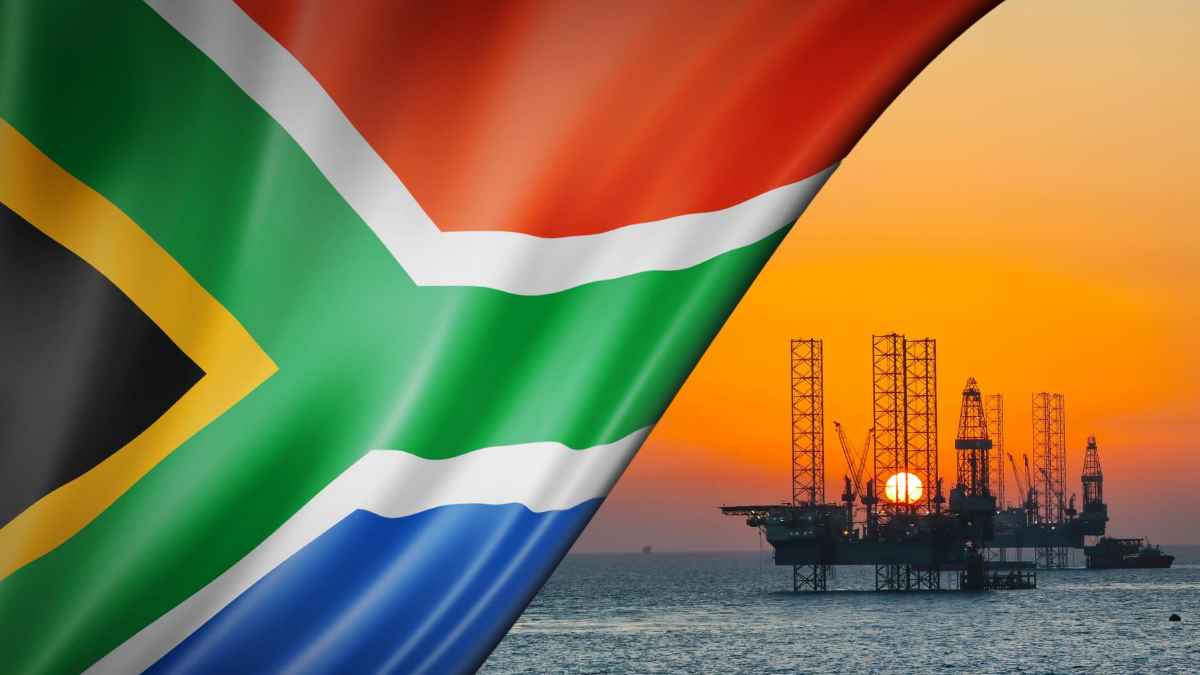
In South Africa, similar projects could transform regions like Mossel Bay by boosting employment and government revenues while promoting sustainable development

JOHANNESBURG, South Africa, October 28, 2025/APO Group/ —By NJ Ayuk, Executive Chairman, African Energy Chamber (https://EnergyChamber.org/)

The waters off South Africa’s west coast represent a veritable treasure trove of economic opportunity for the country, considering that its majority share of the Orange Basin — the geological formation in which they sit — is estimated to hold approximately 30 billion barrels of potential oil resources. Over the border to the north, in Namibia, where the underlying geology is similar, streamlined exploration processes have facilitated the development of over 20 successful exploration and appraisal wells since 2022. During this same period, South Africa has drilled exactly zero wells in their territory.

Why is there such a disparity across the two sides of a single border?

It is easy to assign blame to the many legal challenges brought forth by foreign-funded environmental non-governmental organizations (NGOs) against industry operators in South Africa. After all, they were successful at halting projects collectively valued at upwards of USD 1.6 billion and driving major players like TotalEnergies to walk away from promising ventures such as the Luiperd-Brulpadda gas-condensate project in 2024. However, the actions of these NGOs are predictable and within the scope of their legal prerogatives. It’s time for stakeholders to stop playing “the blame game.”

To finally unlock the wealth of its resources and prevent similar holdups in the future, the South African oil and gas industry and their government partners must focus instead on implementing clear legislation, expanding engagement with affected communities, and finding a workable balance between environmental responsibility and economic progress. Of course, this is easier said than done — and the challenge is far from insignificant.

Fortifying Frameworks


Since 2021, court cases brought by NGOs funded by western institutions have stalled or postponed a total of five upstream oil and gas projects across South Africa — three on the West Coast and two on the East Coast. Plaintiffs have successfully argued that oil companies, including TotalEnergies and Shell, failed to conduct adequate consultations with coastal communities and that the mandatory environmental impact assessments (EIAs) they produced were insufficient.

A recent court ruling also mandated that TotalEnergies include emissions estimates for potential future commercial operations in its exploration EIAs, adding layers of complexity and causing additional delays.

Emmanuelle Garinet, TotalEnergies’ vice president of Africa exploration, described this permitting process as “unacceptable,” noting that securing a permit can take three to four years. In a global competition for exploration capital, such delays practically end all hope of attracting further investment. Eco Atlantic’s CEO, Gil Holzman, echoed this sentiment, warning that, “if you’re unable to explore, develop, and produce, the money goes elsewhere.”

Repeated legal challenges like these go beyond reasonable efforts to protect the environment. I view them as acts of lawfare — the strategic use of legal systems and procedures to delay or block energy development indefinitely. Even worse, they stem from a permitting process that is inherently vulnerable to such tactics. While NGOs have the legal right to raise their concerns, the current system allows for approvals to be contested endlessly, even when thorough environmental impact assessments are in place. The result is a climate of uncertainty and an investment deterrent, as companies tied up in court face escalating costs and growing risks.

With streamlined processes creating investor-friendly waters and productive wells right over the maritime border in Namibia, South Africa risks losing major operator interest at proposed exploration sites on its side of the Orange Basin.

To counter this, the government must introduce legislation that sets clear, enforceable standards for EIAs and community consultations. A framework like this would ensure that environmental concerns are thoroughly addressed during the approval process and limit the number of appeals that could take advantage of any legal loopholes.

As Garinet noted, legal challenges are a part of democracy, but there must be safeguards against the “abuse of law” by groups with agendas that do not align with the broader public interest.

Recent developments in onshore shale gas exploration offer South Africa a blueprint for a better direction. On October 16, 2025, Minister of Mineral and Petroleum Resources Gwede Mantashe announced that a long-standing moratorium on shale gas exploration, imposed in 2011 amid objections from environmental activists to hydraulic fracking in the ecologically sensitive Karoo region, will be lifted as soon as new regulations are published later this month. These regulations, finalized by the minister, aim to address environmental and safety concerns, including water challenges in the semi-arid Karoo, providing a controlled framework that could influence similar reforms to the governance of offshore projects.

The government must introduce legislation that sets clear, enforceable standards for EIAs and community consultations

Empowering Local Voices

Community engagement is the other critical piece of this puzzle. Historically, consultations related to oil and gas projects were superficial at best, lacking meaningful interaction with the populations closest to or most affected by the project at hand. This disregard fueled distrust, empowering the NGOs to challenge projects in court.

Since roughly 2020, encouraged by the global support for renewables, these groups have become adept at leveraging regulations to demand more thorough consultations and more comprehensive EIAs. While this has improved operator accountability, it has also impeded exploration.

To break this cycle, South Africa must adopt a proactive approach to community engagement. Petroleum Agency SA’s community awareness campaigns, which educate locals about oil and gas activities, offer a strong starting point. Expanding these initiatives to involve communities early in the EIA process would address environmental impact concerns while highlighting a project’s economic benefits to come.

An example of this kind of effort playing out can be found in Suriname, where TotalEnergies’ GranMorgu deepwater project is set to create 6,000 local jobs and add USD 1 billion to the economy. In the run-up to this project, TotalEnergies consulted and sought feedback from stakeholders in both the coastal districts and indigenous communities, establishing quarterly meetings and a grievance mechanism.

In South Africa, similar projects could transform regions like Mossel Bay by boosting employment and government revenues while promoting sustainable development. The new shale gas regulations offer another model as they respond to previous objections and legal challenges brought by environmental campaigners, demonstrating how inclusive frameworks can mitigate opposition and enable progress.

Government advocacy is critical to this strategy. While Minister Mantashe has long championed oil and gas, progress in addressing permitting delays had been sluggish until the October announcement. His recent commitment to lifting the shale gas moratorium reflects the renewed push to shift from emissions-heavy coal-fired plants, which supply the bulk of South Africa’s electricity, toward cleaner gas alternatives. As the minister himself acknowledged, “the economy needs a growth trigger, and oil and gas are those triggers.”

Furthermore, Tseliso Maqubela, deputy director general at the Department of Minerals and Petroleum Resources, admitted at African Energy Week 2025 that the government has been “found wanting on technical grounds” in consultation processes. A government initiative to correct this, by standardizing the protocols for EIAs and consultations, could reduce the frequency of NGO-led legal challenges.

Godfrey Moagi’s leadership of the recently established South African National Petroleum Company (SANPC), could be another positive. Moagi’s engagement within the industry and his outreach to both government ministries and the public could bridge the gaps between those entities. SANPC collaboration could also help to ensure that EIAs meet legal standards and community expectations while cutting down on litigation.

Following it Through

Legislative reform, community engagement, and government advocacy are not standalone solutions, however. To achieve success, they must work together like components of the proverbial well-oiled machine.

New legislation should mandate transparent consultation processes with defined time limits. Communities should be both heard and informed, but the power of an NGO acting on their behalf to so easily derail a project should also be checked.

Conversely, the government must also counter the perception that foreign-funded NGOs are deliberately blocking development. While their actions merit scrutiny, the focus should be on building a system that withstands legal challenges rather than vilifying advocacy groups acting within the bounds of the law.

By learning from Namibia’s and Suriname’s successes — where clear regulations and proactive engagement have attracted billions in investment — South Africa can create an equally attractive upstream environment. The impending lift of the shale gas moratorium demonstrates this potential, showing how targeted regulations can resolve longstanding delays and unlock the resources needed to grow the economy.

The stakes are high. If South Africa fails to act, it risks further abandonment by oil majors, which would leave its vast resources untapped. The contrast is stark when compared to Guyana, where ExxonMobil’s offshore production has transformed the economy, or to Namibia, where exploration is booming.

South Africa controls most of the Orange Basin, but it lags behind its northern neighbor thanks to bureaucratic and legal hurdles. The government must seize this moment to pass legislation that sets firm rules, expands community engagement, and builds trust with both investors and the local population. Only once all these pieces are in place can South Africa emulate the economic transformations seen elsewhere.

The time for half-measures and finger-pointing is over. Policymakers must act decisively to secure South Africa’s energy future.


Distributed by APO Group on behalf of African Energy Chamber.

Home  Facebook

Energy

Egypt’s Mineral Resources Authority Chair Joins African Mining Week (AMW) Advisory Board

Published

on

Eng. Yasser Ramadan, Chairman of the Egyptian Mineral Resources Authority has joined the 2026 edition of African Mining Week – scheduled for October 14–16 in Cape Town – as an advisory board member

CAPE TOWN, South Africa, June 23, 2026/APO Group/ –Eng. Yasser Ramadan, Chairman of the Egyptian Mineral Resources Authority (EMRA) has been appointed as an Advisory Board Member of African Mining Week (AMW) – The Most Influential Mining Conference in Africa – reinforcing the event’s engagement with key regulatory institutions shaping the continent’s mining sector.


In his role, Ramadan will provide strategic guidance on core themes and agenda priorities for AMW, ensuring alignment with Egypt’s mining sector vision, including regulatory reform, investment facilitation and value-added mineral development.

His appointment strengthens AMW’s position as a direct engagement platform for global investors seeking exposure to Egypt’s mining industry. It also supports Egypt’s broader national agenda to attract foreign direct investment into key mineral segments including phosphate, gold, copper and industrial minerals, which are central to the country’s industrialization and resource monetization strategy.

Under the theme Mining the Future: Unearthing Africa’s Full Mineral Value Chain, AMW 2026 will convene African regulators, including EMRA, alongside global investors and project developers for partnerships formation aimed at unlocking investment flows across the continent’s mining sector.

AMW 2026 comes at a time when Egypt is accelerating reforms and strategic initiatives across its mining sector. These include enhanced collaboration on mineral value chains, such as the Afreximbank-Central Bank of Egypt initiative to establish the African Gold Bank, aimed at financing gold mining and beneficiation projects. Additionally, Egypt’s Suez Canal Economic Zone-based Futurefert project recently secured $20 million in financing from the European Bank for Reconstruction and Development to develop fertilizer production facilities, further supporting the country’s phosphate beneficiation ambitions and regional food security objectives.

Meanwhile, regulatory reforms are also underway, including the development of a modern mining cadastre system designed to streamline licensing processes and improve transparency for investors, led by EMRA.

Through his role on the AMW Advisory Board, Ramadan will position Egypt as a key mining investment destination within Africa’s evolving resource landscape.

https://apo-opa.co/4ai4FYa

Distributed by APO Group on behalf of Energy Capital & Power.

Continue Reading

Energy

Africa’s Data-First Energy Workforce is the Key to Unlocking Future Exploration

Published

on

Africa’s energy sector is undergoing a massive digital transformation, leveraging AI and analytics to enhance transparency and production while prioritizing essential workforce development and innovation

CAPE TOWN, South Africa, June 22, 2026/APO Group/ –Africa’s energy future will be shaped not only by the resources beneath the ground, but by the ability of its workforce to interpret, manage and act on increasingly complex datasets. As exploration targets become more technically challenging and investors demand greater certainty, energy companies across the continent are turning to artificial intelligence, advanced analytics and digital platforms to improve decision-making. Building a data-first workforce capable of leveraging these technologies is emerging as a strategic priority, enabling operators to reduce exploration risk, optimize production and accelerate project development.


As digital innovation becomes increasingly critical to streamlining operations across exploration and production, this year’s African Energy Week (AEW) 2026 – taking place in Cape Town from October 12–16 – is set to highlight how these shifts impact regional competitiveness. These industry-wide advancements are set to take center stage during Renegade Intel, the event’s premier track dedicated to AI and data centers.

For Africa’s exploration sector, digitalization is becoming a prerequisite for success. As operators pursue frontier acreage, deeper reservoirs and more complex geological plays, the ability to process and interpret large volumes of seismic, subsurface and operational data is critical. However, technology alone is not enough. Scaling exploration activity will require a workforce equipped with advanced digital skills, capable of applying AI-driven insights to geological modeling, prospect evaluation and resource development.

In the exploration sector, the BHP Xplore Bootcamp – designed to fast-track early-stage mineral exploration – launched in South Africa on February 3. The intensive program provides junior explorers with $500,000 grants and access to proprietary data analytics, specifically targeting deeper copper and zinc systems in the Northern Cape province through advance mineral modeling.

Harnessing digitalization is no longer an option but a necessity to ensure Africa remains globally competitive

Further boosting upstream efficiency, global technology company SLB inaugurated its Africa Performance Center in Luanda, Angola in late 2025. The facility provides regional operators with high-fidelity digital twins and AI-driven workflows for enhanced oil recovery. These tools allow companies to analyze massive datasets, extending the life of mature fields in Angola and Algeria.

AI is increasingly being adopted across Africa’s energy management systems. Leading the charge in modern grid management, South Africa’s state utility Eskom announced on March 3 that it is leveraging AI to build a self-healing power grid. This ambitious project aims to utilize predictive analytics to minimize outages and optimize integration of renewable energy sources across its national transmission network. This was followed by the signing of an agreement between Eskom, the University of Pretoria and the South African National Energy Development Institute, aimed at harnessing the power of AI to address critical energy challenges across the country.

Similar moves are taking place in Nigeria. In a landmark move for regulatory transparency, the Nigerian Upstream Petroleum Regulatory Commission (NUPRC) launched a 60-day digitalization program in early 2026. NUPRC Commission Chief Executive Oritsemeyiwa Eyesan announced the initiative following a visit from the Nigeria Extractive Industries Transparency Initiative’s Executive Secretary Musa Sarkin Adar, pledging to eliminate paper trails to enhance speed and royalty enforcement.

Sustaining this momentum requires robust talent pipelines and university partnerships. Workforce reform is essential to bridge the technical gap, as African institutions must evolve into dynamic innovation hubs. Investing in local skills development ensures that the digital transition remains Africa-led, creating high-value jobs for the continent’s growing youth population.

“Transforming Africa’s economic potential into reality requires that we empower those who make growth possible – our SMEs, our women entrepreneurs and our youth,” says NJ Ayuk, Executive Chairman, African Energy Chamber. “Harnessing digitalization is no longer an option but a necessity to ensure Africa remains globally competitive.”

Ultimately, digitalization and skills development are the dual engines driving Africa toward an era of energy abundance. By fostering a tech-savvy workforce and adopting cutting-edge analytics, the continent can de-risk projects and attract long-term capital. These critical advancements are set to form the cornerstone of discussions at the Renegade Intel track at AEW 2026 this October.

Distributed by APO Group on behalf of African Energy Chamber.

Continue Reading

Energy

Cabship Expands Artificial Intelligence (AI)-Driven Logistics, Workforce Development Strategy Ahead of Angola Oil & Gas (AOG) 2026 Sponsorship

Published

on

As Angola’s oil and gas sector evolves, Cabship is expanding its service offering through digital innovation, workforce development and integrated logistics solutions designed to support the next phase of industry growth

LUANDA, Angola, June 22, 2026/APO Group/ –Angolan logistics and maritime services provider Cabship is strengthening its service portfolio to better support the country’s evolving oil and gas sector, while leveraging digital technologies, workforce development and local partnerships to meet growing industry demand. Reflecting its expanding role across Angola’s oil and gas value chain, the company has joined the Angola Oil & Gas (AOG) 2026 conference and exhibition as an Elite Sponsor.


Over the years, Cabship has developed into a strategic integrated logistics and support service providers for Angola’s oil and gas industry. The company offers a broad range of solutions spanning shipping, customs clearance, procurement, warehousing, material management, pipe yard operations, freight forwarding, transportation and offshore support services. Building on this foundation, Cabship continues to diversify its capabilities to support increasingly complex upstream and offshore developments across Angola.

The company’s growth strategy has been underpinned by continuous investment in technology and operational efficiency. As Angola’s oil and gas industry embraces digital transformation, Cabship has integrated artificial intelligence and advanced digital tools into its logistics and supply chain operations. These technologies are helping optimize cargo tracking, improve operational planning and enhance the efficiency of project execution, enabling operators and service providers to reduce costs while maintaining reliability across the supply chain.

Alongside technology adoption, Cabship has placed local content development at the center of its long-term strategy. The company signed a partnership agreement with Angola’s National Petroleum Institute (INP), aimed at strengthening training initiatives to prepare young Angolan professionals for careers in the energy sector. The partnership initially benefits 15 individuals from the provinces of Cabinda, Zaire, Bengo and Luanda, with recipients undergoing specialized training in industrial electricity in renewable energies and international welding.

The company has also continued to expand its offshore and marine support capabilities through strategic partnerships, strengthening its ability to provide integrated services for both shallow-water and deepwater operations. These efforts align with Angola’s broader objectives of increasing local participation across the oil and gas value chain while supporting new exploration, development and production projects.

As an Elite Sponsor of AOG 2026 – taking place September 9-10 in Luanda, with a pre-conference day on September 8 – Cabship will join industry leaders, policymakers and investors to discuss the future of Angola’s oil and gas sector. The company’s participation highlights the increasingly important role that logistics, digital innovation and workforce development play in supporting Angola’s next phase of oil and gas growth.


Distributed by APO Group on behalf of Energy Capital & Power.

Continue Reading

Trending

Exit mobile version