Connect with us
Anglostratits

Energy

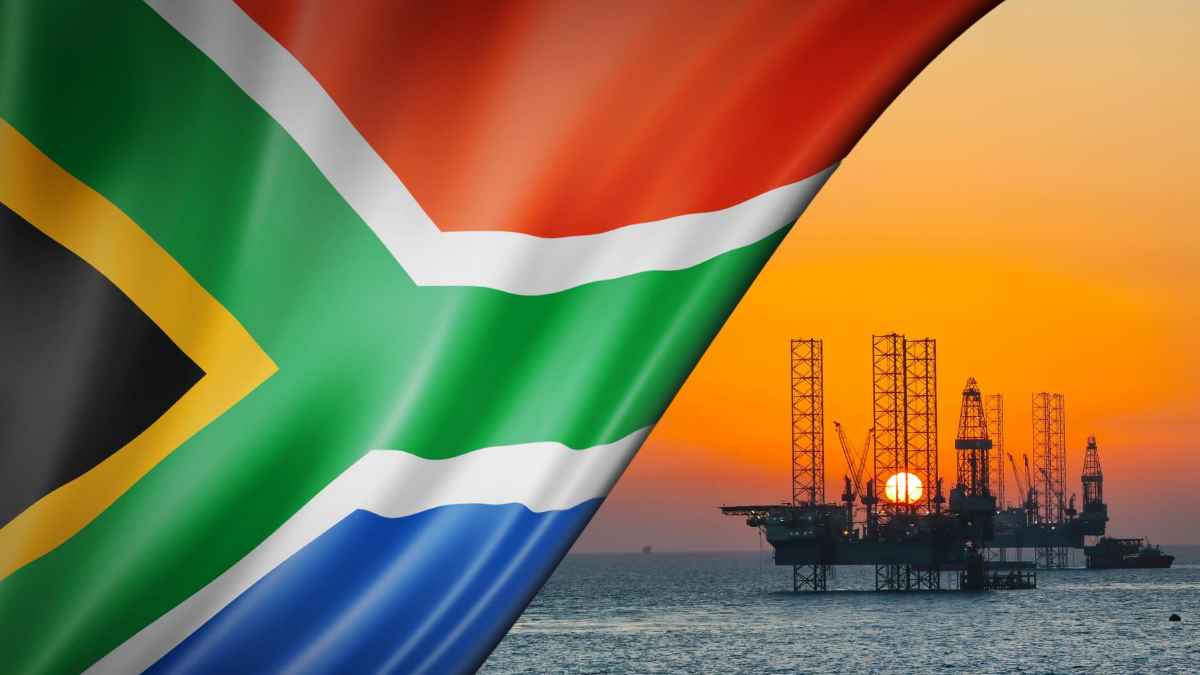
Legislative Reform and Community Engagement: Keys to the Lock on South African Oil and Gas Exploration (By NJ Ayuk)

Published

on

South African

In South Africa, similar projects could transform regions like Mossel Bay by boosting employment and government revenues while promoting sustainable development

JOHANNESBURG, South Africa, October 28, 2025/APO Group/ —By NJ Ayuk, Executive Chairman, African Energy Chamber (https://EnergyChamber.org/)

The waters off South Africa’s west coast represent a veritable treasure trove of economic opportunity for the country, considering that its majority share of the Orange Basin — the geological formation in which they sit — is estimated to hold approximately 30 billion barrels of potential oil resources. Over the border to the north, in Namibia, where the underlying geology is similar, streamlined exploration processes have facilitated the development of over 20 successful exploration and appraisal wells since 2022. During this same period, South Africa has drilled exactly zero wells in their territory.

Why is there such a disparity across the two sides of a single border?

It is easy to assign blame to the many legal challenges brought forth by foreign-funded environmental non-governmental organizations (NGOs) against industry operators in South Africa. After all, they were successful at halting projects collectively valued at upwards of USD 1.6 billion and driving major players like TotalEnergies to walk away from promising ventures such as the Luiperd-Brulpadda gas-condensate project in 2024. However, the actions of these NGOs are predictable and within the scope of their legal prerogatives. It’s time for stakeholders to stop playing “the blame game.”

To finally unlock the wealth of its resources and prevent similar holdups in the future, the South African oil and gas industry and their government partners must focus instead on implementing clear legislation, expanding engagement with affected communities, and finding a workable balance between environmental responsibility and economic progress. Of course, this is easier said than done — and the challenge is far from insignificant.

Fortifying Frameworks


Since 2021, court cases brought by NGOs funded by western institutions have stalled or postponed a total of five upstream oil and gas projects across South Africa — three on the West Coast and two on the East Coast. Plaintiffs have successfully argued that oil companies, including TotalEnergies and Shell, failed to conduct adequate consultations with coastal communities and that the mandatory environmental impact assessments (EIAs) they produced were insufficient.

A recent court ruling also mandated that TotalEnergies include emissions estimates for potential future commercial operations in its exploration EIAs, adding layers of complexity and causing additional delays.

Emmanuelle Garinet, TotalEnergies’ vice president of Africa exploration, described this permitting process as “unacceptable,” noting that securing a permit can take three to four years. In a global competition for exploration capital, such delays practically end all hope of attracting further investment. Eco Atlantic’s CEO, Gil Holzman, echoed this sentiment, warning that, “if you’re unable to explore, develop, and produce, the money goes elsewhere.”

Repeated legal challenges like these go beyond reasonable efforts to protect the environment. I view them as acts of lawfare — the strategic use of legal systems and procedures to delay or block energy development indefinitely. Even worse, they stem from a permitting process that is inherently vulnerable to such tactics. While NGOs have the legal right to raise their concerns, the current system allows for approvals to be contested endlessly, even when thorough environmental impact assessments are in place. The result is a climate of uncertainty and an investment deterrent, as companies tied up in court face escalating costs and growing risks.

With streamlined processes creating investor-friendly waters and productive wells right over the maritime border in Namibia, South Africa risks losing major operator interest at proposed exploration sites on its side of the Orange Basin.

To counter this, the government must introduce legislation that sets clear, enforceable standards for EIAs and community consultations. A framework like this would ensure that environmental concerns are thoroughly addressed during the approval process and limit the number of appeals that could take advantage of any legal loopholes.

As Garinet noted, legal challenges are a part of democracy, but there must be safeguards against the “abuse of law” by groups with agendas that do not align with the broader public interest.

Recent developments in onshore shale gas exploration offer South Africa a blueprint for a better direction. On October 16, 2025, Minister of Mineral and Petroleum Resources Gwede Mantashe announced that a long-standing moratorium on shale gas exploration, imposed in 2011 amid objections from environmental activists to hydraulic fracking in the ecologically sensitive Karoo region, will be lifted as soon as new regulations are published later this month. These regulations, finalized by the minister, aim to address environmental and safety concerns, including water challenges in the semi-arid Karoo, providing a controlled framework that could influence similar reforms to the governance of offshore projects.

The government must introduce legislation that sets clear, enforceable standards for EIAs and community consultations

Empowering Local Voices

Community engagement is the other critical piece of this puzzle. Historically, consultations related to oil and gas projects were superficial at best, lacking meaningful interaction with the populations closest to or most affected by the project at hand. This disregard fueled distrust, empowering the NGOs to challenge projects in court.

Since roughly 2020, encouraged by the global support for renewables, these groups have become adept at leveraging regulations to demand more thorough consultations and more comprehensive EIAs. While this has improved operator accountability, it has also impeded exploration.

To break this cycle, South Africa must adopt a proactive approach to community engagement. Petroleum Agency SA’s community awareness campaigns, which educate locals about oil and gas activities, offer a strong starting point. Expanding these initiatives to involve communities early in the EIA process would address environmental impact concerns while highlighting a project’s economic benefits to come.

An example of this kind of effort playing out can be found in Suriname, where TotalEnergies’ GranMorgu deepwater project is set to create 6,000 local jobs and add USD 1 billion to the economy. In the run-up to this project, TotalEnergies consulted and sought feedback from stakeholders in both the coastal districts and indigenous communities, establishing quarterly meetings and a grievance mechanism.

In South Africa, similar projects could transform regions like Mossel Bay by boosting employment and government revenues while promoting sustainable development. The new shale gas regulations offer another model as they respond to previous objections and legal challenges brought by environmental campaigners, demonstrating how inclusive frameworks can mitigate opposition and enable progress.

Government advocacy is critical to this strategy. While Minister Mantashe has long championed oil and gas, progress in addressing permitting delays had been sluggish until the October announcement. His recent commitment to lifting the shale gas moratorium reflects the renewed push to shift from emissions-heavy coal-fired plants, which supply the bulk of South Africa’s electricity, toward cleaner gas alternatives. As the minister himself acknowledged, “the economy needs a growth trigger, and oil and gas are those triggers.”

Furthermore, Tseliso Maqubela, deputy director general at the Department of Minerals and Petroleum Resources, admitted at African Energy Week 2025 that the government has been “found wanting on technical grounds” in consultation processes. A government initiative to correct this, by standardizing the protocols for EIAs and consultations, could reduce the frequency of NGO-led legal challenges.

Godfrey Moagi’s leadership of the recently established South African National Petroleum Company (SANPC), could be another positive. Moagi’s engagement within the industry and his outreach to both government ministries and the public could bridge the gaps between those entities. SANPC collaboration could also help to ensure that EIAs meet legal standards and community expectations while cutting down on litigation.

Following it Through

Legislative reform, community engagement, and government advocacy are not standalone solutions, however. To achieve success, they must work together like components of the proverbial well-oiled machine.

New legislation should mandate transparent consultation processes with defined time limits. Communities should be both heard and informed, but the power of an NGO acting on their behalf to so easily derail a project should also be checked.

Conversely, the government must also counter the perception that foreign-funded NGOs are deliberately blocking development. While their actions merit scrutiny, the focus should be on building a system that withstands legal challenges rather than vilifying advocacy groups acting within the bounds of the law.

By learning from Namibia’s and Suriname’s successes — where clear regulations and proactive engagement have attracted billions in investment — South Africa can create an equally attractive upstream environment. The impending lift of the shale gas moratorium demonstrates this potential, showing how targeted regulations can resolve longstanding delays and unlock the resources needed to grow the economy.

The stakes are high. If South Africa fails to act, it risks further abandonment by oil majors, which would leave its vast resources untapped. The contrast is stark when compared to Guyana, where ExxonMobil’s offshore production has transformed the economy, or to Namibia, where exploration is booming.

South Africa controls most of the Orange Basin, but it lags behind its northern neighbor thanks to bureaucratic and legal hurdles. The government must seize this moment to pass legislation that sets firm rules, expands community engagement, and builds trust with both investors and the local population. Only once all these pieces are in place can South Africa emulate the economic transformations seen elsewhere.

The time for half-measures and finger-pointing is over. Policymakers must act decisively to secure South Africa’s energy future.

Distributed by APO Group on behalf of African Energy Chamber.

Home  Facebook

Energy

African Energy Chamber (AEC) Endorses Kigali’s Africa CEO Forum as the Continent’s Strategic Hub

Published

on

African Energy Chamber

With thousands of executives, investors and policymakers gathering in Rwanda this May, the African Energy Chamber is urging the energy industry to support African-led platforms that tackle energy poverty, mobilize investment and drive the continent’s economic future

KIGALI, Rwanda, February 6, 2026/APO Group/ –The African Energy Chamber (AEC) (https://EnergyChamber.org) has formally endorsed the upcoming Africa CEO Forum in Kigali, positioning the May 2026 gathering as a critical platform for investment, partnership and policy dialogue across the continent. Scheduled for May 14-15 in Rwanda’s capital, the forum is expected to convene approximately 2,800 CEOs, heads of state, ministers and business leaders, reinforcing its status as the largest annual meeting of Africa’s private sector.


For the AEC, Kigali represents a strategic venue where African decision-makers, global investors and industry leaders can align around practical solutions to the continent’s most pressing challenge: ending energy poverty while accelerating economic growth. By bringing together stakeholders from more than 90 countries alongside hundreds of government representatives and journalists, the forum creates a rare environment capable of translating dialogue into bankable projects and long-term partnerships.

Africa’s energy future should be defined by Africa – and platforms such as the Africa CEO Forum are strategic opportunities to advance Africa’s energy narrative

This positioning aligns with the Africa CEO Forum’s core mission: highlighting the driving role of the private sector in Africa’s development through high-level networking, deal-making opportunities and strategic analysis from leading institutions. Participants gain access to decision-makers, insight into emerging investment projects and direct engagement with public authorities seeking public-private partnerships.

Energy remains central to these discussions. Despite Africa’s vast natural resources, over 600 million still lack access to reliable electricity and 900 million to clean cooking solutions, constraining industrialization, job creation and social development. The AEC maintains that addressing this crisis will require sustained investment across oil, gas, power and emerging low-carbon technologies – supported by regulatory certainty and African financial leadership.

“Africa’s energy future should be defined by Africa – and platforms such as the Africa CEO Forum are strategic opportunities to advance Africa’s energy narrative. The Forum in Kigali provides the platform where investors, governments and industry can engage directly, mobilize capital at scale and build partnerships that deliver reliable, affordable power to African citizens,” states NJ Ayuk, Executive Chairman of the African Energy Chamber.

Kigali also reflects a broader shift in confidence toward African economic leadership. Rwanda’s rise as a hub for high-level continental dialogue shows how stable governance, investment-friendly policies and regional connectivity can position African cities at the forefront of global business discussions. Ultimately, Africa’s journey toward energy security and prosperity will be defined by partnerships forged on the continent itself.

As momentum builds toward May, the AEC is calling on energy stakeholders across the value chain to engage actively in Kigali – bringing projects, financing solutions and long-term commitment. Participation ensures that Africa’s economic and energy future is not merely discussed abroad, but designed, financed and delivered where it matters most.

Distributed by APO Group on behalf of African Energy Chamber.

Continue Reading

Energy

South Africa’s Upstream Petroleum Resources Development Act (UPRD Act): Can Legal Certainty Revive Major Investment After IOCs’ Exit?

Published

on

African Energy Chamber

South Africa’s new Upstream Petroleum Resources Development Act offers a fresh regulatory framework, but is it enough to bring supermajors back, or will independent players now dominate the landscape?

CAPE TOWN, South Africa, February 6, 2026/APO Group/ –The high‑profile exit of global energy major TotalEnergies from deepwater Blocks 11B/12B and 5/6/7 – home to the Brulpadda and Luiperd gas discoveries – was a significant setback for South Africa’s plans to use domestic resources to boost energy security and economic growth. TotalEnergies, together with partners QatarEnergy and CNR International, gave up their stakes after determining that the discoveries could not be commercially developed under the existing market conditions and regulatory framework.


The exits underscored long‑standing industry frustrations with South Africa’s legal and regulatory environment, widely seen as lacking the clarity and predictability that deepwater investors demand. That backdrop helps explain the government’s passage of the Upstream Petroleum Resources Development Act (UPRD Act) – a standalone legislative framework designed to replace the petroleum provisions embedded in the old Mineral and Petroleum Resources Development Act and provide a bespoke upstream regime.

At its core, the UPRD Act aims to accelerate exploration and production of South Africa’s petroleum resources by providing clear rules and stable rights for companies – key to attracting major investment. It combines exploration and production rights into a single petroleum right, sets out controlled licensing rounds, guarantees third-party access to infrastructure, and establishes the Petroleum Agency of South Africa as a clear regulatory authority. The law also promotes active participation by the State and previously disadvantaged South Africans, mandates local content, allows a share of output to be sold for strategic stock purposes, and separates oil and gas regulation from mining rules to reduce red tape and simplify operations.

Yet the big question remains: will this new legal certainty be enough to lure back the supermajors, or has the landscape shifted toward leaner, more aggressive independent companies seeking opportunities where majors have stepped away?

 It shows how regulatory reform is essential to restoring investor confidence

“Simply put, TotalEnergies’ exit was a blow to South Africa’s energy industry. These discoveries brought to light alternative energy solutions for a country plagued with a decade‑long energy crisis. However, without clear, predictable rules, even world‑class discoveries struggle to progress to commercial development. It shows how regulatory reform is essential to restoring investor confidence,” states NJ Ayuk, Executive Chairman of the African Energy Chamber.

The UPRD Act now provides that framework, but timing is crucial. The regulations needed to put the Act into practice are still being finalized, and until these rules – covering licensing, environmental safeguards and rights administration – are published and tested in early rounds, investor confidence is likely to remain cautious.

For supermajors, investment decisions are increasingly guided by a global strategy that prioritizes projects with clearer returns and lower regulatory risk. With growing pressure to meet climate targets and streamline their portfolios amid the energy transition, deepwater frontier projects in emerging markets are less appealing unless they come with clear, predictable terms.

This creates an opening for independent and smaller players. Companies like Africa Energy Corp. – which increased its stake in Block 11B/12B after the majors’ exit – could view South Africa’s upstream sector as a promising opportunity. With leaner cost structures and a greater tolerance for frontier risk, these players can advance projects that supermajors may avoid, potentially driving local value creation and technology transfer through a different investment model.

Looking ahead to African Energy Week (AEW) 2026 – the continent’s premier energy summit bringing together governments, investors and service companies – the UPRD Act is expected to be a central topic in discussions surrounding South Africa. AEW offers a high‑profile platform to showcase the country’s evolving policy landscape and could set the stage for the first post‑Act licensing round. Industry leaders are likely to debate whether the framework delivers on its promise of stability and what conditions might be needed to attract supermajors back.

Ultimately, South Africa’s upstream rebound will depend on execution: if the regulations foster transparency, competitive terms and confidence in governance, the UPRD Act could be a turning point. If not, the sector may settle into a new normal where ambitious independents, rather than supermajors, drive the next chapter of oil and gas development.

Distributed by APO Group on behalf of African Energy Chamber.

Continue Reading

Business

The International Islamic Trade Finance Corporation (ITFC) Strengthens Partnership with the Republic of Djibouti through US$35 Million Financing Facility

Published

on

ITFC

This facility forms part of the US$600 million, three-year Framework Agreement signed in May 2023 between ITFC and the Republic of Djibouti, reflecting the strong and growing partnership between both parties

JEDDAH, Saudi Arabia, February 5, 2026/APO Group/ –The International Islamic Trade Finance Corporation (ITFC) (https://www.ITFC-IDB.org), a member of the Islamic Development Bank (IsDB) Group, has signed a US$35 million sovereign financing facility with the Republic of Djibouti to support the development of the country’s bunkering services sector and strengthen its position as a strategic regional maritime and trade hub.

The facility was signed at the ITFC Headquarters in Jeddah by Eng. Adeeb Yousuf Al-Aama, Chief Executive Officer of ITFC, and H.E. Ilyas Moussa Dawaleh, Minister of Economy and Finance in charge of Industry of the Republic of Djibouti.

The financing facility is expected to contribute to Djibouti’s economic growth and revenue diversification by reinforcing the competitiveness and attractiveness of the Djibouti Port as a “one-stop port” offering comprehensive vessel-related services. With Red Sea Bunkering (RSB) as the Executing Agency, the facility will support the procurement of refined petroleum products, thus boosting RSB’s bunkering operations, enhancing revenue diversification, and consolidating Djibouti’s role as a key logistics and trading hub in the Horn of Africa and the wider region.

We look forward to deepening this partnership, creating new opportunities, and leveraging collaborative programs to advance key sectors and drive sustainable economic growth

Commenting on the signing, Eng. Adeeb Yousuf Al-Aama, CEO of ITFC, stated:

“This financing reflects ITFC’s continued commitment to supporting Djibouti’s strategic development priorities, particularly in strengthening energy security, port competitiveness, and trade facilitation. We are proud to deepen our partnership with the Republic of Djibouti and contribute to sustainable economic growth and regional integration.”

H.E. Ilyas Moussa Dawaleh, Minister of Economy and Finance in charge of Industry of the Republic of Djibouti, commented: “Today’s signing marks an important milestone in the development of Djibouti’s bunkering services and reflects our strong and valued partnership with ITFC, particularly in the oil and gas sector. This collaboration supports our ambition to position Djibouti as a regional hub for integrated maritime and logistics services. We look forward to deepening this partnership, creating new opportunities, and leveraging collaborative programs to advance key sectors and drive sustainable economic growth.”

This facility forms part of the US$600 million, three-year Framework Agreement signed in May 2023 between ITFC and the Republic of Djibouti, reflecting the strong and growing partnership between both parties.

Since its inception in 2008, ITFC and the Republic of Djibouti have maintained a strong partnership, with a total of US$1.8 billion approved primarily supporting the country’s energy sector and trade development objectives.

Distributed by APO Group on behalf of International Islamic Trade Finance Corporation (ITFC).

Continue Reading

Trending