Connect with us
Anglostratits

Tech

Webb Fontaine Launches Webb Fontaine Zerø at the World Customs Organization (WCO) Technology Conference & Exhibition 2026, Redefining the Future of Artificial Intelligence (AI)-Driven Customs Systems

Published

on

Webb Fontaine

Webb Fontaine’s Corporate Sponsorship for the second consecutive edition of the event marked a significant milestone, reinforcing the company’s long-term commitment to driving digital transformation in Customs

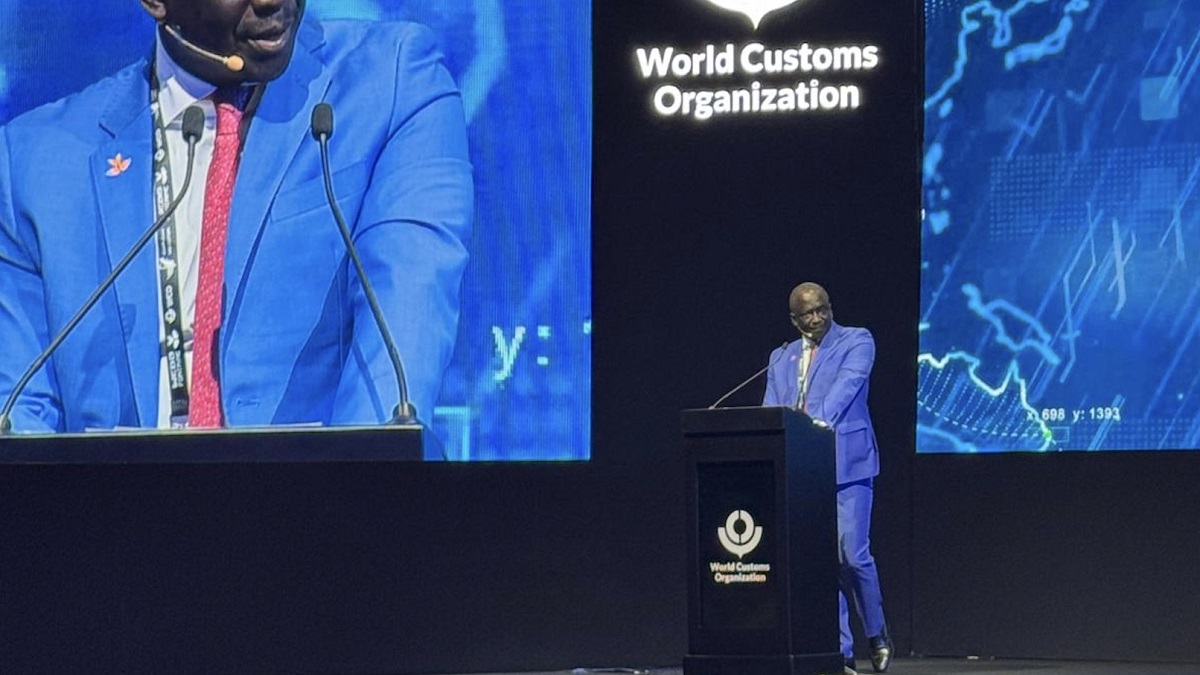
DUBAI, United Arab Emirates, February 6, 2026/APO Group/ –Webb Fontaine (www.WebbFontaine.com), a leading provider of AI-powered trade facilitation solutions, successfully concluded its participation as Corporate Sponsor at the 2026 WCO Technology Conference & Exhibition, where it officially launched its groundbreaking new concept, Webb Fontaine Zerø.


Held at the ADNEC Centre Abu Dhabi from 28 to 30 January 2026, the conference brought together more than 1,500 public and private sector stakeholders, including Customs administrations from over 100 countries, to explore how advanced technologies are shaping the future of border management, trade facilitation, and supply chain resilience.

Webb Fontaine’s Corporate Sponsorship for the second consecutive edition of the event marked a significant milestone, reinforcing the company’s long-term commitment to driving digital transformation in Customs through innovation, partnership, and AI powered platforms.

The highlight of Webb Fontaine’s presence was the official unveiling of Webb Fontaine Zerø, a next-generation, LLM-based Customs technology concept built from the ground up for the AI era. Announced during the opening keynote by Webb Fontaine Chief Executive Officer Alioune Ciss, Webb Fontaine Zerø represents a complete reset from legacy systems, embedding artificial intelligence and large language models into every layer of Customs operations.

“AI is no longer a future roadmap on a PowerPoint slide. It is already at work,” said Alioune Ciss, CEO of Webb Fontaine. “With Webb Fontaine Zerø, we rebuilt our core platforms from the ground up, integrating AI into every layer of Customs processes. This is not an upgrade. It is a fresh start for an AI-driven era. Customs administrations need systems that evolve as fast as regulations and trade tariff rates change, and Webb Fontaine Zerøis designed precisely for that.”

With Webb Fontaine Zerø, we rebuilt our core platforms from the ground up, integrating AI into every layer of Customs processes

The 2026 edition of the Conference was held under the theme “Customs Agility in a Complex World: Securing and Facilitating Trade through Innovation,” aligning closely with Webb Fontaine Zerø’s vision of real-time regulatory adaptation, intelligent risk management, and seamless digital trade ecosystems.

Beyond the keynote launch, Webb Fontaine experts actively contributed to high-level discussions throughout the event. Ara Shamirzayan, Chief Technology Officer, led a technical panel on reinventing risk management through advanced data analytics and AI, while Anicet Houngbo, General Manager of Webb Fontaine Benin, moderated a panel on digital facilitation at the border, highlighting successful government transformations across emerging markets.

Webb Fontaine’s exhibition stand attracted significant attention, offering live demonstrations of AI-powered solutions and immersive experiences centered around Webb Fontaine Zerø. Delegates engaged with interactive activations and in-depth discussions on how next-generation technologies can modernize Customs operations, enhance revenue collection, strengthen border security, and accelerate trade flows.

The company also sponsored the official conference dinner on the second day of the event, creating a unique platform for networking and collaboration among global Customs leaders, policymakers, and technology partners.

Webb Fontaine’s strong presence at the conference builds on its long-standing collaboration with the World Customs Organization, including discussions around securing cross-border transactions and contributing to the strategic work done by the WCO through active participation to the WCO SAFE Framework of Standards, the Private Sector Consultative Group (PSCG), and the Permanent Technical Committee (PTC).

With the successful launch of Webb Fontaine Zerø and an impactful week of engagement with the global Customs community, Webb Fontaine continues to position itself at the forefront of AI-driven trade technology.

The company looks forward to advancing discussions initiated at the conference and partnering with governments worldwide to usher in a new era of intelligent, agile, and future-ready Customs systems.

Distributed by APO Group on behalf of Webb Fontaine.

Tech

Kora Joins International Air Transport Association’s (IATA) Payment Network to Power Airline Payments Across Africa

Published

on

Africa

Through this integration, airlines and travel agencies using IFG can now accept payments across Africa via Kora, including cards, bank transfers, mobile money, and local alternative payment methods

LAGOS, Nigeria, June 12, 2026/APO Group/ –Kora (www.KoraHQ.com), the payment infrastructure platform, has joined the International Air Transport Association’s IATA Financial Gateway (IFG) (https://apo-opa.co/4ovs4va), connecting global airlines to Africa’s payment ecosystem through a single, reliable infrastructure layer.


IATA Financial Gateway is the airline industry’s dedicated payment orchestration and management platform. IFG brings together global, regional and local payment partners to provide airlines with the right mix of payment options to maximize acceptance, reduce cost, and better serve customers in every market. Through this integration, airlines and travel agencies using IFG can now accept payments across Africa via Kora, including cards, bank transfers, mobile money, and local alternative payment methods, without building or managing multiple complex integrations independently.

Global airlines no longer have to choose between expanding into Africa and managing payment complexity

Africa is one of the fastest-growing aviation markets in the world. The continent is expected to add more than 300 million new passengers by 2050. Yet global airlines have long faced a fundamental operational challenge when entering African markets: fragmented local payment rails, FX complexity, disconnected settlement systems, and the burden of managing multiple payment service provider relationships across Nigeria, Kenya, Ghana, Egypt and South Africa. This partnership removes that friction. One connection through IFG gives airlines access to Kora’s full African payment infrastructure, with the settlement reliability and local compliance that enterprise operations require.

Dickson Nsofor, CEO of Kora, said: “Africa is not a market to figure out later. It is a growth opportunity that demands serious infrastructure today. Our partnership with IATA signals that the rails are ready. Global airlines no longer have to choose between expanding into Africa and managing payment complexity. With Kora inside IFG, they get both.”

IATA currently represents over 370 international airlines globally. With Kora now part of IFG, those airlines gain direct access to Africa’s payment stack across every market Kora operates in.

IATA Financial Gateway (IFG) enables increased travel payment processing flexibility for the world’s airlines and travel suppliers to build a cost-effective travel payment strategy. Kora’s participation strengthens our ability to serve airlines operating in or expanding across African markets,” said Kamil Al-Awadhi, Regional Vice President, Africa and Middle East.

Distributed by APO Group on behalf of Kora.


Continue Reading

Energy

Dietsmann Brings its Energy Maintenance and Robotics Expertise to African Energy Week (AEW) 2026

Published

on

African Energy Chamber

After decades keeping Africa’s oil, gas and power plants running, Dietsmann is bringing robotics and AI to the center of its work

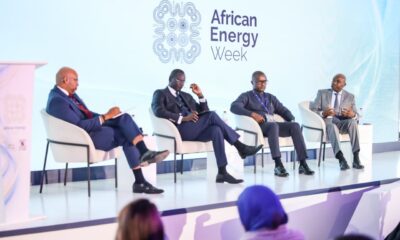
CAPE TOWN, South Africa, June 12, 2026/APO Group/ –Dietsmann, the independent specialist in operation and maintenance (O&M) services for energy production facilities, will participate as a Bronze Sponsor at African Energy Week (AEW) 2026 – taking place from October 12-16 in Cape Town. The sponsorship deepens a presence in African energy that stretches back decades and reflects the company’s growing role in the policy conversation after it joined the African Energy Chamber (https://EnergyChamber.org) earlier this year.


Dietsmann’s participation at AEW 2026 reflects the growing role of specialist maintenance contractors in Africa’s energy industry. With much of the continent’s production now coming from mature fields, the contractors that keep those facilities running reliably and at lower cost have become more important than ever. Dietsmann has built its position over more than four decades, maintaining oil, gas and power plants across Angola, Nigeria, Gabon, Libya, Uganda and South Sudan, often in demanding offshore and remote environments.

The company’s expertise is also on display in the Republic of Congo, where industrial maintenance is its core business. There it maintains TotalEnergies’ offshore production facilities and services the 484 MW gas-fired Centrale Électrique du Congo, one of the country’s main power plants. In Angola, it has operated since 2000 through Sonadiets, a joint venture with Sonangol that was among the first of its kind between an African national oil company and a maintenance specialist.

Dietsmann knows that reliable operations are the foundation of energy security

Dietsmann also prioritizes workforce development in parallel to its technical work. The firm has organized local training programs in all its African host countries since the early 2000s, building maintenance skills among national employees through dedicated training centers and on-the-job campaigns. Its approach aligns closely with the local-content priorities that are defining this moment in African energy policy.

Maintenance itself is being reshaped by technology, and Dietsmann is among the contractors leading the shift across Africa. In partnership with the robotics firm Taurob, the company has deployed autonomous inspection robots, including ATEX-certified units built for hazardous environments, and is integrating drones and AI-based analytics to move maintenance from reactive repairs toward predictive monitoring.

The company’s CEO Cesare Canevese has carried a consistent message into African energy circles: reliable maintenance, digitalization and local skills are non-negotiables for continental energy security. He also notes that Dietsmann’s expertise travels across the energy transition, as the fundamentals of maintaining a facility change little whether it produces oil, gas or power – readying the company for work on Africa’s growing gas-to-power and LNG projects.

“Dietsmann knows that reliable operations are the foundation of energy security,” said NJ Ayuk, Executive Chairman of the African Energy Chamber. “Pairing decades of field experience with new technology and local skills development is how Africa keeps its existing assets producing for longer.”

As a Bronze Sponsor at AEW 2026, Dietsmann is expected to feature in discussions on operational reliability, local content and the digital technologies reshaping how Africa maintains its energy infrastructure.

Distributed by APO Group on behalf of African Energy Chamber.

Continue Reading

Business

African Organisations Move from Awareness to Action as IT Asset Visibility Becomes a Board-Level Priority

Published

on

IT

Following widespread recognition of the IT asset visibility gap across the continent, V-Track reports a significant shift in organisational behaviour as finance and IT leaders move beyond acknowledgement toward structured, technology-driven control

Across African markets, a shift is underway in how organisations approach IT asset management. Having acknowledged the scale of the visibility gap – the growing disconnect between what appears on balance sheets and what can be verified in the real world – finance and IT teams are now moving to close it. The conversation, once dominated by problem definition, is rapidly becoming one of implementation.


This shift follows a period of heightened scrutiny in which organisations have begun to quantify the financial impact of poor asset visibility: avoidable procurement spend on devices that already exist in their estates, capital tied up in assets that are no longer in productive use, audit exposure from inaccurate registers, and security risk created by devices that have drifted off the network without formal decommissioning.

“We are seeing a clear change in the nature of the conversations organisations are having with us,” said Valene Nagiah, Head of Asset Tracking and Management at V-Track. “Twelve months ago, the primary question was: do we have a problem? Now, the question is: how do we fix it  and how quickly can we demonstrate a return? That is a meaningful shift, and it reflects a broader maturation in how African businesses think about IT governance.”

From static registers to continuous control

For many organisations, the first step in closing the visibility gap has been confronting the inadequacy of existing systems. Periodic manual audits and static spreadsheet-based asset registers are the default approach across much of the continent and are increasingly being recognised for what they are: point-in-time snapshots that begin losing accuracy the moment they are completed.

In environments where assets move constantly between offices, remote locations, field teams, and employees who may work across multiple sites,  a register that is accurate today may be significantly out of date within weeks. The challenge is not simply one of data quality; it is structural. Manual processes cannot keep pace with the operational reality of a distributed, mobile workforce.

“The organisations making the most progress are those that have stopped treating asset management as an audit exercise and started treating it as a continuous function,” said Nagiah. “Visibility is not something you achieve once a year. It is something you maintain every day and that requires infrastructure, not just process.”

The hybrid workforce as a forcing function

The permanent entrenchment of hybrid and distributed working across African markets has proven to be a significant forcing function for ITAM investment. As organisations formalised remote and flexible work arrangements, the practical consequences of asset invisibility became harder to ignore. Devices issued to home-based employees, contractors, and field staff could no longer be assumed to be present, functional, or secure, and without tracking infrastructure, verifying their status required manual intervention that was neither scalable nor reliable.

The organisations making the most progress are those that have stopped treating asset management as an audit exercise and started treating it as a continuous function

In markets characterised by infrastructure variability, including intermittent power supply, inconsistent connectivity, and high rates of staff movement between employers, these challenges are amplified. A device that was verified last quarter may have changed location, changed hands, or gone offline entirely in the intervening period. Without continuous monitoring, the organisation simply does not know.

For leased IT environments, this dynamic carries additional financial weight. Devices that cannot be accounted for at the end of a lease agreement represent a direct liability, replacement costs that fall to the organisation, compounded by the administrative burden of attempting to recover assets after the fact. Proactive tracking eliminates this exposure before it materialises.

What effective implementation looks like

Organisations that have made meaningful progress on IT asset visibility share a common set of characteristics. They have moved away from treating ITAM as a back-office IT function and repositioned it as a financial control mechanism with direct implications for procurement strategy, capital allocation, and audit readiness. They have invested in platforms that provide continuous, real-time data rather than periodic snapshots. And they have created clear ownership of asset data at both the IT and finance level, recognising that the two functions need to operate from the same source of truth.

The practical benefits of this approach are demonstrable across four areas:

  • Financial accuracy: asset registers that reflect operational reality, enabling more precise depreciation, budgeting, and capital planning.
  • Procurement efficiency: elimination of duplicate or unnecessary purchases driven by inaccurate inventory data.
  • Security and compliance: continuous visibility into device status reduces the attack surface created by unmonitored endpoints and strengthens regulatory compliance.
  • Lease and lifecycle management: accurate, real-time asset data enables organisations to optimise lease terms, plan timely returns, and maximise residual value.


“The organisations that are getting this right are not necessarily those with the largest IT budgets,” Nagiah noted. “They are the ones that have made a deliberate decision to treat their asset estate as a managed financial resource and have put the systems in place to support that decision. The technology to do this exists, and it is accessible. The gap is no longer a technology gap. It is a decision gap.”

A platform built for African operating conditions

V-Track’s asset intelligence platform is designed to function effectively within the operational constraints that characterise many African business environments. The platform requires no on-premises infrastructure, operates across distributed and multi-jurisdiction environments, and provides finance and IT teams with a unified view of their asset estate regardless of where those assets are physically located.

Organisations yet to begin their asset visibility journey are encouraged to start with V-Track’s 15-day free trial (https://apo-opa.co/4ehmGXN) – a structured visibility audit that typically surfaces actionable findings within the first week. No procurement process, no long-form commitment, and no prior ITAM infrastructure required.

“The most common thing we hear after the trial is: we had no idea,” said Nagiah. “That is exactly the point. The trial does not sell a product – it reveals a reality. What organisations choose to do with that clarity is their decision. But they can no longer say they did not know.”

Distributed by APO Group on behalf of V-Track.


Continue Reading

Trending