It is interesting to observe how the innovation brought by alternative payments is improving the whole ecosystem, and impacting cards as well – including debit ones
CURITIBA, Brazil, January 25, 2024/APO Group/ —
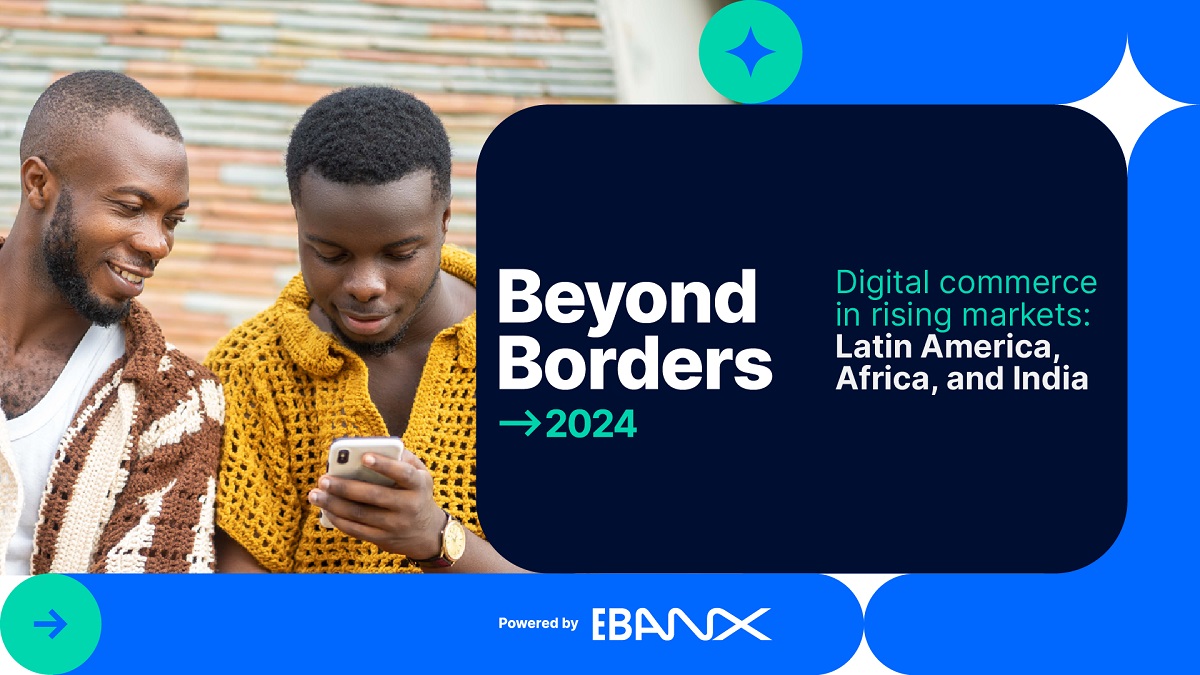
Clients in major rising economies like Brazil, India, Kenya, and Nigeria are pulling the global digital market up by paying online purchases with instant payments, transfers, and other alternative payment methods – including for B2B transactions; Cards are still strong in digital, with high penetration of domestic brands and debit bringing new consumers to the online sales world, points out the new EBANX’s (www.EBANX.com) Beyond Borders study; Digital payments in Africa have jumped from a 23% to a 46% penetration rate in less than eight years and continue to drive growth in digital commerce.
Rising markets in Latin America, Africa, and Asia are guiding the global surge in new consumers, with India leading the way, by adding 34 million people to the consumer class this year, almost one third of the 109 million worldwide. After Asia, Africa and Latin America are, respectively, the second and third regions to add more people, per the World Data Lab. This general consumer increase led by these three dynamic regions unfolds into the digital commerce realm as well: combined, LatAm’s and Africa’s digital commerce markets are expected to surpass US$1 trillion in total value by 2026, while India’s will be over US$275 billion, per Payments and Commerce Market Intelligence (PCMI) data in the new annual Beyond Borders (https://apo-opa.co/3OiQ1F4), EBANX’s comprehensive study about the digital market and payments in rising economies, which was launched today.
While digital commerce is growing by 13% or 12% per year in more consolidated markets around the world, like the U.S. or Europe, online sales are expanding at a much faster pace in rising economies, of 20%, according to Statista’s data, in the study. Over half of the population in these regions already embraces digital payments, positioning them as central to economic growth and consumer access.
“There is a solid demographic reason for this: rising economies have a young and growing population, contrasting developed regions. In addition to the demographic and economic push, rising economies largely benefit from digitization,” states Paula Bellizia, President of Global Payments at EBANX. “The digital revolution has been disrupting industries and unlocking opportunities for both local and global players, from verticals spanning from SaaS, digital ads, and B2B online trade, to gaming, streaming, social media, and e-commerce. And payments have been the backbone of this growth,” she added.
Latin America’s digital market will nearly double in size by 2026, reaching US$944 billion after growing at a 23% CAGR, per PCMI data for Beyond Borders, showcasing robust opportunities. Brazil, LatAm’s digital commerce powerhouse, boasted a US$275 billion market last year, and stands out as a prominent force, ranking fourth globally in the number of digital buyers, according to Insider Intelligence.
There is a solid demographic reason for this: rising economies have a young and growing population, contrasting developed regions
Also emerging as strong contenders are Mexico, Colombia, and Peru, which display annual growth rates of around 30% for digital commerce. Central America & Caribbean countries like Costa Rica, El Salvador, Panama, Guatemala, and the Dominican Republic will not slow down either, accelerating at an annual pace of around 20% by 2026, proving that a block approach to this Latin region can add up to the global expansion strategy of any global digital player.
India is another perfect example of the digital potential in rising economies: the Asian country is the world’s second-largest online shopping market, only behind China, with around 350 million people boosting a digital commerce market that surpassed US$184 billion last year. And yet, online sales penetration rate is still at 33%, as pointed out by Insider Intelligence’s data in Beyond Borders, showing the substantial untapped opportunity that still exists in the country – particularly if efforts are directed towards improving payment access for India’s diverse population.
Financial inclusion was at the center of two strong cases inspiring the world: UPI in India and Pix in Brazil. With great user experience, zero-cost services to consumers and minimal to no charges for merchants, the two systems are revolutionizing both offline and online purchases: Pix is part of the daily lives of 4 in every 5 adults in Brazil, according to the country’s Central Bank. Over the last three years, nearly 8 out of 10 customers making their initial online purchase with an EBANX merchant opted to use Pix for payment, per EBANX internal data. In India, UPI has a 41% share of the total digital commerce, according to PCMI, being the utmost chosen payment method by Indian online consumers.
As an early adopter of digital payments, and soon to be home to an adult population of 1 billion by 2030, Africa is also an important region for the outstanding digital growth of commerce and payments. After heavily embracing digital payments, which jumped from a 23% to a 46% penetration rate considering many of its countries in less than eight years, Africa is now on the verge of its next big leap: digital commerce, fueled by cell phone penetration rates and constant adaptability of local, alternative payment methods to the online world, like mobile money, which reached almost universal penetration in countries like Kenya.
It is interesting to observe how the innovation brought by alternative payments is improving the whole ecosystem, and impacting cards as well – including debit ones – which remain steady and keep playing an important role in the digital economy as account ownership surges in rising markets. “Cards and alternatives are learning from one another, absorbing features from one another, paying attention to the needs of merchants and consumers,” Bellizia noted. Combined, credit and debit cards represent 51% of digital commerce value in Brazil, 66% in Mexico, and 75% in Chile, according to PCMI data in Beyond Borders. In India, cards account for 43% of the value of online transactions; and the high penetration goes to African nations as well: in Morocco, 42%; in Nigeria, 36%. “A payments strategy for rising markets needs to consider a balance between cards and alternative payments, adapted to specific countries, verticals, and business models, centered in offering the best payment experience to customers, enabling them to pay with their method of choice. This fosters true access,” she added.
The new Beyond Borders report is also revealing the next frontier for innovation and growth in the payments industry: B2B payments – companies purchasing from other companies. Currently 42% of Kenyan businesses and 63% of Indian ones make online purchases. In LatAm, 64% of businesses in Brazil and an impressive 85% in Colombia, way higher than the global average of 50%, according to OECD and UNCTAD data. By 2027, rising markets in LatAm, Africa and Apac will make up for 40% of the total value of B2B payments made online worldwide, and yet an estimated 70% of B2B transactions are still pretty much manual, according to Capgemini, lacking more seamless flows. “This opens a massive opportunity in which alternative payments can be a game-changer: EBANX’s internal data show that local payments improve approval rates for B2B transactions, with internal rates that surpass 80%,” Paula Bellizia concluded.
Access the complete Beyond Borders 2024 study at https://apo-opa.co/3OiQ1F4.
Distributed by APO Group on behalf of EBANX.

















 Business5 days ago
 Business4 days ago
 Energy5 days ago
 Business5 days ago
 Events5 days ago