Connect with us
Anglostratits

Business

Global Africa Business Initiative shifts Digital and Health Action Pathways into higher gear to accelerate continent’s economic transformation

Published

on

Africa

The GABI Solutions Lab challenged some of Africa’s top business leaders to develop an ambitious, actionable work plan to overcome the roadblocks holding the continent back

KIGALI, Rwanda, May 25, 2026/APO Group/ –The Global Africa Business Initiative (GABI) (https://GABI.UNGlobalCompact.org) has shifted its new Digital and Health Action Pathways into a higher gear in order to accelerate the continent’s economic transformation by identifying and driving solutions to problems that slow progress.


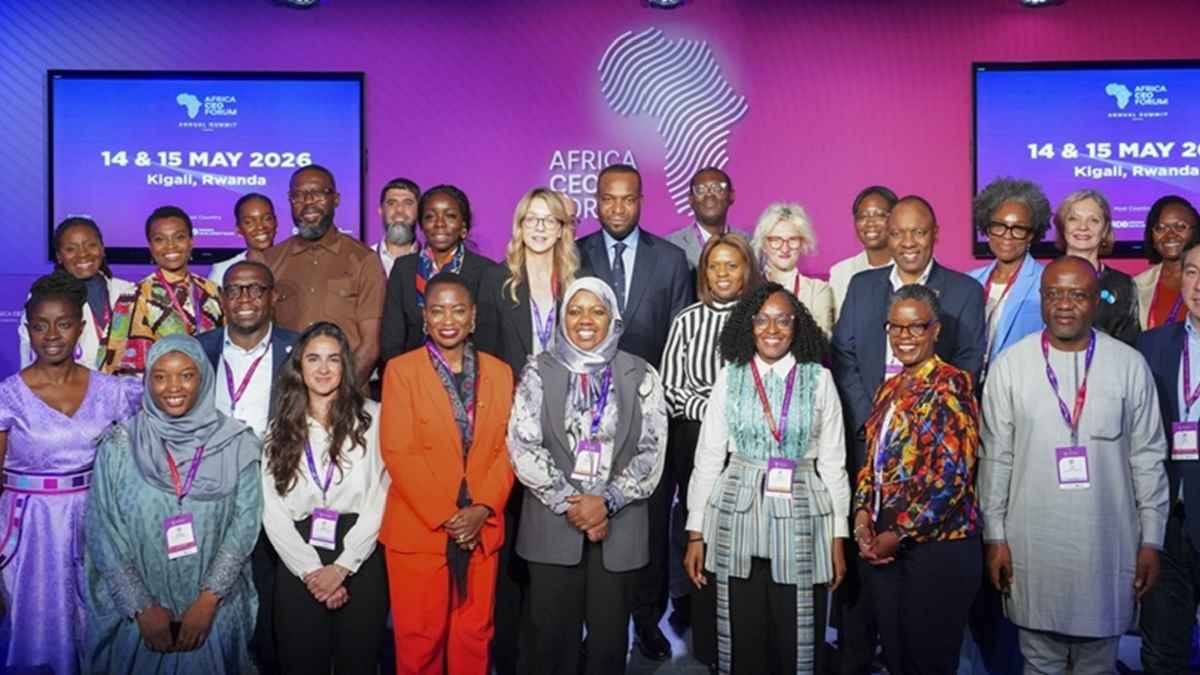
Convening on the sidelines of the Africa CEO Forum in Kigali, Rwanda on 15 May, the GABI Solutions Lab challenged some of Africa’s top business leaders to develop an ambitious, actionable work plan to overcome the roadblocks holding the continent back.


“Africa does not face a shortage of ideas, but a significant gap in execution and the financing required to scale solutions,” said Sanda Ojiambo, Assistant Secretary-General and CEO of the United Nations Global Compact. “The GABI Solutions Lab was a focused working session where public and private sector leaders co-developed practical solutions, structured bankable partnerships, and unlocked viable financing pathways that can be advanced immediately.  The aim is to ensure that commitments are translated into measurable, real-world outcomes at scale,” she added.


The GABI Action Pathways for Digital Transformation and Health were launched at Unstoppable Africa last September by a coalition of African and global leaders committed to advancing transformation from aspiration to delivery. The Solutions Lab in Kigali advanced and connected those two pathways, using digital technology in health as a practical test case for the broader challenge of bringing private capital into public-interest infrastructure at scale. As co-architects of solutions, participants worked through the specific conditions that would make each challenge bankable and implementable, drawing on real-world scenarios presented by public and private sector leaders.


Among the key discussion themes were how to accelerate investment in digital public infrastructure, connectivity, skills, and governance to ensure that AI becomes a force multiplier for African development; how to reduce the adoption timeline for proven infrastructure solutions; and how to deploy financing models for sovereign digital infrastructure at scale across multiple African markets.


Caitlin Burton, CEO of AI and robotics company Zipline Africa, headquartered in Rwanda, highlighted the need to move beyond pilot programmes towards the scaled implementation of proven technologies. “Across much of Africa, adoption is still moving at the pace of traditional aid cycles and public sector implementation timelines rather than the speed of modern technology deployment. We need financing models, incentives, accountability mechanisms, and partnerships that can collapse the adoption timeline for proven infrastructure from decades to years and create greater urgency for action,” she said.

Africa does not face a shortage of ideas, but a significant gap in execution and the financing required to scale solutions


Kate Kallot, Founder and CEO of Kenya-based data infrastructure company, Amini, emphasized the importance of sovereign AI infrastructure and digital capability development across the continent, saying, “Many developers and builders across the continent lack the tools or access required to build solutions that reflect local realities. The lack of data is a symptom of a much larger digital divide, including limited connectivity and infrastructure gaps. The challenge now is how to deploy financing models for sovereign digital infrastructure at scale, across multiple markets, in a way that delivers real capability into the hands of governments and citizens within the next 12 months.”


Nigeria’s Federal Minister of Communications and Digital Economy Bosun Tijani, spoke about the speed of AI adoption. “Without meaningful connectivity, skilled people, and governance systems that can support adoption at scale, we risk falling further behind. The real challenge is not whether Africa will adopt AI, but whether we have built the absorptive capacity required to use it to transform our economies and key sectors,” he said.


Senior industry leaders from the Aig-Imoukhuede Foundation, Afreximbank, Ecobank, McKinsey, PMI, mPedigree, ServiceNow, Safaricom, and the United Nations were also present to drive the transformation conversation.


Now in its fifth year, GABI is a global platform that brings together business leaders, policymakers, and investors to drive Africa’s economic growth. It is built on a simple premise: Africa’s potential is unlocked when public ambition aligns with private capital — and that happens by doing business with Africa, not just in Africa.


Unstoppable Africa, GABI’s flagship event, will take place at the Marriott Marquis in New York on 20-21 September. Follow the latest developments at Unstoppable Africa – YouTube (http://apo-opa.co/4nO8nOz).


For more information on the Global Africa Business Initiative, visit GABI.UNGlobalCompact.org/.

Distributed by APO Group on behalf of Global Africa Business Initiative.


Business

Nigerian Operators Strengthen Africa-Wide Energy Collaboration at African Energy Week (AEW) 2026

Published

on

African Energy Chamber

Operators focused on deepwater, offshore field development and gas infrastructure have joined AEW 2026 in Cape Town

CAPE TOWN, South Africa, July 7, 2026/APO Group/ –Leading Nigerian oil and gas operators are set to play a major role at African Energy Week (AEW) 2026, bringing upstream expertise, project development experience and investment momentum to Cape Town as Africa seeks to accelerate regional energy collaboration. Their participation reflects a growing push by Nigerian producers to engage more closely with regional and international stakeholders on new field development, gas commercialization and long-term energy investment.


TotalEnergies’ Nigeria Managing Director and Country Chair Matthieu Bouyer will attend alongside former TotalEnergies Managing Director Adewale Fayemi. A strategic player in the country’s upstream market, TotalEnergies continues to operate key deepwater assets in Nigeria and is among the international majors that have maintained offshore investment even as onshore and shallow-water positions have shifted to indigenous firms.

First E&P – which produces approximately 57,000 barrels per day (bpd) – has emerged as an increasingly more prominent player in Nigeria’s oil and gas market. The company has built its portfolio through direct asset development and positioning across the Niger Delta, contributing to the broader expansion of indigenous upstream capacity.CEO and MD Ademola Adeyemi-Bero and Chief Strategy Officer George Toriola will represent First E&P at AEW 2026 as the company assesses opportunities beyond Nigeria’s borders.

Meanwhile, Emadeb E&P continues to increase its portfolio through strategic acquisitions and project advancements. The company achieved first oil at the Ibom Field in 2025, marking the first new shallow-water offshore development in Nigeria in more than 15 years. The company has invested more than $100 million and has further drilling campaigns planned. MD Oluwasegun Ogunsanya and COO Sheriff Adeeyo will both participate at AEW 2026.

SunTrust Atlantic Energies has produced more than 54 million barrels of crude from the Umusadege field in OML 56 since 2008, sustaining output of approximately 10,000 bpd. Founder and Chief Executive Ugo Okafor and Executive Director Rachel Akhuetie will attend AEW. The company’s sustained production from a single marginal field over nearly two decades demonstrates the long-term value available in Nigeria’s upstream portfolio when operators commit capital and operational continuity.

Lekoil will be represented by Company Secretary and General Manager of Legal Gloria Iroegbunam and Chief Technical Officer Sam Olotu. Through its Otakikpo asset, the company commissioned Nigeria’s first indigenous onshore crude export terminal in nearly five decades while expanding gas-to-power infrastructure and advancing commercialization of additional discoveries including OPL 310.

Energia MD and CEO Oladimeji Bashorun and Pan Ocean & Newcross CFO Seyi Oladapo have also joined the conference. Pan Ocean and the Newcross have expanded across producing assets, gas infrastructure and export logistics, and will contribute to discussions on project financing and the capital structures required to sustain Nigeria’s upstream growth. For its part, Energia continues to support Nigeria’s production goals through a growing portfolio of operated and partnered assets across the Niger Delta.

“These operators are drilling new wells, building export terminals and financing offshore developments that did not exist five years ago. Nigeria’s upstream sector is growing not only through asset transfers but through new investment and new production,” stated NJ Ayuk, Executive Chairman of the African Energy Chamber.

As African energy markets become increasingly interconnected, collaboration between leading operators will be critical to accelerating project development and unlocking new investment. Through their participation at AEW 2026, Nigerian operators are bringing valuable expertise, capital and project execution capabilities to the regional dialogue, reinforcing their role in shaping Africa’s next phase of upstream growth.

Distributed by APO Group on behalf of African Energy Chamber.

Continue Reading

Energy

Guyana to Host Launch of Caribbean Energy Week 2027 as Regional Energy Momentum Builds

Published

on

Etu Energias

The official in-country launch of Caribbean Energy Week 2027 will take place next month in Georgetown, spotlighting emerging investment opportunities across the Caribbean’s oil, gas and LNG value chain

GEORGETOWN, Guyana, July 7, 2026/APO Group/ –The in-country launch of Caribbean Energy Week 2027 will take place on July 20, 2026 at the Guyana Marriott Hotel in Georgetown, bringing together government officials, investors, operators and industry stakeholders to highlight the strategic opportunities shaping the region’s energy future.


Held under the patronage of President Dr. Mohamed Irfaan Ali and with the endorsement of the Honorable Minister of Natural Resources, Vickram Bharrat, the launch will underscore Guyana’s central role in driving regional energy development and advancing the Caribbean’s position as an emerging global energy hub. The event will also be supported by the Guyana Office for Investment, reflecting the country’s continued focus on attracting international capital and strengthening its investment pipeline.

The launch event will provide an early platform to outline the priorities for Caribbean Energy Week 2027, including upstream expansion, LNG development, infrastructure build-out and regional energy integration. It will also highlight the growing importance of cross-border collaboration as Caribbean states work to unlock shared resources and improve coordination across oil and gas value chains.

Guyana continues to anchor regional growth, with offshore production from the ExxonMobil-operated Stabroek Block averaging close to one million barrels per day in 2026 and expected to increase further as new developments come online. The continued expansion of upstream capacity, alongside ongoing exploration activity and FPSO deployments, has reinforced the country’s position as the region’s leading oil producer and a key driver of investment momentum.

Across the wider Caribbean, Suriname is advancing its offshore development agenda, led by TotalEnergies’ GranMorgu project and a growing pipeline of exploration activity. In Trinidad and Tobago, efforts are focused on revitalizing mature gas production while expanding LNG and petrochemical capacity, with renewed attention on upstream partnerships and regional gas monetization opportunities.

Building on this foundation, Caribbean Energy Week 2027 is expected to further expand its reach and impact, offering a dedicated platform for project announcements, investment facilitation and strategic partnerships. As global demand for secure and diversified energy supply continues to grow, the Caribbean is increasingly positioned as a key emerging hub defined by scale, collaboration and long-term opportunity.

Distributed by APO Group on behalf of Energy Capital & Power.

Continue Reading

Business

MSGBC 2026 Technical Presentation to Examine Deepwater Delivery and Contracting Models

Published

on

Etu Energias

The MSGBC basin is adopting the standardized engineering, phased development and integrated contracting that operators worldwide use to keep high-cost offshore projects financeable

DAKAR, Senegal, July 7, 2026/APO Group/ –The engineering and contracting models that delivered GTA and Sangomar are being measured against the basin’s next projects, where cost and schedule discipline will decide which developments advance.


The MSGBC basin is adopting the standardized engineering, phased development and integrated contracting that operators worldwide use to keep high-cost offshore projects financeable. With Greater Tortue Ahmeyim (GTA) and Sangomar now in production, the basin’s next wave of projects hinge on their ability to apply those models quickly and competitively.

These questions anchor the technical presentation “Deepwater Engineering & Offshore Project Delivery in the MSGBC Basin” at this year’s MSGBC Oil, Gas & Power 2026 conference and exhibition. The session aims to examine how subsea production systems, the deployment of FPSO and FLNG units, offshore drilling, marine logistics and contracting models combine to turn a discovery into bankable production.

As the MSGBC basin moves into its next phase of deepwater development, the ability to deliver projects efficiently, safely and competitively will be critical

In offshore infrastructure, concept selection follows the resource. The economics of each vessel choice are visible in the basin’s two producing assets. Sangomar relies on a standalone FPSO, a converted very large crude carrier supplied by MODEC and moored roughly 100 km offshore, with a first-phase cost of around $5 billion.

GTA processes gas on an FPSO before piping it to the Gimi FLNG vessel operated by Golar LNG under a 20-year contract, with a nameplate capacity of approximately 2.7 million tons per year. Oil developments reward the storage and offloading flexibility of an FPSO, while large-scale gas justifies the cost of dedicated liquefaction close to shore.

The subsea systems linking wells to their host facilities represent a significant portion of a deepwater project’s engineering risk and cost. Sangomar ties its wells to the FPSO through 101 km of rigid flowlines, with a 24-well drilling program completed by deepwater drillships during ramp-up, while GTA connects its ultra-deepwater wells across roughly 100 km to processing infrastructure. Phasing is the principal lever for containing that exposure, allowing operators to bring on early production before committing capital to later stages. Woodside is now assessing a Sangomar Phase 2 of around 33 additional wells tied back to the existing FPSO, an approach that reuses the host facility rather than financing a new one.

At Sangomar, the subsea production systems ­– umbilicals, risers and flowlines – were delivered by the Subsea Integration Alliance under a single engineering, procurement, construction and installation (EPCI) contract. This approach consolidated technical scopes that are traditionally tendered separately.

“As the MSGBC basin moves into its next phase of deepwater development, the ability to deliver projects efficiently, safely and competitively will be critical to unlocking new investment and production. Leveraging the MSGBC Oil, Gas & Power platform, we aim to showcase the technologies, partnerships and delivery strategies that are helping transform discoveries into commercially viable production,” says Sandra Jeque, Vice President, Energy Capital & Power.

Gas developments lean on long-term LNG sales agreements and domestic supply commitments to underpin financing, while oil developments rely on the phased reuse of existing infrastructure to protect returns. As such, the “Deepwater Engineering & Offshore Project Delivery in the MSGBC Basin” presentation at MSGBC Oil, Gas & Power 2026 will examine how these engineering, logistics and contracting decisions connect, and how operators can carry the delivery performance achieved in the region into its next investment cycle.

Distributed by APO Group on behalf of Energy Capital & Power.

Continue Reading

Trending