Connect with us

Business

Global Africa Business Initiative shifts Digital and Health Action Pathways into higher gear to accelerate continent’s economic transformation

Published

on

Africa

The GABI Solutions Lab challenged some of Africa’s top business leaders to develop an ambitious, actionable work plan to overcome the roadblocks holding the continent back

KIGALI, Rwanda, May 25, 2026/APO Group/ –The Global Africa Business Initiative (GABI) (https://GABI.UNGlobalCompact.org) has shifted its new Digital and Health Action Pathways into a higher gear in order to accelerate the continent’s economic transformation by identifying and driving solutions to problems that slow progress.


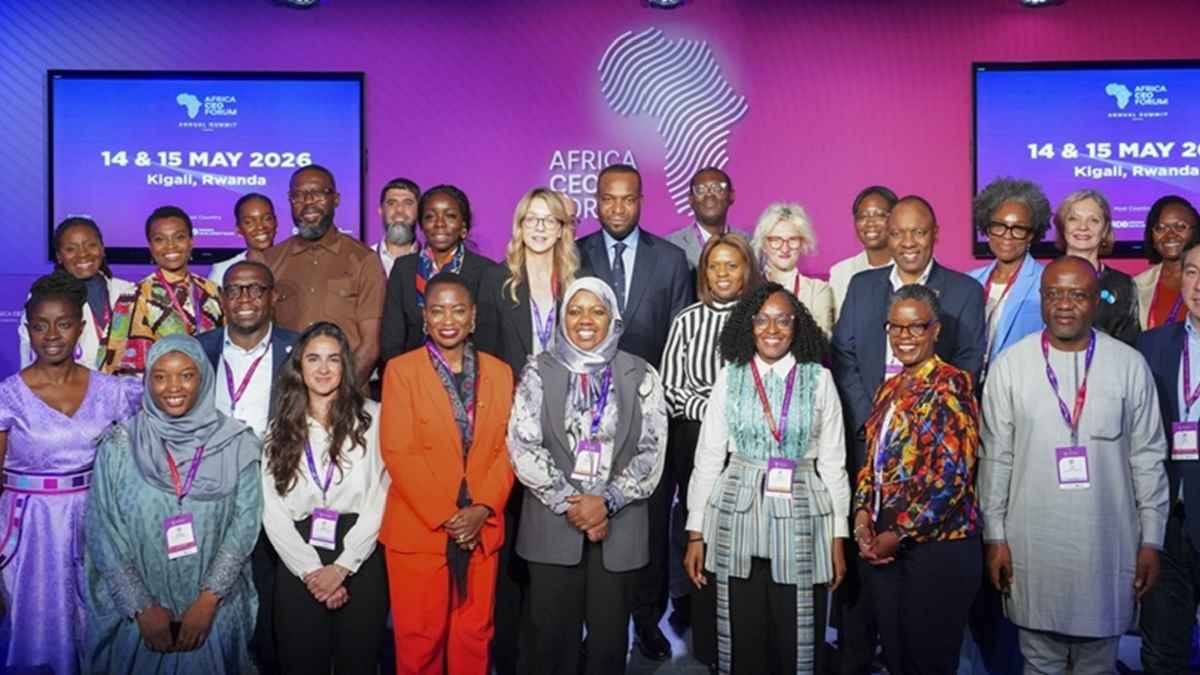
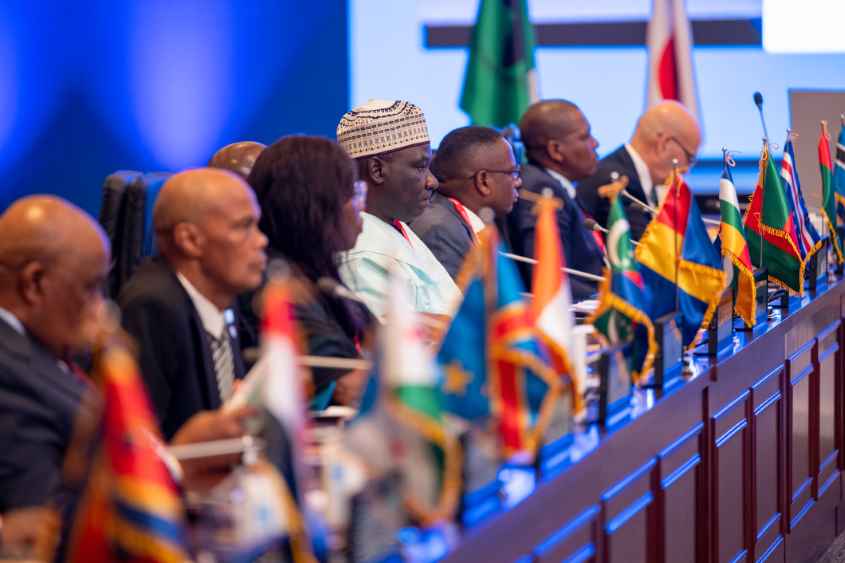
Convening on the sidelines of the Africa CEO Forum in Kigali, Rwanda on 15 May, the GABI Solutions Lab challenged some of Africa’s top business leaders to develop an ambitious, actionable work plan to overcome the roadblocks holding the continent back.


“Africa does not face a shortage of ideas, but a significant gap in execution and the financing required to scale solutions,” said Sanda Ojiambo, Assistant Secretary-General and CEO of the United Nations Global Compact. “The GABI Solutions Lab was a focused working session where public and private sector leaders co-developed practical solutions, structured bankable partnerships, and unlocked viable financing pathways that can be advanced immediately.  The aim is to ensure that commitments are translated into measurable, real-world outcomes at scale,” she added.


The GABI Action Pathways for Digital Transformation and Health were launched at Unstoppable Africa last September by a coalition of African and global leaders committed to advancing transformation from aspiration to delivery. The Solutions Lab in Kigali advanced and connected those two pathways, using digital technology in health as a practical test case for the broader challenge of bringing private capital into public-interest infrastructure at scale. As co-architects of solutions, participants worked through the specific conditions that would make each challenge bankable and implementable, drawing on real-world scenarios presented by public and private sector leaders.


Among the key discussion themes were how to accelerate investment in digital public infrastructure, connectivity, skills, and governance to ensure that AI becomes a force multiplier for African development; how to reduce the adoption timeline for proven infrastructure solutions; and how to deploy financing models for sovereign digital infrastructure at scale across multiple African markets.


Caitlin Burton, CEO of AI and robotics company Zipline Africa, headquartered in Rwanda, highlighted the need to move beyond pilot programmes towards the scaled implementation of proven technologies. “Across much of Africa, adoption is still moving at the pace of traditional aid cycles and public sector implementation timelines rather than the speed of modern technology deployment. We need financing models, incentives, accountability mechanisms, and partnerships that can collapse the adoption timeline for proven infrastructure from decades to years and create greater urgency for action,” she said.

Africa does not face a shortage of ideas, but a significant gap in execution and the financing required to scale solutions


Kate Kallot, Founder and CEO of Kenya-based data infrastructure company, Amini, emphasized the importance of sovereign AI infrastructure and digital capability development across the continent, saying, “Many developers and builders across the continent lack the tools or access required to build solutions that reflect local realities. The lack of data is a symptom of a much larger digital divide, including limited connectivity and infrastructure gaps. The challenge now is how to deploy financing models for sovereign digital infrastructure at scale, across multiple markets, in a way that delivers real capability into the hands of governments and citizens within the next 12 months.”


Nigeria’s Federal Minister of Communications and Digital Economy Bosun Tijani, spoke about the speed of AI adoption. “Without meaningful connectivity, skilled people, and governance systems that can support adoption at scale, we risk falling further behind. The real challenge is not whether Africa will adopt AI, but whether we have built the absorptive capacity required to use it to transform our economies and key sectors,” he said.


Senior industry leaders from the Aig-Imoukhuede Foundation, Afreximbank, Ecobank, McKinsey, PMI, mPedigree, ServiceNow, Safaricom, and the United Nations were also present to drive the transformation conversation.


Now in its fifth year, GABI is a global platform that brings together business leaders, policymakers, and investors to drive Africa’s economic growth. It is built on a simple premise: Africa’s potential is unlocked when public ambition aligns with private capital — and that happens by doing business with Africa, not just in Africa.


Unstoppable Africa, GABI’s flagship event, will take place at the Marriott Marquis in New York on 20-21 September. Follow the latest developments at Unstoppable Africa – YouTube (http://apo-opa.co/4nO8nOz).


For more information on the Global Africa Business Initiative, visit GABI.UNGlobalCompact.org/.

Distributed by APO Group on behalf of Global Africa Business Initiative.


Business

Ammat Global Resources Redefines Local Content Through Congolese-Led Operations

Published

on

With 80–85% of its workforce and management composed of Congolese nationals, Ammat Global Resources is demonstrating that deep localization can serve as a competitive operating model for upstream performance and ESG alignment

POINTE-NOIRE, Congo (Republic of the), May 26, 2026/APO Group/ –In the Republic of Congo’s offshore energy sector, where debates around local content have often centered on compliance thresholds and regulatory minimums, Ammat Global Resources is presenting a different approach. The independent upstream operator has built a workforce model in which 80-85% of all roles – including executive leadership, engineering and asset management – are held by Congolese nationals.


From its operational headquarters in Pointe-Noire to its offshore production assets across the Loango and Zatchi fields, Ammat’s organizational architecture reflects a deliberate shift away from expatriate-heavy operational control toward domestic technical ownership. In practical terms, this means Congolese petroleum engineers, reservoir specialists and asset managers are not only involved in field operations, but leading them.

This model stands in contrast to the long-established upstream norm in parts of sub-Saharan Africa, where complex offshore assets have historically depended on expatriate technical managers, often at significant cost and with limited knowledge transfer. Ammat’s approach directly challenges that dependency assumption by embedding domestic expertise at the core of operational decision-making.

Operational Efficiency Gains

By consolidating technical authority within-country, the company reduces exposure to international staffing volatility, minimizes expatriate overhead costs, and shortens decision cycles across drilling, production optimization and maintenance planning. This creates a leaner operational profile that is particularly relevant in mature offshore assets, where efficiency gains often depend on speed of execution rather than capital expansion.

Local content is about transferring real control, real expertise and real value creation to African professionals

Equally important is the regulatory and institutional dimension. Deep domestic execution has strengthened Ammat’s alignment with Congolese authorities and regulatory stakeholders, creating a more predictable operating environment. In resource-dependent economies, this trust factor often determines the difference between stalled projects and sustained production lifecycles. By situating Congolese professionals in high-accountability roles, the company reduces the friction typically associated with external operators perceived as distant from national development priorities.

Local Content Redefined

The African Energy Chamber (AEC) has consistently argued that local content must move beyond employment quotas to become a mechanism for industrial capability-building. Ammat’s structure reflects this principle in practice. Rather than positioning local workers in peripheral service roles, the company has embedded them in core technical and strategic functions, effectively internalizing operational intelligence within the host country.

“Local content is about transferring real control, real expertise and real value creation to African professionals. What Ammat Global Resources is demonstrating in Congo is that when nationals are trusted with full operational responsibility, the result is not just compliance, but stronger assets, better decision-making, and long-term sustainability. This is the future of African energy,” says NJ Ayuk, Executive Chairman of the AEC.

From an ESG perspective, Ammat’s model also strengthens the social and governance pillars of its operations. Socially, it accelerates skills transfer, professional development and long-term employment stability for Congolese talent. Governance-wise, it enhances accountability by ensuring that decision-makers are embedded within the regulatory and community context in which assets operate.

The environmental side is also strengthened indirectly. Localized technical teams tend to respond more rapidly to operational inefficiencies, maintenance issues, and environmental risk factors due to proximity and institutional continuity. This reduces downtime and improves adherence to environmental management protocols, particularly in sensitive offshore environments.

Ultimately, Ammat Global Resources is positioning itself as a case study in what local content maturity can look like when treated as a core business strategy rather than a compliance obligation. By centering Congolese professionals across its value chain – from engineering to executive management – the company is demonstrating that localization can be a catalyst for operational resilience, cost efficiency and long-term partnership stability in Congo’s upstream sector.

Distributed by APO Group on behalf of African Energy Chamber.

Continue Reading

Energy

Guyana Confirmed to Host Caribbean Energy Week 2027 as Regional Energy Integration Gains Momentum

Published

on

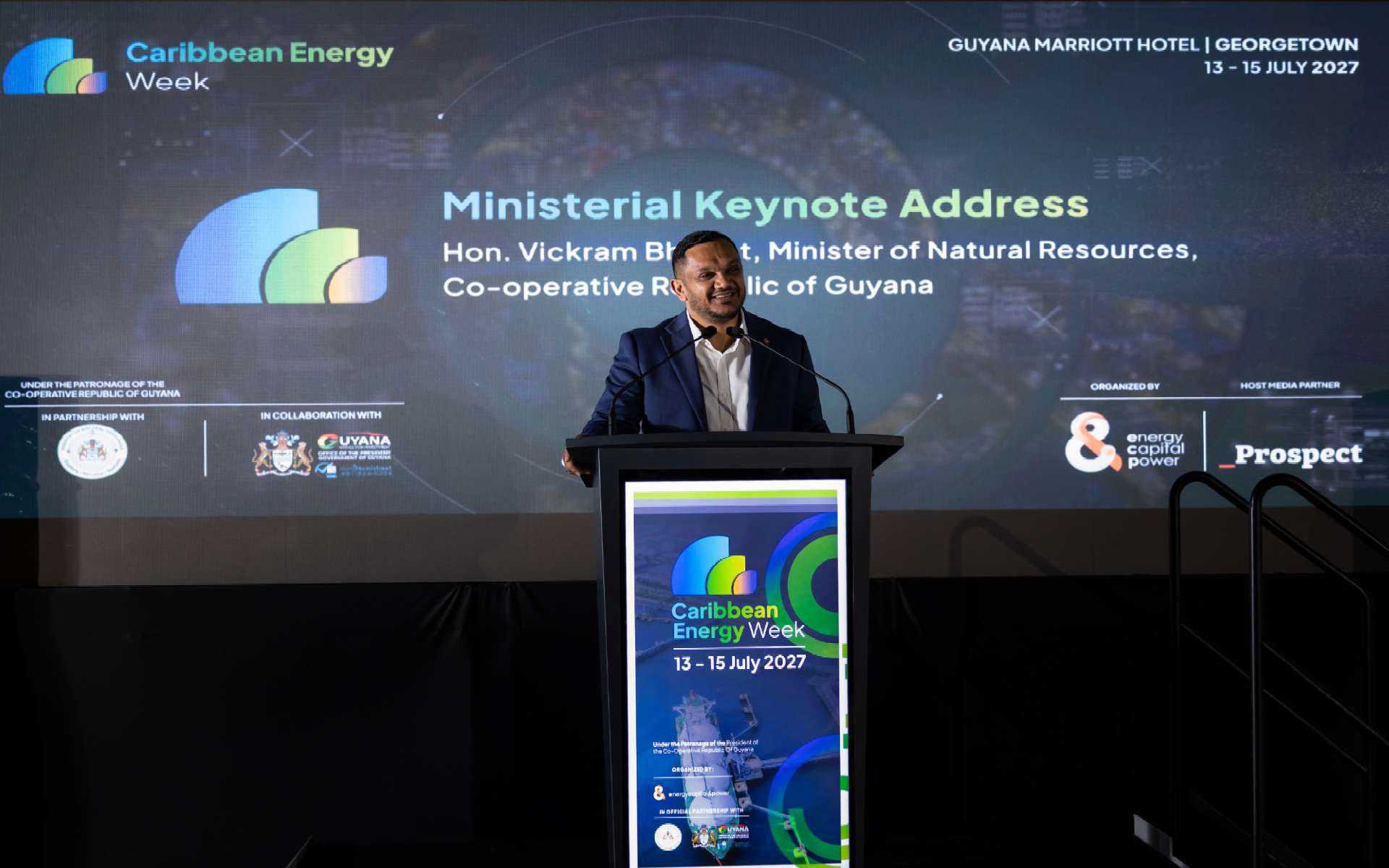
The second annual Caribbean Energy Week will take place in July 2027 in Guyana under the patronage of President Dr. Mohamed Irfaan Ali and the endorsement of The Honorable Minister of Natural Resources Vickram Bharrat, bringing together global investors and regional leaders to advance oil, gas and LNG development

GEORGETOWN, Guyana, May 25, 2026/APO Group/ –The second annual Caribbean Energy Week (CEW) will take place in Guyana in July 2027, convening regional governments, international energy companies and investors at a pivotal moment for the Caribbean’s emergence as a global energy hub. Held under the patronage of President Dr. Mohamed Irfaan Ali and with the endorsement of The Honorable Minister of Natural Resources Vickram Bharrat, the event highlights the country’s growing leadership in shaping the region’s energy future.


Under the theme, “Unlocking the Caribbean Energy Corridor: Oil, Gas, LNG & Investment for a New Global Hub,” CEW 2027 will focus on transforming the Caribbean from a set of fragmented markets into an integrated, globally competitive energy corridor. Central to this vision is deeper cross-border collaboration, accelerated infrastructure development and increased capital flows across the oil, gas and LNG value chains.

We are seeing unprecedented upstream growth in Guyana, major project development in Suriname and renewed momentum around regional gas and LNG integration in Trinidad and Tobago

Momentum across the region continues to build. In Guyana, offshore production from the ExxonMobil-led Stabroek Block averaged approximately 914,000 barrels per day in the first quarter of 2026, with output expected to exceed one million barrels per day following the startup of the Uaru development. At the same time, upstream expansion remains robust, supported by new seismic campaigns, FPSO developments and ongoing work tied to the Longtail project. In neighboring Suriname, TotalEnergies is advancing its $10.5 billion GranMorgu offshore development alongside new exploration activity, underscoring sustained investor confidence in the Guyana-Suriname Basin and reinforcing the region’s long-term growth trajectory.

In Trinidad and Tobago, the focus is shifting toward revitalizing mature gas production through new upstream partnerships and cross-border developments, including progress on projects such as Manatee and increased collaboration with Venezuela to unlock stranded reserves. At the same time, the country is advancing efforts to expand its LNG and petrochemical value chains, positioning itself to remain a key gas processing and export hub in the Atlantic Basin.

“We are seeing unprecedented upstream growth in Guyana, major project development in Suriname and renewed momentum around regional gas and LNG integration in Trinidad and Tobago,” said James Chester, CEO of Energy Capital & Power, the event organizer. “Caribbean Energy Week 2027 is about connecting those opportunities – bringing together governments, operators and investors to unlock a truly integrated energy corridor that can compete on the global stage.”

The inaugural Caribbean Energy Week in 2026 laid a strong foundation, attracting more than 400 attendees and over 90 companies, alongside high-level ministers and industry leaders from across the region and beyond. Hosted in Paramaribo, the event facilitated critical dialogue on cooperation, investment and infrastructure, while also serving as a platform for deal-making and knowledge exchange.

Building on this momentum, CEW 2027 is set to expand in both scale and impact, offering a premier platform for strategic dialogue, project showcases and investment engagement. As global demand for diversified energy supply grows, the Caribbean is increasingly well-positioned to play a central role – one defined by collaboration, connectivity and opportunity.

Distributed by APO Group on behalf of Energy Capital & Power.

Continue Reading

Business

Venezuela Under Rodriguez: Turning Back Toward Stability and Opportunity (By NJ Ayuk)

Published

on

Venezuela possesses the world’s largest proven oil reserves, estimated at approximately 303 billion barrels or roughly 17% of global totals, with a value equating to tens of trillions of dollars

JOHANNESBURG, South Africa, May 25, 2026/APO Group/ —By NJ Ayuk, Executive Chairman, African Energy Chamber (https://EnergyChamber.org).

Just a decade ago, many had written off the Venezuelan oil industry and, by extension, Venezuela itself, determining that it was on the brink of an irreversible collapse. A more pessimistic view asserted that the country had already become a failed state, and it would just take some time for the rest of the world to see it for themselves.

On January 3, 2026, when U.S. Special Forces carried out strikes against military targets in northern Venezuela and a raid of the presidential compound in Caracas, culminating in the capture and extradition of President Nicolás Maduro and his wife to the US.  Numerous analysts predicted the shocking and sudden upheaval would inevitably result in violent civil conflict and an even greater economic disaster for a country already battered by years of economic embargoes and chaos.

In retrospect, the fallout from Maduro’s arrest and removal proved much less severe than experts predicted, and Delcy Rodríguez’s transition from executive vice president to acting president in Maduro’s absence moved forward without much turbulence.

A little less than two months later, together with my team from the African Energy Chamber (AEC), I was able to meet with President Rodríguez in Caracas. It is my great pleasure to report that we did not encounter an administration mired in uncertainty and instability but rather one demonstrating optimism and a clear sense of renewal.

Venezuela is in very good hands under President Rodríguez, who personally expressed to us her firm commitment to recovery through reforms and new partnerships.

Resurrecting a Powerhouse

Venezuela possesses the world’s largest proven oil reserves, estimated at approximately 303 billion barrels or roughly 17% of global totals, with a value equating to tens of trillions of dollars. From its most recent peak of roughly 3.5 billion barrels per day (bpd) in the late 1990s, Venezuelan oil production suffered a steep decline to 2.6 million bpd over the next few years when a 2002 strike at the national oil company Petróleos de Venezuela, S.A. (PDVSA) motivated then-President Hugo Chavez to replace nearly half the company’s workforce. While initially production remained steady at that lower rate under President Maduro, elected after Chavez’s death in 2013, the subsequent crash in global oil prices marked the start of further declines that saw production rates eventually hit new lows of only 300,000-400,000 bpd in 2020.

Production has since rebounded to about 1 million bpd as of early 2026.

With a continuation of the stability found under the Rodríguez administration, along with simplified regulations, Venezuela can attract the level of investment required to bolster production rates even further. Though it would be a best-case scenario, with these elements in place, experts project that, within a decade, Venezuela could see the return of a 2.5 million bpd output and even the historical peaks of 3.5 million bpd achieved in the 1990s. But all signals indicate that President Rodríguez is earnestly committed to that very outcome.

In January, President Rodríguez (who held the additional role of Venezuela’s oil minister until March) overhauled the country’s Organic Hydrocarbons Law, deregulating the energy sector in a move that is expected to draw in USD1.4 billion in investments this year alone.

This reform bill, while it maintains state ownership of reservoirs, eases up on the terms that once mandated a majority stake and operational control for PDVSA in joint ventures. Through what the reforms describe as “production participation contracts” — effectively a production-sharing model — the bill also grants private firms more autonomy in exploration, production, and commercialization. Other attractive changes address royalty caps, taxation, and independent/foreign dispute resolution.

In a nutshell, President Rodríguez’s reforms slash at the bureaucracy that has been keeping Venezuela from realizing its true energy potential. She has cut red tape and rollout the red carpet to energy investors and Venezuela stands to win.

President Rodríguez has also proven herself as a reliable collaborator.

By maintaining Venezuela’s commitments to OPEC, especially through the political upheaval of the past five months, President Rodríguez has done her part in supporting the stability of the global oil market while preserving her country’s beneficial ties to the other OPEC countries. Furthermore, the Rodríguez administration’s vision for Venezuela’s rebound extends beyond oil.

Venezuela’s natural gas reserves, estimated at roughly 200 trillion cubic feet (Tcf), rank the country’s holdings among the world’s largest, and President Rodríguez plans to develop these resources to their fullest.

President Rodríguez’s reforms slash at the bureaucracy that has been keeping Venezuela from realizing its true energy potential

While Venezuela’s Organic Hydrocarbons Law regulates gas associated with crude oil production, the separate Gaseous Hydrocarbons Law governs non-associated gas and offers even more flexibility on private ownership stakes and trading activities than regulations that apply to oil.

The Rodríguez administration intends to leverage these conditions to monetize offshore non-associated gas fields such as Dragon, Loran-Manatee, and Perla through partnerships with international majors like Shell, BP, Eni, and Repsol. Plans are also in place to ramp up pipeline exports to Trinidad and Tobago and to capture gas at sites where it is currently being flared to both reduce waste and supply domestic power generation.

With the rise of AI data centers increasing the demand for electricity production the world over, these strategies should attract a great deal of foreign investment to Venezuela and generate revenue at a quicker pace than many large-scale oil projects, all while improving the reliability of the national grid and positioning the country as a significant contributor to global supply.

What This Means for Africa

For decades, Venezuela has demonstrated a willingness to ally with African oil-producing nations. With one of the highest proportions of African ancestry among the Spanish-speaking countries of Latin America, there is a deep admiration for Africa in Venezuela, and the nation has been consistent in its support for the rights of African producers to drill in their own territories in the battle against energy poverty. Even years before the foundation of OPEC, it was Venezuelan representatives who expressed a desire to coordinate with Africa’s sovereign, developing oil producers to collaborate on global petroleum policies. When the organization officially formed in 1960, Libya was the first African nation invited into the fold only two years later. Both the Chávez and Maduro administrations even went so far as to establish numerous state-sponsored promotions of the Afro-Venezuelan identity including the creation of a Vice Ministry for African Relations and additional Venezuelan embassies throughout Africa. Venezuela was also among the first countries to indicate interest in supporting or hosting concepts related to the Africa Energy Bank, underscoring its commitment to African energy sovereignty.

This same welcoming disposition is alive and well in Venezuela today, as our recent AEC trip to the nation’s capital confirmed.

During our delegation’s visit, we engaged directly with PDVSA leadership, energy ministers, and President Rodríguez herself. The warmth of their reception and the clarity of their vision left a lasting impression.

The Venezuelan officials we met with emphasized an openness to African participation across all facets of production, and President Rodríguez has been fully open to African investments in and beyond oil. She was eager to formalize cooperation, which would include dedicated programs to train African professionals at Venezuela’s renowned Universidad Venezolana de los Hidrocarburos (UVH), which has now opened itself specifically to such initiatives.

In the end, we signed a landmark memorandum of understanding, committing both Venezuela and the AEC to working towards increased investment, trade, technology exchange, and human capital development among numerous other items.

This potential trading partnership, especially regarding natural gas, holds profound significance for Africa, where approximately 600 million people lack access to electricity, and nearly 1 billion still rely on dangerous traditional biomass for cooking.

These inequities wreak havoc on human health and hold back development. Reliable energy from fossil fuels has proven time and again to be the most reliable bridge to modern energy access and human flourishing, and I was pleased to learn that President Rodríguez shares my passion for eradicating this deficit.

With over a century of experience in the oil and gas industry, Venezuela complements Africa as a whole. Our deep bench of producers, entrepreneurs, and international partners can work seamlessly with Venezuelan counterparts to scale up output and reduce energy poverty on both continents. It was refreshing to engage with leadership that shares this vision, and the AEC is excited to make Venezuela a key focus of our 2026 and 2027 initiatives.

African producers should seriously consider Venezuela as a strategic investment destination. The country offers world-class technical expertise, a skilled workforce, and vast proven reserves. With improving conditions in the energy sector and a government open to partnerships, Venezuela represents significant long-term potential for mutually beneficial cooperation. Strategic investments now could position African players as key partners in the country’s energy future while delivering attractive returns.

The Way Back

The approach to making Venezuela the best country for energy investments that President Rodríguez has taken since stepping into her current role is already working. In recognition of her hydrocarbons law reforms, the U.S. lifted fiscal and travel sanctions that were in place on both her and PDVSA, allowing transactions between U.S. companies and Venezuelan banks to recommence.

Other players in the global community have demonstrated confidence in Venezuela’s recovery as well. The return of major airlines like Qatar Airways, American Airlines, TAP Air Portugal, and Turkish Airlines coincided with President Rodríguez’s meetings with reportedly over 120 other multinational corporations.

This renewed confidence is perhaps most clearly visible in the energy sector, where major international oil companies have moved quickly to re-enter the Venezuelan market. Since President Rodríguez took office, Eni has signed a major agreement to relaunch the giant Junín-5 heavy oil project in the Orinoco Belt, Shell has secured deals to develop the Dragon offshore gas field and is in negotiations to develop the Carito and Pirital onshore fields, and Hunt Oil has finalized multi-billion dollar agreements to explore and produce heavy crude in the Monagas, Anzoátegui, and Barinas regions. These developments build directly on the hydrocarbons law reforms and the lifting of sanctions, signaling a return of strong international trust in Venezuela’s energy future.

Outside the administration, the everyday Venezuelans we engaged with during our stay in their country all shared a resilience, an ambition, and a commitment to rebuilding their economy. President Rodríguez is a perfect reflection of these people, and we are confident she will serve them well.

If there is one lesson we have learned since founding the AEC, it is that political stability and clear and favorable regulations create an enabling environment for the energy sector to operate at its maximum potential. With President Rodríguez at the helm, Venezuela has repositioned itself in accordance with this principle. We look forward to working with this administration as it steers the country away from becoming a cautionary tale and towards its future as an example of progress.

Distributed by APO Group on behalf of African Energy Chamber.

Continue Reading

Trending

Exit mobile version