Connect with us
Anglostratits

Business

Gaps in cybersecurity policies and employee commitment leave organisations vulnerable, Kaspersky survey shows

Published

on

Kaspersky

Without robust cybersecurity management and oversight, organisations face heightened exposure to ransomware attacks, data leaks, and regulatory penalties

JOHANNESBURG, South Africa, April 23, 2026/APO Group/ –A recent Kaspersky (www.Kaspersky.co.za) survey undertaken in the Middle East, Turkiye and Africa (META) region entitled “Cybersecurity in the workplace: Employee knowledge and behaviour”, showed that 39% of professionals consider cybersecurity rules in their company to be excessive or not fully appropriate. In Kenya, this figure was 25% and in South Africa, 23%. Furthermore, the survey highlighted that 7% of respondents in the META region, 4% in Kenya and 10% in South Africa noted that their organisations do not have cybersecurity rules or that they are not aware of them. These results show a disconnect between corporate cybersecurity policies and employee commitment to these rules, underscoring the risks associated with shadow IT and unmanaged device usage in the workplace.


Shadow IT is defined as the use of unauthorised software, devices, or services without IT oversight, and it has evolved into a critical business risk. While often driven by employee productivity needs, it creates blind spots for IT departments. The rise of hybrid work environments, increased reliance on cloud-based tools and the spread of AI tools have accelerated this trend. Without robust cybersecurity management and oversight, organisations face heightened exposure to ransomware attacks, data leaks, and regulatory penalties.


19% of all survey respondents said there are no policies regarding the use of non-corporate devices in their company. 35% admitted that they can use their own devices to access business information, provided they have some type of cybersecurity protection, even consumer-grade software. On the positive side, 21% of all respondents said they can use their own device, but these must first pass more stringent corporate IT security checks; while 25% indicated that only devices provided by the IT function can be used for work purposes.


The situation is significantly better with permissions for employees to install software on corporate devices without IT department’s approval. 50% of all survey participants reported that only IT specialists in their company are allowed to install software, while in 31% of organisations only top management or designated users can do so. 11% of employees can install software that is approved by the IT team. However, 8% of respondents said that all users can install any software they need without IT agreement in their organisation.


Many organisations already have security policies in place, but employee perception must also be considered

At the same time 21% of professionals surveyed in the META region, 29% in Kenya and 17% in South Africa acknowledged that within the past year they installed software on their work devices without IT supervision. That highlights a persistent shadow IT challenge that continues to expose organisations to security vulnerabilities, compliance risks, and data breaches.


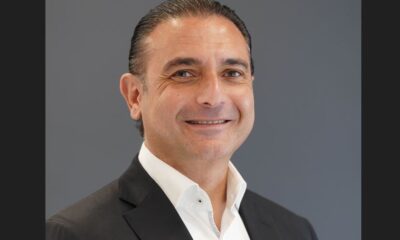
“Shadow IT is now a mainstream operational risk. When one in five employees installs software without IT oversight, it signals a policy gap. Many organisations already have security policies in place, but employee perception must also be considered. Organisations should move beyond restrictive controls and instead implement intelligent, user-centric cybersecurity strategies that combine strategies that integrate technology with employee awareness and responsible use,” said Toufic Derbass, Managing Director for the META region at Kaspersky.


To help organisations strengthen their defences, Kaspersky recommends the following:

  • Conduct a Shadow IT audit to identify all unauthorised software, cloud services, and personal devices accessing corporate data.
  • Implement robust monitoring and cybersecurity solutions, for example from the Kaspersky Next product line with EDR and XDR tiers, to gain visibility into unsanctioned app usage and device behaviour.
  • If employees are allowed to use personal devices, define clear minimum security requirements and enforce them through such solutions as mobile device management (MDM) or endpoint management tools.
  • Complement user-friendly cybersecurity policies for employees with trainings that demonstrates real-life risks and ways to avoid them. Solutions such as Kaspersky Automated Security Awareness Platform can help.


For employees Kaspersky experts advise:

  • Understand your company’s cybersecurity policies. If anything is unclear, ask for clarification.
  • Only use applications that have been approved by your IT department and request access to specific IT resources when needed.
  • Use only authorised devices for work. If personal devices are allowed, make sure they meet all required security standards and have appropriate cybersecurity solutions installed.
  • Store and share work files only through approved platforms.


*The survey was conducted by Toluna research agency at the request of Kaspersky in 2025. The study sample included 2800 online interviews with employees and business owners using computers for work in seven countries: Türkiye, South Africa, Kenya, Pakistan, Egypt, Saudi Arabia, and the UAE.

Distributed by APO Group on behalf of Kaspersky.

Events

GREE Unveils 130 Products at the 139th Canton Fair, with Over 80% Featuring AI and Green Energy-Saving Technologies

Published

on

GREE

GUANGZHOU, CHINA – Media OutReach Newswire – 17 April 2026 – On April 15, the 139th China Import and Export Fair (hereinafter referred to as the “Canton Fair”) officially opened. As a leading enterprise in the manufacturing sector, Gree Electric made a grand appearance at Pavilion 4.2A under the theme “GREE, Making Better Electric Appliances,” presenting over a hundred innovative products in its largest exhibition area in Canton Fair history. Amid the global wave of green and intelligent manufacturing transformation, GREE is leveraging its hard-core independent innovation and full-industry-chain capabilities to show the world the confidence and resolve of China’s intelligent manufacturing to navigate industry cycles and lead the transformation.

Zhu Lei, CMO of Gree Electric, stated that Gree has participated in the Canton Fair for 31 consecutive years. This year, GREE brought 130 products to the event. Facing the global market, GREE strives to fully meet the practical needs of consumers from different regions worldwide. Notably, the majority of these products are originally manufactured in and exported from China, reflecting the dedication and ingenuity of GREE’s Chinese craftsmen.

It is reported that at this year’s Canton Fair, GREE has created a full-industry-chain exhibition space ranging from core components to scenario-based solutions. To date, buyers from over 50 countries and regions have scheduled visits and business negotiations, marking a 21% year-on-year increase.

Currently, the global home appliance industry is undergoing a dual transformation. On one hand, an energy efficiency revolution driven by the “Dual Carbon” goals makes the transition to eco-friendly refrigerants an urgent priority; on the other hand, an experience revolution spurred by consumption upgrades has made quietness, health, and smart features the core demands of users. GREE’s SilenzX series ultra-quiet air conditioners, showcased at the event, serve as a precise response to this trend. Equipped with a self-developed rotary four-cylinder compressor, the SilenzX series reduces the minimum sound pressure level of the outdoor unit to a mere 29 decibels—far below the industry average of 42 decibels. Backed by 137 invention patents, the product recently won a Gold Medal at the International Exhibition of Inventions Geneva, signaling that Chinese enterprises have shifted from being “followers” to “leaders” in the realm of comfort technology.

A deeper layer of competitiveness stems from GREE’s long-term bet on a green future. Among the products showcased at this Canton Fair, over 80% are equipped with AI, green energy-saving, and other advanced technologies. GREE has comprehensively implemented R290 eco-friendly refrigerant technology across its entire product matrix, including split units, window units, and water heaters. Furthermore, its world-first photovoltaic air conditioning system has achieved a systemic breakthrough of “zero carbon emissions, zero electricity bills, and zero waste.” The AI dynamic energy-saving technology also utilizes intelligent algorithm optimization to boost annual energy efficiency by 15.8% and reduce power consumption by 13.6%. Rather than isolated technological features, these represent comprehensive green solutions that cover the entire chain of energy production, transmission, and consumption, providing the industry with a leapfrog path from “low-carbon compliance” to “zero-carbon leadership.”

Behind this systemic innovation capability lies a full-industry-chain competitive moat forged through 35 years of independent R&D. At this Canton Fair, Gree introduced three major compressors—G-Boost, G-Storm, and G-Hyper—which have successfully overcome industry challenges such as ultra-high-temperature cooling and ultra-low-temperature heating. Its star product, the GMV 9 series, is capable of operating in an ultra-wide temperature range from -35°C to 60°C, marking GREE’s achievement of full-stack technological autonomy from core components to system integration.

This strategic resolve is yielding substantial returns in GREE’s global layout. As one of the first Chinese home appliance companies to venture overseas, GREE has built a network covering more than 190 countries and regions. Independent brands now account for 70% of its total export volume, and this figure exceeds 85% in Belt and Road countries. This marks a highly successful, high-quality transformation from a traditional OEM (Original Equipment Manufacturer) model to an independent brand-led enterprise.

From core technological breakthroughs to a green and low-carbon transition, GREE remains rooted in technology and centered on quality. Its presence at the Canton Fair serves as a vivid microcosm of the transformation and upgrading of China’s manufacturing sector, demonstrating the powerful potential and dynamic momentum of “Made in China.”


Continue Reading

Business

Sierra Leone Signs Offshore Petroleum License with Marginal Energy

Published

on

Sierra Leone

The deal marks a new step in positioning Sierra Leone as an emerging upstream destination with over $225 million in committed exploration investment

PARIS, France, April 23, 2026/APO Group/ –The Government of Sierra Leone has signed a new offshore petroleum license agreement with Nigerian-based independent energy company Marginal Energy, advancing efforts to attract upstream investment and unlock the country’s hydrocarbon potential.


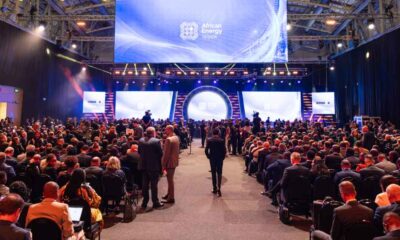
The agreement was formalized on April 23 at the Invest in African Energy Forum in Paris, reinforcing Sierra Leone’s growing profile among frontier exploration markets.

Signed through the Petroleum Directorate of Sierra Leone (PDSL), the license grants Marginal Energy exclusive rights to explore, develop and produce hydrocarbons across five offshore blocks – G-Blocks 145, 146, 147, 160 and 161 – covering approximately 6,800 KM2.

The deal establishes a full-cycle upstream program, spanning exploration through to potential production, under a fiscal and regulatory framework designed to balance investor returns with national value creation.

According to details released by PDSL, the agreement includes a structured exploration period of up to seven years, alongside a minimum work program incorporating 3D seismic acquisition, advanced geoscience studies and drilling commitments. The company has committed to invest more than $225 million during the exploration phases.

In a statement released by PDSL, President Julius Maada Bio said the agreement reflects the government’s commitment to “responsibly harnessing Sierra Leone’s natural resources for sustainable economic transformation,” adding that partnerships with capable investors will help accelerate development of the country’s petroleum sector.

PDSL Director General Foday Mansaray described the deal as “an important step in unlocking Sierra Leone’s offshore potential,” emphasizing the country’s focus on transparency and competitiveness. The agreement also includes provisions for local content development, technology transfer and environmental management, aligning with Sierra Leone’s broader strategy to ensure long-term economic benefits from resource development.

For Marginal Energy, which brings over two decades of experience in the Niger Delta, the agreement represents an entry into a largely underexplored basin with significant upside potential. The company said it is committed to deploying its technical and financial capabilities to advance exploration while maintaining high standards of environmental and operational performance.

The signing comes as African governments continue to position their upstream sectors to attract capital amid shifting global energy dynamics. It also follows a reconnaissance permit agreement signed by PDSL with Shell at the forum a day earlier, enabling Shell to conduct advanced geological and geophysical surveys across multiple offshore blocks.

Distributed by APO Group on behalf of Energy Capital & Power.

Continue Reading

Business

New strategic partnership in the Arab States region to enhance access to green finance for small and medium-sized enterprises

Published

on

ICIEC

It will support financing across a broad range of sustainability-related areas

Across our region, SMEs are the backbone of economies and helping them grow and innovate is critical to strengthening economic resilience and climate ambition

AMMAN, Jordan, April 23, 2026/APO Group/ –The United Nations Development Programme (UNDP), has signed a Joint Statement of Intent with the Islamic Corporation for the Development of the Private Sector (ICD) (https://ICD-PS.org) and the Islamic Corporation for the Insurance of Investment and Export Credit (ICIEC) —both members of the Islamic Development Bank (IsDB) Group—introducing a new blended finance structure that leverages credit insurance to catalyze private investment in climate-smart sectors.


This partnership will unlock capital for green small and medium-sized enterprises (SMEs) and support national efforts to achieve climate and sustainable development goals across the Arab States region. It will support financing across a broad range of sustainability-related areas, including climate change mitigation and energy transition, climate adaptation and resilience, sustainable water usage and governance, circular economy and management, sustainable agriculture and food systems and other green finance sectors.

“Across our region, SMEs are the backbone of economies and helping them grow and innovate is critical to strengthening economic resilience and climate ambition,” said Abdallah Al Dardari, UN Assistant Secretary General and Director of UNDP’s Regional Bureau for Arab States. “Through this new partnership we will work closely with regional financial institutions to expand SMEs access to green finance, to accelerate inclusive, climate-resilient development in line with UNDP’s flagship Green Finance Platform.”

In countries benefiting from the new partnership, ICD will provide financing facilities to partner banks and financial institutions while ICIEC will offer comprehensive credit insurance and risk-sharing solutions to encourage financial institutions to expand financing to green sectors, in addition to leveraging reinsurance partnerships to enhance the facility’s capacity and long-term sustainability.

“By uniting ICIEC’s risk mitigation, ICD’s financing, and UNDP’s development network, we are creating a scalable engine for green private sector growth,” stressed Mohammad Asheque Moyeed, Acting Director, Banking Department at ICD. “This partnership is our shared commitment to building a more inclusive and sustainable future for SMEs across our member countries.”

“Our role in this partnership is to unlock capital for the SMEs driving a greener, more diversified economy,” explained Yasser Alaki, Director of Business Development, ICIEC. “Through our credit insurance solutions, ICIEC provides the essential risk assurance that enables financial institutions to confidently channel financing toward this vital growth sector.”

Serving as a convener of the partnership, UNDP will facilitate linkages between financial institutions and SMEs engaged in its programmes and will coordinate joint efforts to mobilize resources to lower the cost of risk-sharing mechanisms.

Distributed by APO Group on behalf of Islamic Corporation for the Development of the Private Sector (ICD).

Continue Reading

Trending