Connect with us
Anglostratits

Business

Africa Strengthens Foundations to Lead Its Own Financing as Domestic Pools Surpass External Flows, Africa Finance Corporation (AFC) Report Shows

Published

on

Africa

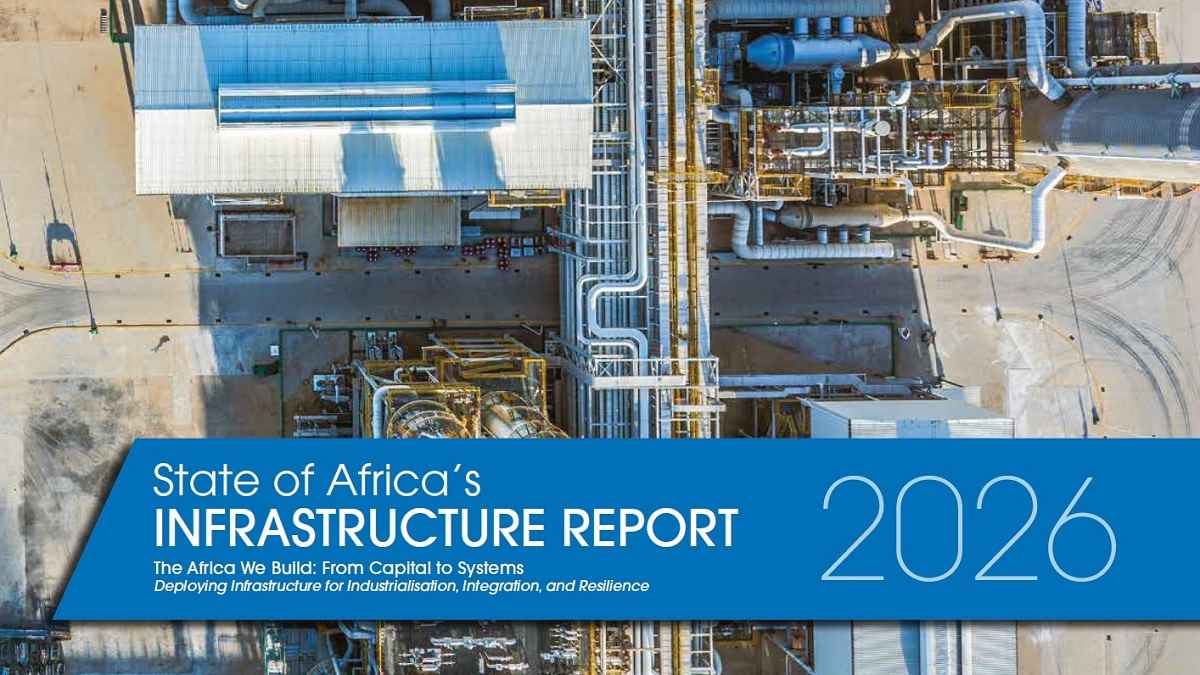
AFC’s State of Africa’s Infrastructure Report 2026 argues that Africa’s next development breakthrough will come from deploying domestic capital into infrastructure, industry and integrated systems at scale

NAIROBI, Kenya, April 23, 2026/APO Group/ —

  • Africa’s development challenge is increasingly shifting from capital raising to productive capital deployment in infrastructure and industry, according to AFC’s State of Africa’s Infrastructure Report 2026
  • Non-bank domestic capital pools now exceed US$2 trillion, surpassing ~US$1.7 trillion in cumulative external flows to Africa (2014–2024)
  • Official development assistance fell from US$83.8 billion in 2020 to US$73.5 billion in 2023, with further declines expected for 2025–2026
  • Sovereign issuance dropped from over US$29 billion in 2018 to US$4–6 billion annually in 2022–2023, with only limited recovery through 2024–2025
  • Domestic pension and insurance assets crossed US$1 trillion for first time
  • Central bank reserves at US$530 billion in 2025, from US$480 billion in 2024
  • Gold now represents ~17% of reserves, up from less than 10% in 2022–2023
  • Africa’s biggest infrastructure opportunity lies in integrated systems—connecting energy, transport, industry and digital layers into demand‑anchored ecosystems that improve bankability and enable scale


Africa’s domestic capital base has reached a scale that now exceeds external financing flows over the past decade, marking a turning point in how the continent funds its growth and industrialisation, according to the Africa Finance Corporation’s (www.AfricaFC.orgState of Africa’s Infrastructure Report 2026.

SAIR 2026 finds that cumulative external flows to Africa totalled approximately US$1.7 trillion between 2014 and 2024, while Africa’s non-bank domestic capital pools exceed US$2 trillion. The implication is clear: African capital now has a stronger foundation to play a significantly larger role in financing the continent’s development.

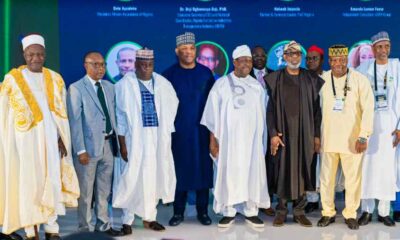
Launched at The Africa We Build Summit in Nairobi, co-hosted by AFC and H.E. Dr William Samoei Ruto, President of the Republic of Kenya, the SAIR 2026 report argues that the overarching development priority has shifted from capital mobilisation to intermediation—converting savings into infrastructure, industry, and productive investment at scale.

“The constraint is no longer capital—it is intermediation,” Samaila Zubairu, President & CEO of AFC, said at the The Africa We Build Summit today. “We have the savings, but not yet the systems to channel them into infrastructure and industry at scale. Closing that gap is now Africa’s most important economic task. The next phase of Africa’s infrastructure story must move beyond standalone assets towards integrated systems.”

Local Capital on the Rise

Driving the increase in domestic institutional capital, pension and insurance assets have surpassed US$1 trillion for the first time. Public development bank assets stand at US$276 billion, and sovereign wealth funds at US$164 billion, while central bank reserves increased from US$480 billion in 2024 to US$530 billion in 2025.

This increase has been supported in part by stronger commodity dynamics and rising gold accumulation. Gold now represents approximately 17% of Africa’s total reserves, up from less than 10% in 2022–2023, while physical holdings rose from 663 tonnes in 2022 to an estimated 738 tonnes in 2025.

Despite its increased scale, domestic capital remains largely concentrated in short-term, low-risk assets—particularly government securities—reflecting limited investable pipelines, regulatory incentives favouring liquidity, and insufficient risk-sharing mechanisms. The result is a persistent gap between available savings and long-term productive investment.

Africa is not capital-poor—it is capital-rich but system-poor

External Financing Recedes

At the same time, external financing is becoming less reliable, reinforcing the case for a domestic capital-led development model. Official development assistance to Africa fell from US$83.8 billion in 2020 to US$73.5 billion in 2023 and is projected to decline further. The OECD estimates global official development assistance fell 23.1% in 2025, the largest annual contraction on record.

Sovereign issuance remains well below pre-2019 levels, falling from over US$29 billion in 2018 to US$4–6 billion annually in 2022–2023, while foreign direct investment has remained concentrated at roughly US$45–55 billion annually, insufficient to meet the continent’s broad investment needs.

As a result, external capital is increasingly complementary, rather than foundational , to Africa’s development model.

From Assets to Integrated Systems

The biggest potential for capital deployment lies in demand-driven integrated infrastructure, according to SAIR 2026. In transport and logistics, corridors deliver the greatest value when designed as production ecosystems rather than transit routes—linking ports, rail, roads, logistics, storage, and trade facilitation to industrial demand. A continental backbone is already taking shape; the opportunity now is to improve performance, execution, and coordination.

This is particularly evident in East Africa. Mombasa—one of Africa’s busiest ports—handles more than 45 million tonnes of cargo annually, while rail investments are extending connectivity inland, including along the Naivasha–Kisumu corridor. In aviation, SAIR 2026 identifies air transport as the most immediate and scalable lever for integration. Across Kenya, Rwanda, and Ethiopia, aviation contributes a combined US$5.5 billion to GDP and supports around one million jobs, demonstrating how connectivity can rapidly translate into trade and growth.

Similarly, in energy, the priority is no longer incremental capacity additions alone, but integrated systems combining generation, transmission, storage, fuels, and industrial demand. Cross-border infrastructure such as the Ethiopia–Kenya interconnector shows how regional systems can move power to where it is needed most and improve system-wide efficiency.

Resilience Gap

Recent shocks—from Russia–Ukraine to the 2026 Gulf crisis—underscore the cost of fragmented systems and the urgency of building domestic processing, storage, and supply-chain resilience. The continent continues to import over 70% of its refined fuel and faces an estimated US$230 billion annual import bill across essential goods—including fuel, food, plastics, steel, and fertiliser, according to SAIR 2026.

In digital infrastructure, while connectivity has expanded rapidly, the next opportunity lies in building the “missing middle”—terrestrial backbone networks, metro fibre, data centres, Internet Exchange Points, and enterprise platforms that convert connectivity into productivity, services exports, and job creation.

Across all sectors and African countries, the report’s conclusion is consistent: the development challenge is increasingly institutional and systemic. Capital exists, and infrastructure assets are expanding. The next breakthrough will come from linking finance, energy, transport, industry, and digital systems into coherent ecosystems capable of supporting growth at scale.

“Africa is not capital-poor—it is capital-rich but system-poor,” said Zubairu. “The priority must be to build the institutions, instruments, and project pipelines required to deploy that capital into infrastructure and industry at scale.”

Distributed by APO Group on behalf of Africa Finance Corporation (AFC).

Energy

African Mining Week (AMW) 2026 to Position Junior Miners at the Forefront of Africa’s Mineral Evolution

Published

on

Energy Capital

The upcoming African Mining Week 2026 conference will unpack best practices to address financial, infrastructure and operational challenges as African junior miners scale their operations

CAPE TOWN, South Africa, May 14, 2026/APO Group/ –Africa’s estimated $8.5 trillion in untapped mineral wealth is increasingly being positioned as a junior miner-led opportunity, with smaller, more agile players playing a key role in unlocking the continent’s mining deposits. As governments and investors recalibrate exploration strategies, junior mining companies are emerging as the primary vehicles for converting underexplored resources into bankable projects.


Against this backdrop, the African Mining Week 2026 Conference and Exhibition will convene regulators, financiers and operators to examine how partnerships, capital access and execution models can shift juniors from the margins to the center of the continent’s mineral development strategy.

Taking place from October 14 – 16 in Cape Town, the event will feature a dedicated panel titled Collaboration for Growth: Unlocking Finance and Scale for Junior Miners. The session will highlight how governments are leveraging Public-Private Partnerships (PPP) to address high upfront capital requirements, limited infrastructure access and gaps in technical expertise constraining junior mining development.

The need for innovative financing solutions across Africa is increasingly apparent, with the continent’s share of global mineral exploration spending declining from 16% in 2004 to just 10.4% in 2024. In South Africa, exploration expenditure totaled R781 million in 2024, down sharply from a peak of R6.2 billion in 2006, underscoring the importance of stronger collaboration between governments and the private sector. In response, mineral-rich African countries are increasingly partnering with global investors to mobilize capital for exploration while supporting local content and beneficiation strategies.

One of the continent’s most prominent PPP models is the Junior Mining Exploration Fund (JMEF) launched by the Industrial Development Corporation of South Africa in partnership with the Department of Mineral Resources and Energy. In February 2026, the fund expanded to R2 billion, with Anglo American committing R600 million, demonstrating how coordinated public-private initiatives can strengthen financing for early-stage mining projects. Increased support through the fund has contributed to growth in South Africa’s junior and emerging mining sector, which recorded nearly 20% income growth in 2025.

Meanwhile, Zambia has introduced the Artisanal and Small-Scale Mining Fund following the enactment of the Geological and Minerals Development Act of 2025, aimed at expanding financing access for junior and small-scale miners. In 2026, the government allocated K449.5 million towards the fund, from a total K1.2 billion mining sector budget. The fund is expected to support junior miners as the country pursues its goal of increasing copper production to three million tons annually by 2030.

Similarly, the Democratic Republic of the Congo is strengthening partnerships with private sector investors, including Phoenix Capital and Eurasian Resources Group, to finance junior and artisanal mining operations as part of a broader strategy to unlock an estimated $24 trillion in untapped mineral resources.

Stepping into this picture, the AMW 2026 panel will explore the impact of PPP financing models, providing a platform for governments, investors and mining companies to develop solutions that scale exploration investment and accelerate the discovery of Africa’s next generation of mineral projects.

AMW serves as a premier platform for exploring the full spectrum of mining opportunities across Africa. The event is held alongside the African Energy Week: Invest in African Energies 2026 conference from October 12-16 in Cape Town. Sponsors, exhibitors and delegates can learn more by contacting sales@energycapitalpower.com

Distributed by APO Group on behalf of Energy Capital & Power.

Continue Reading

Energy

African Mining Week (AMW) 2026 to Examine Energy-Mining Nexus as Africa Prioritizes Reliable Power

Published

on

The upcoming African Mining Week conference will bring together industry players and global investors to explore investment and partnership opportunities emerging at the intersection of energy and mining

CAPE TOWN, South Africa, May 14, 2026/APO Group/ –Mining is rapidly becoming a driver of power market development in Africa, as energy supply constraints reshape how projects are financed and executed. From renewables and storage to fuel logistics and transmission, operators are increasingly securing integrated energy solutions to sustain output and manage risk.


Against this backdrop, the African Mining Week (AMW) Conference and Exhibition – taking place October 14–16, 2026, in Cape Town – will convene global investors, energy developers and mining stakeholders to examine pathways for strengthening power infrastructure to support mining activities across the continent. The event will feature a dedicated panel titled Accelerating Mineral Production: The Energy-Mining Nexus, bringing together policymakers, utilities and mining companies to discuss investment, infrastructure challenges and strategies for scaling production.

The discussion comes at a time when energy availability is becoming the defining constraint – and enabler – of mining growth across Africa. As a result, many companies are partnering with energy providers to secure power deals.

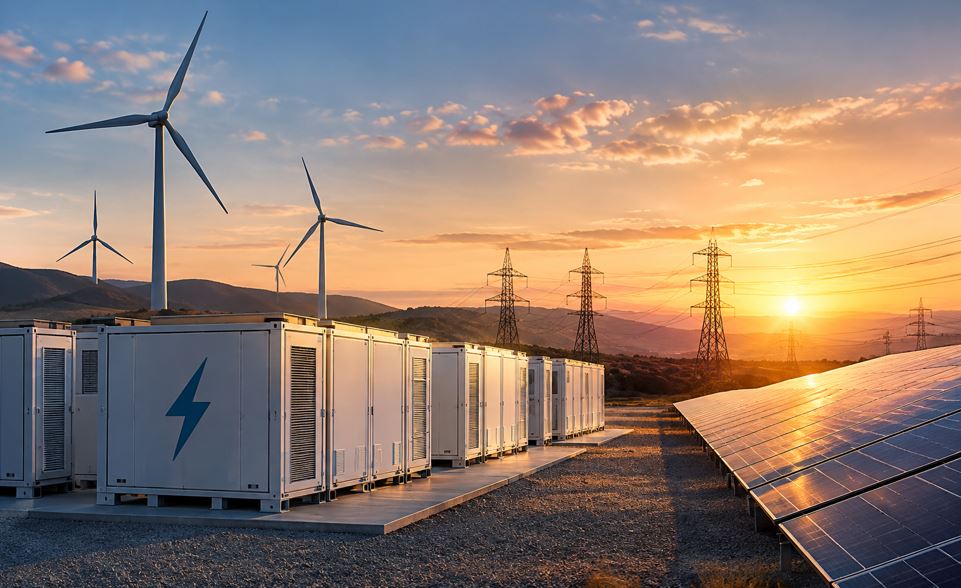
One of the clearest examples of this is EDF power solutions – a joint venture (JV) between mining company Anglo American and energy company EDF. The JV is advancing a portfolio of renewable energy projects to power mining operations across South Africa. In mid-April, the company commissioned the 140 MW Umsobomvu facility as part of the broader 520 MW Koruson 2 cluster, following the earlier delivery of approximately 480 MW under the Koruson 1 cluster in early April. These projects are contributing to the decarbonization of mining operations by displacing coal-based grid electricity for miners such as Valterra Platinum, Kumba Iron Ore and De Beers.

Sibanye-Stillwater is also turning to renewable energy to optimize its operations. The company is advancing a 725 MW renewable energy portfolio secured via long-term power purchase agreements with developers including NOA Group, Red Rocket and Sola Group. These developments align with South Africa’s strategy to generate 40% of its electricity using renewables by 2030, a move aimed at lowering electricity costs and improving energy security for energy-intensive sectors such as mining.

Similar case studies are being seen across other mineral-rich provinces in Africa. In Zambia, First Quantum Minerals is advancing a 430 MW renewable energy project alongside Total Eren and Chariot Limited. The project will strengthen energy supply to the company’s mines, enabling First Quantum to contribute to a national target to increase copper output to three million tons by 2031.

Meanwhile, Eurasian Resources Group is investing in transmission infrastructure and cross-border power solutions between Zambia and the Democratic Republic of the Congo to stabilize energy supply for cobalt operations.

While renewables are scaling rapidly, mining companies are also reinforcing energy security through fuel agreements. In February 2026, Valterra Platinum signed a three-year fuel supply deal with TotalEnergies for its South African operations. Puma Energy and BHL Group have also launched a five-year fuel transport agreement moving supply between Namibia’s Walvis Bay and Zambian mining hubs.

As such, AMW 2026 comes at a pivotal time when energy and mining are no longer parallel sectors, but deeply interconnected growth engines. From renewables and transmission to fuel logistics and financing, the continent is witnessing a structural shift toward integrated energy–mining ecosystems. The AMW 2026 panel will spotlight how innovative partnerships, blended financing models and private-sector participation are accelerating both energy deployment and mineral production – positioning Africa to meet rising global demand while advancing its own industrialization agenda.

Distributed by APO Group on behalf of Energy Capital & Power.

Continue Reading

Business

Trafigura Eyes $900M Aluminium Smelter as Egypt Accelerates Mineral Beneficiation Drive

Published

on

Energy Capital

African Mining Week 2026 will spotlight Egypt’s rapidly expanding mining value chain as the country accelerates a shift from raw mineral exports toward large-scale downstream industrialization and value addition

CAPE TOWN, South Africa, May 14, 2026/APO Group/ –Multinational commodities trader Trafigura, together with the Egyptian Aluminium Company and Metallurgical Industries Holding Company, has entered exclusive negotiations to co-finance and develop a major new aluminium complex in Egypt, marking one of the country’s most significant downstream metals investments to date.


The proposed project, valued between $750 million and $900 million, includes a 300,000-ton-per-annum aluminium smelter and a 150,000-ton-per-annum anode plant. It is designed to position Egypt more competitively in global aluminium supply chains at a time when geopolitical fragmentation and industrial realignment are pushing countries to localize and secure critical materials processing capacity.

Beyond serving international demand, the project aligns directly with Egypt’s industrial strategy to increase the mining sector’s contribution to GDP from around 1% today to 5-6% over the medium term, underscoring a clear policy shift toward value-added production rather than raw mineral exports.

The aluminium deal is also part of a wider acceleration in Egypt’s beneficiation strategy, with new partnerships emerging across phosphates, fertilizers and industrial minerals.

In April 2026, Misr Phosphate Company signed an agreement with Indorama Corporation to supply phosphate feedstock for a $525 million fertilizer complex in the Suez Canal Economic Zone at Sokhna. The first phase of the project is expected to produce around 600,000 tons annually, strengthening Egypt’s position in global fertilizer supply chains while increasing domestic processing capacity.

In parallel, El Sewedy Industrial Development and China’s Kunming Chuan Jin Nuo Chemical are developing a $1 billion integrated phosphate complex in the Sokhna Industrial Zone, further expanding Egypt’s downstream chemical and fertilizer ecosystem.

Chinese industrial group Xingfa Group has also outlined plans to invest up to $2 billion across phosphate exploration, extraction and chemical manufacturing in Egypt, reinforcing international confidence in the country’s industrial minerals strategy.

At the same time, Egypt is moving to strengthen its position in precious metals and refining. The Central Bank of Egypt, alongside the African Export-Import Bank, is advancing plans for a Pan-African Gold Bank initiative aimed at expanding local gold refining capacity, formalizing artisanal and industrial supply chains and reducing dependence on external refining hubs.

These projects signal a broader structural shift: Egypt is transitioning from a raw commodity exporter to a vertically integrated minerals and industrial processing hub, with downstream value creation at the center of its economic strategy.

Egypt’s accelerating beneficiation agenda will be a key focus at African Mining Week (AMW) 2026 – The Most Influential Mining Conference in Africa – where the country will feature through a dedicated Country Spotlight.

The forum brings together government representatives, regulators, global investors, mining companies, project developers and financiers to explore opportunities across Egypt and Africa’s expanding mining and industrial value chain.

As the country scales its downstream ambitions across aluminium, phosphates, fertilizers and gold, AMW 2026 will serve as a key platform for translating policy momentum into investment partnerships and project execution.

Distributed by APO Group on behalf of Energy Capital & Power.

Continue Reading

Trending