Connect with us
Anglostratits

Business

Africa Energy Forum 2026: Building Africa’s Industrialised Future

Published

on

energy

Cape Town to host continent’s largest energy gathering as focus shifts from aspiration to execution

CAPE TOWN, South Africa, May 13, 2026/APO Group/ –The Africa Energy Forum (https://apo-opa.co/4ugdl9y) returns from 16-19 June 2026, bringing together the companies, investors and governments driving Africa’s move from energy access to industrial-scale infrastructure.

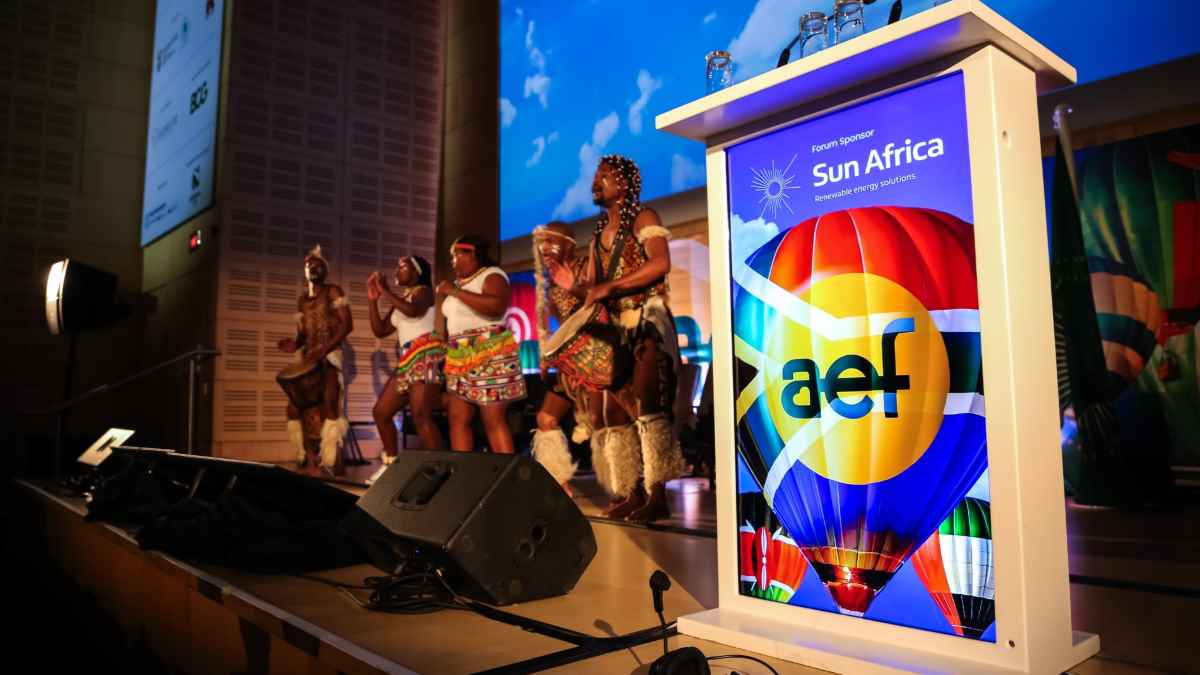
The companies gathering in Cape Town are deploying capital into transmission infrastructure, building mining corridors that will define trade routes for decades, financing baseload capacity that can power heavy industry, and developing renewable projects that will anchor Africa’s manufacturing future. Forum Sponsor Sun Africa leads a group of sponsors whose projects and investments are already shaping how the continent builds its industrial base.

“I am looking forward to joining the conversation in Cape Town this June. What excites me about this year’s Summit is the calibre of capital and commitment in the room — companies that are financing baseload capacity for heavy industry, building mining corridors that will define trade routes for decades, and deploying renewable projects that will anchor Africa’s manufacturing future. That is the kind of long-term, structural thinking that Sun Africa has always believed this continent deserves, and it is exactly the conversation we need to be having.” Sun Africa, CEO, Adam Cortese.

ACWA Power, Infinity Power and AMEA Power are building gigawatt-scale renewable capacity across the continent. Globeleq and TotalEnergies are financing and operating projects that demonstrate how private capital can deliver industrial-grade infrastructure. British International Investment and IFC are structuring deals that blend concessional and commercial finance to unlock sovereign wealth fund participation. Nedbank CIB is providing the sustainable finance structures that allow projects to reach financial close.

“As Africa moves from aspiration to execution, this year’s agenda focuses on the hardware of industrialisation – the steel, concrete and transmission lines that will define Africa’s industrial future,” said Simon Gosling, Managing Director of EnergyNet.

The companies driving this shift face common challenges: structuring bankable projects where perceived risk exceeds actual performance, moving critical minerals from extraction to processing, building transmission corridors that serve both mines and cities, and deploying patient capital into long-term infrastructure.

As Africa moves from aspiration to execution, this year’s agenda focuses on the hardware of industrialisation – the steel, concrete and transmission lines

Cape Town provides the right setting. South Africa is navigating private transmission investment, energy trading, mining-driven renewable deployment, and tensions between industrial growth and climate commitments – challenges the rest of the continent will face. The city’s reforms offer a live case study.

The agenda reflects where these companies are focusing their resources. Critical minerals receive a two-day dedicated stream exploring downstream processing, transport corridors and value capture from reserves representing over 30% of global supply. Sessions examine the Lobito Corridor, Liberty Corridor and Simandou infrastructure as models for large-scale project finance.

Transmission and baseload themes address grid expansion, private investment structures and 24/7 availability for data centres and manufacturing. Energy trading sessions explore how sponsors are transforming project finance through creditworthy off-take, whole technology discussions will cover AI for revenue protection, data centre supply chains and CBAM compliance.

More broadly, the forum structure supports deal-making. The speaker programme includes closed-door roundtables bringing together DFIs, sovereign wealth funds, Middle East ministers, utilities, regulators and the private sector for frank discussions on capital deployment.

This will bring together senior public and private sector leadership, with notable speakers including H.E. Honourable Dr. Kgosientsho Ramokgopa, Minister of Electricity & Energy, South Africa; H.E. Honourable Samantha Graham-Marè, Deputy Minister of Electricity & Energy, South Africa; Dan Marokane, GCE, Eskom, South Africa; H.E. Honourable Jeremiah Kpan Koung, Vice President, Liberia; H.E. Honourable Dr. Kgosientsho Ramokgopa, Minister of Electricity & Energy, South Africa; H.E. Honourable Lerato Mataboge, African Union Commissioner for Infrastructure and Energy; Precious Edward, Head, IPP Office, South Africa; Obaïd Amrane, CEO, Ithmar Capital, Morocco, Chair, Africa Sovereign Investors Forum (ASIF) & Chair, International Forum of Sovereign Wealth Funds (IFSWF); Mike Teke, Group CEO, Seriti Resources; and Jonathan Hoffman, CEO, Globeleq.

Regional fireside chats, meanwhile, will spotlight opportunities across North, East, South and West Africa. Day One features ministerial sessions with participation from Sierra Leone’s Ministry of Energy and The Gambia’s Ministry of Environment, Climate Change & Natural Resources.

Additional sponsors driving the programme include AKSA as Exhibitor Sponsor, with lead sponsor support from Synergy Consulting, ATIDI, Engie, European Investment Bank, Standard Bank, Red Rocket, USP&E Global and Sungrow.

On the final day, YES! (Youth Energy Summit) takes place as part of the aef stream under the theme ‘Empowering Today’s Entrepreneurs – Building Tomorrow’s Industrialists’. Here, impact leaders will present scalable initiatives creating entrepreneurship opportunities in Africa’s energy sector, while industry partners lead interactive workshops building practical skills for 600 young people in attendance.

Distributed by APO Group on behalf of EnergyNet Ltd..

Business

Africa Finance Corporation Raises Record US$2 Billion Syndicated Loan in Landmark Show of Confidence in Transformational Infrastructure Strategy

Published

on

Africa Finance Corporation

The facility materially enhances the Corporation’s capacity to continue scaling investments in critical sectors and industrial ecosystems driving trade, growth and jobs

LONDON, United Kingdom, June 4, 2026/APO Group/ –Africa Finance Corporation (www.AfricaFC.com), the continent’s leading infrastructure solutions provider, has successfully raised a record US$2 billion syndicated loan, underscoring strong global investor support for AFC’s rapid buildout of integrated infrastructure and industrial platforms shaping Africa’s next phase of economic growth.

The transaction was initially launched at US$1.6 billion before being upsized to US$2 billion. Participation from banks across Asia Pacific (35%), Europe (35%), the Middle East (25%) and Africa (5%) reflects broad international support for AFC’s differentiated investment model and long-term strategy, achieved against a backdrop of heightened geopolitical uncertainty and market volatility.

The facility materially enhances the Corporation’s capacity to continue scaling investments in critical sectors and industrial ecosystems driving trade, growth and jobs. AFC’s financial strength is reinforced by progressively higher investment-grade credit ratings, including ‘A’ / A-1 with a Positive Outlook assigned by S&P Global Ratings this year, building on its long-standing A3 ratings from Moody’s and A+ from Japan Credit Rating Agency (JCR).

Closing AFC’s largest-ever syndicated loan facility in a complex global environment is a defining milestone

Samaila Zubairu, President & CEO of AFC, said: “This transaction reflects growing recognition that Africa’s next phase of growth will be driven not by isolated projects, but by integrated infrastructure systems that connect energy, transport, logistics, industry and technology. As global capital seeks resilient long-term growth opportunities, AFC has positioned itself at the centre of Africa’s transformation by developing the platforms and ecosystems that convert infrastructure into industrialisation, jobs and economic competitiveness.”

The transaction comes at a period of expansion for AFC, which recently announced plans to open its first regional office outside Lagos in Nairobi during its flagship The Africa We Build Summit, as the Corporation’s assets surpassed a record US$19 billion and membership expanded to 48 African countries. This syndicated facility complements growing pools of African institutional funding, aligning with AFC’s mission – set out in the State of Africa’s Infrastructure Report 2026 – to help mobilise domestic pension capital for priority infrastructure.

The debt facility was led by Barclays, Commerzbank, First Abu Dhabi Bank PJSC, and FirstRand Bank, acting through its Rand Merchant Bank division (London Branch), as Global Coordinators and Initial Mandated Lead Arrangers and Bookrunners. Additional Initial Mandated Lead Arrangers and Bookrunners included Abu Dhabi Commercial Bank PJSC, Bank of China (Johannesburg and London Branches), Emirates NBD, Industrial and Commercial Bank of China Limited (London Branch), Mashreqbank PSC, Mizuho Bank, SMBC Bank International, Société Générale Côte d’Ivoire, Société Générale S.A, Société Générale Sénégal, Standard Chartered Bank (Hong Kong) Limited, and the National Bank of Ras Al Khaimah (P.S.C). Others lenders include Export-Import Bank of India (London Branch), Arab Bank for Economic Development in Africa, Bank of Communications (Johannesburg and London Branches), China Construction Bank (Johannesburg Branch), Doha Bank Q.P.S.C, Hua Nan Commercial Bank (Hong Kong Branch), Export-Import Bank of the Republic of China, Qatar National Bank Q.P.S.C, The Gunma Bank, Chang Hwa Commercial Bank (London Branch), Banka Kombetare Tregtare sh.a and Industrial Bank of Korea (Hong Kong Branch). .

“Closing AFC’s largest-ever syndicated loan facility in a complex global environment is a defining milestone, one that reflects the unwavering confidence our lending partners place in AFC’s credit strength, strategic relevance and execution capabilities”, said Banji Fehintola, Executive Board Member and Head of Financial Services. “The strong support from a broad group of international financial institutions reaffirms sustained investor conviction in AFC’s mission to deliver transformative infrastructure and industrial projects with lasting economic impact across Africa.”


Distributed by APO Group on behalf of Africa Finance Corporation (AFC).

Continue Reading

Energy

Libya Energy & Economic Summit (LEES) 2027 to Define Libya’s Next Phase of Energy Expansion in Tripoli

Published

on

Etu Energias

Returning for its fifth edition, LEES 2027 will advance Libya’s $18 billion energy pipeline, targeting 1.6–2 million bpd, gas megaprojects and renewables

TRIPOLI, Libya, June 4, 2026/APO Group/ –The fifth edition of the Libya Energy & Economic Summit (LEES) 2027 returns to Tripoli on January 23–25. Positioned as Libya’s landmark energy event, LEES serves as the country’s premier international platform for investment, technical collaboration and private sector engagement across oil, gas, power and renewables.


LEES 2027 builds directly on the outcomes of LEES 2026, which marked Libya’s shift from post-recovery stabilization to execution-led development. The 2026 edition established an estimated $18 billion pipeline of energy and infrastructure projects and repositioned the sector from ambition to delivery, setting the foundation for the 2027 summit’s execution-focused agenda.


A central focus for 2027 is upstream acceleration. The National Oil Corporation’s (NOC) 2026 licensing round introduced 22 on- and offshore exploration blocks, the country’s first in 17 years, alongside a mandate to drill 70 to 100 new wells annually. With support from the Ministry of Oil & Gas, LEES 2027 will evaluate initial seismic results, contract awards and the transition from exploration rights into operational development phases.

Production expansion remains a core investment theme. Libya’s output stabilized at approximately 1.4 million barrels per day (bpd) in 2026, with LEES 2027 targeting pathways toward 1.6 million bpd in the near term and a long-term ambition of 2 million bpd. The summit – endorsed directly by the NOC – will focus on infrastructure bottlenecks, field optimization and midstream capacity required to support higher output levels.


Gas monetization and large-scale infrastructure development will also feature prominently. Eni’s $8 billion offshore Structures A&E project remains on track for completion by late 2027, while discussions around Chevron-linked shale studies highlight potential resources estimated at 123 trillion cubic feet of gas and 18 billion barrels of oil across key basins, including Sirte, Murzuq and Ghadames.

Moving from licensing and planning into large-scale execution and infrastructure delivery, LEES 2027 is a focal point for this critical transformation in Libya’s energy sector


The sector aims to attract an estimated $3–4 billion in annual drilling investment following unified drilling regulations announced in 2026. LEES 2027 will assess early implementation outcomes, including operational safety, fiscal predictability and contract execution efficiency across upstream assets.


Meanwhile, Libya’s 4 GW solar roadmap is advancing, anchored by TotalEnergies’ 500 MW Sadada solar project. Supported by the Renewable Energy Authority of Libya as an institutional partner, LEES 2027 is expected to focus on financial close milestones, construction timelines and the scaling of independent power purchase structures within the national grid strategy.


Human capital development will also remain a strategic pillar at next year’s event, with the Energy JEEL initiative having trained more than 900 youth participants aged 15–35 in engineering, digital systems and energy operations, forming a national talent pipeline aligned with Libya’s long-term energy transition and industrial expansion goals.

Against this backdrop, LEES 2027 – which takes place at the Tripoli International Convention Center – will serve as the sector’s execution benchmark, converting licensing frameworks, infrastructure commitments and production targets into operational outcomes across hydrocarbons, power generation and next-generation energy systems.


“Moving from licensing and planning into large-scale execution and infrastructure delivery, LEES 2027 is a focal point for this critical transformation in Libya’s energy sector,” says James Chester, CEO of LEES 2027 organizer Energy Capital & Power. “It will be a defining platform where investment commitments from 2026 are translated into measurable production, capacity expansion and long-term energy security outcomes.”


Join industry leaders at the Libya Energy & Economic Summit 2027 in Tripoli and explore investment opportunities in one of Africa’s most dynamic energy markets. LEES 2027 offers a premier platform for partnerships, innovation and sector growth. Visit www.LibyaSummit.com to secure your participation. To sponsor or participate as a delegate, please contact sales@energycapitalpower.com

Distributed by APO Group on behalf of Energy Capital & Power.

Continue Reading

Business

JustMarkets Research Highlights Global Growth Divergence as a Key Market Driver

Published

on

JustMarkets

JustMarkets has identified a growing macroeconomic divergence between major global economies as one of the key forces currently shaping foreign exchange markets

LIMASSOL, Cyprus, June 4, 2026/APO Group/ –According to JustMarkets’ (www.JustMarkets.com) latest market research, currency movements are increasingly being influenced not only by interest rate expectations, but also by the relative pace of economic growth across leading economies. With the United States expanding faster than the Eurozone, the United Kingdom, and Japan, FX markets are beginning to reflect a broader shift in capital flows, earnings expectations, and investor positioning.

The analysis follows a period of synchronized global monetary tightening, during which central bank policy dominated market sentiment. However, as inflation pressures moderate and economies begin to move at different speeds, JustMarkets notes that relative growth performance is becoming a more important factor for traders assessing medium-term currency trends.

US Growth Outperformance Comes Into Focus

IMF projections point to US GDP growth of 2.4% in 2026, compared with 1.3% for both the Eurozone and the United Kingdom, and 0.7% for Japan. This places the US growth advantage at approximately 1.1 percentage points over the Eurozone and 1.7 percentage points over Japan.

JustMarkets’ research indicates that this growth gap is already visible across major currency pairs. EUR/USD declined from around 1.20 in late January 2026 to approximately 1.145 by mid-March, while GBP/USD remained in the 1.31–1.34 range following weaker UK GDP data. USD/JPY also stayed elevated above the 155–160 range in March, reflecting the continued US-Japan growth differential.

“These moves suggest that the FX market is increasingly pricing in macroeconomic divergence rather than reacting solely to individual central bank decisions,” JustMarkets stated in its analysis. “Relative growth is becoming a central lens for understanding currency performance.”

A Broader Framework for FX Market Analysis

These moves suggest that the FX market is increasingly pricing in macroeconomic divergence rather than reacting solely to individual central bank decisions

The research highlights that traders are increasingly monitoring forward-looking indicators such as composite PMIs, retail sales, real wage growth, corporate investment plans, and relative earnings revisions. These indicators can provide early signals of economic momentum before official GDP data is released.

The company notes that similar dynamics were visible in 2022, when weakening Eurozone growth indicators, pressure from the energy crisis, and stronger relative US resilience contributed to EUR/USD reaching parity for the first time in two decades.

According to JustMarkets, the current environment reinforces the importance of analyzing currencies as relative instruments. Rather than assessing whether a single currency is strong or weak in isolation, traders need to compare the economic strength of one region against another and identify which FX pairs best reflect that divergence.

JustMarkets Expands Access to Multi-Asset Market Opportunities

JustMarkets emphasizes that a broad instrument range is essential in a market environment shaped by macro divergence. The company provides access to major, minor, and exotic FX pairs, alongside indices, commodities, and metals, allowing traders to express market views across multiple asset classes.

In periods of US growth outperformance, traders may look beyond traditional USD crosses and consider related opportunities across equity indices, commodities, and regional market exposures. This flexibility allows market participants to apply a more comprehensive approach to macro-driven trading strategies.

Growth Divergence Becomes a Defining Market Theme

The research concludes that growth divergence is emerging as a quiet but increasingly influential market regime. Unlike sudden policy shocks or headline-driven volatility, this type of shift tends to develop gradually through economic data, investor expectations, and capital allocation trends.

As global economies move at different speeds, www.JustMarkets.com expects traders to place greater emphasis on comparative growth indicators when evaluating currency opportunities.

For traders seeking to explore these market dynamics, JustMarkets offers a free demo account (https://apo-opa.co/4dKXdHa) with access to multiple FX pairs, indices, commodities, and metals.

Distributed by APO Group on behalf of JustMarkets.


Continue Reading

Trending