Connect with us

Business

Africa Energy Forum 2026: Building Africa’s Industrialised Future

Published

on

energy

Cape Town to host continent’s largest energy gathering as focus shifts from aspiration to execution

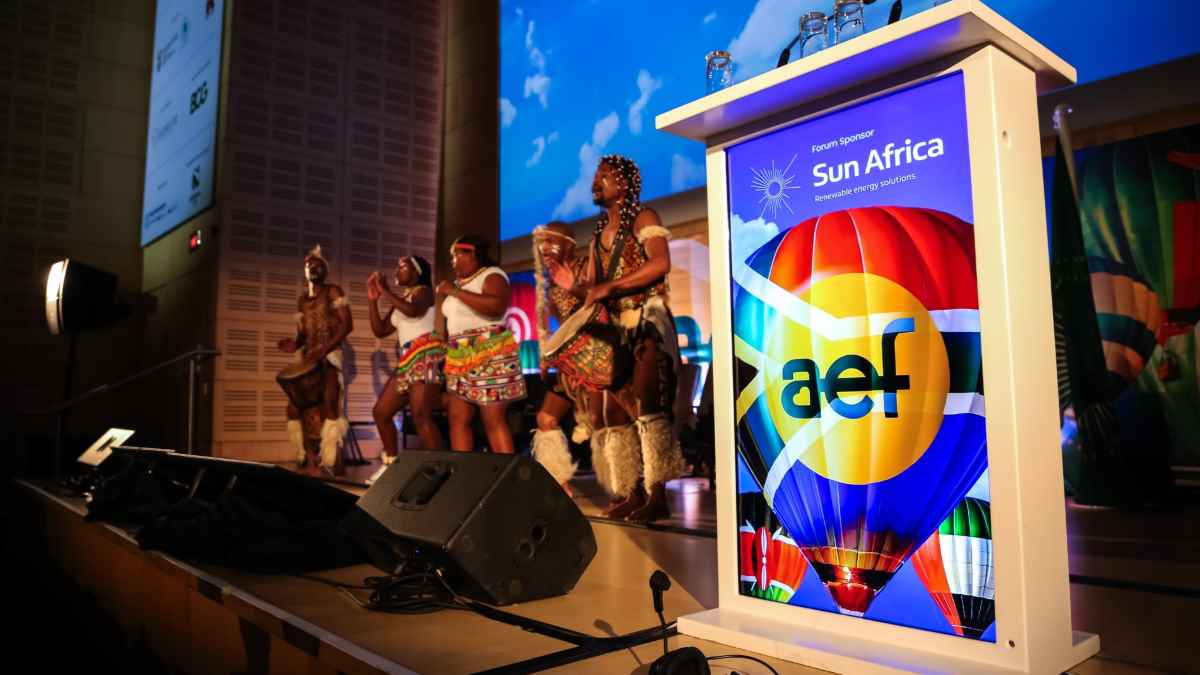
CAPE TOWN, South Africa, May 13, 2026/APO Group/ –The Africa Energy Forum (https://apo-opa.co/4ugdl9y) returns from 16-19 June 2026, bringing together the companies, investors and governments driving Africa’s move from energy access to industrial-scale infrastructure.

The companies gathering in Cape Town are deploying capital into transmission infrastructure, building mining corridors that will define trade routes for decades, financing baseload capacity that can power heavy industry, and developing renewable projects that will anchor Africa’s manufacturing future. Forum Sponsor Sun Africa leads a group of sponsors whose projects and investments are already shaping how the continent builds its industrial base.

“I am looking forward to joining the conversation in Cape Town this June. What excites me about this year’s Summit is the calibre of capital and commitment in the room — companies that are financing baseload capacity for heavy industry, building mining corridors that will define trade routes for decades, and deploying renewable projects that will anchor Africa’s manufacturing future. That is the kind of long-term, structural thinking that Sun Africa has always believed this continent deserves, and it is exactly the conversation we need to be having.” Sun Africa, CEO, Adam Cortese.

ACWA Power, Infinity Power and AMEA Power are building gigawatt-scale renewable capacity across the continent. Globeleq and TotalEnergies are financing and operating projects that demonstrate how private capital can deliver industrial-grade infrastructure. British International Investment and IFC are structuring deals that blend concessional and commercial finance to unlock sovereign wealth fund participation. Nedbank CIB is providing the sustainable finance structures that allow projects to reach financial close.

“As Africa moves from aspiration to execution, this year’s agenda focuses on the hardware of industrialisation – the steel, concrete and transmission lines that will define Africa’s industrial future,” said Simon Gosling, Managing Director of EnergyNet.

The companies driving this shift face common challenges: structuring bankable projects where perceived risk exceeds actual performance, moving critical minerals from extraction to processing, building transmission corridors that serve both mines and cities, and deploying patient capital into long-term infrastructure.

As Africa moves from aspiration to execution, this year’s agenda focuses on the hardware of industrialisation – the steel, concrete and transmission lines

Cape Town provides the right setting. South Africa is navigating private transmission investment, energy trading, mining-driven renewable deployment, and tensions between industrial growth and climate commitments – challenges the rest of the continent will face. The city’s reforms offer a live case study.

The agenda reflects where these companies are focusing their resources. Critical minerals receive a two-day dedicated stream exploring downstream processing, transport corridors and value capture from reserves representing over 30% of global supply. Sessions examine the Lobito Corridor, Liberty Corridor and Simandou infrastructure as models for large-scale project finance.

Transmission and baseload themes address grid expansion, private investment structures and 24/7 availability for data centres and manufacturing. Energy trading sessions explore how sponsors are transforming project finance through creditworthy off-take, whole technology discussions will cover AI for revenue protection, data centre supply chains and CBAM compliance.

More broadly, the forum structure supports deal-making. The speaker programme includes closed-door roundtables bringing together DFIs, sovereign wealth funds, Middle East ministers, utilities, regulators and the private sector for frank discussions on capital deployment.

This will bring together senior public and private sector leadership, with notable speakers including H.E. Honourable Dr. Kgosientsho Ramokgopa, Minister of Electricity & Energy, South Africa; H.E. Honourable Samantha Graham-Marè, Deputy Minister of Electricity & Energy, South Africa; Dan Marokane, GCE, Eskom, South Africa; H.E. Honourable Jeremiah Kpan Koung, Vice President, Liberia; H.E. Honourable Dr. Kgosientsho Ramokgopa, Minister of Electricity & Energy, South Africa; H.E. Honourable Lerato Mataboge, African Union Commissioner for Infrastructure and Energy; Precious Edward, Head, IPP Office, South Africa; Obaïd Amrane, CEO, Ithmar Capital, Morocco, Chair, Africa Sovereign Investors Forum (ASIF) & Chair, International Forum of Sovereign Wealth Funds (IFSWF); Mike Teke, Group CEO, Seriti Resources; and Jonathan Hoffman, CEO, Globeleq.

Regional fireside chats, meanwhile, will spotlight opportunities across North, East, South and West Africa. Day One features ministerial sessions with participation from Sierra Leone’s Ministry of Energy and The Gambia’s Ministry of Environment, Climate Change & Natural Resources.

Additional sponsors driving the programme include AKSA as Exhibitor Sponsor, with lead sponsor support from Synergy Consulting, ATIDI, Engie, European Investment Bank, Standard Bank, Red Rocket, USP&E Global and Sungrow.

On the final day, YES! (Youth Energy Summit) takes place as part of the aef stream under the theme ‘Empowering Today’s Entrepreneurs – Building Tomorrow’s Industrialists’. Here, impact leaders will present scalable initiatives creating entrepreneurship opportunities in Africa’s energy sector, while industry partners lead interactive workshops building practical skills for 600 young people in attendance.


Distributed by APO Group on behalf of EnergyNet Ltd..

Energy

Transnet Freight Rail Chief Executive Officer (CEO) to Spotlight South Africa’s Rail Reform at African Mining Week (AMW) 2026

Published

on

As South Africa accelerates freight rail reforms and private sector participation to unlock mining investment, Transnet Freight Rail CEO Russell Baatjies will outline the company’s infrastructure modernization strategy and opportunities for investors at African Mining Week 2026

CAPE TOWN, South Africa, August 20, 2026/APO Group/ –Russell Baatjies, Group Chief Executive of Transnet Freight Rail, has been confirmed as a speaker at African Mining Week (AMW) 2026 – Africa’s premier gathering for the mining industry – taking place October 14-16 in Cape Town.


Baatjies will participate in the Regional Connectivity: Financing Africa’s Mineral Infrastructure panel, where he is expected to discuss Transnet’s strategy to modernize South Africa’s freight rail network, expand private sector participation and strengthen regional logistics corridors to support mining growth and cross-border trade.

His participation comes as South Africa accelerates sweeping logistics reforms aimed at removing infrastructure bottlenecks and unlocking greater investment across its mining sector. As the country seeks to mobilize R2 trillion to develop its critical minerals industry – including an estimated R40 trillion in untapped iron ore resources – expanding rail and port capacity has become central to increasing exports of coal, platinum group metals, manganese, chrome and iron ore while improving regional trade connectivity.

In May 2026, Transnet signed rail access agreements with 11 Train Operating Companies (TOCs) serving the coal, manganese, container, fuel and general freight sectors, marking a major step toward opening the national freight rail network to private operators. The agreements are expected to add 24 million tons of annual freight capacity, with the potential to increase to 52 million tons over the next five years, supporting South Africa’s goal of increasing annual rail volumes from approximately 180 million tons to 250 million tons by 2030.

Building on these reforms, Transnet launched the procurement process in June 2026 for The Leasing Company, a rolling stock leasing platform designed to improve access to locomotives and wagons for both established and emerging TOCs. The initiative is expected to increase asset utilization, strengthen freight capacity and attract greater private investment into Southern Africa’s rail sector.

The company is also reinforcing its financial position to accelerate infrastructure modernization through major financing agreements, including a €300 million loan from Agence Française de Développement, a €350 million loan from the European Investment Bank, a $278 million facility from the New Development Bank, a $1 billion loan from the African Development Bank and a R94.8 billion government guarantee package supporting its long-term recovery and investment program.

Alongside infrastructure investment, Transnet is strengthening collaboration with the mining industry to improve export capacity through strategic agreements with Exxaro ResourcesUnited Manganese of KalahariHotazel Manganese Mines and Tshipi é Ntle Manganese Mining, reinforcing efforts to support higher mining production through more efficient logistics.

At AMW 2026, Baatjies is expected to examine how rail modernization, private sector participation and regional logistics integration can unlock new mining investment while strengthening Africa’s mineral value chains and improving access to global markets.


Distributed by APO Group on behalf of Energy Capital & Power.


Continue Reading

Business

Global retail ad market to hit $200bn milestone this year as growth momentum slows

Published

on

WARC Media releases The Future of Commerce Media 2026 examining the intersection of commerce and advertising
19 August 2026 – The global retail media market continues to grow and evolve, with ad investment projected to surpass $200bn this year and reach $223bn by 2027, per WARC Media. However, growth is slowing towards single digits, and there are dangers of ‘enshittifying’ the shopper experience, which in turn may have a negative impact on campaign effectiveness, as retail media networks look to meet ambitious targets.

Alex Brownsell, Head of Content, WARC Media, says: “The retail media landscape is maturing and

consolidating, forcing marketers to rethink their approach. While retail media excels at converting existing demand, it underperforms on long-term brand building. Retailers face a delicate balancing act: growing ad revenue to boost margins without overwhelming shoppers with too many ad interruptions that compromise both shopper experience and campaign effectiveness. Success now depends on smart integration with other channels and finding the optimal path to sustainable results.”

The Future of Commerce Media 2026 examines key trends and analyses fresh research about the intersection of commerce and advertising.

Global retail media ad market to reach $200.4bn in 2026 and $223.4bn in 2027, but growth slows

On course to reach $200.4bn in 2026, worldwide retail media investment is forecast to grow by 11.5% year-on-year in 2027 to $223.4bn, according to WARC Media’s latest forecasts. By then, retail media will account for 15.2% of total worldwide ad investment.

However, growth is slowing towards single digits. When excluding industry leader Amazon, the global retail media market is set to dip to 9.8% in 2027 – the lowest year-on-year rate of growth since WARC Media began monitoring spend.

US retail media remains resilient as European growth slows

While European retail media spend growth decelerates to single digits, the US market shows stronger momentum. WARC Media forecasts US retail media network spending will grow 13.6% in 2028 to reach $74.9bn.

But concentration of ad spend remains a challenge. In 2025, Amazon captured 78.0% of all US retail media expenditure, with Walmart taking 7.5%, leaving just 14.5% for all other networks combined, according to Walrus Intelligence. In Europe, more than two-thirds of overall retail media spend went to Amazon in France, Germany, Italy, Spain, and the UK.

Retail media takes more than half of CPG ad budgets

Retail media dominates endemic CPG category budgets. In 2027, retail media will account for 55.8% of all media investment by alcoholic drinks brands globally, and 54.9% of the overall food category spend. However, in fast-growing categories like technology and electronics, retail media is set to only take 15.0% of total spend in 2027 – down from 16.2% in 2025.

Many retail media networks are over-reliant on a small number of core advertisers. Nearly three-quarters (73.9%) of UK brands spend with three or fewer RMNs. WARC Media’s analysis found that among eight of the UK’s largest domestic RMNs, none achieves a third of revenue from the long tail – i.e. the bottom 50% of brands by spend.

Amazon’s non-retail advertising business – spanning Prime Video and Twitch – is projected to generate $6.7bn in 2027, surpassing Walmart’s total 2025 ad spend. As a standalone entity, it would be the world’s second-largest commerce media operation outside China, highlighting Amazon’s expanding dominance beyond traditional retail media.

Retail media can help bring SMEs into the TV ad market

Video on-demand is poised to overtake retail media’s global advertising investment by 2028, according to WARC Media forecasts, with connected TV already representing 23% of retail media spend.

Walmart’s acquisition of Vibe.co points towards a clear growth opportunity for retail media networks, by encouraging smaller brands, which until now focused on performance, to begin exploring channels like CTV.

‘Enshittification’ a risk as retail media networks try to meet ambitious targets

As commerce media enters a phase of slower growth and consolidation, it risks what tech author Cory Doctorow has called “enshittification”, where the digital experience declines as platforms look to fuel monetisation at the expense of users and business customers.

With consumer spending under pressure, it may be tempting for RMNs to dial up ad loads. Amazon, The Home Depot, Macy’s and Walmart each serves 20+ ads per page on average, research has found.

To avoid commerce media ‘enshittification’, brands are advised to build a frictionless on-platform experience that prioritises serving users, maximises ad relevance and minimises irrelevant ad clutter. Standardised measurement and arming AI tools with robust datasets and deep consumer understanding can also help.

Retail media creative must work harder than other channels

Retail media creative must work significantly harder just to register with audiences. A study of simulated shopping experiences on Walmart and Amazon by Ipsos found that memory encoding drops by 47% for ads run on retailer platforms, as opposed to those appearing on generic offsite environments.

For undecided shoppers, high creative quality drives a 12% lift in short-term brand choice. For those not in the market, superior creative quality produces a 21% performance advantage over low-quality ads.

More than half (62%) of US grocery buyers claim to have purchased a product directly after seeing it on an in-store screen, yet in-store remains one of the most underdeveloped creative opportunities in retail media.

Additionally, WARC research suggests that retail media ads are good at converting existing demand, but bad at generating long-term outcomes. Brand-side organisational dysfunction and a poor understanding of the contextual requirements of commerce ad formats has led to creative shortcomings the industry must overcome to ensure the effectiveness of retail media campaigns.

Retail media’s most creative potential may exist in the space where channels meet – for instance, through partnerships with creators, and campaigns that span physical and digital touchpoints.

The Future of Commerce Media 2026 is based on data and insights from WARC and external research. WARC members can read the full report.


Continue Reading

Business

Mukuru Wallet Empowers Botswana Customers with Everyday Cashless Spending Power

Published

on

For consumers in Botswana, this means fewer trips to cash-out points and greater access to cashless payment options

GABORONE, Botswana , August 19, 2026/APO Group/ –Mukuru (www.Mukuru.com), a leading financial services provider, has launched its Visa-branded Companion Card in Botswana. Linked to the Mukuru Wallet, this new offering expands its functionality and enables customers to make secure, cashless payments for everyday purchases directly from their Wallet balance.

With the Mukuru Wallet, customers already manage their money from their phones. Now, the Companion Card extends that convenience to in-person spending. Because the Card is linked directly to the Mukuru Wallet, there is no need to transfer funds between accounts before making a purchase. This means no traditional bank account is required, and both the Wallet and Companion Card work across all mobile networks.

For consumers in Botswana, this means fewer trips to cash-out points and greater access to cashless payment options. Customers can now pay for groceries, transport, utilities, school fees, and online shopping wherever Visa is accepted, bringing digital transactions into daily life.

The launch is timely because it addresses a critical gap in a market where digital infrastructure is robust but financial exclusion persists. Botswana has one of Africa’s highest mobile penetration rates at 166%, with approximately 4.21 million connections in a population of 2.54 million. (https://apo-opa.co/3U5Rowx) Despite this, access to formal banking has not kept pace, with current estimates suggesting that 38% of adults remain unbanked.

Security Customers can Trust

Security is a key feature of the Companion Card. A customer PIN protects every transaction, and online purchases benefit from Visa’s 3D Secure authentication. If a card is lost or misplaced, customers can instantly block or stop it from their phone. In addition, as a registered Electronic Payment Service Provider in Botswana, Mukuru ensures that its services are secure and regulated, helping improve everyday financial access.

Our customers already trust the Mukuru Wallet to manage their money

Thembani Moyo, Country Manager for Mukuru Botswana, commented, “Our customers already trust the Mukuru Wallet to manage their money. The Companion Card gives them a new, practical way to use it; so paying for groceries or topping up airtime is as easy as swiping a card, without ever needing to visit a branch or carry cash.”

The Companion Card is part of Mukuru’s broader ambition to be a complete financial services partner for its customers. As Botswana’s economy digitises and consumers increasingly expect cashless, card-based ways to pay, the Wallet ecosystem is designed to evolve alongside these needs.

Andy Jury, Group CEO of Mukuru, added, “This is about strengthening what the Mukuru Wallet can do for our customers. We’re building a financial services brand around real, everyday needs, helping customers manage, move, and spend their money securely, and on their own terms.”

For many Botswana households, the Wallet and Card together offer a practical alternative to traditional banking, giving customers control over their money without the barriers that formal banking can present.

Amon Magunje, Country Manager for Visa, Botswana added, “Visa is committed to expanding access to the digital economy through secure and innovative payment solutions. For us, the launch of the Mukuru Companion Card in Botswana marks an important step in advancing financial inclusion, connecting more consumers to the security, convenience and global reach of the Visa network. This collaboration combines Visa’s global capabilities with Mukuru’s deep local presence to deliver greater value and choice to consumers across Botswana.”

Shathiso Choto, Head of Retail Banking, Access Bank added, “At Access Bank, we are proud to champion initiatives that expand access to safe and reliable financial services. Supporting the Mukuru Companion Card allows us to empower more customers to actively and confidently engage in Botswana’s digital economy.”

Getting Started

Customers can sign up for a Mukuru Wallet via WhatsApp on +267 7718 4600, at any Mukuru booth, branch or accredited agent across Botswana. Once their Wallet is funded with a minimum of P50, they will be issued with a Mukuru Card. The physical card extends the functionality of the digital Wallet, giving customers a simple way to use their Wallet balance for everyday payments wherever Visa is accepted.

Distributed by APO Group on behalf of Mukuru.


Continue Reading

Trending

Exit mobile version