Connect with us

Business

Sub-Saharan Africa records strong trade growth as globalization reaches record level

Published

on

globalization

These findings form part of the latest edition of the DHL Globalization Tracker, released today by DHL and New York University’s Stern School of Business

JOHANNESBURG, South Africa, October 7, 2026/APO Group/ —
  • The AI boom has become a powerful driver of global trade, outweighing tariffs and geopolitical shocks
  • The trade outlook has improved, with growth through 2029 now forecast to outpace the previous decade
  • Sub-Saharan Africa recorded strong trade value growth of 11% in the first five months of 2026
  • U.S.-China ties declined significantly, but U.S. allies are not following the same path
  • Globalization reached a record level of 25.8%


Sub-Saharan Africa recorded strong trade value growth in 2026 despite higher tariffs, geopolitical tensions and disruption to major trade routes. The value of the region’s trade rose 11% in the first five months of 2026 compared with the same period in 2025, placing it behind only East Asia and the Pacific, at 24%, and Europe, at 12%. This follows a year in which the region achieved the world’s fastest trade value growth during the first six months of 2025

These findings form part of the latest edition of the DHL Globalization Tracker, released today by DHL and New York University’s Stern School of Business. Based on more than 30 million data points, the report analyses international flows of trade, capital, information, and people. It offers the most comprehensive view of globalization available. This edition marks the report’s first publication under its new name. It was previously known as the “DHL Global Connectedness Tracker”.

AI buildout boosts global trade

The report shows that global goods trade grew faster in the first half of 2026 than in any half-year in the past 15 years, apart from the exceptional Covid rebound. A major driver was strong demand for goods used to build AI infrastructure, such as semiconductors and data-transmission equipment. Trade in AI-enabling goods drove 42% of goods trade growth in 2025, and this share rose to 76% during the first quarter of 2026, according to WTO and OECD analysis.

“The biggest story in global trade right now is AI, not tariffs,” said John Pearson, CEO of DHL Express. “Every AI query ultimately depends on logistics. Chips, networking equipment and the many other goods behind this technology must be in the right place at the right time. DHL connects the businesses and markets behind these complex supply chains. Whenever innovation creates new trade flows, our global network helps keep them moving.”

Global effects of Iran war and tariffs remain limited

At the same time, the Iran war and the closure of the Strait of Hormuz disrupted important trade routes. But the effects remained concentrated. Economies dependent on the Strait were hit particularly hard. For example, the value of trade fell 37% in Saudi Arabia and 7% in the United Arab Emirates in the first five months of 2026 compared with the same period in 2025.

Trade policy created a separate headwind. U.S. tariffs reached their highest levels in decades, but their global impact was limited. One reason is that the U.S. accounted for only 13% of world imports in recent years, with roughly half of those imports exempt from the tariff increases as of August 2026. Another is that most countries refrained from broad retaliation. Many instead increased efforts to secure access to alternative markets through new trade agreements.

Trade outlook upgraded despite recent shocks

Looking ahead, global goods trade is projected to expand by an average of 3.4% per year through 2029. That would be substantially faster than the 2.7% rate recorded over the previous decade.

The next step is making sure more SMEs can access those opportunities and grow beyond their home markets

“The surprise is not only that global trade kept growing through new tariffs and the Iran war,” said Prof. Steven A. Altman, Director of the DHL Initiative on Globalization at NYU Stern’s Center for the Future of Management. “The outlook is now stronger than it was before either shock. This reminds us to look beyond the most visible disruptions and recognize the deeper reasons why trade remains so resilient. The AI trade boom highlights the demand for goods and services that can only be provided efficiently when specialized producers work together across countries. It also shows how companies continually adapt to keep trade moving through disruptions and policy shifts.”

Sub-Saharan Africa records strong trade growth

Among all regions, East Asia and the Pacific recorded the strongest trade growth. The value of its trade rose 24% in the first five months of 2026 compared with the same period in 2025. Europe followed with 12% and Sub-Saharan Africa with 11%.

“The narrative around Africa often focuses on challenges. What this data shows is that trade across the region continues to grow, even amid geopolitical uncertainty and market disruption. That’s a strong signal of the resilience of African businesses and the growing connections between African markets and the rest of the world. The next step is making sure more SMEs can access those opportunities and grow beyond their home markets,” said Hennie Heymans, CEO of DHL Express Sub-Saharan Africa.

East Asia and the Pacific not only recorded the strongest growth, but also saw a larger share of its trade stay within the region. This share increased from 57% in 2025 to 60% in the first five months of 2026. Strong Asian supply chains serving the AI boom contributed to this increase.

Sharp U.S.–China decoupling, but no global split

One of the most significant changes in international flows is the weakening of U.S.–China ties. Yet the global impact remains surprisingly small. For example, trade between the U.S. and China accounted for 3.5% of world trade at its peak in 2015, before falling to only 1.6% during the first five months of 2026. The U.S.–China share of international business investment is even smaller – less than 1%. Meanwhile, close U.S. allies have largely maintained their relationships with China. These findings challenge the idea that U.S.–China decoupling is dividing the world economy into rival blocs.

A closer look also shows that direct trade figures understate U.S. reliance on China. Goods imported into the U.S. from other countries contain growing amounts of Chinese materials and components. When these indirect imports are also taken into account, U.S. reliance on China has declined only slightly through 2024, the latest year for which data are available.

Globalization reaches a new record

Beyond trade and investment patterns, the report tracks the broader development of globalization based on international flows of trade, capital, information and people. It uses a scale from 0% (no cross-border flows) to 100% (borders and distance have no impact). In 2025, globalization reached a record level of 25.8%, supported in part by AI-related trade and investment.

All four flow categories contributed to the new record, reaching higher levels of internationalization. Information flows remain the most globalized, followed by capital and trade flows. People flows remain the least globalized.

The DHL Globalization Tracker

The DHL Globalization Tracker is a concise report and interactive website that provides regular updates on globalization and global trade. It complements the renowned DHL Globalization Report, published regularly since 2011. Drawn from over 25 public, private, and academic sources, the Tracker analyzes more than 30 million data points on international flows of trade, capital, information, and people.
It includes interactive online charts that make it easy for users to explore trends by region, geopolitical alignment, and for individual countries. It also supports easy data and chart downloads for offline use.

The DHL Globalization Tracker is commissioned by DHL and authored by Prof. Steven A. Altman and Caroline R. Bastian of New York University Stern School of Business. It is available, together with further resources, at https://apo-opa.co/4jIMVdN.

Note: The DHL Globalization Tracker and DHL Globalization Report were formerly known as the “DHL Global Connectedness Tracker” and “DHL Global Connectedness Report”. Their new names more directly reflect the focus of the research. The scope and underlying approach remain unchanged, ensuring continuity with previous editions.


Distributed by APO Group on behalf of DHL Group.


Business

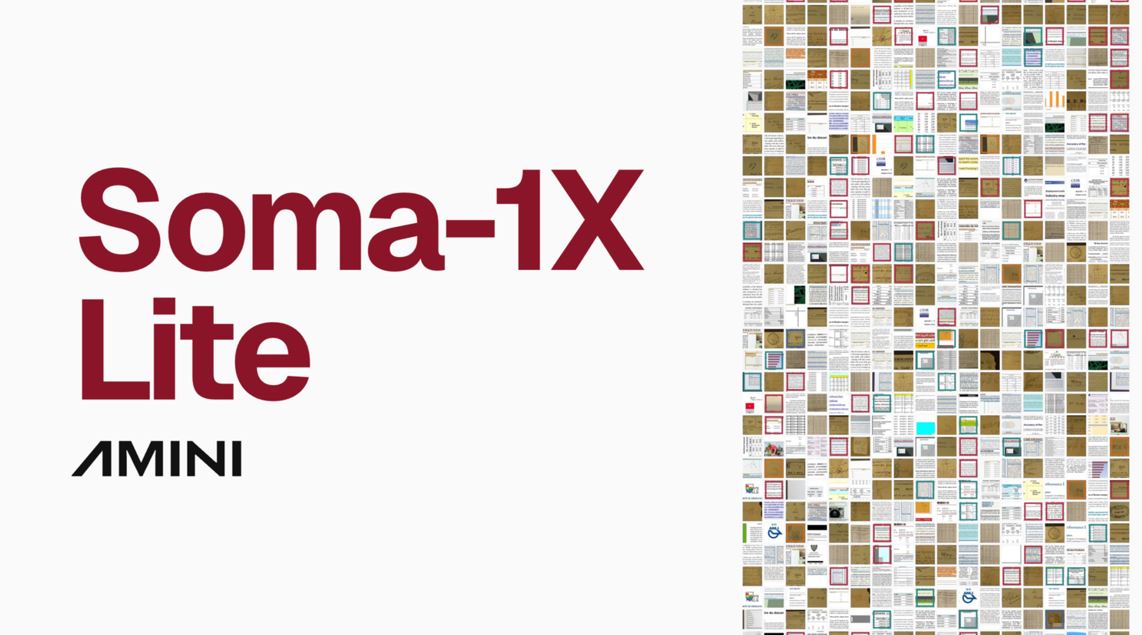
Amini Releases Soma, an Open Artificial Intelligence (AI) Model to Take Nations from Analogue to AI-Ready

Published

on

Built by an African company from work that began in Barbados, Soma-1X Lite outperforms frontier models on a leading public document benchmark, at ten percent of their cost

BRIDGETOWN, Barbados, November 25, 2026/APO Group/ –Amini (https://www.Amini.ai/) today released Soma-1X Lite, a compact, open-weight AI model that converts paper records into structured, machine-readable data. Small enough to run on a single GPU within a government’s sovereign infrastructure, Soma shows that countries of the Global South can build world-class AI for their own context, on their own terms. The model is available today on Hugging Face (https://apo-opa.co/4fPHTcI)


The biggest leapfrog opportunity of the AI age

Across the Global South, most knowledge remains offline. It sits on paper: cabinet papers, land registries, civil registries, geological surveys, and handwritten ledgers in languages no AI benchmark was designed to test. Because AI learns from what it can read, those countries are largely absent from the systems now shaping the global economy.

Amini sees in that gap an opportunity. Countries that have never fully digitised do not need to move from analogue to digital and then, a decade later, from digital to AI. They can go straight from analogue to AI-ready. That takes tools that handle difficult documents at national scale and run on infrastructure a country controls. Soma was designed around those requirements:

  1. Small and sovereign. Two billion parameters, running on a single GPU, so inference runs entirely within an institution’s own infrastructure and data never leaves its jurisdiction.
  2. Globally competitive. A score of 84.7 on olmOCR-Bench (https://apo-opa.co/3UWoRui), ahead of Gemini 3.8 Flash, GPT-5.5, and Claude Sonnet  5.
  3. Affordable at national scale. About 15,000 pages an hour, at an estimated $0.22 per 1,000 pages in GPU compute.
  4. ​Fluent in a diverse set of local low-resourced languages. The lowest average error rate of five open models evaluated across ten African languages, including Swahili, Yoruba, Hausa and Wolof.

“Constraint has always been our superpower,” said Kate Kallot, founder and CEO of Amini. “We did not ask how big we could build. We asked how small we could build and still stand among the best in the world.”

“This is the biggest leapfrog opportunity of the AI age, and the biggest opportunity for inclusion,” Kallot added. “Inclusion is not a seat at a table someone else built. It is our languages, our stories, our culture and our knowledge systems, read correctly and kept at home.”

Shaped by the history of Barbados

Soma’s story began in Barbados. Through R.O.A.D. (Reclaiming Our Atlantic Destiny) (https://Road.bb/), the Government of Barbados is preserving and digitising one of the world’s most extensive archives documenting the history of Atlantic slave societies: millions of pages, many handwritten, fragile and centuries old. Working on these records, alongside cabinet papers and other government archives, shaped how Soma was built. Faded ink, handwritten annotations, complex tables and damaged pages became the problems the model was trained and tested to solve.

Constraint has always been our superpower

Over the past year, Soma has processed millions of government records in private, sovereign environments. The work has since extended to Botswana, where Amini is digitizing geological maps and mineral resource records still on paper, with the Central African Republic to follow.

“These records are not simply collections of names, dates and events; they hold the traces of human lives. Some people are named, and others appear only in fragments in the official record. Making these materials searchable is important, but it is part of the deeper work of restoring memory, dignity and humanity, enabling Barbadians and the wider diaspora to find themselves in the record, reconnect families and communities, and reclaim histories thought to be long lost. Our partnership with Amini demonstrates what becomes possible when technology is designed in service of the archive, and with people first.”  Chereda Grannum, Programme Manager, ROAD

Sovereignty through cooperation

Soma is released with open weights, so any government, archive, university or developer can run it privately and build on it. It builds on open-source research, and Amini is returning its work to that community.

Its origins span regions: an African company, the archives of a Caribbean nation, the geological records of Botswana and ten African languages. Amini sees this as a model for how Global South countries can reduce dependence on a handful of frontier providers: by pooling knowledge, sharing models and solving common challenges together.

“The Global South has as much to teach AI as it has to gain from it. We chose Amini because they share that conviction. Together, we’ve turned Cabinet papers and centuries of Barbadian history into intelligence our citizens and public servants use every day. Soma-1X Lite shows we can build world-class AI on our own terms. And when we build for the Global South, we build for most of humanity.” –  Senator the Hon. Jonathan Reid, Minister of Innovation, Industry, Science and Technology of Barbados

Availability

Soma-1X Lite is available now on Hugging Face (https://apo-opa.co/3Xv7otD). Full benchmark results and methodology are published on Amini’s technical blog (https://apo-opa.co/4CCuVcm).

In Swahili, soma means “read”.

What’s next?

Amini is releasing Soma-1X Lite’s model weights, inference instructions, and evaluation code, enabling researchers and developers to reproduce its results, build upon the model, and adapt it to their own needs.

The next release will extend Soma to more underrepresented languages and scripts, historical and handwritten archives, and complex records such as maps, forms and registries. Through continued research, and real world feedback from its government  deployments, Amini aims to make document intelligence more capable, accessible, and relevant to institutions worldwide.

Distributed by APO Group on behalf of Amini.


Continue Reading

Events

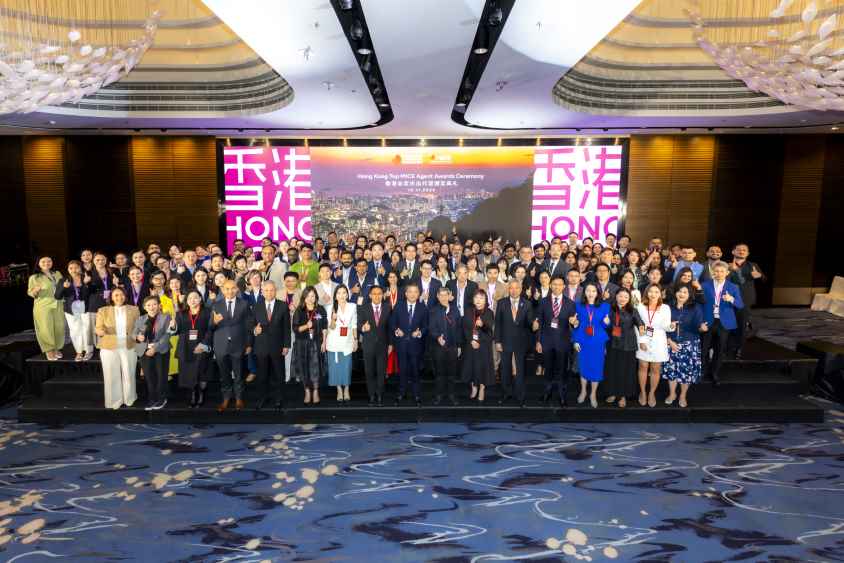
Hong Kong Celebrates Outstanding Achievements of Top-performing Agents at 2026 Hong Kong Top MICE Agent Awards Ceremony

Published

on

Over 100 Leading MICE Agents from 10 Key Markets Gather to Explore “Only in Hong Kong” MICE Experiences First-hand
HONG KONG SAR – Media OutReach Newswire – 25 November 2026 – Hong Kong Tourism Board (HKTB) hosted the 2026 Hong Kong Top MICE Agent Awards Ceremony on 19 November, celebrating the outstanding achievements of travel agents in driving business events to Hong Kong. The event underscored the strong partnership between HKTB and its overseas and local travel trade and MICE partners, reinforcing Hong Kong’s position as the World’s Meeting Place and in translating collaborative efforts into robust MICE arrivals in 2025.


The ceremony brought together over 100 top-performing MICE agents from the Chinese Mainland, Taiwan, India, Indonesia, Malaysia, the Philippines, Singapore, Thailand, Vietnam and Russia, alongside travel trade and trade media representatives, as well as more than 130 strategic travel trade partners from Hong Kong’s tourism and hospitality sectors. As the highlight of the 2026 Hong Kong MICE Familiarisation Programme, the event provided a valuable platform to strengthen industry collaboration, exchange market insights and showcase Hong Kong’s latest MICE developments under the “Only in Hong Kong” proposition.


HKTB Executive Director Mr Anthony Lau said, “Meeting and Incentive travel remains one of Hong Kong’s most valuable visitor segments. These visitors stay longer, spend more, and often become repeat visitors to our city. More importantly, they bring together business leaders, top performers and decision-makers, creating valuable business and people-to-people connections.”

Robust MICE Arrivals Built on Strong Partnerships

In 2025, Hong Kong welcomed more than 2.5 million MICE visitors, up 7 per cent year-on-year, with the meetings and incentive travel (M&I) segment accounting for over 60 per cent of the total. The city welcomed over 1,600 M&I groups during the year, reflecting the sustained growth of Hong Kong’s M&I sector and serving as testament to the concerted efforts of HKTB and its travel trade partners in Hong Kong and around the world, including the largest incentive travel events of the year, Asia Pacific Herbalife Extravaganza, which brought 15,000 non-Hong Kong participants.

Recognising Outstanding Contributions to Hong Kong’s MICE Development

To recognise the outstanding contributions of MICE agents and industry partners to Hong Kong’s MICE development, a series of awards were presented at the ceremony including the 2026 Hong Kong Top MICE Agent Awards and the 2026 Hong Kong MICE Agent Excellence Awards. In addition, the 2026 Strategic MICE Partners award was presented to major attraction partners in recognition of their outstanding support in enhancing Hong Kong’s MICE experience, namely Hong Kong Disneyland Resort, The Hong Kong Jockey Club, Ngong Ping 360, Ocean Park Hong Kong, and The Peak Tram and The Peak Tower.

Mr Kampol Kiatbenchaphong, President of Bonus Travel said, “We are delighted to be recognised with both the Top MICE Agent Award and MICE Agent Excellence Award. Hong Kong remains a premier MICE destination thanks to its versatile venues for groups of different scale, seamless connectivity and exceptional hospitality standards. The city’s unique mix of variety, vibrancy, contrast and world-class experiences continually creates new opportunities for us to design memorable programmes for our clients. With a steady pipeline of new attractions, mega events and “Only in Hong Kong” experiences, Hong Kong continues to offer compelling reasons for both business event organisers and incentive travellers to visit and return.”

Signature “Only in Hong Kong” Experiences to Inspire Innovative Incentive Programmes

Building on this occasion, HKTB introduced the latest MICE and tourism developments and experiences under the “Only in Hong Kong” brand platform. Industry guests were also presented with the “Hong Kong Incentive Playbook” (Click here to learn more), highlighting unique MICE products and offerings. This was followed by the 2026 Hong Kong MICE Industry Networking Exchange, where Hong Kong travel trade partners and the visiting agents met for business-matching sessions.

A specially curated acapella vocal performance paying tribute to Hong Kong’s film culture was also featured during the programme, echoing HKTB’s “Hong Kong Good Take” film tourism promotion (Click here to learn more) and showcasing another facet of the city’s unique cultural appeal. Through unique experiences, HKTB aims to inspire the development of innovative incentive programmes that showcase the very best of Hong Kong to future incentive groups. These include the newly launched “Hong Kong Good Take” film tourism guide, which features more than 100 filming locations from 50 selected films. Corporate and MICE visitors could follow in the footsteps of their favourite characters through distinctive neighbourhoods, experience the movie magic waiting around every corner and discover Hong Kong through the lens of the city’s cinematic heritage. Going forward, HKTB will continue to join hands with MICE agents and Hong Kong partners to curate fresh ideas and experiences that are truly “Only in Hong Kong”.

As part of the “2026 Hong Kong MICE Familiarisation Programme”, HKTB also arranged for the agents to explore the city’s latest MICE offerings, including a site inspection at Kai Tak Sports Park, a horseracing “Happy Wednesday” party at Happy Valley racecourse, an outdoor Tai Chi session, and a Chinese medicine wellness experience at Lui Seng Chun, a declared monument in Mong Kok. The agents will also take part in one of HKTB’s signature annual events, Hong Kong WinterFest, immersing themselves in Hong Kong Winter Wonderland in Central, which features the tallest-ever 22-metre outdoor Christmas tree and a brand-new immersive light show on the facades of nine iconic buildings around Statue Square Garden, as well as seasonal decorations across the city.

For more details about MICE in Hong Kong, please visit the MEHK website (www.mehongkong.com).


Continue Reading

Business

From solar power to sustainable farming: Africa’s Green Economy Summit unveils over US$500 million in investment opportunities

Published

on

New Infrastructure and SMME Deal Books spotlight 20 projects across 13 African countries ahead of the February 2027 summit in Cape Town

CAPE TOWN, South Africa, November 25, 2026/APO Group/ –Solar developments in Zimbabwe, battery reuse in Kenya and clean technology manufacturing in Nigeria are among the projects featured in the newly released Investment Deal Books from Africa’s Green Economy Summit (https://apo-opa.co/48YuThr) (AGES). Together, the two publications introduce the first 20 confirmed projects across 13 African countries, collectively seeking more than US$500 million in investment.


From Zimbabwe and South Africa to Kenya, Nigeria and Egypt, Africa’s Green Economy Summit will bring together investors, policymakers and project developers, connecting expertise, capital and enterprise from across the continent.

The Infrastructure Deal Book and SMME Deal Book provide investors, financiers and development partners with information on project maturity, capital sought and commercial models. Their publication precedes the summit’s fifth edition, taking place from 23 to 26 February 2027 at the Century City Conference Centre (https://CCConferenceCentre.co.za) in Cape Town.

The release comes amid record renewable energy expansion worldwide. According to the International Renewable Energy Agency’s Renewable Capacity Statistics 2026 (https://apo-opa.co/4A5nad0), global renewable power capacity increased by 692 GW in 2025, with Africa recording its largest annual addition of 11.3 GW. The Deal Books feature proposed renewable energy developments alongside businesses addressing agricultural productivity, resource efficiency and climate resilience.

Infrastructure projects span energy and agriculture

The Infrastructure Deal Book profiles larger developments at different stages of preparation, outlining their financing structures, milestones and routes to implementation.

Featured projects include MamboAnesu Energy, a phased solar project in Zimbabwe with a planned total capacity of 200 MW, and Eden Menia Egypt Farm, which integrates modern irrigation, renewable energy and digital farm management in Egypt.

In Kenya, Spiro ESS aims to repurpose electric motorcycle batteries into stationary energy storage systems. The proposed programme connects electric mobility with energy storage, extending battery lifecycles and supporting more reliable electricity supply.

The powerful conversations, insights, projects, investment landscape, and networks were both magical and fierce, reflecting a continent moving from ambition to implementation

Growing businesses bringing African solutions to market

The SMME Deal Book features enterprises across clean energy, manufacturing, sustainable agriculture and climate technology.

Among them are Powerbox Energy Systems in Nigeria, which manufactures modular solar and battery systems locally, and Adsorb Technologies in South Africa, which converts agricultural and forestry residues into activated carbon for industrial applications.

Their profiles outline plans to expand production, establish commercial partnerships and reach wider markets.

Turning project visibility into investor engagement

The Deal Books allow investors to review projects against their investment mandates before meeting developers. Curated matchmaking and pitch sessions provide a setting for more detailed financing discussions.

Reflecting on her participation at the previous summit, Gertrude Ogojiaku, CEO of Asoba, said:

“AGES was an awesome event. The powerful conversations, insights, projects, investment landscape, and networks were both magical and fierce, reflecting a continent moving from ambition to implementation.”

“Driving e-mobility and the energy transition requires a collaborative ecosystem of partners. For Spiro, connecting with asset financiers, banks, infrastructure investors and solar and energy-storage providers is essential to scaling our operations across Africa. Platforms like AGES create opportunities to bring these stakeholders together and build the partnerships needed to accelerate growth.”

– Kaushik Burman, CEO, Spiro Mobility

Both Deal Books are now available to download, with further details on the featured businesses, infrastructure proposals and financing plans.

Distributed by APO Group on behalf of VUKA Group.


Continue Reading

Trending

Exit mobile version