Connect with us
Anglostratits

Energy

From Re-Entry to Expansion: Libya Sets Growth Agenda at Libya Energy & Economic Summit (LEES) 2026

Published

on

Energy Capital

Libya outlined its next upstream phase on day one of the Libya Energy & Economic Summit, with production growth centered on IOC re-entry, gas projects and regional cooperation

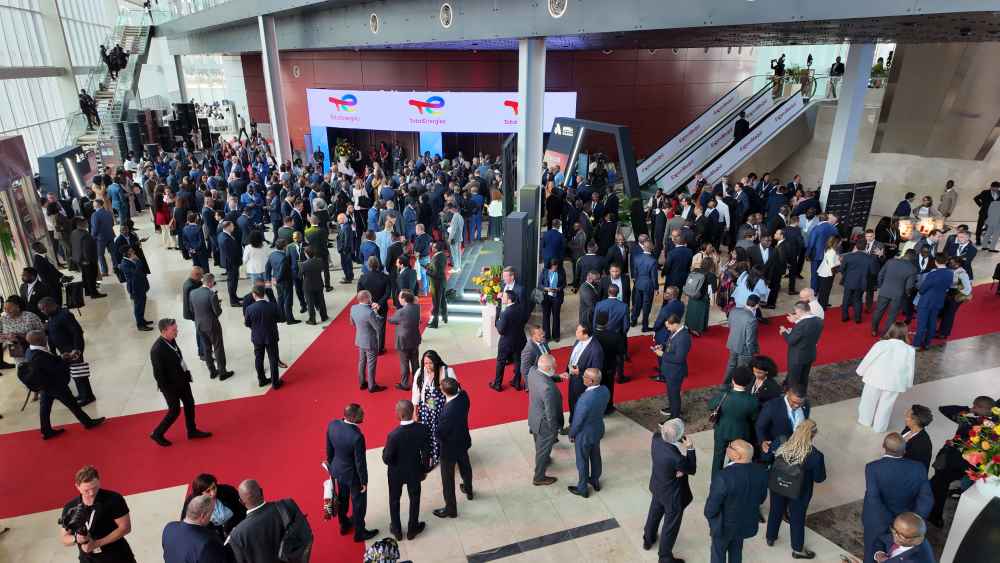
TRIPOLI, Libya, January 26, 2026/APO Group/ –The Libya Energy & Economic Summit (LEES) 2026 opened in Tripoli on Saturday with a series of strategic announcements underlining its renewed upstream momentum and investment appeal. Prime Minister Abdulhamid Al-Dbeibeh confirmed that the country’s first major oil and gas licensing round in more than 17 years – launched in March 2025 – will have its results announced in February 2026. The round, covering 22 onshore and offshore blocks under revised fiscal and profit-sharing terms, is designed to improve competitiveness and support Libya’s push toward higher production and diversified investment.


Prime Minister Al-Dbeibeh framed the summit as a turning point for Libya’s energy sector, highlighting rising output, stronger partnerships and structural reforms. He cited crude oil production exceeding 1.4 million barrels per day (bpd) and total oil equivalent production of more than 1.52 million bpd in early 2026 as evidence of progress following years of disruption.


Waha Re-Entry Agreement: $20B Investment to Boost Output


In one of the summit’s biggest deals, Libya signed a 25-year oil development agreement with France’s TotalEnergies and the U.S.’s ConocoPhillips via Waha Oil Company, backed by more than $20 billion in foreign-financed investment. The deal aims to modernize upstream operations and boost production capacity by up to around 850,000 bpd over the medium term – a major vote of confidence in Libya’s hydrocarbons sector.


The amendment to the Waha re-entry agreement, signed at LEES by TotalEnergies CEO Patrick Pouyanné and ConocoPhillips CEO Ryan M. Lance, reinforces long-term IOC commitment to one of Libya’s most strategic producing assets and is widely viewed as a benchmark for future upstream investment structures.

Libya and Egypt Deepen Petroleum Cooperation


Libya and Egypt formally signed a memorandum of understanding (MoU) to expand technical cooperation, capacity building and institutional coordination in the oil and gas sector. The agreement reflects a shared regional approach to energy security and infrastructure development, reinforcing ties between two of North Africa’s largest hydrocarbon producers.


Chevron Signs MoU on New Exploration Opportunities


In another key development, U.S. oil major Chevron signed an MoU with Libya’s National Oil Corporation (NOC) to study potential new exploration and development opportunities. This marks Chevron’s re-engagement in Libya after more than a decade since its previous exit, and signals growing interest from major international players in the country’s upstream potential.

Ministerial Panel: Production Targets and Strategic Focus


During a high-profile ministerial panel, Libya’s Oil & Gas Minister Dr. Khalifa Abdulsadek said the nation is targeting an increase in crude oil output from roughly 1.375 million bpd to 1.6 million bpd by the end of 2026, reflecting the progress the country has made in stabilizing production and attracting investment. Minister Abdulsadek also highlighted the importance of agreements like the Waha re-entry amendment as central to the country’s strategy for scaling production.

IOC Panel: Gas Expansion, Infrastructure and Drilling Capacity


Italian major Eni confirmed plans to bring its Bahr Essalam gas compression project online by the end of Q1 2026, adding around 100 million standard cubic feet per day (mmscfd) to Libya’s gas output. A second gas utilization project is expected by Q3 2026, potentially delivering an additional 100–120 mmscfd and reinforcing gas as a core pillar of Libya’s energy strategy.


OMV highlighted Libya’s significant stranded gas potential, estimating associated gas volumes of between 7 and 9 billion cubic meters, while stressing that infrastructure constraints – particularly evacuation and processing capacity – remain a key barrier to development. During the same panel, Libya’s NOC outlined plans to invest $2 billion to modernize gas infrastructure, including pipelines and processing systems, addressing bottlenecks that have constrained evacuation and processing capacity.


Operational readiness and drilling capacity also featured prominently. Assail Drilling Company (ADC) hosted a technical workshop focused on rig technology upgrades, outlining how modernized rigs and enhanced drilling efficiency could support Libya’s near-term production targets and reduce downtime across mature fields.


Repsol executives echoed the need for long-term visibility and stable frameworks, noting that predictable contracts and infrastructure readiness are essential for mobilizing rigs, capital and skilled personnel at scale.

Bottom Line: A Turning Point for Libya’s Energy Sector


Announcements from day one of LEES 2026 indicate that Libya’s oil and gas sector is moving decisively from recovery into an expansion phase. With long-term IOC re-entry agreements, advancing gas projects, renewed exploration interest and a focus on infrastructure and drilling efficiency, Libya is positioning itself for higher production, deeper regional integration and renewed relevance in global energy markets.


Distributed by APO Group on behalf of Energy Capital & Power.

Business

Angola Strengthens Global Investment Drive Across Oil, Gas and Mineral Resources

Published

on

Angola

With sweeping reforms across the extractive sector, Angola is entering a new phase defined by transparency, regulatory modernisation, value addition, and international partnership

LONDON, United Kingdom, May 8, 2026/APO Group/ –At a defining moment in Angola’s economic transformation, the Critical Minerals Africa Group (CMAG) (https://CMAGAfrica.com), together with the Government of Angola and the Ministry of Mineral Resources, Petroleum and Gas of the Republic of Angola (MIREMPET), will convene global investors, policymakers, and industry leaders in London for the Angola Oil, Gas & Mining Investment Conference on 14 May 2026.


More than a conference, this gathering represents a strategic international engagement at a time when Angola is actively reshaping its economic future and positioning itself as one of Africa’s most compelling destinations for long-term investment in natural resources, infrastructure, and industrial development.

With sweeping reforms across the extractive sector, Angola is entering a new phase defined by transparency, regulatory modernisation, value addition, and international partnership. The country’s leadership is sending a clear message to global markets: Angola is open for investment and ready to build transformational partnerships that support sustainable growth and economic diversification.

This is not simply about resource development, it is about building long-term industrial growth, strengthening energy and mineral supply chains, and shaping Angola’s future

The event will be headlined by H.E. Diamantino Azevedo, Minister for Mineral Resources, Oil and Gas of Angola, whose leadership since 2017 has been central to advancing Angola’s mineral and hydrocarbons agenda. Under his stewardship, Angola has accelerated institutional reform, strengthened governance frameworks, promoted private sector participation, and prioritised sustainable resource development.

As global demand intensifies for critical minerals, energy security, and resilient supply chains, Angola is uniquely positioned to become a strategic partner to international investors and industrial economies. The country’s vast untapped mineral wealth, significant oil and gas reserves, expanding infrastructure ambitions, and commitment to economic diversification present a rare investment window for global stakeholders.

Speaking ahead of the event, Veronica Bolton Smith, CEO of the Critical Minerals Africa Group said:

“Angola stands at a pivotal point in its national development. The reforms taking place across the country’s extractive sectors are creating unprecedented opportunities for responsible international investment and strategic partnership. This is not simply about resource development, it is about building long-term industrial growth, strengthening energy and mineral supply chains, and shaping Angola’s future as a globally competitive investment destination. We believe this moment represents one of the most important opportunities for international partners to engage with Angola’s leadership and participate in the country’s next chapter of economic transformation.”

The event is expected to attract a distinguished international audience, including sovereign representatives, institutional investors, mining and energy executives, infrastructure developers, development finance institutions, and strategic partners seeking direct engagement with Angola’s leadership.

Distributed by APO Group on behalf of Critical Minerals Africa Group (CMAG).


Continue Reading

Business

African Union (AU) Commissioner Mataboge Joins African Energy Week (AEW) 2026 as Continent Scales Interconnected Energy Infrastructure

Published

on

African Energy Chamber

Lerato Mataboge’s participation reflects the African Union’s commitment to transforming African energy systems, prioritizing African-led innovation and priorities

CAPE TOWN, South Africa, May 7, 2026/APO Group/ –Lerato D. Mataboge, Commissioner for Infrastructure and Energy at the African Union (AU), has joined the upcoming African Energy Week (AEW) Conference and Exhibition – taking place October 12-16 in Cape Town – as a speaker. Her participation puts the AU’s institutional voice at the center of the event at a moment when the continental body is moving from policy architecture to execution, and growing increasingly vocal about the conditions it will and will not accept from international partners.


Mataboge has been among the clearest African voices pushing back on the terms of the global energy transition debate. At the World Economic Forum in Davos in January 2026, she challenged the prevailing narrative, arguing that baseload power is a non-negotiable prerequisite for African industrialization and that the continent cannot be assessed by the same benchmarks applied to economies that already have reliable electricity. Africa holds around 20% of the world’s identified uranium resources yet accounts for less than 1% of global nuclear electricity consumption, a disparity she has cited as emblematic of a broader pattern of resource wealth that has yet to translate into energy sovereignty.

Commissioner Mataboge is the institutional link between Africa’s continental energy ambitions and the investors and developers who can make them real

Speaking in Cape Town in March, Mataboge noted that Africa has approximately 245 GW of installed generation capacity, while electricity consumption averages around 600 kWh per person per year, roughly five times below the global average. Closing the gap means connecting between 90 and 100 million additional people to electricity annually, requiring roughly $200 billion in annual investment by 2030 against a current annual investment level of approximately $45 billion.

Mataboge’s mandate at the AU is to build the institutional architecture that can begin to mobilize that capital at scale. She is overseeing the operationalization of the African Single Electricity Market (AfSEM), which aims to integrate the continent’s fragmented regional power pools into a unified electricity market, alongside the Continental Power Systems Masterplan and the Ten-Year Infrastructure Investment Plan for Cross-Border Connectivity, the AU’s master pipeline for transmission and generation projects. These frameworks have been in development for years, but the challenge has been turning them into bankable propositions that attract private capital. At AEW 2026, that case will be made to the investors and developers who can act on it.

“Commissioner Mataboge is the institutional link between Africa’s continental energy ambitions and the investors and developers who can make them real,” said NJ Ayuk, Executive Chairman of the African Energy Chamber. “Her message is clear – that Africa will not subordinate its development needs to external financing conditions that were never designed with this continent in mind. AEW is the right room to have that conversation, and the right moment.”

AEW 2026 – Africa’s premier energy event – convenes Africa’s foremost policymakers, financiers, developers and operators to advance the continent’s energy agenda. Commissioner Mataboge’s address will place the AU’s institutional framework, and the financing gap it is working to close, at center stage.

Distributed by APO Group on behalf of African Energy Chamber.

Continue Reading

Energy

InterOil’s Angola Oil & Gas (AOG) 2026 Silver Sponsorship Reflects Drive to Scale Logistics, Local Content

Published

on

Energy Capital

Integrated logistics, local workforce development and offshore execution converge as Angola’s project pipeline expands

LUANDA, Angola, May 7, 2026/APO Group/ –Angolan oilfield services provider InterOil has joined the upcoming Angola Oil & Gas (AOG) Conference and Exhibition as a Silver Sponsor, taking place September 9-10 with a pre-conference on September 8. For over 21 years, InterOil has worked alongside international operators, playing a strategic role in maintaining stable and reliable offshore activities. It’s AOG sponsorship not only demonstrates a commitment to the growth of the industry, but positions the logistics and offshore support provider at the center of Angola’s next wave of deepwater and infrastructure-led projects.

InterOil’s sponsorship reflects a core reality in Angola’s hydrocarbon market: as projects become more complex and move into deeper waters, the ability to sustain operations through integrated logistics solutions is emerging as a defining constraint. The company’s model – combining onshore coordination with offshore execution – addresses this directly, ensuring continuity across high-intensity operations where downtime carries significant financial and technical risk.

Operating in a complex offshore environment, InterOil has built its track record around reliability and operational discipline. A key reference point is the Kaombo development in Block 32, operated by TotalEnergies. Since 2014, the company has supported the project through integrated onshore and offshore logistics, sustaining operations for both the FPSO Kaombo North and FPSO Kaombo South. The development remains one of Angola’s most technically complex offshore assets, and InterOil’s role in maintaining operational continuity underscores the importance of logistics providers in stabilizing production and ensuring efficiency at scale.

This operational focus is complemented by a long-term commitment to local content development. InterOil has prioritized the recruitment, training and advancement of Angolan professionals, embedding structured capacity-building and knowledge transfer into its operating model. In a market where local participation is both a regulatory requirement and a strategic imperative, this approach supports workforce development while reinforcing operational resilience.

As Angola seeks to sustain production above one million barrels per day by expanding infrastructure, accelerating offshore projects and deepening local participation across the value chain, the role of logistics providers is becoming more strategic. AOG 2026 provides a platform where these capabilities are integrated into broader project discussions, connecting operators, service providers and investors around execution as a core pillar of project success. InterOil’s participation underscores a broader industry shift: in Angola’s next phase of growth, operational delivery will carry as much weight as resource potential.

Distributed by APO Group on behalf of Energy Capital & Power.

Continue Reading

Trending